United Airlines is making a calculated move into one of the most strategically important domestic air corridors in the United States by launching new nonstop service between Fort Lauderdale-Hollywood International Airport (FLL) and Los Angeles International Airport (LAX). While the announcement may initially appear to be a standard network expansion, the route reveals a far more aggressive competitive strategy aimed directly at both JetBlue Airways in South Florida and Delta Air Lines in Los Angeles.
The new route begins on October 25 with five weekly flights before ramping up significantly to twice-daily service from December 17, placing United squarely into a market that has rapidly transformed following the collapse of Spirit Airlines. The timing is deliberate. Winter is the strongest travel season for South Florida, and United clearly sees an opportunity to seize market share during a period of elevated demand for transcontinental leisure and premium travel.
More importantly, the route places United at the center of two overlapping aviation battles. In Fort Lauderdale, the airline is stepping into a market increasingly controlled by JetBlue. In Los Angeles, the carrier continues its effort to close the gap with Delta, which currently holds the title of LAX’s largest airline by passenger volume.
The addition of FLL-LAX is therefore not simply another point-to-point route. It is a strategic pressure point in two of the nation’s most competitive airline markets.
United’s launch comes at a moment when the competitive landscape in Fort Lauderdale is shifting dramatically. Spirit Airlines once operated the route at various frequencies, ranging from daily service to limited weekly operations. However, Spirit’s financial collapse and resulting reduction in network presence created immediate openings for competitors eager to absorb displaced traffic.
United was already preparing for this possibility months earlier. The airline had increased Fort Lauderdale operations as part of contingency planning designed to capture stranded demand if Spirit failed to maintain operations. That preparation is now turning into a more aggressive expansion phase.
Patrick Quayle, United’s Senior Vice President of Global Network Planning, previously acknowledged the potential disruption Spirit’s collapse could create for passengers, emphasizing that United intended to provide alternative travel options where possible.
The new Fort Lauderdale–Los Angeles service fits perfectly into that strategy.
At 2,337 miles, the route is among the longest domestic sectors from Fort Lauderdale. Westbound flights frequently exceed six hours because of prevailing winds, placing the service into the category of long-haul domestic flying. That creates important product implications, especially as airlines increasingly compete for premium passengers on transcontinental routes.
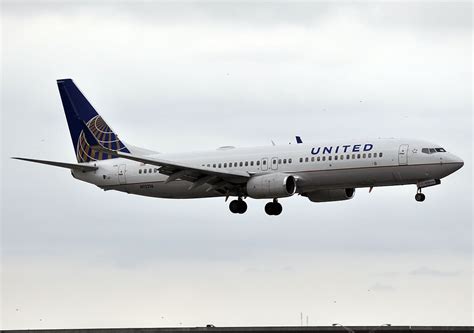
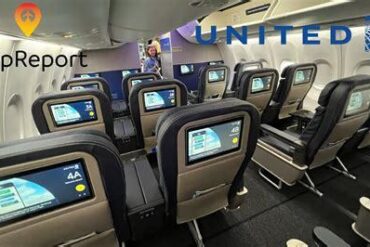
One of the biggest unanswered questions surrounding United’s launch is aircraft configuration. The airline has not yet confirmed which jets will operate the route, but the decision could heavily influence its ability to compete effectively.
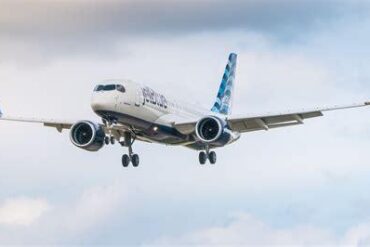
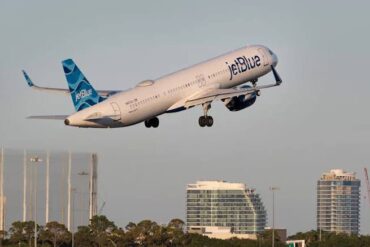
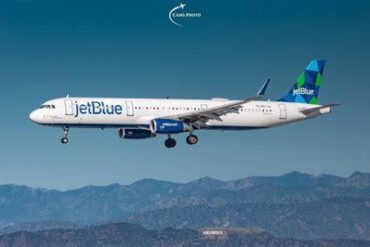
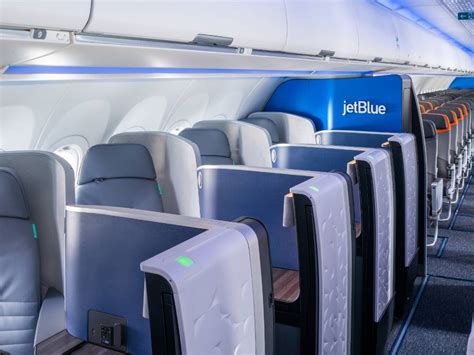
JetBlue already dominates the premium conversation on FLL-LAX with its highly regarded Mint business-class product, offered aboard Airbus A321 aircraft configured specifically for premium transcontinental flying. Mint has become one of the strongest domestic premium products in the United States, featuring lie-flat seating, upgraded dining, and a boutique-style onboard experience that consistently earns high customer satisfaction scores.
If United deploys standard narrowbody aircraft with traditional recliner-style domestic first-class seats, the product comparison could become difficult, especially on westbound flights lasting more than six hours. Premium travelers increasingly expect lie-flat comfort on long domestic sectors, particularly in competitive business and leisure markets linking Florida and California.
This makes United’s fleet decision strategically important. Deploying premium-configured aircraft would allow the airline to compete more directly against JetBlue’s Mint product. Failing to do so risks conceding the lucrative premium segment entirely to JetBlue.
The competitive imbalance is even more pronounced when examining Fort Lauderdale itself.
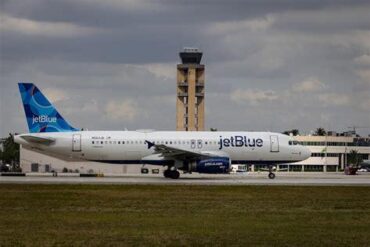
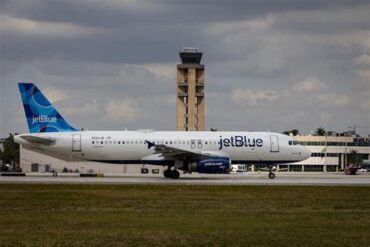
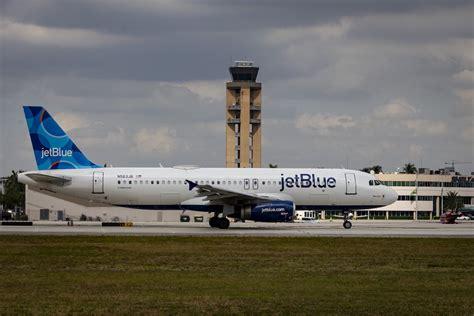
JetBlue has aggressively expanded at FLL over the past year, capitalizing on the operational vacuum left behind by Spirit Airlines. The New York-based carrier recently announced 11 additional Fort Lauderdale routes and expects nearly 130 daily departures during the summer season, creating its largest-ever schedule at the airport.
The numbers reveal just how dominant JetBlue has become in South Florida.
According to Cirium data, JetBlue recorded a remarkable 45% increase in Fort Lauderdale flights in Q2 2026 compared to Q2 2025, growing from 11,246 flights to 16,316. United, by comparison, posted a more modest 11% increase, operating 4,374 flights during the same period.
That means United enters the Los Angeles route as the challenger rather than the incumbent powerhouse.
JetBlue also enjoys substantial brand visibility among South Florida travelers, particularly leisure passengers who frequently travel between Florida and California. The airline already operates up to five daily flights on the route, giving it a major scheduling advantage over United’s initial offering.
For United, frequency expansion to twice daily by December is therefore essential. Without stronger schedule flexibility, the airline would struggle to attract higher-yield passengers seeking departure-time convenience.
Yet the competitive situation is complicated further by the unusual relationship between United and JetBlue themselves.
The two airlines currently cooperate through the Blue Sky partnership, a customer-focused alliance centered around reciprocal loyalty benefits, booking integration, and limited coordination. However, the partnership stops well short of a fully integrated joint venture.
That distinction matters.
United and JetBlue may share certain customer-facing benefits, but they remain direct competitors in overlapping markets. Fort Lauderdale–Los Angeles is becoming one of the clearest examples of that reality. Cooperation on paper does not eliminate the underlying battle for market share, premium travelers, and long-term network dominance.
The Los Angeles side of the equation may be even more strategically important for United.
Unlike most of United’s hubs, LAX is not a fortress hub where the airline comfortably dominates local traffic. Instead, Los Angeles remains one of the few major U.S. airports where multiple legacy carriers compete aggressively for leadership.
Delta currently holds the advantage.
According to Los Angeles World Airports statistics for 2025, Delta carried 13.92 million passengers at LAX, securing approximately 19% market share. United followed closely behind with 11.87 million passengers and a 16% share.
Those figures illustrate why United continues investing heavily in Los Angeles despite intense competition. The airport is one of the most valuable aviation gateways in the world, serving not only domestic traffic but also extensive international connectivity to Asia-Pacific destinations, Australia, Hawaii, and Latin America.
Every additional domestic feeder route strengthens United’s ability to channel passengers into its broader LAX network.
The new Fort Lauderdale service therefore serves dual purposes. It captures local South Florida demand while simultaneously feeding United’s growing Los Angeles operation with additional connecting traffic.
That connectivity becomes especially important during winter months, when demand for travel to Hawaii, Southern California, ski destinations, and Pacific leisure markets increases substantially.
United has already demonstrated its commitment to expanding at LAX through recent additions to its summer 2026 schedule, including year-round routes to Columbus, Kansas City, and Pittsburgh. The Fort Lauderdale addition reinforces the same strategic direction: strengthen domestic feed, increase market presence, and gradually challenge Delta’s lead.
Delta, however, is hardly standing still.
The airline has aggressively expanded its own Los Angeles operation in recent years, investing heavily in terminals, premium lounges, and new routes designed to solidify its position as LAX’s largest carrier. Florida has become a particularly important battleground, with Delta increasing frequencies and adding new leisure-oriented routes targeting both vacation travelers and premium coastal demand.
That makes United’s Fort Lauderdale move particularly revealing. The airline is not merely replacing lost Spirit capacity. It is deliberately entering a contested corridor where every seat contributes to a larger strategic war over hub dominance, premium passengers, and long-term customer loyalty.
The economics of the route also make sense beyond competitive symbolism.
South Florida remains one of the nation’s strongest origin markets for leisure travel, especially during winter. Los Angeles, meanwhile, provides access to one of the country’s largest entertainment, technology, and international business markets. Traffic flows in both directions are substantial, combining tourism, visiting friends and relatives traffic, corporate demand, and international connections.
The collapse of Spirit Airlines altered pricing dynamics on several former ultra-low-cost routes, potentially creating opportunities for network carriers to improve yields while absorbing displaced demand. United appears eager to capitalize on that shift before competitors further consolidate their positions.
The route also highlights a broader industry trend emerging after Spirit’s decline: major airlines are increasingly targeting markets once dominated by ultra-low-cost carriers, especially where premium demand and connecting opportunities justify higher operating costs.
For United, Fort Lauderdale–Los Angeles represents precisely that kind of opportunity.
The airline gains relevance in a growing South Florida market, strengthens connectivity into Los Angeles, and positions itself against two rivals simultaneously. JetBlue may currently hold the advantage at Fort Lauderdale, while Delta leads at LAX, but United’s expansion demonstrates that the carrier is no longer willing to concede either battleground without a fight.
What initially looks like a single domestic route launch is therefore something much larger — a revealing snapshot of how America’s largest airlines are reshaping strategy in the post-Spirit competitive landscape.