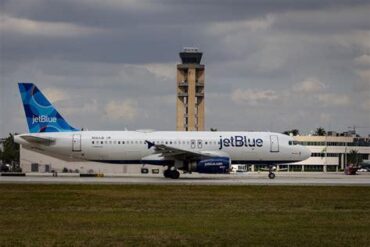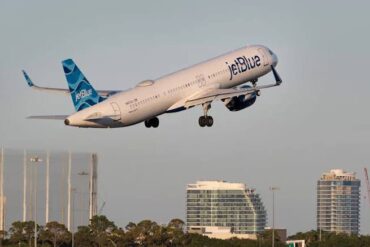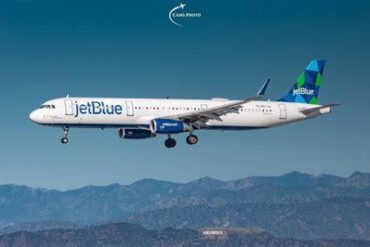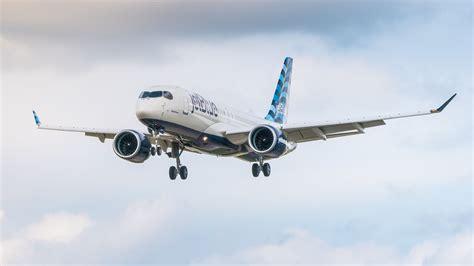
JetBlue Airways is making another decisive move in South Florida as the carrier prepares to open a dedicated Airbus A220 pilot base at Fort Lauderdale-Hollywood International Airport (FLL) beginning in January 2027. The decision marks a major strategic milestone for the airline and reinforces Fort Lauderdale’s rapidly growing importance within JetBlue’s national network.
The development arrives at a pivotal moment for the US aviation market. Following Spirit Airlines’ financial collapse and resulting operational retrenchment, JetBlue has moved aggressively to capture market share across South Florida. The airline is expanding routes, increasing flight frequencies, repositioning aircraft, and building long-term operational infrastructure at FLL. What was once considered a large focus city is increasingly evolving into one of JetBlue’s core hubs.
Industry observers view the new A220 base as one of the strongest indicators yet that JetBlue sees Fort Lauderdale as central to its long-term growth strategy, especially as competition reshapes the leisure travel market across Florida and the Caribbean.
JetBlue’s reported internal vacancy bid, first revealed by aviation insider JonNYC, states that the new Airbus A220 domicile will officially launch on January 1, 2027. While the airline has not yet issued a formal public announcement, the internal planning documents strongly suggest preparations are already underway behind the scenes.
The move follows another significant crew investment announced previously: the establishment of a dedicated JetBlue Mint crewmember base at Fort Lauderdale. Together, these developments signal that JetBlue is no longer treating FLL as simply a high-volume leisure station. Instead, the airline is building the kind of operational depth usually associated with its largest strategic hubs such as New York-JFK and Boston.
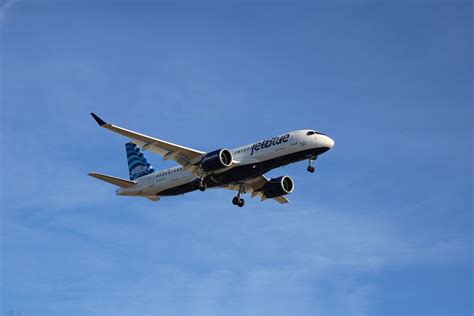
JetBlue Is Turning Fort Lauderdale Into A Strategic Powerhouse
Fort Lauderdale has become one of the most valuable growth opportunities in the US airline industry. Spirit Airlines historically dominated the airport with its ultra-low-cost model, but its restructuring dramatically altered the competitive landscape. That vacuum created rare opportunities involving gate access, route demand, airport positioning, and customer acquisition.
JetBlue has moved quickly to capitalize.
The airline has steadily expanded its presence over the past year, ultimately becoming the largest carrier at Fort Lauderdale by seat share. The strategy is not merely about adding flights. It reflects a broader shift toward building a scalable and sustainable operational center capable of supporting long-term expansion throughout Florida, Latin America, and the Caribbean.
Fort Lauderdale’s geography makes the airport uniquely attractive for JetBlue’s network strategy. The airport sits within one of the largest leisure travel markets in the United States while also providing exceptional proximity to Caribbean destinations and major Northeastern business corridors. JetBlue’s customer base aligns almost perfectly with those traffic patterns.
In many ways, Fort Lauderdale offers JetBlue something increasingly difficult to find elsewhere: room to grow.
Congestion at airports such as JFK and Boston limits expansion opportunities. Fort Lauderdale, by contrast, still provides the ability to scale operations while maintaining relatively efficient turnaround times and competitive operating costs.
The new Airbus A220 base strengthens that advantage even further.
Why The Airbus A220 Fits JetBlue’s South Florida Strategy Perfectly
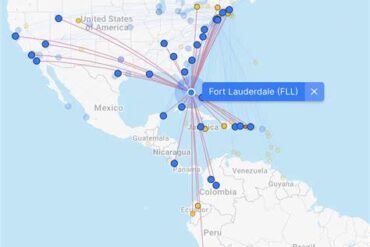
JetBlue already operates an extensive Airbus A220 network from Fort Lauderdale. According to Cirium data, the airline currently deploys the aircraft on 25 routes from FLL, connecting South Florida with destinations across the Northeast, Florida, Mexico, and the Caribbean.
Those routes include major markets such as Boston, New York-JFK, Newark, Atlanta, San Juan, Dallas/Fort Worth, and Cancún, alongside smaller leisure-focused destinations like Aguadilla, Nassau, Montego Bay, and Punta Cana.
The route structure explains exactly why the A220 has become such an essential aircraft for JetBlue.
Many Fort Lauderdale routes fall into a middle-capacity category where larger Airbus A321 aircraft may offer too many seats during off-peak periods, while regional jets lack the range, passenger comfort, or economics necessary for competitive service. The A220 fills that gap exceptionally well.
With lower fuel burn, reduced trip costs, and impressive operational efficiency, the aircraft allows JetBlue to maintain high-frequency schedules on thinner routes without sacrificing profitability. That flexibility becomes especially valuable in seasonal leisure markets where demand can fluctuate dramatically throughout the year.
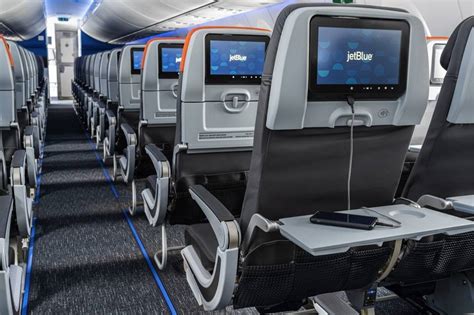
The aircraft also gives JetBlue a competitive product advantage over ultra-low-cost carriers.
JetBlue’s A220 cabin includes larger windows, wider seats, seatback entertainment systems, oversized overhead bins, and a quieter passenger experience. The aircraft’s 2-3 seating layout significantly reduces the number of middle seats onboard, a subtle but important feature for customer satisfaction.
That premium-feeling experience helps JetBlue differentiate itself in a market crowded with low-cost competition.
The airline’s decision to retire its Embraer fleet further elevated the A220’s importance. The aircraft is now becoming the backbone of JetBlue’s smaller narrowbody operations and a central pillar of its future network strategy.
Fort Lauderdale’s Expanding Route Network Continues Accelerating
The new pilot base is arriving alongside one of the most aggressive expansions in Fort Lauderdale’s recent aviation history.
JetBlue has substantially increased service frequencies on existing routes while simultaneously adding new destinations from FLL. Recent growth announcements have included expanded operations to Atlanta, Philadelphia, and Tampa, along with entirely new services such as Cleveland.
The airline later unveiled an additional wave of expansion immediately after Spirit Airlines’ collapse, introducing 11 more destinations from Fort Lauderdale. Those additions included Baltimore, Charlotte, Columbus, Indianapolis, and several Latin American markets designed to strengthen JetBlue’s regional connectivity.
This expansion is not happening in isolation.
JetBlue has openly acknowledged that aircraft are being shifted away from underperforming markets elsewhere in the network to support the Fort Lauderdale build-up. Several routes outside South Florida have already been eliminated specifically to free aircraft capacity for FLL operations.
That reallocation strategy highlights how important Fort Lauderdale has become internally.
Rather than spreading resources evenly across the network, JetBlue is concentrating investment where it sees the highest long-term returns. South Florida currently offers exactly that combination of opportunity, passenger demand, and competitive repositioning.
Industry analysts expect JetBlue to operate more than 130 daily departures from Fort Lauderdale during the summer season, representing the airline’s largest-ever operation at the airport.
The A220 Base Could Shape JetBlue’s Fleet Future
JetBlue’s Airbus A220 fleet continues to expand rapidly. The airline expects to receive 12 additional A220 aircraft this year alone, and Fort Lauderdale appears increasingly likely to absorb a substantial portion of those deliveries.
Establishing a dedicated pilot base creates operational efficiencies that support larger fleet concentrations. Crew scheduling becomes easier, maintenance planning improves, and aircraft utilization can be optimized more effectively when pilots and aircraft are concentrated within the same operational ecosystem.
That infrastructure matters enormously as airlines attempt to maximize profitability in a highly competitive environment.
The A220’s economics make it particularly attractive for JetBlue’s evolving strategy. The aircraft delivers excellent range capabilities while maintaining lower operating costs than previous-generation narrowbody aircraft. It also allows the airline to experiment with new markets using lower-risk capacity levels before potentially upgrading routes to larger aircraft later.
Fort Lauderdale is becoming the perfect testing ground for that model.
JetBlue can use the A220 to aggressively expand throughout the Caribbean and Latin America while simultaneously strengthening high-frequency domestic routes into the Northeast. Few aircraft currently in service offer the same balance of efficiency, comfort, and operational flexibility.
The establishment of the new pilot base strongly suggests JetBlue expects this growth trajectory to continue well beyond 2027.
South Florida Is Emerging As JetBlue’s Most Important Growth Market
JetBlue’s investment wave at Fort Lauderdale represents far more than a temporary expansion cycle. The airline is laying down permanent infrastructure designed to support years of future growth.
Crew bases, aircraft concentration, route expansion, and fleet deployment strategies all point toward the same conclusion: JetBlue sees South Florida as one of its most critical long-term markets.
The timing could hardly be more advantageous. With Spirit Airlines retreating, competitors are racing to secure market share in one of America’s busiest leisure aviation corridors. JetBlue, however, appears to be moving faster and more decisively than most rivals.
By anchoring its Fort Lauderdale expansion around the Airbus A220, the airline is pairing one of the industry’s most efficient modern aircraft with one of the country’s most strategically valuable aviation markets.
That combination could reshape JetBlue’s network for the next decade.