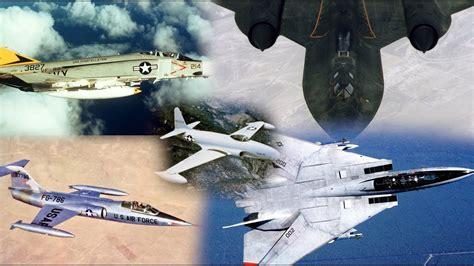
For all the attention surrounding F-35s, F-22s, B-21s, and next-generation combat aircraft, the United States military still relies on an unlikely collection of Cold War-era jets to prepare pilots for modern air warfare. Some are operated directly by the services, while others support military training through defense contractors. Their continued presence is not necessarily a sign that military aviation has failed to modernize. Instead, it reflects a practical calculation involving cost, reliability, availability, and the value of familiar flight characteristics.
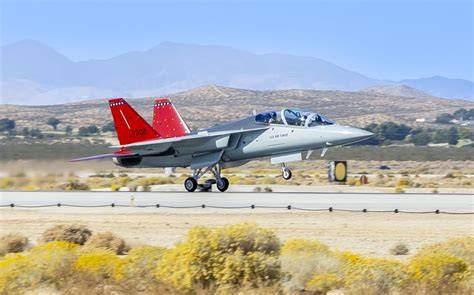
The transition is nevertheless accelerating in 2026. The U.S. Air Force has begun introducing the Boeing-Saab T-7A Red Hawk, a digital-era trainer designed to replace the six-decade-old T-38 Talon. The first Red Hawk arrived at Joint Base San Antonio-Randolph in January, while Air Force instructor pilots began qualifying on the aircraft during the spring. The T-7A is expected to begin replacing T-38s more broadly in 2027.
Yet modernization does not happen overnight. Training fleets are particularly difficult to replace because thousands of pilots, instructors, maintainers, simulators, spare parts, syllabi, and operating procedures are built around established aircraft. That is why several aircraft whose designs were born during the Cold War remain relevant in American military training in 2026.
1. Northrop T-38 Talon: The Six-Decade Supersonic Trainer
The Northrop T-38 Talon is easily the most important Cold War-era trainer still associated with the U.S. military. Entering Air Force service in 1961, it became the world’s first purpose-built supersonic jet trainer and went on to educate generations of American fighter and bomber pilots. More than six decades later, the sleek twin-engine aircraft is finally approaching the end of its long career.
The T-38’s longevity is easier to understand when its original design is considered. Developed from the lightweight fighter technology that also produced the Northrop F-5 family, the Talon was compact, responsive, relatively inexpensive to operate, and capable of teaching students the fundamentals of high-performance jet flight without the expense of putting them directly into a frontline fighter.
Its two General Electric J85 engines give the aircraft enough performance to reach approximately Mach 1.3, while its high service ceiling and responsive handling make it valuable for teaching aerobatics, formation flying, instrument procedures, supersonic techniques, night operations, and other advanced skills. The aircraft is also used beyond undergraduate training, including roles involving test pilots and maintaining proficiency among operational crews.
The Talon’s final chapter has been particularly eventful. A May 2026 mishap triggered a temporary fleet-wide operational pause while aircraft were inspected. The pause was lifted on May 28, allowing inspected aircraft to return to flight while the Air Force continued transitioning toward its replacement.
The replacement is the T-7A Red Hawk, which represents a dramatic technological shift. Rather than simply being a newer airplane, the Red Hawk is intended to integrate modern digital systems and training concepts more closely with the demands of fourth- and fifth-generation combat aircraft. The Air Force has already cleared the T-7A for production and approved an initial batch of 14 aircraft.
That does not make the T-38 obsolete overnight. In 2026, the old Talon and new Red Hawk effectively represent two generations of American pilot training operating during the same transition.
2. Northrop F-5 Tiger II: The Cold War Fighter That Became “Red Air”
The Northrop F-5 Tiger II has taken a very different route into modern American training. Unlike the T-38, it was designed as a combat aircraft, but its combination of maneuverability, compact dimensions, speed, and comparatively low operating costs eventually made it exceptionally useful as an aggressor aircraft.
The F-5’s importance to American training comes from an unusual historical coincidence. Its flight characteristics resemble those of the Soviet-era MiG-21 Fishbed, one of the most important fighter aircraft of the Cold War. That made the F-5 an effective tool for creating realistic dissimilar-air-combat training without requiring the United States to operate actual Soviet aircraft in large numbers.
Beginning in the 1970s, American aggressor units used F-5s to replicate enemy tactics and aircraft performance. Instead of simply teaching pilots how to fly their own fighters, the aggressor mission forced them to confront unfamiliar opponents and learn how an adversary might exploit different speed, turning, acceleration, and energy characteristics.
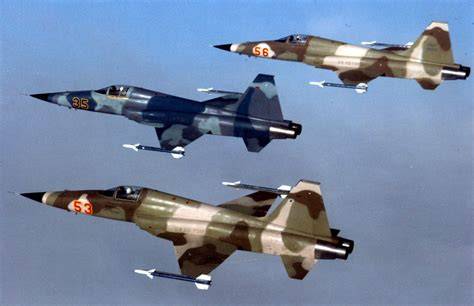
Although the F-5 has disappeared from some of its most famous American assignments, including the Navy’s iconic TOPGUN school, it has not completely vanished from U.S. military training. Navy aggressor operations have continued using F-5s, including aircraft associated with units at Naval Air Station Key West and Naval Air Station Joint Reserve Base New Orleans, while the Marine Corps has also retained F-5s for training duties.
The aircraft’s persistence illustrates an important principle in military aviation: a training aircraft does not need to be technologically superior to the aircraft it is helping pilots defeat. Sometimes its greatest value comes from being different.
An F-5 does not need stealth, advanced electronically scanned radar, or the sensor fusion of an F-35. It needs to provide a credible tactical problem for pilots to solve. That relatively simple requirement has kept this Cold War fighter relevant long after its original combat mission faded.
3. BAE Systems Hawk and the US Navy’s T-45 Goshawk
The BAE Systems Hawk belongs to a later generation of Cold War aircraft, entering service in the 1970s as a dedicated advanced jet trainer. Its American descendant, the T-45 Goshawk, became one of the most important aircraft in the U.S. Navy and Marine Corps pilot-training pipeline.
The distinction matters because the T-45 is not simply an imported Hawk wearing American markings. The aircraft was extensively modified for carrier operations, producing an airframe capable of handling the extraordinary stresses associated with catapult launches and arrested landings.
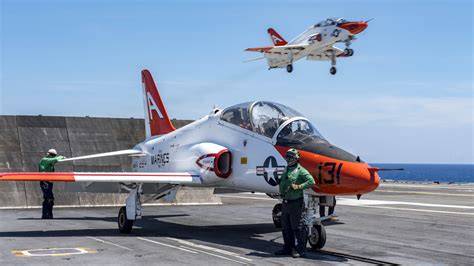
The Navy describes the T-45 as a tandem-seat, carrier-capable jet trainer used to prepare Navy and Marine Corps pilots for jet carrier aviation and tactical strike missions. The aircraft entered operational service in 1991, with later T-45C models receiving a digital cockpit.
Carrier aviation makes the T-45 particularly demanding. A normal runway landing already requires precision, but an aircraft carrier landing leaves almost no room for error. The student must approach accurately, manage speed and angle of attack, and coordinate with the landing signal officer before catching an arresting wire. The aircraft itself must survive repeated high-stress operations.
That explains why the T-45 has remained useful even as combat aircraft have become dramatically more sophisticated. The fundamental skills involved in flying a fast jet remain important regardless of whether the eventual cockpit contains analog instruments, glass displays, or advanced sensor-fusion systems.
In 2026, however, the T-45 is also approaching the next stage of its career. The Navy is examining future training arrangements and aircraft options as it considers how to modernize the jet-training pipeline. The old Hawk-derived platform therefore finds itself in a position similar to the T-38: still highly useful, but increasingly surrounded by a training philosophy designed for a new generation of combat aviation.
4. Aero L-39 Albatros: A Warsaw Pact Trainer in American Training
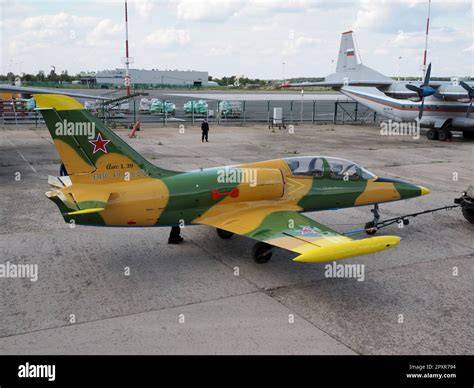
Few aircraft illustrate the strange legacy of the Cold War better than the Aero L-39 Albatros. Designed in Czechoslovakia during the Cold War and introduced in 1972, the L-39 became the standard jet trainer for much of the Warsaw Pact and one of the most widely produced trainer aircraft in aviation history.
For American military training, its value comes from a different direction. L-39s have found work with private defense contractors and specialized aviation organizations, where they can support tactical training, adversary work, flight testing, and other military-related activities.
The aircraft was designed around simplicity. Its single-engine configuration, straightforward systems, rugged construction, and predictable handling helped make it suitable for large-scale military training across countries with widely varying operating environments.
That simplicity remains attractive decades later. Operating a modern fighter as a dedicated training asset can be extraordinarily expensive, especially when the objective is to provide basic or intermediate tactical instruction rather than expose the student to the full capabilities of an advanced combat aircraft.
The L-39 can therefore occupy a useful middle ground. It is fast enough to provide a meaningful jet-training environment, inexpensive enough for repeated sorties, and sufficiently different from American frontline fighters to introduce pilots to unfamiliar aircraft behavior.
Its Cold War origin also makes the aircraft particularly appropriate for certain adversary-training scenarios. A pilot training against a machine derived from a completely different design philosophy encounters a different aerodynamic and tactical problem than when flying against another American-designed aircraft.
The L-39’s continued presence is thus less about nostalgia than economics and training realism. The aircraft survived because it was built simply enough to remain useful long after the geopolitical system that created it disappeared.
5. Hawker Hunter: A Frontline Fighter Reborn as a Training Asset
The Hawker Hunter is the oldest aircraft on this list and arguably the most surprising. Its roots stretch back to the late 1940s, with the prototype making its first flight in 1951 and the production aircraft entering Royal Air Force service in the 1950s. Before becoming a specialized training asset, the Hunter was a genuine frontline fighter and fighter-bomber.
Nearly 2,000 Hunters were produced, and the type served with numerous air forces around the world. It also accumulated extensive combat experience, including operations during the 1965 and 1971 Indo-Pakistani wars and the 1967 Six-Day War.
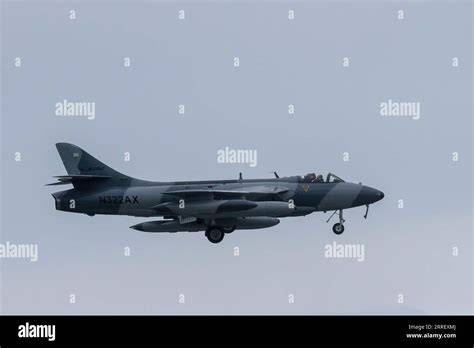
The Hunter has long since disappeared from active military service as an operational fighter. Its continued relevance to American military training comes through private defense contractors that operate upgraded examples for specialized missions.
Companies including Airborne Tactical Advantage Company, Hawker Hunter Aviation, and Lortie Aviation have operated Hunter fleets supporting military organizations with tactical training, threat simulation, and flight trials. The aircraft’s role is therefore not to teach a new pilot the fundamentals of flying a fighter. Instead, it can provide a realistic airborne training problem for pilots who already possess advanced skills.
That distinction is important. Modern air forces increasingly rely on contractors to provide some adversary and tactical training because doing so can preserve frontline fighter availability and reduce operating costs. A contractor-operated Hunter can perform training missions without consuming the service life of an F-35, F-16, F/A-18, or other high-value combat aircraft.
The Hunter’s survival is therefore one of the clearest examples of how an aircraft can have an entirely different second life after leaving military service.
6. Dassault/Dornier Alpha Jet: Cold War Engineering With a New Role
The Dassault/Dornier Alpha Jet represents another unusual Cold War success story. Developed jointly by French and German aerospace industries, the aircraft entered service in the late 1970s as both a trainer and a light attack aircraft.
France needed a modern jet trainer to replace aging aircraft such as the Lockheed T-33 and Fouga Magister, while West Germany faced the challenge of finding a more appropriate aircraft for roles that had previously exposed the difficult Lockheed F-104 Starfighter to demanding low-level missions.
The Alpha Jet offered a practical compromise. Its relatively simple construction, twin-engine arrangement, and agile handling made it suitable for advanced training while also giving it useful light-attack capabilities.
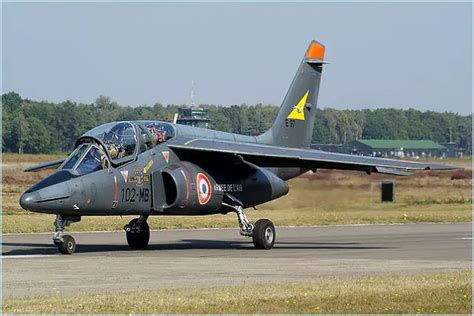
One of its most interesting design features was the placement of its wings high on the fuselage. This helped keep the engines away from runway debris, an important consideration for European military planners who envisioned operations from damaged or improvised wartime airfields.
The twin-engine arrangement also provided a degree of redundancy. For a training aircraft, that can be valuable because students are still developing the judgment required to manage serious emergencies. For a combat aircraft, an additional engine could improve the chances of returning after sustaining damage.
The Alpha Jet’s importance to the broader European aerospace industry was equally significant. France and Germany shared development costs at a time when both countries were trying to strengthen domestic aerospace capabilities against intense American competition. The cooperation demonstrated how joint European programs could spread development expenses while creating aircraft suited to regional operational requirements.
In American military aviation, Alpha Jets have appeared primarily through specialized contractor and training roles rather than as a standard U.S. undergraduate trainer. That makes the aircraft a somewhat different case from the T-38 and T-45, but its continued presence in military-related training demonstrates the wider ecosystem surrounding modern U.S. aircrew preparation.
Why Cold War Jets Still Matter in 2026
The survival of these aircraft is not simply an accident of history. Training is one of the areas where older technology can remain surprisingly effective. A pilot learning formation flying does not necessarily need a fifth-generation fighter. A fighter pilot practicing against an aggressor does not necessarily need another F-35. A student learning high-performance jet handling can gain enormous value from an aircraft that costs substantially less to operate.
There is also an important difference between combat technology and training technology. Combat aircraft must survive against increasingly sophisticated threats, whereas training aircraft primarily need to reproduce the physical and tactical demands that students must master.
That is why the arrival of the T-7A is so significant. The Red Hawk is designed to narrow the technological gap between the training environment and the operational aircraft students will eventually fly. Its arrival marks the beginning of the end for the T-38, but it does not erase the underlying reasons that allowed the Talon to survive for more than 60 years.
The same logic applies to the T-45, F-5, L-39, Hunter, and Alpha Jet. Each aircraft occupies a different niche, and several are no longer operated directly by the U.S. military. Yet they remain part of the wider training infrastructure that supports American airpower.
The End of an Era Is Finally Becoming Visible
In 2026, the transition is no longer theoretical. The T-7A Red Hawk has entered Air Force service, instructor pilots have begun qualifying on it, and production has received formal approval. The Air Force says the new aircraft is intended to replace the aging T-38 as the advanced trainer for future fighter and bomber pilots.
But the broader lesson is more interesting than any individual replacement program. The United States did not keep these Cold War aircraft flying because it lacked access to modern technology. It kept them because they continued to deliver useful training at a manageable cost.
That era is now closing. T-38s, F-5s, Hawks, L-39s, Hunters, and Alpha Jets belong to a generation shaped by the Cold War, yet their training value survived long after the Cold War itself ended. As the T-7A, advanced simulators, networked training systems, and fifth-generation combat aircraft reshape the pilot pipeline, these aging jets will gradually disappear from the American military training ecosystem.
For now, however, they remain an extraordinary bridge between two eras of aviation. The pilots preparing to fly America’s most advanced fighters in 2026 may still learn some of their most important lessons from aircraft conceived when the Soviet Union, supersonic flight, and the nuclear confrontation defined the future of military aviation.
And that may be the most remarkable thing about these old jets: after surviving decades of technological change, they are finally being retired not because they stopped being useful, but because the definition of useful training is changing around them.