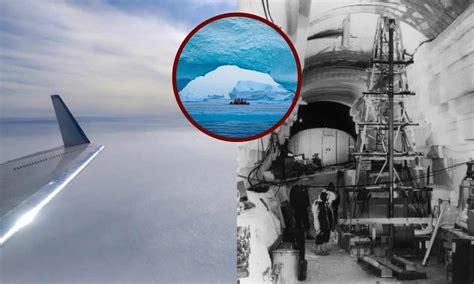
In an astonishing convergence of aerospace exploration and Cold War history, NASA has unveiled a long-lost, 100-foot-deep military base buried beneath Greenland’s immense ice sheet. This unexpected revelation thrusts a secretive chapter of U.S. military ambition back into the spotlight, reminding us that the frozen north once played host to a top-secret American installation now frozen in time.
The Discovery: Radar Images That Unveiled History
What began as a scientific mission to better understand climate patterns resulted in the resurfacing of a Cold War relic. NASA scientist Chad Greene, while analyzing radar images of the Greenland Ice Sheet, identified a strange geometric anomaly buried deep beneath the surface. Further analysis revealed that the structure was not a natural formation, but a man-made underground military base, constructed by the United States Army Corps of Engineers in the late 1950s and early 1960s.
This buried installation, known as Camp Century, dates back to a highly experimental era in U.S. defense policy. Initially classified, the base had long vanished from modern maps and public discourse. That is, until NASA’s radar peered through layers of compressed snow and revealed the skeletal remains of a massive subterranean complex.
The Origins of Camp Century: Engineering on the Edge of Feasibility
Camp Century was not merely a research outpost; it was the physical manifestation of Cold War ingenuity, paranoia, and technological experimentation. Built between June 1959 and October 1960, the facility was part of a joint initiative between the United States and Denmark under the Defense of Greenland Agreement of 1951. The accord permitted U.S. military activity on Danish territory, aligning with broader NATO interests in countering Soviet aggression.
However, the base’s most intriguing role was in support of Project Iceworm, a covert plan to establish a network of ballistic missile silos buried beneath Greenland’s ice. These silos would have allowed the U.S. to discreetly target Soviet positions with nuclear warheads, thereby enhancing its strategic deterrent during the peak of Cold War tensions.
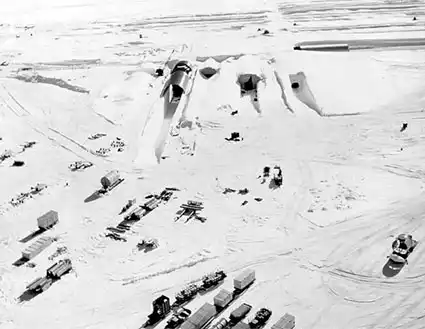
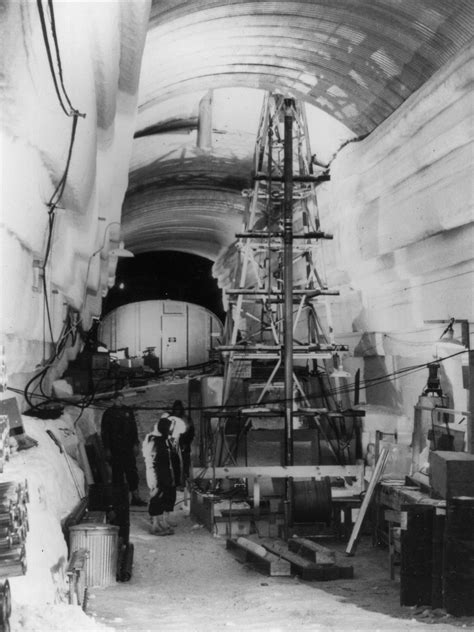
Camp Century was built into the very heart of the ice, a feat that required unparalleled logistical and engineering efforts. The construction involved transporting 6,000 tons of materials, including prefabricated buildings, generators, and even a nuclear reactor — all moved painstakingly across the icy terrain by bobsled at a glacial pace of 2 mph. Every inch of the 1,000-foot snow tunnel, dubbed Main Street, was manually excavated by U.S. soldiers.
Life at the Edge: Living Conditions and Operation
The idea of a city beneath the ice captured the imagination of military strategists and engineers alike, but the reality was starkly different. Camp Century featured sleeping quarters, research labs, a kitchen, recreation areas, and a power plant — all housed in narrow tunnels and prefabricated structures carved into the ice.
The most technologically ambitious aspect of the base was its portable nuclear reactor, which supplied electricity and heat. It was among the earliest practical deployments of mobile nuclear energy and allowed the camp to function independently of outside power sources.
Despite the innovation, life in Camp Century was grueling. Personnel had to contend with extreme cold, isolation, and the psychological stress of living in a structure surrounded by unstable ice. Over time, persistent structural failures due to shifting and cracking in the ice walls demanded ongoing, intensive repairs.
Abandonment: When Ice Proved Mightier than Steel
Camp Century was a technical marvel — but it was also a deeply flawed experiment. The very foundation upon which it was built — Greenland’s ice sheet — proved to be far too unstable for long-term use. The relentless movement of the ice began to buckle tunnels, crush walls, and compromise load-bearing structures. Maintaining the base became an expensive and dangerous endeavor.
After just eight years of operation, Camp Century was decommissioned in 1967. The U.S. military quietly withdrew, sealing the base beneath snow and abandoning any further ambitions related to Project Iceworm. The nuclear reactor was removed, but much of the infrastructure, waste, and materials were simply left behind, eventually buried under decades of snowfall.
Secrets Under the Ice: Environmental and Geopolitical Implications
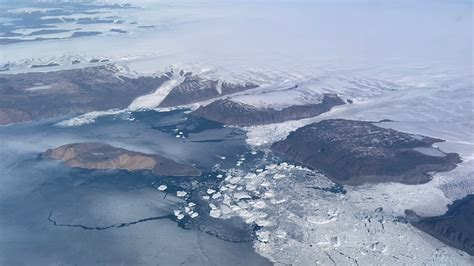
NASA’s rediscovery of Camp Century is more than just an archaeological curiosity. It raises significant environmental concerns about what lies beneath the melting Greenland Ice Sheet. Scientists warn that the retreat of the ice, accelerated by global climate change, could eventually expose radioactive waste, diesel fuel, and chemical pollutants left behind at the site.
Greenland’s ice, once thought to be a permanent tomb, is now rapidly thinning. According to climate models, these buried remnants may be released into the environment within this century, prompting urgent discussions about international responsibility and remediation.
A Cold War Time Capsule in the Modern World
The story of Camp Century — unearthed by a space agency renowned for looking skyward — serves as a stark reminder that human history is just as layered beneath our feet as it is above our atmosphere. What NASA revealed is not merely an engineering oddity, but a frozen testament to Cold War ambitions, military secrecy, and human hubris.
It also exemplifies how 21st-century technologies, such as ice-penetrating radar and satellite imagery, are uncovering new insights into the past. NASA’s Earth Science Division, often overlooked amid high-profile missions to Mars and beyond, continues to demonstrate its transformative power in rewriting the narratives of human history on Earth.
Conclusion: What Lies Ahead
As climate change continues to reshape the Arctic landscape, Camp Century may no longer remain a hidden relic. Scientists, environmental agencies, and international bodies must prepare for the eventual exposure of toxic waste and the potential geopolitical disputes surrounding responsibility.
Meanwhile, NASA’s discovery acts as a call to re-examine Cold War legacies — not only in dusty archives but beneath the thawing polar ice caps. What else remains buried, both figuratively and literally, waiting to be uncovered by the eyes in the sky?
The past, it seems, is never as far away as we think — especially when the ice begins to melt.