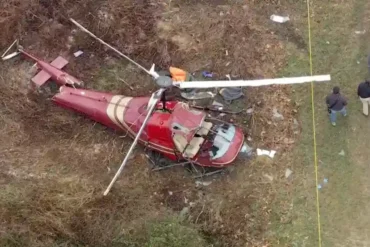
A Cessna 150 pilot was killed and two Pennsylvania State Police troopers were injured Wednesday evening when the small fixed-wing aircraft collided with a State Police Bell 407 helicopter at Carlisle Airport in Pennsylvania. The crash occurred shortly before 7:00 p.m. local time, creating a major emergency response at the small general aviation airport.
The Cessna 150, registered as N23330, reportedly struck the police helicopter from behind while the Bell 407, registered as N873ST, was conducting routine training operations. Preliminary information indicates that the helicopter was hovering only a few feet above a grass area when the collision occurred.
Pennsylvania State Police Commissioner George Bivens said the Cessna approached from the rear, potentially leaving the helicopter crew with little opportunity to see the aircraft before impact. He also said the Cessna appeared to travel along the runway before suddenly veering sharply to the right for reasons that remained unknown.
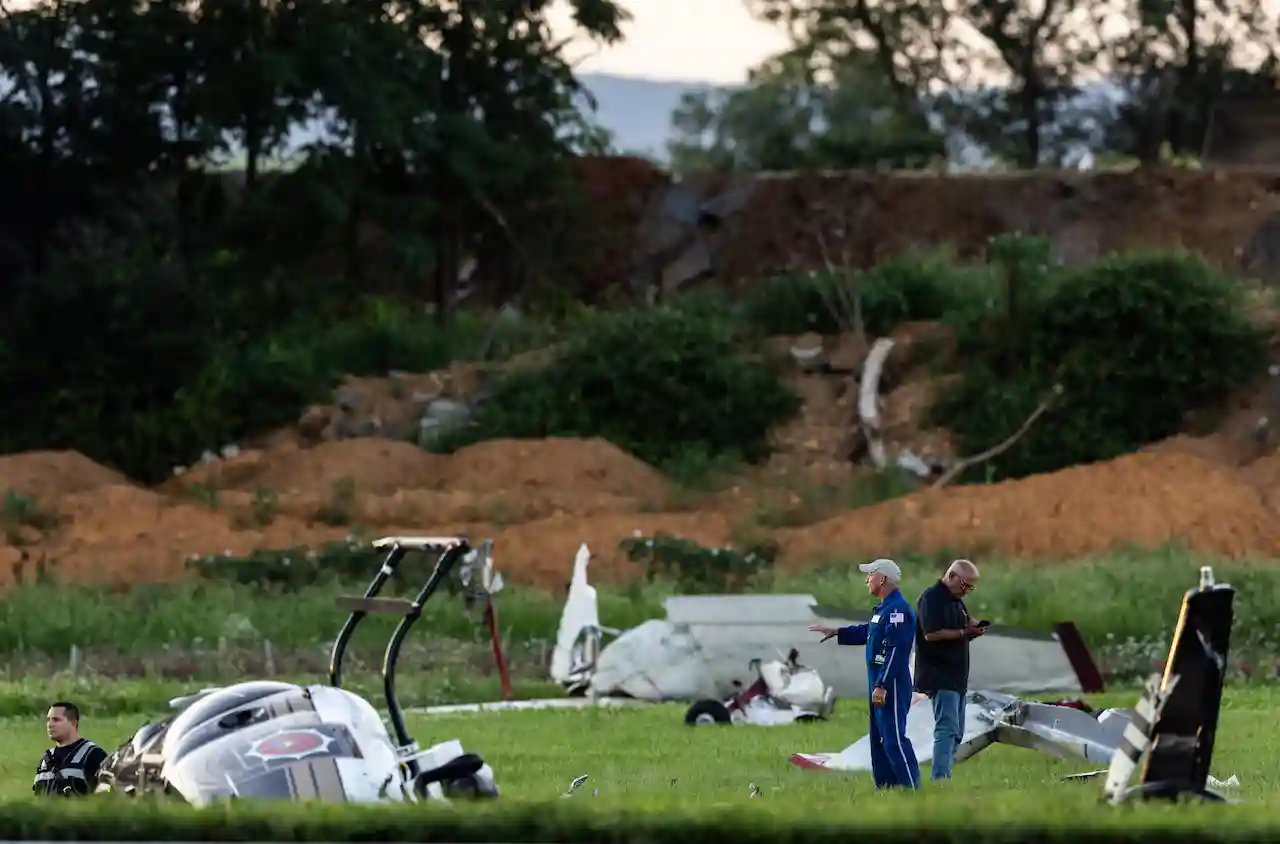
One Pilot Killed as Bell 407 Overturns
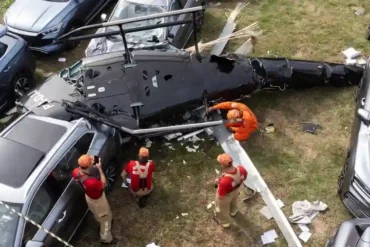
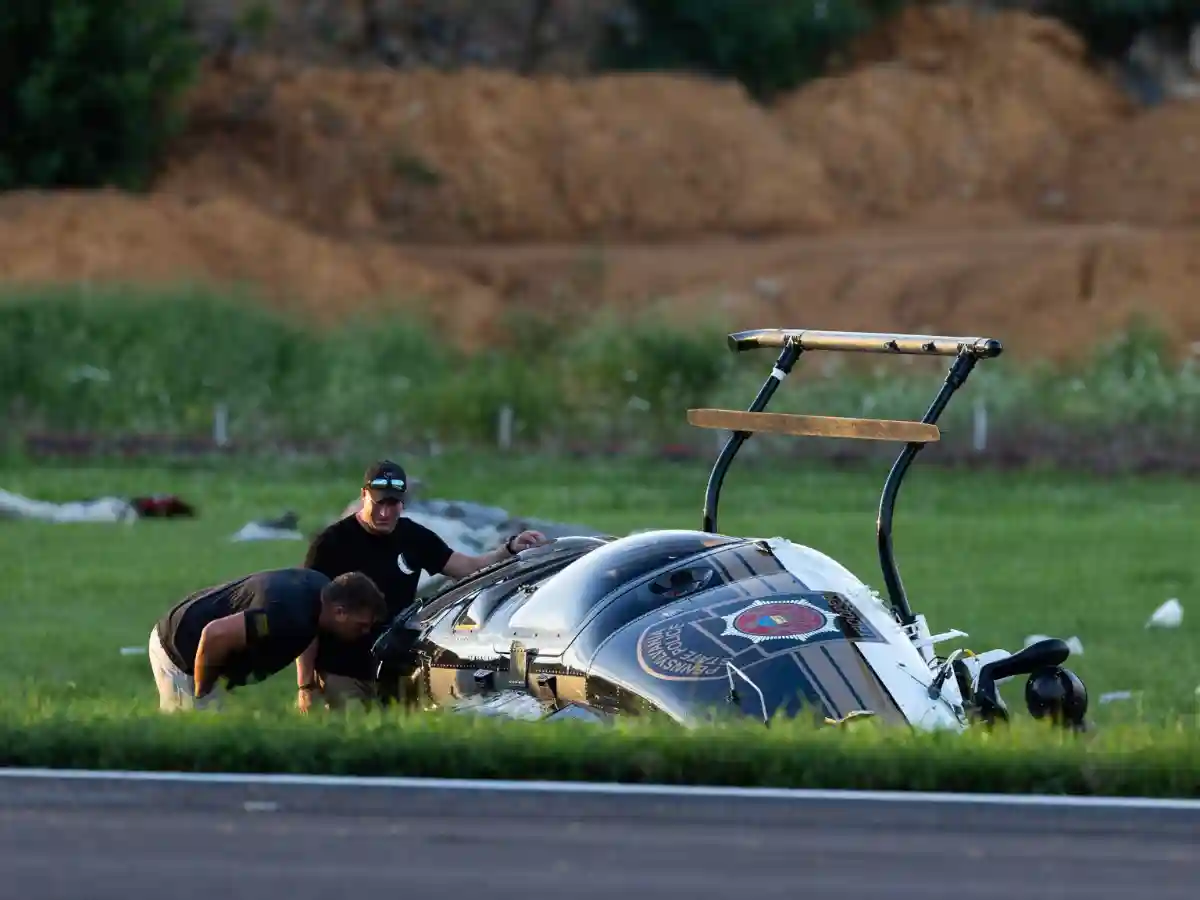
The collision caused the Pennsylvania State Police Bell 407 to overturn onto its side. Two troopers aboard the helicopter, Corporal Bryce Corman and Trooper Jason Mills, were briefly trapped inside the damaged aircraft.
Both troopers were ultimately able to escape through a window. They were transported to a local hospital for treatment and were reported to have suffered minor injuries. The Cessna pilot, believed to have been the only person aboard the airplane, did not survive the crash and died at the scene.
Images and video from the aftermath showed a substantial emergency response surrounding the airport. Investigators are expected to examine the positions of the aircraft, runway activity, available video footage, radio communications, weather conditions and other evidence to determine how the collision developed.
Carlisle Airport Has No Control Tower
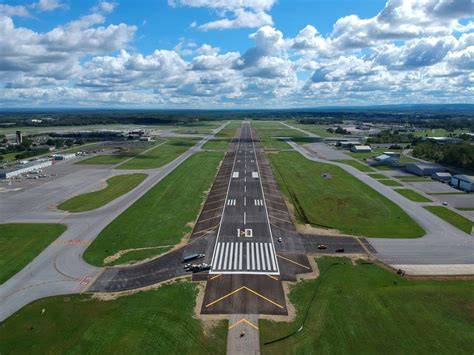
Carlisle Airport is a non-towered airport with a single runway, designated 10/28, measuring more than 4,000 feet in length. Unlike major controlled airports, it does not have an air traffic control tower directing aircraft movements.
Pilots operating at non-towered airports generally rely on established radio procedures and see-and-avoid principles to maintain awareness of other aircraft. There is also no airport-based radar service directing traffic around the runway environment. That makes accurate position reporting, visual scanning and coordination particularly important when fixed-wing aircraft and helicopters are operating in the same area.
The airport primarily accommodates general aviation aircraft, with single-engine airplanes representing a significant portion of its traffic. Helicopters and multi-engine aircraft also operate from the field, creating an environment in which different aircraft types may share the same relatively confined airspace.
Pennsylvania State Police Aviation Unit Under Investigation
The Pennsylvania State Police Aviation Section, established in 1968, operates helicopters and fixed-wing aircraft for a range of missions. Its responsibilities include search and rescue, aerial surveillance and law-enforcement support.
The agency’s Bell 407 helicopters have been used for these demanding operational roles for years. The aircraft involved in Wednesday’s accident was part of a fleet that has undergone significant operational use since the helicopters were delivered between 2013 and 2014.
The National Transportation Safety Board arrived at Carlisle Airport overnight to begin examining the crash, with assistance from the Federal Aviation Administration. Investigators are expected to reconstruct the final moments of both aircraft and establish why the Cessna moved into the helicopter’s path.
Crash Renews Attention on Mixed Aircraft Operations
The Carlisle collision comes during heightened scrutiny of situations involving helicopters and fixed-wing aircraft. That attention intensified after the January 29, 2025 collision near Ronald Reagan Washington National Airport, when a U.S. Army Black Hawk helicopter collided with an American Eagle CRJ700 operated by PSA Airlines. All 67 people aboard the two aircraft were killed.
That disaster prompted reviews of procedures governing helicopter and airplane operations in congested airspace, along with additional measures around Washington, D.C. The Carlisle accident occurred in a very different operating environment, but it again highlights the importance of traffic awareness, communication and separation when different aircraft share the same airspace.
The investigation into the Cessna 150 and Bell 407 collision will determine whether operational procedures, visibility, aircraft positioning, pilot awareness or another factor contributed to the fatal accident. Until investigators complete that work, the exact cause remains undetermined.