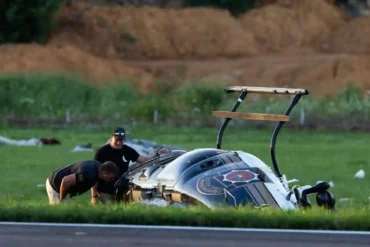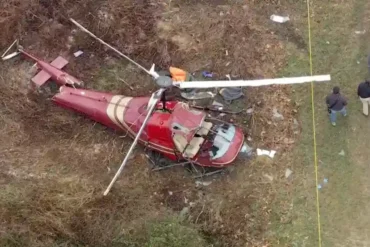
A tragic helicopter collision over Rio de Janeiro has claimed the lives of six people, including American singer Oliver Tree and Argentine YouTuber Gaspar Prim, in one of Brazil’s most devastating rotorcraft accidents in recent years. The fatal crash occurred on the morning of June 14 in the Recreio dos Bandeirantes district, a busy area in the western part of the city known for significant helicopter activity. Authorities confirmed that two helicopters collided in midair before crashing to the ground, leaving no survivors.
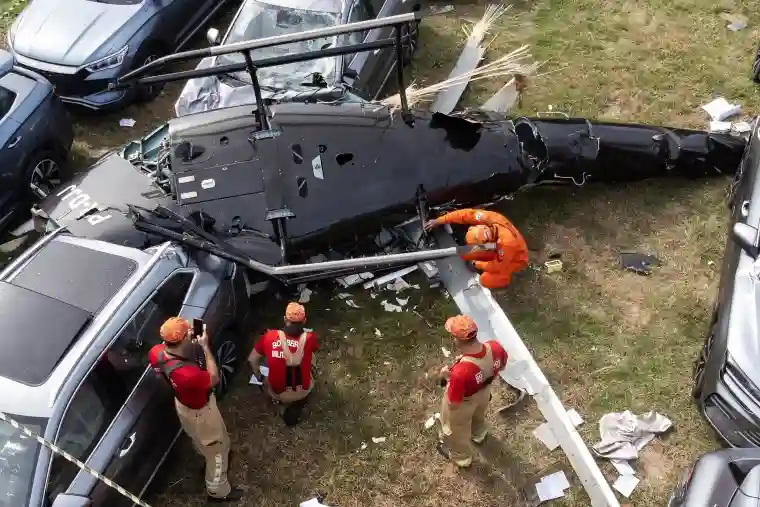
The accident immediately captured international attention due to the prominence of several victims and the dramatic destruction that followed the impact. According to Brazilian officials, the aircraft involved were a Bell 206B JetRanger III registered as PP-MAC and an Aérospatiale AS350B2 Écureuil registered as PR-DJJ. Both helicopters were destroyed in the collision, and emergency crews arriving at the scene found extensive wreckage scattered across a wide area.
Investigators reported that the collision occurred at approximately 8:59 AM local time. Emergency responders rushed to the crash site within minutes, but all occupants aboard both aircraft were pronounced dead at the scene. The force of the crash and the resulting fires created a challenging environment for rescue and recovery teams, with debris spread across nearby property and surrounding infrastructure.
Victims Identified Following Deadly Helicopter Crash
Authorities later identified the six victims as Oliver Tree Nickel, Gaspar Prim, Lucas Vignale, Lucas Brito Chaves, and pilots Alexandre Souza and Charles Marsillac. The loss of Oliver Tree drew significant global attention, as the American musician had built an international fan base through hit songs including Life Goes On and Miss You. Reports indicated that he was in Brazil as part of his ongoing world tour.
Gaspar Prim, widely recognized online under the name “Gaspi,” was also among those killed. The Argentine content creator had amassed a substantial audience across YouTube and social media platforms, becoming a well-known digital personality throughout Latin America. Tributes from fans, fellow creators, and members of the entertainment industry began appearing online shortly after news of the tragedy emerged.
The deaths of the passengers and crew have generated widespread mourning in multiple countries, reflecting the international reach of the victims’ careers and public profiles. Messages of condolence have continued to circulate as authorities work to determine exactly how the accident unfolded.
Fire and Destruction at the Impact Site
One of the helicopters reportedly crashed into a parking and vehicle storage area, triggering a major fire that rapidly spread among nearby vehicles. Local reports indicated that approximately 20 cars were destroyed as flames engulfed the area following the impact.
Images and videos circulating online appeared to show thick smoke rising from the crash scene, with firefighters battling intense flames amid scattered wreckage. Reports from Brazilian media suggested that the crash involved a facility containing BYD electric vehicles, a factor that may have complicated firefighting operations due to the unique hazards associated with battery-related fires.
The extensive fire damage highlighted the severity of the accident and demonstrated how aviation incidents in densely populated urban areas can create risks extending far beyond the aircraft themselves. Authorities quickly secured the location to protect evidence and ensure public safety while investigators began their work.
Collision in One of the World’s Busiest Helicopter Environments
Rio de Janeiro possesses one of the busiest urban helicopter networks anywhere in the world. The city’s geography, traffic congestion, tourism industry, and concentration of affluent neighborhoods contribute to exceptionally high levels of rotorcraft activity throughout the day.
Helicopters are frequently used by business executives, tourists, private owners, and service operators seeking faster transportation across the sprawling metropolitan region. As a result, the skies above Rio often contain multiple aircraft operating simultaneously along heavily traveled corridors.
The Bell 206B JetRanger III involved in the crash was manufactured in 1999 and is typically configured for one pilot and four passengers. The AS350B2 Écureuil, commonly known in Brazil as the Esquilo, was manufactured in 2012 and can accommodate one pilot and up to five passengers. Both aircraft types are widely used around the world for private transportation, aerial observation, utility work, and tourism-related operations.
Officials stated that both helicopters possessed valid documentation and current airworthiness certifications. While neither aircraft was authorized for air taxi services, investigators have not yet indicated whether either helicopter was conducting commercial activities at the time of the collision.
Investigation Focuses on Flight Paths and Communications
Brazilian aviation authorities have launched a comprehensive investigation into the circumstances surrounding the crash. The Aviation Accident Investigation and Prevention Center (CENIPA), along with regional specialists from SERIPA III, has begun collecting evidence, documenting wreckage positions, and preserving critical information for technical analysis.
Investigators are expected to review flight trajectories, radio communications, maintenance records, operational procedures, and weather conditions present during the morning of the accident. Particular attention will likely be directed toward determining how two helicopters operating in the same airspace came into conflict and whether any procedural, technical, or environmental factors contributed to the collision.
According to aviation safety records, separate accident investigations have been opened for both aircraft involved. At this stage, authorities have not released preliminary conclusions regarding altitude separation, flight plans, pilot communications, or other key operational details.
Questions Remain as Brazil Awaits Answers
The Rio de Janeiro helicopter collision stands among the deadliest rotorcraft accidents in Brazil in recent years and has renewed scrutiny of helicopter traffic management in major urban centers. Aviation experts will closely follow the investigation as authorities attempt to reconstruct the final moments before impact.
While preliminary findings may emerge in the coming weeks, a complete final report could take significantly longer. Until then, many questions remain unanswered. What is already clear, however, is that the accident has left a profound impact on the aviation community, the entertainment world, and countless fans mourning the sudden loss of six lives in a devastating midair collision above one of Brazil’s most recognizable cities.