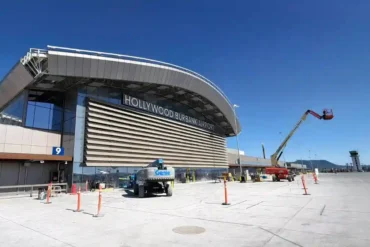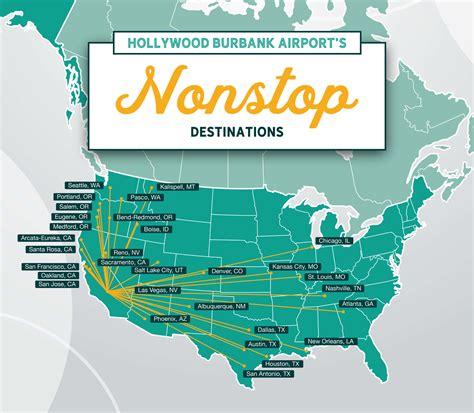
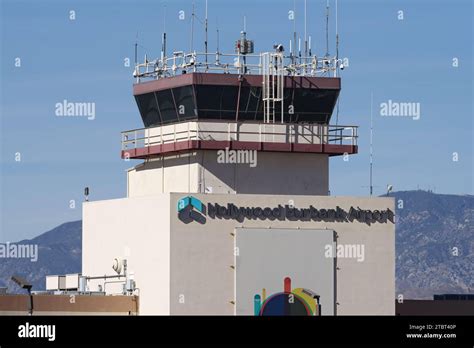
The spotlight on Hollywood Burbank Airport (BUR) has intensified after U.S. National Transportation Safety Board (NTSB) Chair Jennifer Homendy suggested it could become the site of the next major midair collision. The comment sent shockwaves through aviation circles and raised public anxiety about safety in one of Southern California’s busiest and most constrained airspaces. Airport officials, however, have responded forcefully, reiterating that safety remains the airport’s top priority and underscoring the Federal Aviation Administration’s (FAA) central role in managing airspace risk.
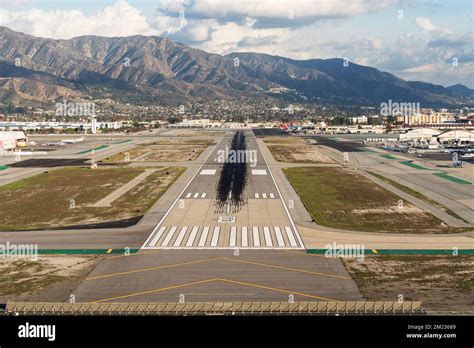
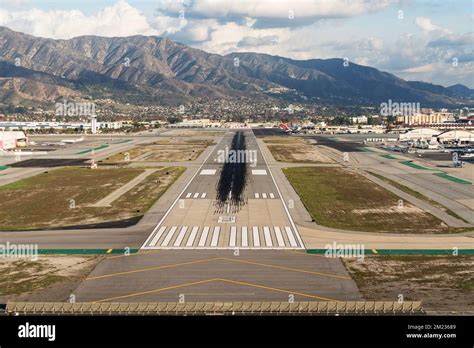
Burbank’s operating environment is famously complex. Situated in a dense urban corridor, the airport handles commercial traffic, private aviation, helicopters, and training flights, all within tightly controlled vertical and lateral boundaries. Unlike sprawling international hubs with wide safety buffers, BUR’s short runways and compressed arrival and departure corridors leave minimal margin for procedural deviation. This intricate choreography places extraordinary demands on air traffic controllers and flight crews alike.
The airport has also been identified as a “hotspot” due to overlapping traffic with nearby Van Nuys Airport (VNY), one of the busiest general aviation airports in the world. The proximity of VNY, less than ten miles away, creates intersecting flight paths that require constant vigilance. Helicopter corridors threading through Los Angeles add yet another layer of complexity, with aircraft of vastly different speeds and flight profiles sharing congested airspace.
Rising Anxiety After Recent Midair Tragedies
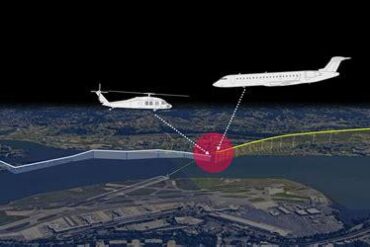
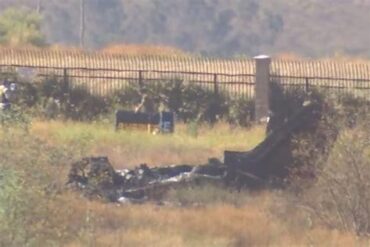
Concerns over midair collisions are not theoretical. They have been amplified by recent tragedies, including the deadly crash involving American Airlines Flight 5342 and a U.S. Army helicopter near Washington, D.C., which killed 67 people. That accident highlighted systemic weaknesses in airspace design, oversight, and risk management, sparking renewed scrutiny of congested urban airports nationwide.
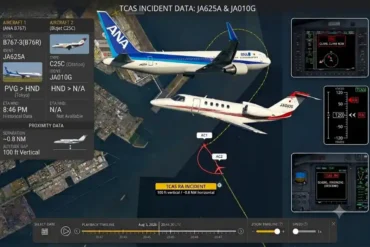
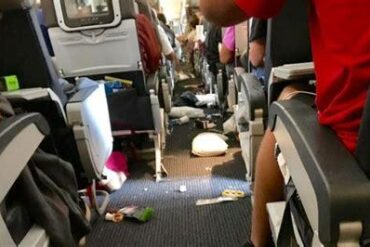
In the aftermath, aviation regulators and safety experts have been combing through data to identify high-risk locations. Burbank has surfaced repeatedly due to its near-miss record. Since 2021, six potentially critical incidents have been logged in the Aviation Safety Reporting System, including one last summer when a Southwest Boeing 737 took evasive action to avoid a private jet. These close calls have fueled speculation that the airport’s operational model is stretched to its limits.
Airport Officials Push Back on Safety Concerns
Burbank Airport officials have rejected the notion that the facility is on the brink of catastrophe. They emphasize that safety is deeply embedded in airport operations and that once aircraft leave the gate, responsibility shifts to the FAA and the national airspace system. The airport’s leadership has framed Homendy’s remarks as a call for broader systemic reform rather than a condemnation of BUR’s local management.
The airport’s stance highlights a critical nuance in aviation governance. Airports manage ground infrastructure and coordination, but the FAA controls airspace design, separation standards, and controller staffing. This division of responsibility means that solutions to collision risks often require federal-level policy changes, not just local airport initiatives.
Congested Airspace and Technical Constraints
The geometry of Burbank’s airspace is unforgiving. Narrow approach paths, steep terrain constraints, and dense urban development limit the flexibility of flight procedures. Controllers must sequence aircraft precisely, accounting for commercial jets, private planes, and helicopters operating at different altitudes and speeds. Even small deviations can cascade into dangerous situations.
In recent years, the FAA has taken steps to reduce risk, including lowering Van Nuys traffic patterns by 200 feet and dedicating additional resources to monitoring TCAS alerts. These measures have reportedly reduced the frequency of collision warnings, but critics argue that incremental tweaks may not be enough in a system already operating near saturation.
Systemic Issues and FAA Criticism
NTSB Chair Homendy has been blunt in her assessment of the FAA’s safety culture, accusing the agency of failing to act decisively on known risks. Her warning that “nobody at the FAA is paying attention” reflects frustration with slow-moving reforms and a reactive rather than proactive safety posture. Investigations into recent accidents have pointed to systemic failures, including outdated airspace design and insufficient risk assessment frameworks.
The spotlight on Burbank is therefore part of a broader reckoning with how the United States manages complex urban airspace. As traffic volumes rebound and urban air mobility concepts emerge, the margin for error continues to shrink.
Staffing Shortages and Operational Strain
One of the most troubling revelations in recent years has been the shortage of air traffic controllers. During a federal government shutdown, Burbank reportedly faced periods with no controllers on duty due to absences and staffing constraints. Such scenarios underscore the fragility of the system and the reliance on human expertise to maintain safety in high-density environments.
Controller fatigue, staffing gaps, and training pipelines are now central topics in aviation safety debates. Burbank’s situation serves as a microcosm of national challenges, where demand for air travel outpaces the infrastructure and workforce needed to support it safely.
Public Perception and Airline Concerns
Airlines operating at Burbank have privately voiced concerns to regulators, worried that the airport’s constrained environment increases operational risk. While commercial carriers maintain strict safety standards, the mix of traffic types and proximity to general aviation create scenarios that require constant coordination and real-time decision-making.
For passengers, headlines about near-misses and warnings from top safety officials can be unsettling. Airport officials have attempted to reassure travelers by emphasizing that aviation remains one of the safest modes of transport and that multiple layers of redundancy and oversight are designed to prevent accidents.
Lessons from Past Incidents and Future Reforms
The aviation industry often evolves through lessons learned from accidents and near-misses. Burbank’s challenges have sparked discussions about redesigning airspace corridors, enhancing controller tools with artificial intelligence, and integrating advanced surveillance systems to provide earlier conflict alerts. These innovations could transform how congested airports manage risk.
Experts also argue for a cultural shift within regulatory agencies, moving from compliance-based oversight to predictive risk management. Data-driven modeling, real-time monitoring, and transparent reporting could help identify hazards before they escalate into disasters.
A Balancing Act Between Capacity and Safety
Burbank’s predicament illustrates a fundamental tension in modern aviation: balancing capacity with safety. Urban airports are critical economic engines, yet their physical constraints make them vulnerable to systemic risks. Expanding runways or relocating traffic is often politically and logistically impossible, leaving regulators to optimize existing systems.
For now, Burbank continues to operate under intense scrutiny, with regulators, airlines, and the public watching closely. The airport’s leadership insists that safety is non-negotiable, while critics call for more aggressive federal action to address systemic vulnerabilities.
The Road Ahead for Burbank and U.S. Airspace Safety
The conversation around Hollywood Burbank Airport is ultimately about more than one facility. It is about how the aviation system adapts to growing complexity, technological change, and public expectations of zero-risk travel. Burbank’s dense airspace, near-miss history, and regulatory scrutiny make it a case study in modern aviation risk management.
Whether it becomes a catalyst for sweeping reforms or remains a cautionary tale depends on how quickly policymakers, regulators, and industry stakeholders act. What is clear is that the stakes are high, and the margin for complacency is gone. Safety, as Burbank officials emphasize, must remain the top priority—not just in words, but in structural, systemic action.