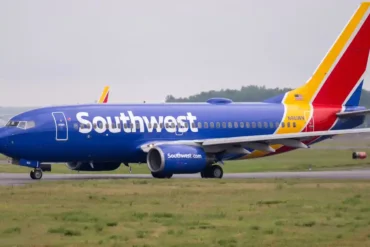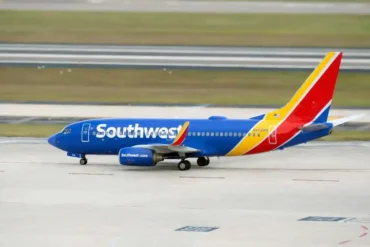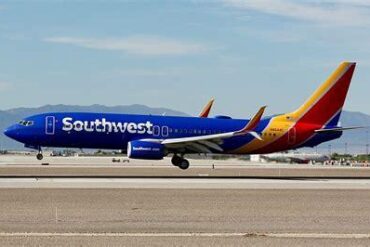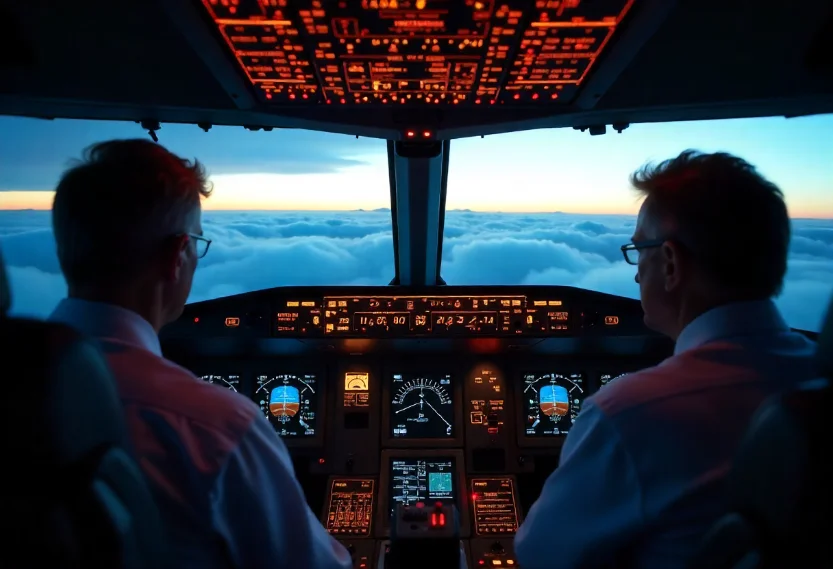
Southwest Airlines Flight 1496 turned into a nightmare for its passengers on July 26, 2025, after a near-collision warning forced the aircraft to perform a rapid emergency descent just minutes into its journey from Burbank, California to Las Vegas, Nevada. What began as a routine 45-minute hop across the Mojave Desert quickly unraveled into a terrifying ordeal that left passengers screaming, flight attendants injured, and aviation authorities scrambling for answers.
A Routine Takeoff Shattered by Crisis
At 11:00 a.m. local time, Flight 1496 departed from Hollywood Burbank Airport under seemingly normal conditions. The Boeing 737 aircraft, operated by Southwest Airlines, was packed with weekend travelers, many of whom were headed for a short getaway to Las Vegas. Weather reports showed clear skies, and the ascent proceeded smoothly—until about ten minutes into the flight.
Without warning, the aircraft suddenly jolted and began a steep descent. Passengers later described the sensation as a rollercoaster-style drop that left many of them airborne within the cabin. Several were flung against the ceiling, while others screamed in panic. The descent was so severe and abrupt that two flight attendants sustained injuries, with one reportedly striking their head and the other requiring medical attention upon landing.
Collision Warning Triggers Emergency Descent
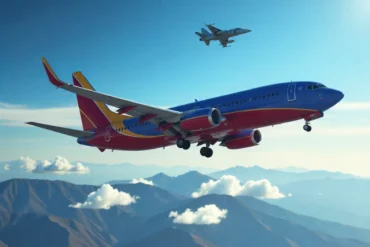
The terrifying maneuver wasn’t turbulence. It was triggered by two onboard Traffic Collision Avoidance System (TCAS) alerts, warning the flight crew of an aircraft nearby that was on a potential collision course. With just seconds to spare, the pilots executed an emergency descent and lateral deviation to evade the unidentified aircraft. The maneuver, although violent, was successful in avoiding disaster.
Passengers recounted the moment with palpable fear. “We felt the plane drop what felt like 30 feet in an instant,” said one shaken traveler. “It wasn’t just shaking—it was like freefall. People were screaming, some hit the roof. It was chaos.”
Chaos Inside the Cabin
In the moments following the drop, cabin crew members worked feverishly to regain order. Oxygen masks did not deploy, as the descent was not due to cabin pressure issues but rather to avoid collision. Passengers were urged to remain seated and buckle up, though many had already sustained bumps and bruises from being unrestrained during the sudden maneuver.
One passenger noted that a flight attendant who had been serving drinks at the time was launched into the air, slamming into the ceiling panel. Another crew member appeared visibly dazed and needed assistance from colleagues and passengers to remain upright. Both attendants were given medical evaluation after the flight’s arrival.
Pilot Addresses Cabin: Communication Breakdown and Near Miss
Once the aircraft stabilized and resumed its climb, the captain came over the intercom to inform passengers of the seriousness of the event. According to multiple passengers, the pilot confirmed the plane had come alarmingly close to another aircraft and that communication with air traffic control had been lost at a critical moment.
This revelation struck a chilling chord among passengers. Not only had they narrowly avoided a catastrophic collision, but they had also done so amid a momentary blackout in coordination with ground control. “It’s terrifying to think that something so vital could just cut out when it matters most,” said one passenger. “We were completely in the dark.”
FAA Launches Investigation into Near-Miss
The Federal Aviation Administration (FAA) quickly launched a formal investigation. Preliminary findings confirmed that another aircraft was in dangerously close proximity to Flight 1496 at the time of the emergency descent. The FAA is probing both the aircraft’s flight path and the reported lapse in communication with the Los Angeles Air Route Traffic Control Center, which oversees that airspace sector.
Investigators are also reviewing radar data, TCAS logs, and air traffic transcripts to piece together how the event unfolded and to determine whether human error, technical malfunction, or procedural oversight contributed to the breakdown.
Southwest Airlines has pledged full cooperation with authorities and emphasized that its pilots followed all emergency protocols to the letter. In a statement, the airline commended the crew’s “professionalism and rapid decision-making under extreme pressure,” crediting them with preventing a possible tragedy.
Injured Crew Members and Passenger Trauma
While no passengers suffered life-threatening injuries, several reported lingering physical discomfort and emotional distress. The two injured flight attendants were treated by medical teams at Harry Reid International Airport in Las Vegas upon arrival. Their injuries, while not classified as critical, underscored the severity of the cabin chaos.
Mental health professionals have since urged the airline industry to offer post-trauma counseling for passengers involved in such incidents. Given the nature of modern air travel, events like this—though rare—can leave lasting psychological scars.
Air Traffic Control Under Scrutiny
Central to the FAA’s investigation is the role of air traffic control in the unfolding emergency. The apparent communication blackout raises critical questions about redundancy systems and risk mitigation protocols. In complex, high-density airspace like that of Southern California, even a brief lapse in communication can create dangerous conditions.
Experts point to the importance of controller-pilot data link communications (CPDLC) as a possible safeguard in future scenarios. Unlike voice transmissions, CPDLC allows for digital text communication between cockpit and controllers, which can persist even when radio channels are compromised. Whether such a system was active or failed on Flight 1496 remains unclear.
The Fragile Illusion of Routine Air Travel
Despite the industry’s remarkable safety record, aviation remains vulnerable to sudden, unpredictable incidents. For passengers on Flight 1496, the illusion of routine was shattered in a matter of seconds. A tranquil trip turned into a life-altering episode of fear and uncertainty.
The harrowing event has renewed calls for upgrades to the national air traffic infrastructure, including modernized radar systems, improved pilot training for unexpected TCAS events, and reinforced cabin safety practices—especially regarding the enforcement of seatbelt use shortly after takeoff.
Southwest’s Response and Future Safeguards
Southwest Airlines has already launched an internal review to determine if additional safeguards could be implemented to prevent similar incidents. The airline emphasized that the crew acted heroically, and their training played a pivotal role in steering the plane clear of danger. However, the carrier also acknowledged the need to reassess how communication loss is handled mid-flight and whether passengers should be better informed of emergency protocols.
“This incident is a powerful reminder of why we prioritize training, coordination, and situational awareness,” said a Southwest spokesperson. “Our crew executed their responsibilities flawlessly, and we are incredibly thankful that no one was seriously hurt.”
Lessons Learned and Ongoing Reforms
As investigations proceed, this close call is likely to influence future safety protocols across the aviation sector. Recommendations from the FAA could include mandatory enhancements to traffic avoidance systems, more robust training scenarios involving communication failures, and perhaps even revising flight paths that pass through congested corridors.
What Flight 1496 revealed is that technology, training, and human decision-making must work in flawless harmony to maintain safety in the skies. A breakdown in any of these layers, even for a few moments, can lead to terrifying consequences.
For the passengers of Flight 1496, July 26 will be remembered not for their arrival in Las Vegas but for a moment of gravity-defying panic, a brush with disaster, and an enduring sense of just how thin the line between normal and catastrophic can be at 30,000 feet.
Final Descent: A Reminder of Air Travel’s Complexity
Though the Boeing 737 ultimately landed safely, the incident will echo throughout aviation circles for months, if not years. From a simple trip to a traumatic memory, Flight 1496 serves as a stark reminder: every second in the sky is backed by layers of precision, responsibility, and preparedness—and even then, not all threats can be avoided without courage, training, and decisive action.
Passengers stepped off the plane shaken but alive. And while their weekend in Las Vegas continued, the impact of that emergency descent lingers as a cautionary tale in the evolving narrative of flight safety.