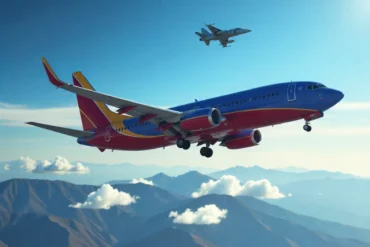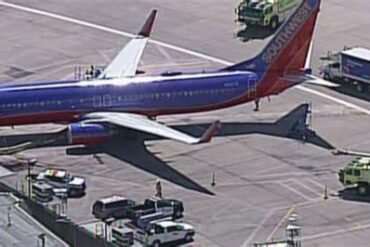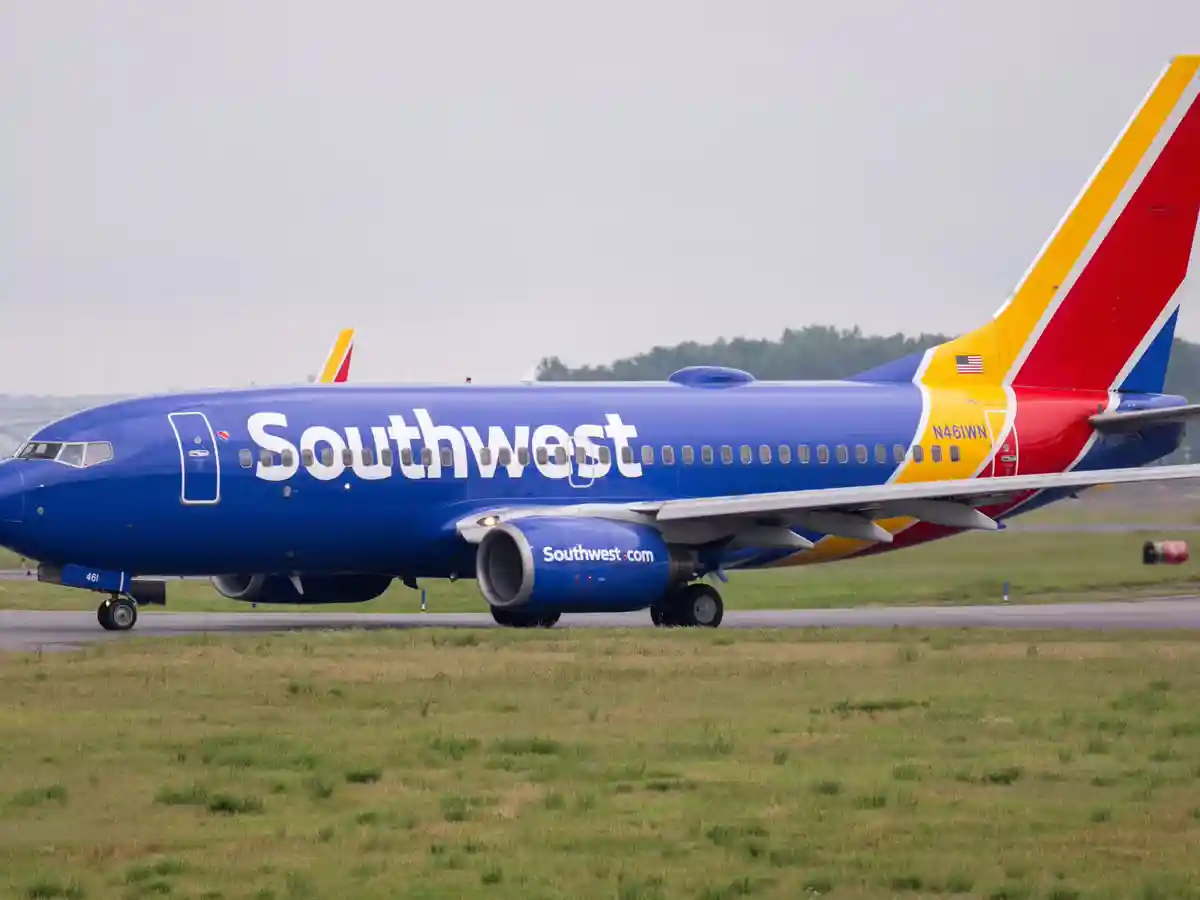
A routine Southwest Airlines flight turned into a harrowing experience when Flight 1496 made a sudden 475-foot emergency descent shortly after takeoff from Hollywood Burbank Airport en route to Las Vegas McCarran International Airport. The incident occurred on January 25, 2025, as the Boeing 737 aircraft was ascending to cruising altitude. A warning from the aircraft’s Traffic Collision Avoidance System (TCAS) prompted the flight crew to initiate immediate evasive action.
The Critical Descent: What Happened in the Sky
As Flight 1496 climbed toward cruising altitude, the TCAS issued a collision alert, signaling the proximity of another aircraft. Without hesitation, the pilots executed a steep dive — a 475-foot descent intended to create a vertical buffer from the potential threat. This maneuver, although successful in avoiding a possible mid-air crash, injured two flight attendants due to the abrupt nature of the aircraft’s movement. No passengers were reported harmed, but the descent sent waves of fear and confusion throughout the cabin.
The TCAS is designed to detect aircraft that enter a predefined protected airspace around the aircraft, issuing real-time resolution advisories. In this case, the system correctly perceived a collision risk and guided the pilots to descend. The system’s swift activation underscores both the power and pressure of modern aviation safety technology.
Collision Avoidance Technology: Designed for Life-or-Death Decisions
At the heart of this incident lies the Traffic Collision Avoidance System, a cornerstone of modern aviation safety. TCAS uses transponder signals from other aircraft to detect potential conflicts. If it determines that another aircraft is on a trajectory that could result in a collision, it issues Resolution Advisories (RAs) to guide pilots on the safest immediate action, typically a vertical maneuver — climb or descend.
The descent by Flight 1496 demonstrates the efficacy of TCAS, but also the unavoidable intensity of such alerts, which often occur without preamble. These systems are designed to override standard procedures if a mid-air conflict is imminent, thereby ensuring that even human error or miscommunication between Air Traffic Control and the cockpit doesn’t result in catastrophe.
However, as robust as the system is, its aggressive reactions sometimes create secondary safety risks, such as crew injury or passenger panic. The event on Flight 1496 highlighted these risks in real-time, as two crew members suffered injuries while performing duties during the maneuver.
FAA Investigation and the Pattern of 2025 Incidents
The Federal Aviation Administration (FAA) has already launched a formal investigation into the Flight 1496 descent, aiming to determine whether the alert was triggered by another aircraft, radar anomaly, or system glitch. The FAA’s inquiry will examine data from the aircraft’s flight recorders, cockpit voice recordings, and radar traffic control logs to reconstruct the moments leading up to the dive.
Notably, this is not an isolated incident. Since January 2025, multiple commercial flights have reported automated collision alerts prompting emergency descents or diversions. While these occurrences remain statistically rare, their increased frequency in early 2025 has raised concerns within the aviation community. Experts are particularly focused on whether these incidents are symptomatic of systemic flaws in air traffic control coordination, software calibration issues, or crowded airspace conditions around key airports.
The FAA is also evaluating whether pilot training protocols need adjustments to reduce crew injury risk during abrupt maneuvers. Airlines may be asked to implement revised crew securing procedures during climb and descent phases, particularly in high-traffic corridors.
Southwest Airlines: Corporate Response and Safety Commitment
In response to the event, Southwest Airlines issued a statement reaffirming its commitment to passenger and crew safety. The airline emphasized that the flight crew acted promptly and professionally, following protocol in response to the TCAS alert. The carrier confirmed that medical attention was provided to the injured flight attendants, and that both would be given time to recover fully.
Southwest further noted that it is cooperating fully with the FAA investigation and is prepared to enhance internal training if recommendations emerge from the regulatory review. The company reiterated that passenger safety remains the cornerstone of its operations, pointing to its strong historical safety record and its adherence to evolving federal standards.
The Crew’s Role in Preventing Disaster
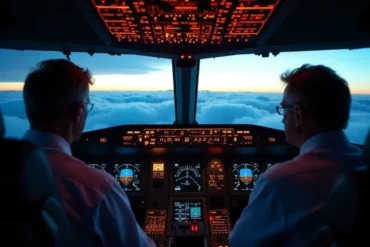
The event on Flight 1496 once again proves that beyond technology, human decision-making remains paramount in aviation safety. The pilots’ ability to trust the TCAS system and react within seconds exemplifies the value of rigorous training and situational awareness. Their actions likely prevented a potential mid-air collision.
Flight attendants, though injured, also performed their duties under duress, working to maintain order among passengers during the sharp descent. In-flight emergencies, especially those involving mechanical or navigational systems, place enormous stress on cabin crew, who are trained not only for service but for critical life-saving procedures. The professionalism displayed during this event reflects the high standards to which airline crews are held.
Passengers’ Perspective: What to Do in Such Emergencies
While most airline passengers will never experience such a jarring event, it’s vital to understand the best practices for personal safety during unexpected in-flight emergencies:
- Always wear your seatbelt when seated, regardless of whether the seatbelt sign is on. Sudden movements like the one on Flight 1496 can occur without notice.
- Follow all instructions from flight attendants immediately. They are trained to respond to turbulence, emergencies, and evacuation scenarios.
- Remain calm. Panic can disrupt the crew’s ability to manage the cabin and assist those who need help. Staying focused on instructions can enhance your safety.
- Be aware of your surroundings. Knowing the location of emergency exits and reviewing the safety card before takeoff can be invaluable in a critical situation.
Aviation Safety in 2025: Balancing Technology and Human Oversight
As air traffic continues to grow in volume and density, particularly in urban airspaces like that around Los Angeles and Las Vegas, the interaction between aircraft automation and human judgment becomes more complex. While TCAS and other automation systems offer an extra layer of safety, they also come with limitations — especially when pilots and controllers must make split-second decisions based on computer-generated advisories.
Moreover, aircraft manufacturers and regulatory bodies are now facing increasing pressure to ensure that collision avoidance systems are calibrated correctly, and that they do not produce false positives that could themselves endanger flights. In some cases, over-sensitive alerts might create operational stress, potentially leading to unnecessary evasive maneuvers.
Going forward, the FAA and global aviation organizations may prioritize research into predictive AI systems that combine real-time airspace analytics with historical data to reduce false alarms. Additionally, cockpit displays and alert systems may be refined to communicate risks more intuitively to pilots, allowing them to make better-informed decisions.
Final Thoughts: A Wake-Up Call With a Safe Landing
The sudden descent of Southwest Flight 1496 serves as a powerful reminder of aviation’s dual dependency on technology and human vigilance. While the collision avoidance system functioned as designed, averting a potentially catastrophic outcome, the incident also highlights the physical risks such systems can introduce, especially to unbelted crew members during flight transitions.
For passengers, this event reinforces the importance of remaining seated and buckled whenever possible, and listening to safety briefings — however routine they may seem. For the aviation industry, it is another compelling reason to continue evaluating the safety protocols, system configurations, and training programs that govern both the technology-driven future and the people who make flying safe.
Ultimately, Flight 1496 landed safely in Las Vegas, and the aftermath has opened crucial conversations around aviation safety systems, crew preparedness, and regulatory oversight — topics that will shape the next era of air travel.