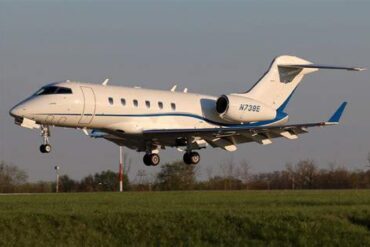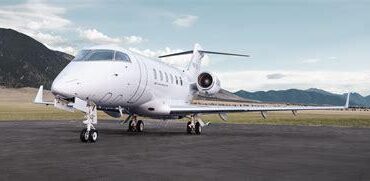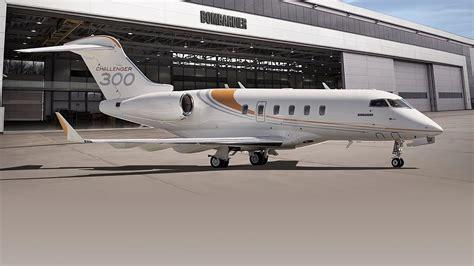
Owning a private jet is often portrayed as the obvious choice once annual flying reaches a certain threshold. In reality, the answer is far more precise. For a used Bombardier Challenger 300 in 2026, the financial tipping point is shaped by acquisition cost, fixed ownership expenses, hourly operating costs, depreciation, and the price of chartering an equivalent aircraft.
The familiar 200-hour rule is therefore only a starting point. Using a representative Challenger 300 charter rate of $9,525 per billable flight hour and a used acquisition price of roughly $10.5 million, the arithmetic initially suggests an ownership advantage after about 1,100 charter hours. That calculation, however, ignores what happens after the aircraft is purchased. Once annual ownership expenses are included, the meaningful threshold falls dramatically.
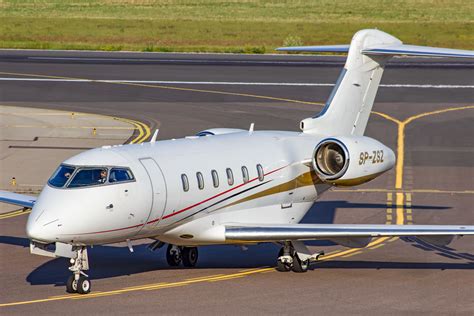
The Challenger 300 is particularly interesting because it occupies the super-midsize business jet category, giving passengers a spacious cabin and enough range for many domestic and international missions. Its combination of performance, comfort, and operating economics makes it a useful case study for understanding when private jet ownership starts making financial sense in 2026.
Challenger 300 Charter Costs in 2026
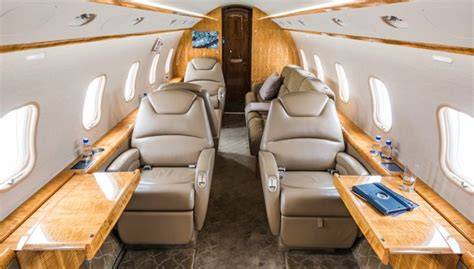
Chartering a Challenger 300 removes almost every responsibility associated with ownership. The customer pays for access to an aircraft without purchasing the airframe, employing a crew, arranging a hangar, maintaining the aircraft, or carrying the risk of long-term depreciation.
For this calculation, the relevant charter benchmark is $9,525 per hour, representing the average super-midsize charter figure used in the reference data. Actual quotes can vary substantially. A low-end super-midsize charter may be available around $6,282 per hour, while high-end pricing can approach $14,930. Aircraft age, operator, availability, routing, airport charges, and scheduling flexibility can all move the final bill.
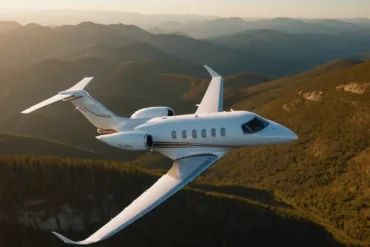
The Challenger 300 is well suited to premium charter missions. Developed by Bombardier and launched in 1999, it offers a maximum range of approximately 3,065 nautical miles, a maximum speed of 476 knots, and seating for up to nine passengers depending on configuration.
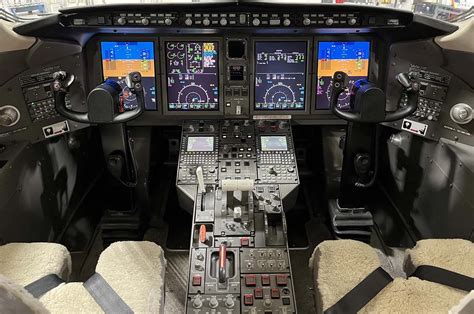
Those capabilities matter because chartering is not simply buying hours in the air. A traveler is effectively buying a complete transportation service. The operator absorbs the cost of pilots, maintenance, insurance, hangar facilities, and aircraft management. The customer also avoids the possibility that an aircraft sits idle for weeks while its ownership expenses continue accumulating.
The $10.5 Million Acquisition Price Changes the Equation
A used Challenger 300 costs roughly $10.5 million according to the reference figures. Dividing that purchase price by the $9,525 hourly charter rate produces an apparently simple result: approximately 1,102 hours of chartering would equal the aircraft’s purchase price.
That figure is useful, but it is not a genuine ownership break-even point. Buying the aircraft does not make future flights free. Owners still have to pay for crew, hangar space, insurance, maintenance, fuel, and engine programs. The aircraft also loses value over time. Consequently, the relevant question is not whether charter payments eventually equal the purchase price, but whether the annual cost of owning and operating the Challenger 300 is lower than paying a charter operator for equivalent flying.
That distinction is the key to the entire calculation.
Annual fixed ownership expenses are estimated at approximately $793,115, including crew, hangar space, hull insurance, and liability insurance. These costs exist even if the aircraft barely flies.
Maintenance adds another substantial expense. Depending on the aircraft’s age and condition, annual maintenance can range from approximately $400,000 to $600,000. Using the midpoint of $500,000 provides a practical working assumption, although individual aircraft can deviate significantly from this figure.
Depreciation must also be considered. At a 4% annual depreciation rate, a $10.5 million Challenger 300 would experience an estimated first-year value reduction of $420,000. Depreciation is not a cash payment in the same way as fuel or salaries, but it represents a genuine economic cost because the owner’s asset becomes less valuable.
The Real Challenger 300 Ownership Break-Even Point
The most important number in this analysis is the estimated hourly operating cost of $3,781.71. Against a $9,525 charter rate, owning the aircraft creates an apparent operating saving of $5,743.29 per flight hour.
This means every hour flown by an owner instead of purchased through charter helps absorb the large fixed expenses of ownership. Based on the reference calculation, approximately 86.6 annual flight hours are needed to offset $500,000 in maintenance costs, 137.4 hours are required to offset the annual fixed ownership expenses, and 72.7 hours are needed to offset $420,000 of depreciation.
Combined, these figures produce an annual threshold of approximately 296.7 flight hours.
That is the practical answer for 2026: around 300 hours per year is the point at which owning a used Challenger 300 can begin to make more financial sense than chartering an equivalent aircraft, assuming the aircraft is purchased with cash and the stated cost assumptions remain reasonably close to reality.
This is considerably higher than the often-repeated 200-hour rule. The difference exists because a private jet carries substantial fixed costs that continue regardless of utilization. A traveler flying 75 or 100 hours annually may enjoy the freedom of ownership, but the economics are difficult to justify purely on hourly savings.
At around 300 hours, however, the equation changes. The owner is using the aircraft frequently enough to spread crew, hangar, insurance, maintenance, and depreciation across a large number of missions. The aircraft begins behaving less like an expensive idle asset and more like a heavily utilized transportation resource.
Why the 300-Hour Threshold Is Not Universal
The 300-hour figure should not be treated as a universal rule. It is highly sensitive to charter rates and ownership costs.
Suppose a traveler consistently finds Challenger 300 charter opportunities below the $9,525 benchmark. The ownership advantage becomes smaller because each charter hour costs less. Conversely, if charter demand pushes comparable flights toward the upper end of the super-midsize range, ownership becomes attractive sooner.
Aircraft condition also matters. A carefully maintained Challenger 300 may produce more stable ownership economics than an aircraft approaching expensive inspections or major component work. Two jets with the same $10.5 million value can therefore produce different annual bills.
Financing introduces another major variable. The 296.7-hour calculation assumes the aircraft is purchased with cash. If an owner finances a significant portion of the acquisition, interest expenses must be added. That increases the number of annual flight hours required to reach a true financial break-even point.
Taxes, residual value, management arrangements, airport fees, and repositioning can also materially change the result. Business ownership may create tax benefits in some jurisdictions, while other structures can reduce the financial appeal.
Chartering Still Wins for Many Travelers
For travelers flying well below 300 hours annually, chartering remains extremely compelling. The biggest advantage is not simply price. It is risk transfer.
A charter customer does not own an aging aircraft. There is no requirement to sell the jet later, no concern about unexpected maintenance events reducing its market value, and no need to maintain a permanent crew or hangar arrangement. If travel patterns change, the customer can simply charter less.
Chartering also provides flexibility across aircraft categories. One trip might justify a Challenger 300, while another could be handled efficiently by a smaller light jet. A longer journey might make a heavy jet more appropriate. Ownership locks the customer into one aircraft, while charter allows the aircraft to be selected according to the mission.
Jet cards sit between traditional charter and ownership. For a super-midsize aircraft, the reference material places jet-card pricing around $11,230 per hour, higher than the $9,525 charter benchmark but potentially attractive to travelers who value guaranteed availability and predictable access.
Fractional Ownership Occupies the Middle Ground
Travelers who need roughly 50 to 300 hours of private aviation annually may find fractional ownership more logical than buying an entire Challenger 300. The customer purchases a share of an aircraft and receives access for a predetermined amount of annual flying.
This model reduces the enormous upfront commitment while retaining some of the convenience associated with ownership. Maintenance, staffing, and operational compliance are generally handled by the provider, while costs can be more predictable than traditional aircraft ownership.
Fractional programs can also reduce concerns about empty legs and repositioning. For travelers near the 300-hour threshold, that flexibility can be worth more than squeezing every possible dollar out of ownership.
Challenger 350 and 3500 Raise the Ownership Benchmark
The Challenger 300 is no longer the newest aircraft in Bombardier’s super-midsize family. The Challenger 350 introduced improved range, avionics, engines, windows, and winglets, while the Challenger 3500 pushed the concept further with a larger cabin, capacity for up to ten passengers, and a range target of about 3,400 nautical miles.
Those improvements generally mean higher acquisition and charter costs. A buyer considering a newer aircraft should therefore recalculate the break-even point rather than simply applying the Challenger 300’s 300-hour benchmark.
For owners focused on long-term economics, newer aircraft can potentially offset some additional purchase expense through improved efficiency and lower maintenance exposure. However, that advantage depends heavily on purchase price, utilization, financing, and resale value.
The Bottom Line for Challenger 300 Buyers in 2026
The most useful conclusion is straightforward: a used Challenger 300 becomes financially compelling at roughly 300 flight hours per year under the assumptions used here. At lower utilization, chartering generally preserves capital and transfers ownership risk to the operator. Around 300 hours, the savings generated by the aircraft’s lower operating cost can begin to absorb its substantial annual fixed expenses.
A frequent traveler who consistently flies 300 or more hours annually may gain enough utilization to justify ownership, particularly when scheduling control, privacy, and immediate access matter. Someone flying 100 to 150 hours may be better served by chartering, while a traveler around 200 to 300 hours should examine fractional ownership. This makes the roughly 300-hour threshold especially relevant for owners with high annual utilization throughout 2026.
Ultimately, the Challenger 300’s break-even point is not a magic number. It is a moving target determined by charter pricing, ownership costs, financing, utilization, and the aircraft itself. But with a $9,525 charter benchmark, $3,781.71 hourly operating cost, and the stated annual ownership assumptions, roughly 297 hours—or, more realistically, about 300 hours—marks the point where owning the jet starts to make financial sense in 2026.