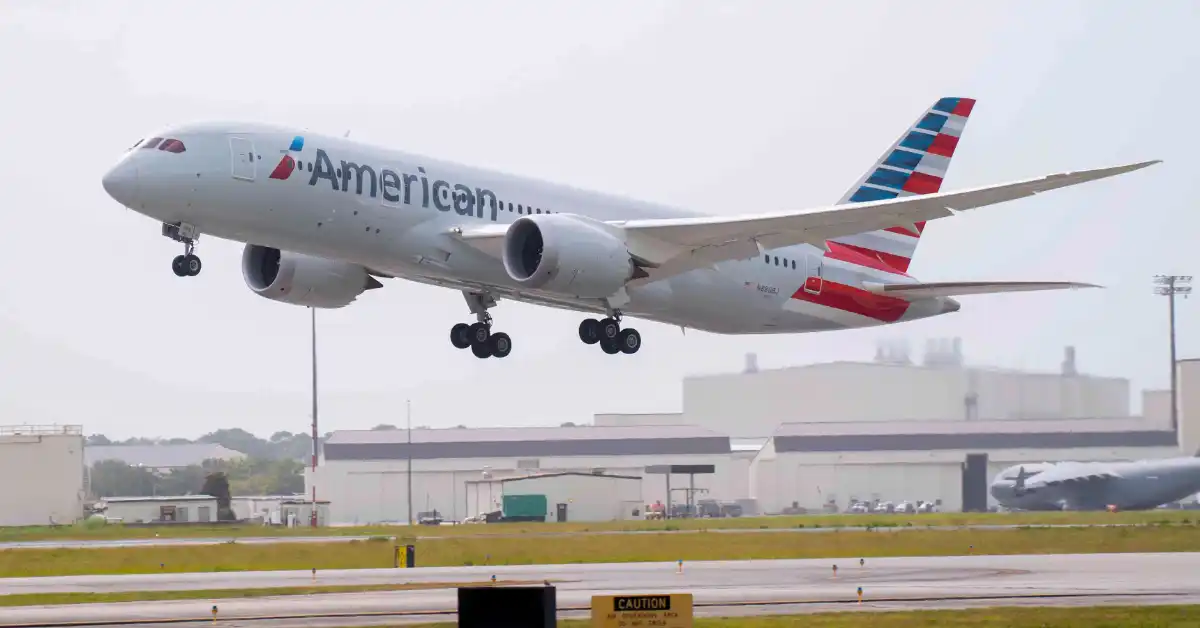
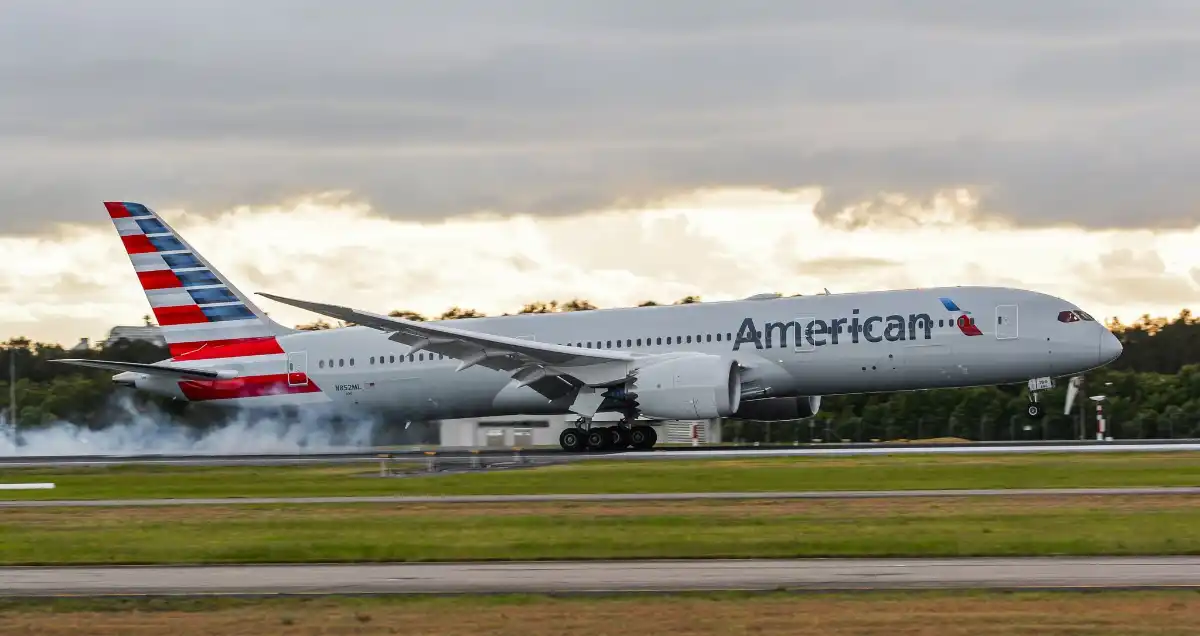
American Airlines has quietly dismantled four long-haul international routes from its network this year, and the pattern behind those exits says as much about global aviation economics as it does about the carrier’s own strategy. The Fort Worth-based airline, otherwise one of the largest in the world by total passengers served, has stopped flying nonstop to destinations in Australia, Qatar, France, and Switzerland. Data from Cirium, the aviation analytics firm that tracks schedule filings across the industry, confirms the oneworld carrier’s withdrawal from Doha Hamad International Airport (DOH), Brisbane Airport (BNE), Zurich Airport (ZRH), and Paris Charles de Gaulle Airport (CDG). Each cut arrived under a different pretext — geopolitical risk, seasonal recalibration, aircraft reallocation — yet all four share a common thread: American is protecting profitability on its strongest trunk routes rather than defending marginal long-haul city pairs.
Brisbane: The Route That Lasted Only Two Months
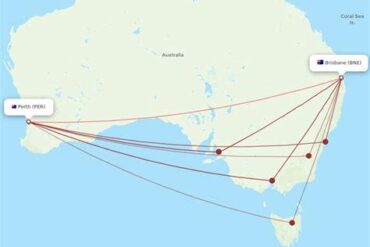
The most startling exit was Los Angeles International Airport (LAX) to Brisbane, a route American abandoned after barely two months of operation. Brisbane is the largest city in Queensland and one of Australia’s most important business and tourism gateways, which made the withdrawal especially conspicuous. The decision leaves Qantas as the only year-round operator on the city pair, while Delta Air Lines layers in nonstop flights across the Southern Hemisphere summer season. For travelers, the practical consequence is thinner competition on a long, fuel-hungry sector where premium cabin demand fluctuates sharply with the calendar. Brisbane-bound passengers flying from the West Coast now face fewer nonstop options, more reliance on Qantas, and connection-heavy itineraries through Sydney or Melbourne during the months Delta does not fly.
Doha: Geopolitical Tension Costs Philadelphia Its Nonstop
Regional instability in the Middle East ultimately erased American’s nonstop service from Philadelphia International Airport (PHL) to Doha. Escalating conflict across the region continues to raise safety and security concerns for carriers routing aircraft and crews through contested airspace, and those concerns carry direct cost implications for insurance, crew duty planning, and rerouting. American’s answer was to exit the market entirely, handing the city pair to alliance partner Qatar Airways, which now stands as the sole operator on the route. The shift is a textbook example of how the oneworld alliance absorbs network retreats: rather than lose the market outright, American leans on a partner with a Doha hub advantage and deep capacity, preserving connectivity for its frequent flyers through codeshare and interline arrangements while removing its own aircraft from a risk-exposed sector.
Miami to Paris: A Seasonal Bet That Did Not Pay
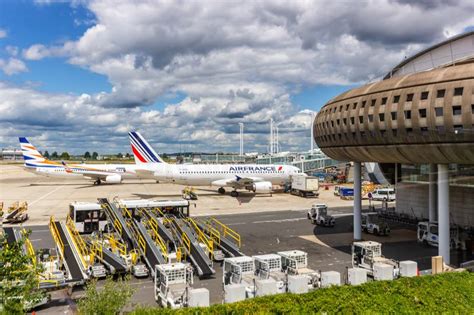
In March, American eliminated its nonstop service from Miami International Airport (MIA) to Paris Charles de Gaulle (CDG), a move tied to shifting seasonal transatlantic demand. The timing was notable: the airline shelved its Paris link from Miami just before the busy summer travel window, suggesting the route’s yield profile could not justify the aircraft it consumed. That leaves Air France as the only operator on the nonstop city pair, though French Bee provides indirect competition by flying to Paris Orly (ORY), the French capital’s second airport. Miami remains a fortress of American’s Latin American and Caribbean network, and the carrier’s calculus clearly favored redeploying widebody capacity toward higher-yielding routes feeding that hub rather than defending a Europe-bound sector against a well-entrenched flag carrier with home-market advantages.
Dallas/Fort Worth to Zurich: The Route Nobody Else Wants
The single route left completely unserved is American’s nonstop from Dallas/Fort Worth International Airport (DFW) to Zurich. The service was converted to a seasonal operation across the Northern Hemisphere summer, and the airline’s schedule now shows no confirmed future flying, even into 2027. Dallas/Fort Worth is American’s largest hub and its most powerful connecting engine, so a Zurich exit is telling: the carrier judged that no partner or competitor could profitably fill the gap, and that the aircraft would earn more elsewhere. For Swiss-bound travelers from Texas and the broader central United States, the result is a forced connection through another European gateway, adding hours to journeys that were previously nonstop.
Third-Largest Long-Haul Operator From the United States
Despite being the world’s largest airline by number of flights, American ranks third for long-haul services departing the United States. Simple Flying’s analysis indicates the carrier will average roughly 78 long-haul departures each day next summer, with its network spanning the Asia-Pacific, Europe, the Middle East, and South America. Over the past two decades, American has exited 13 European airports, including London Gatwick (LGW), London Stansted (STN), Moscow Domodedovo (DME), Helsinki (HEL), Brussels (BRU), Düsseldorf (DUS), Birmingham (BHX), Glasgow (GLA), Berlin Tegel (TXL), Bologna (BLQ), Dubrovnik (DBV), Shannon (SNN), and Manchester (MAN).
South America has suffered comparable attrition, with 11 routes abolished to destinations including Recife (REC), Salvador (SSA), Asunción (ASU), Curitiba (CWB), Porto Alegre (POA), São Paulo Viracopos/Campinas (VCP), Belo Horizonte (CNF), La Paz (LPB), Santa Cruz (VVI), Brasília (BSB), and Córdoba (COR).
Asia Cuts: Beijing, Doha, Hong Kong, and Osaka
In Asia, American has dropped services to Beijing Capital (PEK), Hong Kong (HKG), Doha (DOH), and Osaka Kansai (KIX), further concentrating its Pacific footprint on a smaller set of anchor markets such as Tokyo Haneda and Sydney. The cumulative effect is a network that looks radically different from the one American operated at its pre-pandemic peak. Rather than pursuing breadth, the airline has narrowed its long-haul map to routes where it holds structural advantages: fortress hubs, partner feed, and premium demand that survives seasonal swings. Each cancellation should be read less as a retreat from international flying than as a disciplined reallocation of scarce widebody capacity toward the routes that generate the highest returns per aircraft day.
What These Cuts Mean for Passengers and Loyalty Members
For travelers, the implications extend well beyond four city pairs. Fewer nonstop options mean longer journeys, tighter connection windows, and greater dependence on alliance partners whose schedules may not align with American’s. AAdvantage members booking Philadelphia to Doha now fly Qatar Airways, and Miami to Paris passengers shift to Air France, an airline in a different alliance entirely, which can complicate earning and redemption. For Brisbane, reliance on Qantas and seasonal Delta service reshapes planning for one of the longest and most expensive journeys in commercial aviation. Cumulatively, American’s four exits this year illustrate a broader truth about modern network planning: long-haul routes survive on yield, not prestige, and carriers will surrender iconic destinations the moment the numbers stop working.