The United States’ most affordable route into aviation just became substantially more capable. Through the Modernization of Special Airworthiness Certification program, known across the industry as MOSAIC, the Federal Aviation Administration has rewritten the boundaries of what the sport pilot certificate can do and what manufacturers may build as a light-sport aircraft. Announced in July of last year and rolled out in two distinct phases, the reform dismantles the weight and speed ceilings that defined the category for two decades and replaces them with performance-based standards calibrated to modern engineering. For hobbyists who once found themselves locked out of the most common training aircraft in America, the shift is transformative. For flight schools, airframe builders, and avionics suppliers, it signals the arrival of an entirely new market segment. The headline is simple: fewer rules, lower costs, and a far wider runway for general flying.
Understanding the Sport Pilot Certificate and Its Lower-Cost Pathway
The sport pilot certificate is not a recent invention. It arrived in 2004 alongside the flight instructor certificate with a sport pilot rating, created expressly to lower the barrier to entry for people who wanted to fly for pleasure without satisfying the full demands of a recreational pilot license or a private pilot license. The economics have always been the attraction. A sport pilot needs a minimum of 20 hours of total flight time, compared with 30 for recreational and 40 for private certification. Within that total, at least 15 hours must be dual instruction with an authorized instructor and five hours must be solo flying, with two hours of cross-country training and a solo cross-country flight of at least 75 nautical miles featuring full-stop landings at two points and one leg of at least 25 nautical miles. Beyond that, candidates complete two hours of practical test preparation, demonstrate ten takeoffs and full-stop landings, and finish ground training through either an instructor-led course or a home-study program. Applicants must be at least 17 years old and able to read, speak, write, and understand English. Medical certification historically required either a medical certificate or a valid US driver’s license, which eliminated one of the costliest and slowest bottlenecks in the traditional pipeline. For a generation of pilots, those numbers turned a distant ambition into a weekend project.
That accessibility came with a narrow cage. The old light-sport aircraft definition capped capacity at two seats, limited maximum takeoff weight to 1,320 pounds (598.7 kg) and imposed a maximum level-flight speed of 120 knots (222.2 km/h). The result was a cottage industry of small, specialized airframes and a fleet that felt disconnected from the mainstream of American aviation. Pilots who trained in a light-sport aircraft often found themselves unable to fly the ubiquitous Cessna 172 parked on the same ramp. As the US Aviation Academy notes, the certificate was ideal for recreational flying but rarely served as a stepping stone toward a professional career. MOSAIC changes the character of that starting point without erasing its affordability.
The First MOSAIC Phase: What Existing Sport Pilots Gained
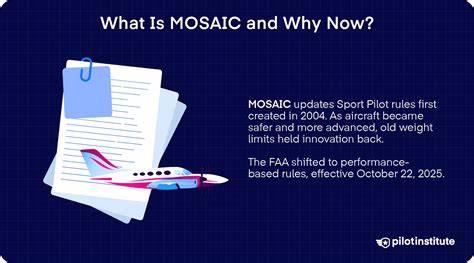
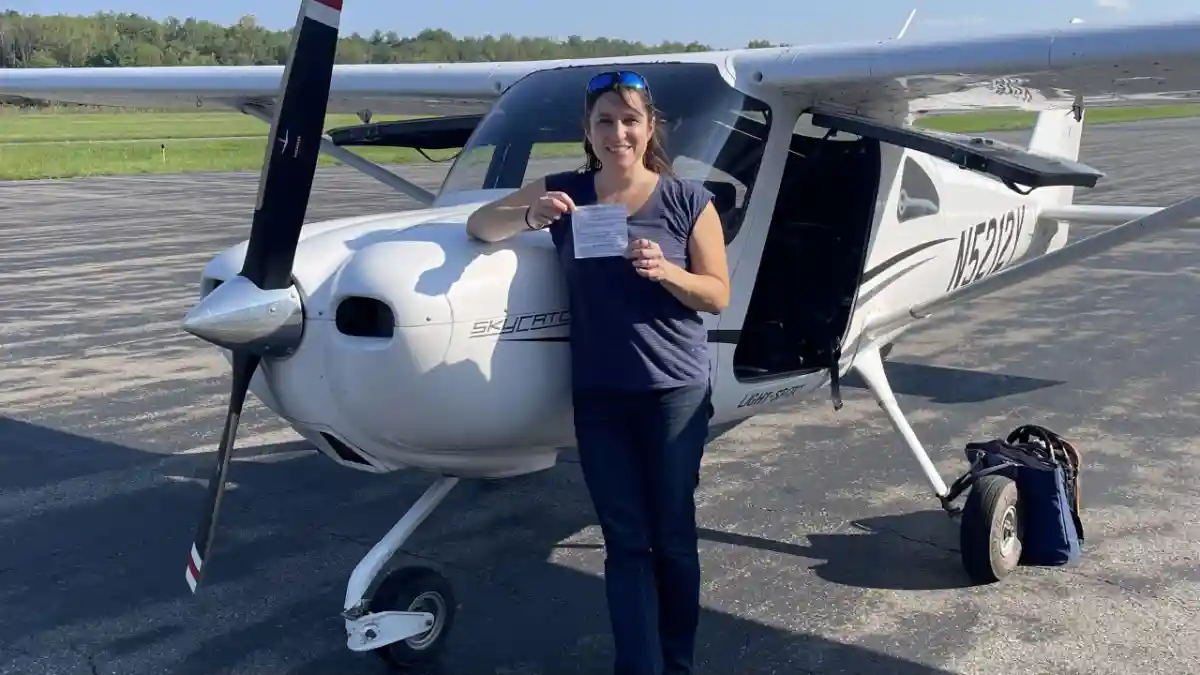
The first stage took effect on October 22 last year and targeted pilots and repairmen already operating under the old framework. Rather than measuring aircraft by weight and top speed, the FAA pivoted to a stall speed of 59 knots (109.3 km/h) with flaps up, a proxy for handling characteristics that says far more about whether an aircraft belongs in the entry-level category than a fixed pound figure ever could. Capacity expanded to four seats, meaning sport pilots can now fly airframes that once sat firmly outside their privileges.
The privilege expansion extends beyond fixed-wing airplanes. Certain helicopters with simplified controls now fall within reach, along with aircraft fitted with retractable landing gear and manually controlled variable-pitch propellers — features that were effectively prohibited before. Operating either configuration requires additional training and endorsements, a deliberate safeguard that preserves the spirit of the certificate while acknowledging that constant-speed props and gear systems demand specific competence. Night flying also became available, again gated behind extra instruction and endorsement. The cumulative effect is a certificate that retains its modest entry cost but no longer dictates a permanently modest flying life.
The Second Phase: How MOSAIC Redefined Light-Sport Aircraft for Manufacturers
The more consequential change for the industry arrived on July 24 of this year, when the FAA replaced the old aircraft definition outright with a framework mirroring the sport pilot privileges. Maximum takeoff weight ceased to exist as a regulatory threshold. Manufacturers may now build models with up to four seats, constrained instead by a flaps-down stall speed of up to 61 knots (112.9 km/h). Restrictions on propellers and retractable landing gear disappeared entirely, and the rule explicitly accommodates new engine types, including electric propulsion and hybrid systems.
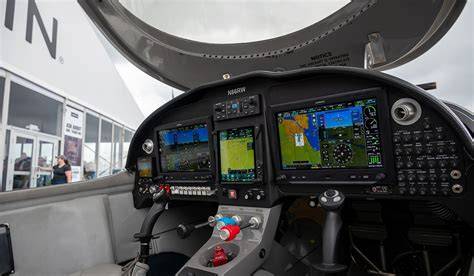
The scope of the category now stretches well past fixed-wing airplanes. The definition embraces gliders, powered parachutes, helicopters, gyroplanes, balloons, and airships under a unified performance philosophy. The FAA’s justification was that the 2004 framework, however groundbreaking at the time, indirectly hampered the adoption of safety-enhancing technologies developed over the following two decades — composite materials, advanced avionics, autopilot systems, and hybrid propulsion among them. By removing weight-driven design pressure, the agency gave engineers room to add parachute recovery systems, glass cockpits, and redundancy without a weight penalty that made them commercially impossible.
Aircraft Now Within Reach of Sport Pilots
The practical payoff is best illustrated by the airframes that suddenly became legal. The FAA’s own MOSAIC document highlighted the Cessna 172, the most-produced aircraft in history and the backbone of flight training worldwide. The Cessna 182 and Piper Cherokee family followed the same logic: trusted, widely available, well-supported airplanes that previously exceeded light-sport thresholds and therefore sat out of reach for sport certificate holders. Flight schools that maintain these types can now train sport students in the same aircraft they use for private pilot students, cutting the cost of maintaining parallel fleets.
Darren Pleasance, president of the Aircraft Owners and Pilots Association, framed the change as a cultural unlock. Expanding the aircraft sport pilots can fly — particularly popular four-seat legacy aircraft — while simplifying certification pathways, he said, opens the door for more people to experience the freedom and joy of aviation. The FAA’s summary of the reform adds that MOSAIC permits aerial work with light-sport aircraft, including infrastructure and forest inspections, photography and filming, and agricultural surveillance, a category of activity that previously required a commercial certificate. For owners, that broadens the utility of an aircraft beyond weekend sightseeing. For aspiring commercial operators, it creates a lawful entry point that did not exist before.
The Restrictions That Still Define the Certificate
Expanded privileges have not abolished the certificate’s structural limits. The most significant remains the one-passenger rule. A sport pilot flying a Cessna 172 must leave two of its four seats empty, and the extra capacity is legal cargo space rather than a revenue opportunity. Commercial flying remains prohibited, so paying passengers are off the table regardless of how many seats the airframe offers. Airspace access, instrument flying, and flight timing restrictions also endure, and night operations require the specific endorsement described in the first phase.
These limits explain why MOSAIC should be read as a widening of the recreational lane rather than a shortcut into professional aviation. The FAA opened the most accessible segment of general flying to a broader fleet and a broader mission set, but kept the lines separating sport, private, and commercial privileges intact. Pilots who want to carry more than one friend, fly into complex airspace without restriction, or earn money from their wings still need to climb the certification ladder.
Why Manufacturers Now See Light-Sport Certification as a Strategic Bet
The business logic behind MOSAIC rests on a mismatch the FAA itself acknowledged. FAA Administrator Bryan Bedford described the reform as enabling industry to meet growing demand for more versatile aircraft with higher performance while maintaining high safety standards. Lower certification friction means builders can pursue designs that serve both the sport market and adjacent general aviation buyers, spreading development costs across a larger customer base and making advanced airframes economically viable at lower volumes.
The appeal reaches equipment suppliers as well. Avionics makers can now target a category where glass panels, autopilot integration, and electric powertrains are no longer weight-prohibitive, while training organizations gain a rationale to standardize on four-seat airframes. That combination — manufacturers building bigger aircraft, schools training in familiar models, and pilots paying less to reach the runway — is precisely the mechanism by which fewer rules and lower costs translate into a genuinely larger pilot population. The reform will not make aviation cheap, but it removes enough artificial constraints that the entry door now swings wider than at any point since the sport pilot certificate was born.