Flying private from New York to California is one of the most requested routes in American business aviation, and it is also one of the most misunderstood when it comes to price. Travelers who picture a single number are usually surprised to learn that the same city pair can be flown for roughly $34,000 on one aircraft and more than $100,000 on another, with the gap driven by cabin size, range, crew hours, repositioning, and the commercial conditions attached to each quotation. The route rewards anyone who understands how operators build a price, because the difference between a well-brokered charter and an impulse booking can be tens of thousands of dollars on a single coast-to-coast leg.
The geography explains much of the pricing logic. On the New York side, Teterboro Airport (KTEB) in New Jersey functions as the business aviation gateway to Manhattan, sitting about twelve miles from Midtown and supported by five FBOs that handle everything from quick turnarounds to full catering. On the California side, Van Nuys Airport (KVNY) plays the same role for Los Angeles, roughly twenty minutes from downtown and handling more than 260,000 movements a year, making it one of the busiest private aviation airports on earth. Using these dedicated facilities rather than JFK or LAX is not cosmetic; it eliminates terminal congestion, long taxi queues, and the scheduling rigidity that commercial slots impose on travelers whose time is the actual product being purchased.
Block time between the two coasts typically falls between five and a half and six and a half hours, a range that widens with headwinds, routing, and aircraft cruise speed. That single figure governs most of the economics, because charter aircraft are priced by the flight hour rather than by the mile. When an operator quotes a coast-to-coast trip, the hourly rate is multiplied across the airborne time, then adjusted for positioning, landing and handling fees, federal excise tax, crew expenses, and any overnight or standby requirements.
Charter Pricing From New York to Los Angeles by Aircraft Category
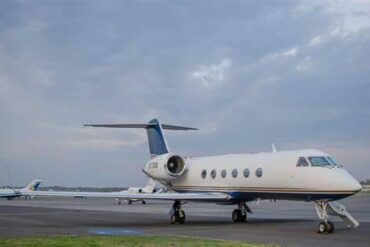
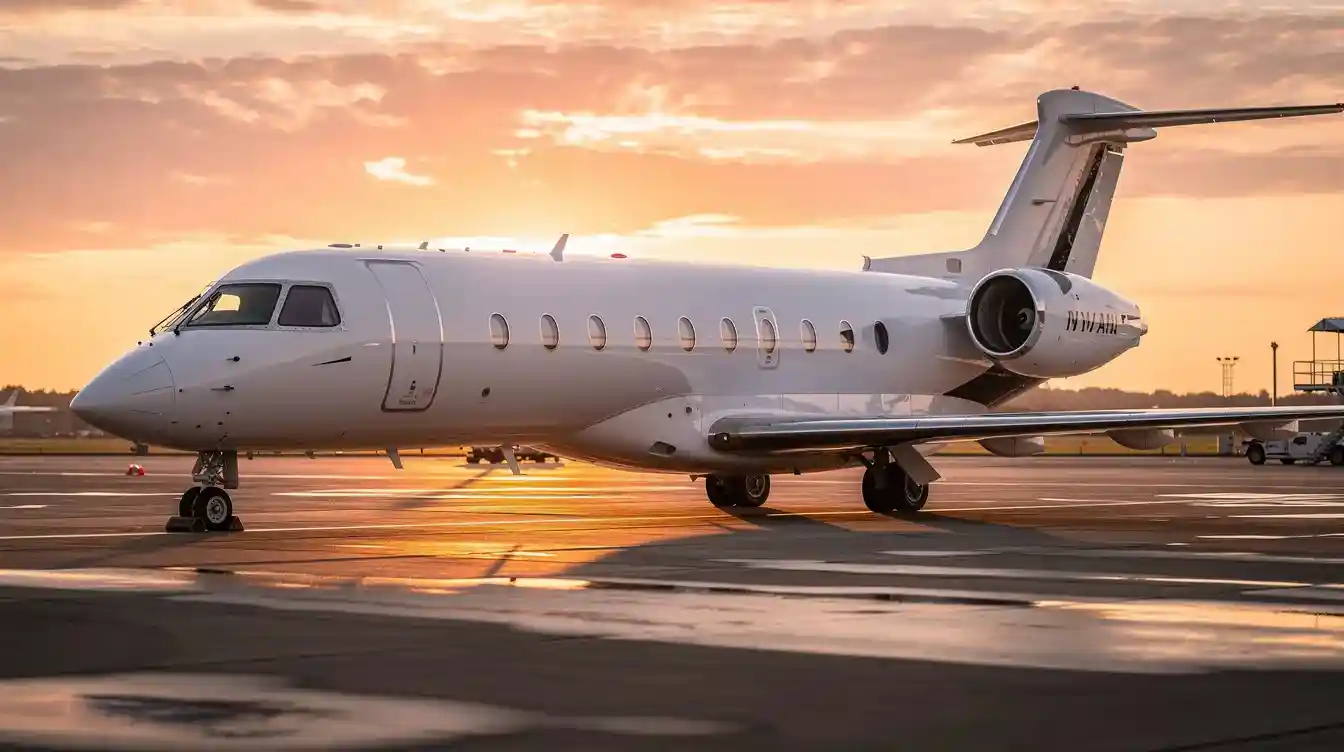
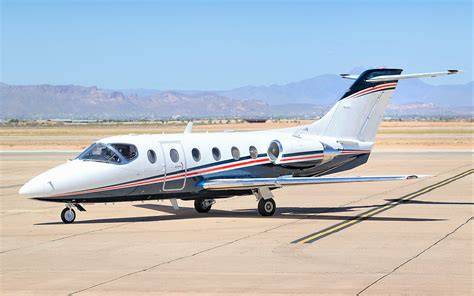
Charter quotations for the New York to Los Angeles corridor cluster into predictable bands. Air Charter Advisors places entry pricing at approximately $40,000 one-way aboard a Cessna Citation Longitude, a super-midsize jet whose transcontinental range and cabin comfort make it a natural choice for this distance. Moving up to a heavy jet such as the Bombardier Challenger 604 or Dassault Falcon 2000LXS pushes a one-way charter to about $50,000, reflecting larger cabins, greater baggage capacity, and the higher fuel burn that comes with them.
Stratos Jets takes a slightly different view, recommending the Bombardier Challenger 300 for this mission profile and estimating $34,000 to $41,000 one-way. Clay Lacy’s figures illustrate how round-trip structure changes the picture: a Gulfstream G450 round trip from New York to Los Angeles can run $102,000, with the aircraft, crew, and fuel included, while the same city pair flown on a light jet costs approximately $56,000 and on a mid-size jet around $79,000. Those numbers deliberately exclude positioning flight time, landing fees, federal excise taxes, and overnight charges, all of which appear later on a final invoice.
Hourly rates underpin every one of these figures. Charter rates across the market span roughly $3,500 to $18,000 per hour, and the spread maps closely onto aircraft class. A turboprop like the Pilatus PC-12 commands $1,200 to $1,800 per hour for six to eight passengers, a very light jet such as the Embraer Phenom 100 runs $1,500 to $2,250, and a light jet like the Hawker 400XP sits at $2,200 to $3,000. The mid-size segment, represented by the Learjet 60, prices between $2,800 and $3,800 per hour, while a super-midsize Citation Sovereign reaches $3,800 to $5,000. Heavy jets including the Gulfstream G-IV climb to $5,000 to $8,000, and ultra-long-range aircraft such as the Gulfstream G650 top out around $8,500 to $14,000 per hour. On a six-hour coast-to-coast flight, that ladder alone explains why quotes diverge so sharply.
The Hidden Line Items That Move a Coast-to-Coast Quote
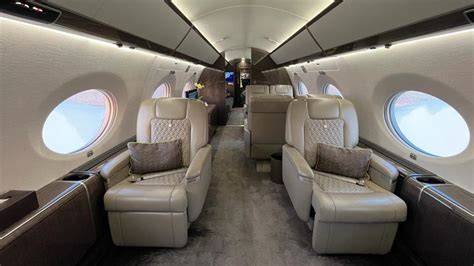
A charter price is assembled from far more than engine hours. Repositioning is the single most volatile component: if the chosen aircraft must fly empty to Teterboro before the trip and return empty afterward, the client effectively pays for those deadhead legs, and on a transcontinental mission that can add hours of billed time in each direction. Aircraft based near the departure point are always cheaper, which is why brokers who maintain deep operator relationships can find a Teterboro-resident jet and cut a quote substantially without sacrificing cabin quality.
Peak demand exerts similar pressure. Holiday travel, major sporting events in Los Angeles, awards season in February and March, and end-of-quarter corporate surges all tighten availability and lift rates, sometimes by double digits. Fuel surcharges fluctuate with jet fuel markets and appear as separate lines in many contracts. Landing and handling fees at both Teterboro and Van Nuys are meaningful, and international permits, customs arrangements, and slot reservations can add further charges if the itinerary touches restricted airspace or extends beyond the continental United States.
Crew costs complete the picture. Long coast-to-coast legs often require a second pilot or a cabin attendant for heavy jets, and crew per diem, accommodations, and ground transportation are frequently billed at cost. Catering ranges from a modest sandwich platter to a multi-course service arranged through the FBO’s preferred purveyor, and special requests such as birthday celebrations, pet transport, or oversized sports equipment each carry their own handling charge. The lesson for any traveler is that the headline hourly rate is a starting point, not a final price, and a properly itemized quote will disclose each of these components before signature.
Ownership Economics Versus the Charter Math
For travelers flying this route frequently, private ownership changes the arithmetic entirely. A pre-owned Gulfstream IV from the early 1990s, a period before production ceased in 1992, can be acquired for roughly $3.2 million, according to Liberty Jet. Budgeting 200 flight hours a year produces annual costs near $1,668,667, which translates to an average of $19.12 per mile when fuel and cruise speed are factored in. Applying that figure to the roughly 2,446 miles of great-circle distance between New York and Los Angeles yields an operating cost of about $46,767.52 for a one-way flight, covering fixed and variable costs but excluding the original purchase price of the aircraft.
Guardian Jet’s framework, built around 300 operating hours annually, arrives at a different answer using the same logic. With annual fixed costs of $1,070,534 and variable costs of $6,870.20 per hour, a single coast-to-coast leg works out to approximately $62,630. Both models are defensible estimates rather than precise predictions, because hangarage, insurance, maintenance reserves, and engine program enrollment vary widely by airframe and operator. What they demonstrate is that ownership only becomes economically rational when the aircraft is flown intensively and when the owner values control over the asset as much as the cost per mile.
Fractional Shares, Jet Cards, and Empty Leg Savings
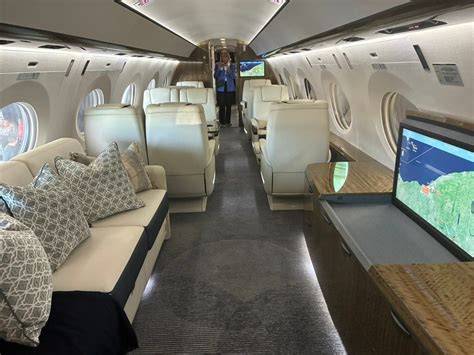
Between outright ownership and on-demand charter sit several shared structures that suit different travel patterns. Fractional ownership divides the aircraft into sixteen shares based on 800 flying hours a year, so a 1/16th share yields roughly 50 hours of access and a 2/16ths share delivers 100 hours. Beyond the acquisition cost of the share, owners typically pay fixed monthly management fees and an occupied hourly fee, all agreed in advance, which removes the surprise element of variable charter pricing while still delivering guaranteed availability on short notice.
Jet cards and membership programs behave like prepaid flight hours purchased in advance and drawn down as needed, at rates locked in with a broker or operator. That predictability has a price, but it eliminates management fees, crew payroll, insurance, and hangar costs. Empty legs represent the most aggressive discounting in the market, available when an aircraft repositions without passengers to reach its next pickup or return to base. Operators sell these legs at 50%, 75%, or even 90% off standard rates to recover some of the cost, and searches on Fly Victor have surfaced one-way New York to Los Angeles empty legs at approximately £26,313 (around $30,929) on a Cessna Citation X, £35,296 (around $46,821) on a Bombardier Challenger 604, and £35,342 (around $46,833) on a Gulfstream IV. Empty legs demand flexibility on dates and routes, but for a traveler whose schedule permits adjustment, they are the single cheapest entry point into private aviation on this corridor.
How to Secure the Right Quote for the New York to California Route
The most reliable route to competitive pricing is disciplined shopping. Contact several charter operators or brokers with precise dates, passenger counts, and any special requirements, because specificity is what allows an operator to match an aircraft accurately and price the mission tightly. Itinerary details such as departure and arrival FBO preferences, ground transport timing, catering expectations, and whether the trip is one-way or round trip all shape the calculation, and brokers use them alongside live aircraft availability, fuel costs, airport fees, and current market conditions to build a tailored quote.
Travelers should request itemized breakdowns rather than lump sums, confirm whether positioning, landing fees, federal excise tax, and crew expenses are included, and ask directly about cancellation terms. Where schedules allow, comparing standard charter against empty legs for the same window can produce the largest savings. Frequent flyers should model fractional ownership or jet card membership against their annual travel volume before defaulting to ownership, since the shared structures deliver access without the fixed-cost burden. On a route flown by some of the world’s most experienced operators, price discovery is genuinely a negotiation, and the traveler who obtains three well-briefed quotes rather than accepting the first will consistently board the best-value aircraft on the ramp.