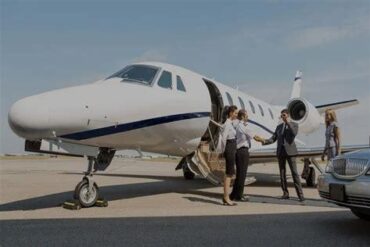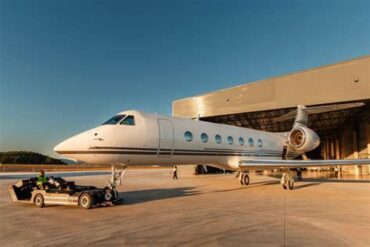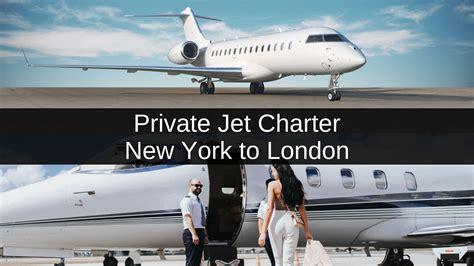
A private jet flight between New York and London is often portrayed as the ultimate symbol of luxury travel. For most travelers, the idea of boarding a private aircraft in Manhattan and landing in the British capital just hours later without airport crowds, security lines, or packed cabins seems almost unimaginable. Yet for corporate executives, celebrities, royal families, ultra-high-net-worth individuals, and heads of state, this level of travel is a practical reality.
The numbers, however, are staggering. Chartering one of the world’s most exclusive aircraft for the transatlantic route can cost as much as $250,000 to $270,000 one way, raising an obvious question: what exactly are passengers paying for?
The answer extends far beyond a seat on an airplane. A Boeing Business Jet crossing the Atlantic is essentially a flying luxury residence, private office, and five-star hotel suite combined into one aircraft. From private bedrooms and showers to dedicated flight attendants and boardrooms in the sky, the experience is fundamentally different from commercial aviation.
Understanding what drives these extraordinary prices reveals a fascinating world where convenience, privacy, flexibility, and prestige are valued just as highly as transportation itself.
The Boeing Business Jet: A Flying Mansion Above The Atlantic
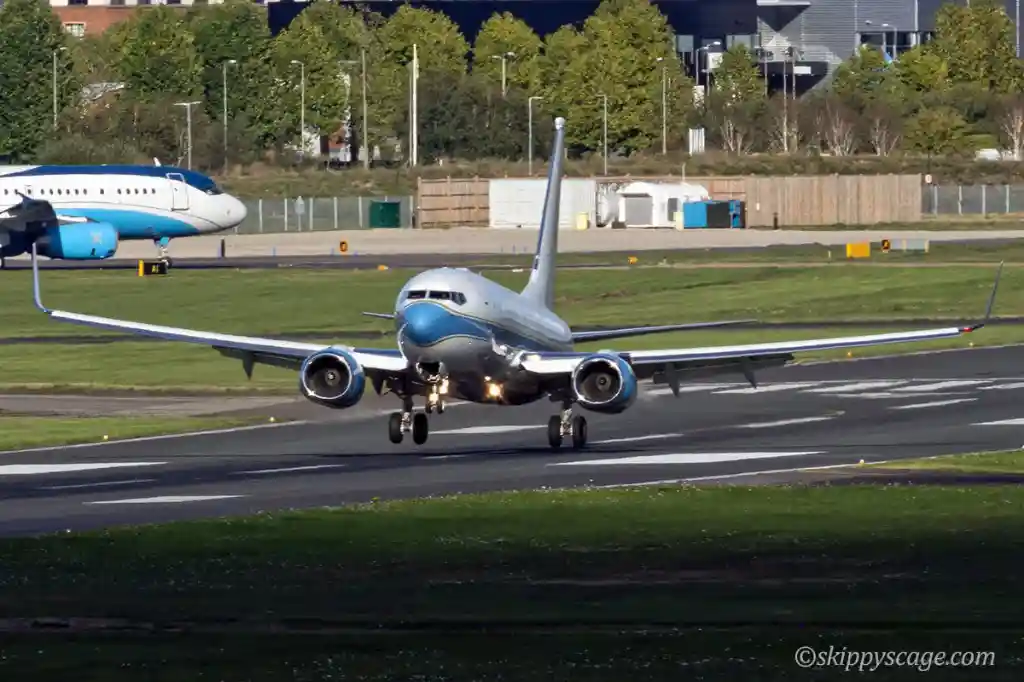
At the highest end of the charter market sits the Boeing Business Jet (BBJ), one of the most prestigious private aircraft available anywhere in the world.
Derived from the highly successful Boeing 737 airliner family, the Boeing Business Jet combines the proven reliability of a commercial aircraft with interiors customized for elite travelers. Unlike a standard airline cabin packed with rows of seats, a BBJ transforms that space into an expansive luxury environment.
While the aircraft can technically accommodate well over 100 passengers in airline service, VIP operators typically configure it for around 19 passengers. This dramatically lower passenger density creates enormous amounts of living space.
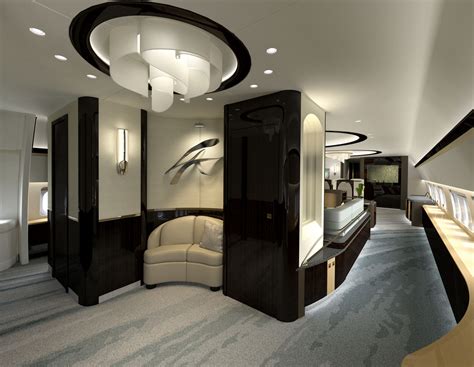
Travelers stepping aboard are often greeted by interiors featuring handcrafted furnishings, private suites, conference rooms, dining areas, entertainment lounges, and dedicated sleeping quarters. The atmosphere resembles a luxury penthouse more than an aircraft cabin.
The aircraft’s impressive range allows it to comfortably operate nonstop between major international cities such as New York and London while still maintaining exceptional comfort throughout the journey.
By the standards of private aviation, the Boeing Business Jet represents the closest thing to owning an airborne estate.
What A $270,000 Charter Flight Actually Includes
Many people see a six-figure charter quote and assume the money is simply paying for exclusivity. In reality, a significant portion of the cost is tied to the extensive services and infrastructure required to operate a large private aircraft internationally.
A typical Boeing Business Jet charter between New York and London includes the aircraft itself, a professional flight crew, fuel, insurance coverage, operational planning, maintenance support, and airport handling services.
Passengers also receive access to private aviation terminals known as Fixed Base Operators, commonly referred to as FBOs. These facilities allow travelers to bypass crowded commercial terminals entirely.
Instead of arriving three hours before departure, many private jet passengers can arrive just minutes before takeoff. Dedicated lounges, expedited screening procedures, private meeting rooms, and direct aircraft access dramatically reduce airport stress.
The charter fee also covers highly trained pilots with extensive international flight experience. Operating a large business jet across the North Atlantic requires expertise, specialized certifications, and meticulous flight planning.
Beyond transportation, clients are paying for a highly coordinated travel experience where every aspect is tailored around their schedule rather than the schedule of an airline.
Inside The Cabin: Bedrooms, Bathrooms, And Living Space
One of the biggest differences between commercial first class and a Boeing Business Jet is the amount of personal space available.
Even the most luxurious airline first-class suites occupy a relatively small footprint within an aircraft carrying hundreds of passengers. A BBJ, by contrast, devotes enormous cabin areas to a handful of travelers.
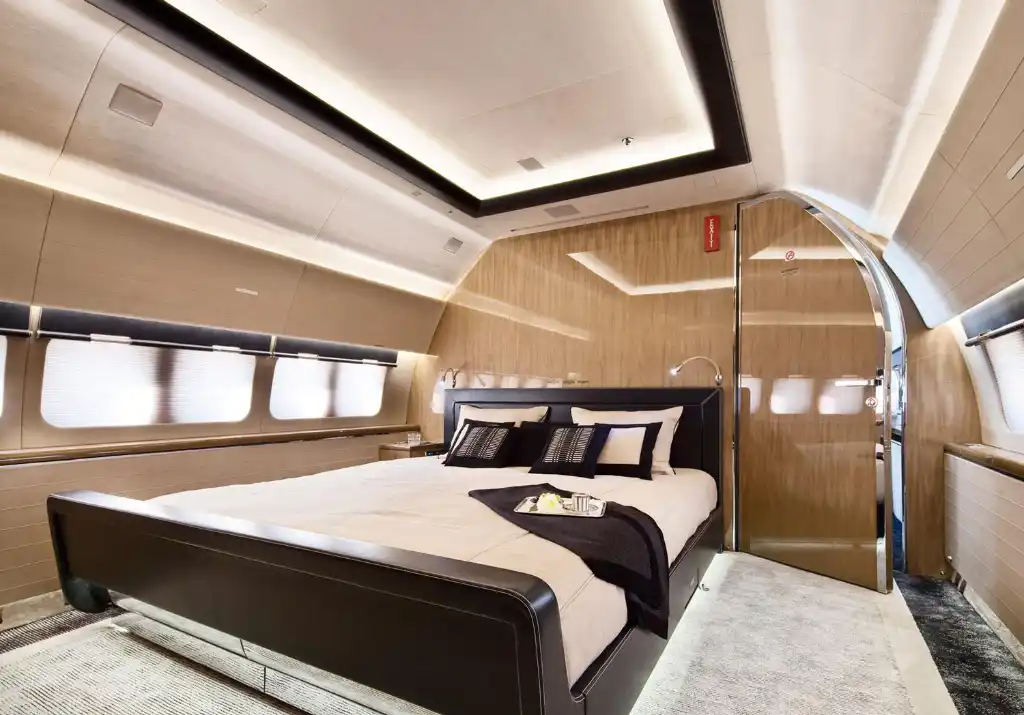
Many configurations include fully enclosed master bedrooms complete with permanent beds rather than convertible seats. Travelers can sleep in complete privacy during overnight flights or simply retreat to their own space whenever desired.
Bathrooms are equally impressive. Some layouts include multiple lavatories and even full shower facilities, allowing passengers to arrive refreshed after a transatlantic crossing.
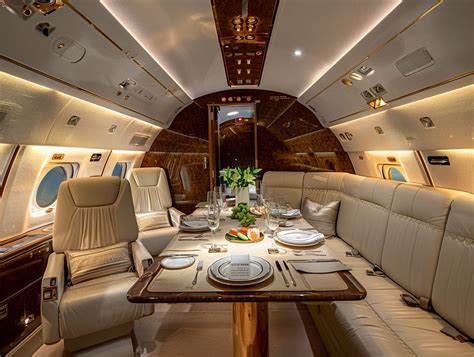
Large dining areas enable formal meals to be served in an environment resembling a private dining room. Lounge spaces encourage conversation, relaxation, or entertainment throughout the journey.
The result is an environment that feels remarkably detached from conventional air travel.
For individuals accustomed to luxury hotels and executive offices, the cabin provides a familiar level of comfort thousands of feet above the ocean.
The Office In The Sky: Why Business Travelers Pay Premium Prices
Luxury is only one component of the Boeing Business Jet’s appeal.
For many clients, productivity represents an equally important factor.
Corporate executives, government officials, and international business leaders often view travel time as lost revenue. Every hour spent disconnected from operations can impact negotiations, investments, or strategic decisions.
A BBJ transforms travel time into productive working time.
Dedicated conference areas allow meetings to continue uninterrupted. High-speed connectivity enables video conferencing with teams around the world. Multiple displays support presentations, data analysis, and collaborative work.
Secure communications systems further enhance the aircraft’s value for government delegations and senior executives handling sensitive information.
Rather than spending seven hours disconnected from business operations, passengers can conduct meetings, finalize contracts, communicate with stakeholders, and manage organizations while crossing the Atlantic.
For organizations where time is worth millions of dollars, the economics become easier to justify.
Why Charter Prices Vary So Dramatically
Not every private flight between New York and London costs a quarter of a million dollars.
The charter market offers aircraft ranging from relatively small jets to ultra-large VIP airliners, creating enormous variation in pricing.
A large-cabin jet such as the Legacy 650 may complete the route for around $64,500 one way. A Falcon 900B can push costs into the mid-$70,000 range, while ultra-long-range aircraft like the Falcon 7X may approach $90,000.
The Boeing Business Jet occupies an entirely different category due to its size, range, and onboard facilities.
Several variables influence pricing:
- Aircraft type and cabin size
- Flight duration
- Fuel consumption
- Aircraft age
- Crew qualifications
- Interior configuration
- Market demand
- Airport selection
Larger aircraft naturally consume more fuel and require more extensive support infrastructure. Newer aircraft with premium interiors also command higher charter rates.
Ultimately, travelers are paying for capability. The more space, range, and flexibility an aircraft provides, the higher the cost becomes.
The Hidden Costs Behind Private Aviation
The advertised hourly charter rate often represents only part of the final invoice.
Private aviation includes numerous additional expenses that can significantly impact overall pricing.
Fuel surcharges are among the most important variables. Since jet fuel prices fluctuate regularly, operators frequently adjust surcharges to reflect changing market conditions.
Airport-related costs add another layer of expense. Landing fees, parking charges, handling services, and terminal usage fees vary considerably between airports.
Crew expenses can also increase costs during multi-day itineraries. Hotels, transportation, meals, and overnight allowances must often be covered when crews remain away from their home base.
Aircraft positioning creates another major expense. If the aircraft is not already located at the departure airport, operators may charge for the repositioning flight required to bring the aircraft to the customer.
Additional services can further elevate costs, including:
- Premium catering
- Ground transportation
- Satellite communications
- Enhanced security services
- Concierge arrangements
- Special customs assistance
In some cases, supplemental expenses for large-cabin jets can exceed tens of thousands of dollars.
Airport Advantages: Skipping The Commercial Travel Experience
One of private aviation’s greatest benefits is not necessarily the aircraft itself but the airport experience surrounding it.
Commercial travelers often spend hours navigating terminals, security checkpoints, baggage systems, and boarding processes.
Private jet passengers enjoy a dramatically different experience.
In the New York area, popular private aviation gateways include Teterboro Airport and several Manhattan heliports. Around London, airports such as Biggin Hill, Northolt, and London City Airport cater extensively to business aviation traffic.
These facilities prioritize speed, privacy, and convenience.
Passengers frequently arrive less than 30 minutes before departure. Vehicles can often pull directly alongside terminal facilities, minimizing walking distances and waiting times.
Security procedures remain robust but are typically far more streamlined than those encountered in commercial terminals.
The cumulative time savings can be substantial, particularly for travelers making frequent international trips.
Flexibility Is Valuable, But Not Unlimited
Despite common perceptions, chartering a private jet does not eliminate every aviation rule.
Air traffic control restrictions, airport slot allocations, customs procedures, and immigration regulations still apply.
Departure times are generally flexible, but not entirely unrestricted. Airports with significant traffic volumes often impose slot requirements that limit scheduling freedom.
International customs procedures remain mandatory. Travelers entering the United Kingdom or the United States must comply with all applicable immigration and customs regulations.
Pet travel, while generally easier than on commercial airlines, still requires documentation and compliance with import requirements.
Private aviation provides exceptional convenience, but it does not grant exemption from national border controls or aviation regulations.
Understanding these limitations helps set realistic expectations for first-time charter clients.
Empty Leg Flights: The Industry’s Best-Kept Secret
One of the most effective ways to reduce private aviation costs involves taking advantage of empty leg flights.
An empty leg occurs when an aircraft must reposition without passengers in order to fulfill another charter commitment.
Rather than operating the flight completely empty, operators often offer these segments at heavily discounted rates.
Savings can be extraordinary.
Discounts of 50% to 90% are not uncommon, making private aviation accessible to travelers who might otherwise never consider chartering an aircraft.
The tradeoff is flexibility.
Passengers must adapt to predetermined routes, dates, and departure times established by the operator’s schedule.
For travelers with flexible plans, empty legs represent one of the most compelling opportunities in private aviation.
Why Round Trips Deliver Better Value
Many first-time charter customers are surprised to discover that round-trip bookings often provide substantially better value than one-way travel.
The reason lies in aircraft positioning.
A one-way charter frequently requires the operator to reposition the aircraft after dropping passengers at their destination. Those repositioning costs are ultimately reflected in pricing.
When customers book both outbound and return flights, operators can utilize the aircraft more efficiently, reducing wasted repositioning activity.
For a Boeing Business Jet, the difference can be dramatic.
A one-way charter priced at approximately $270,000 may increase to only around $345,000 for a complete round trip.
This means the second flight effectively costs far less than booking two separate one-way journeys.
For travelers planning return travel, round-trip arrangements almost always provide stronger overall value.
Is A $250,000 Private Flight Actually Worth It?
For most travelers, spending a quarter of a million dollars on a single flight will never make financial sense.
However, evaluating private aviation purely through the lens of transportation misses the broader value proposition.
A Boeing Business Jet offers privacy that commercial airlines cannot match. It provides schedule control, personalized service, enhanced productivity, and unmatched comfort throughout an international journey.
When divided among 19 passengers, the economics also become more interesting.
A fully occupied Boeing Business Jet round trip can reduce the effective per-passenger cost to levels that approach premium commercial first-class travel, especially on busy transatlantic routes where first-class fares regularly reach several thousand dollars.
The difference is that passengers are not simply purchasing a seat. They are purchasing an entirely different travel ecosystem.
For heads of state, multinational executives, celebrities, and wealthy families, the value lies in time saved, privacy maintained, productivity gained, and convenience achieved.
That is why a New York-to-London private charter can command a price tag exceeding $250,000—and why clients continue to pay it. In the world of ultra-premium aviation, the aircraft is only part of what is being sold. The real product is complete control over the travel experience, from departure to arrival, delivered at 40,000 feet above the Atlantic.