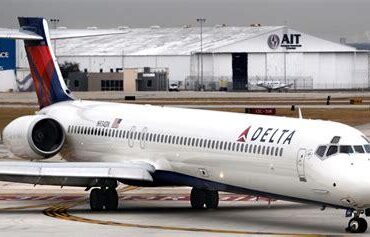
Marcia Bayer, a Texas resident, has filed a $250,000 lawsuit against Delta Air Lines, alleging that the airline’s handling of her international journey caused her to miss the critical window to authorize life-saving surgery for her father in Brazil. The legal action shines a harsh spotlight on airline accountability during international travel, especially when passengers face personal emergencies.
Bayer’s ordeal began on December 26, 2024, when she received devastating news: her father, residing in Rio de Janeiro, had been hospitalized and required urgent surgery. Due to Brazilian medical regulations, the hospital mandated in-person consent from a close family member, as her father was too incapacitated to provide it himself.
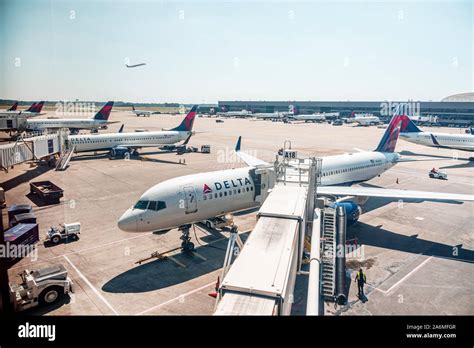
Determined to be by his side, Bayer immediately booked a last-minute ticket with Delta Air Lines, scheduled to depart from Dallas-Fort Worth International Airport (DFW) on December 28, with connections through Atlanta Hartsfield–Jackson (ATL) and final arrival at Rio de Janeiro/Galeão International Airport (GIG).
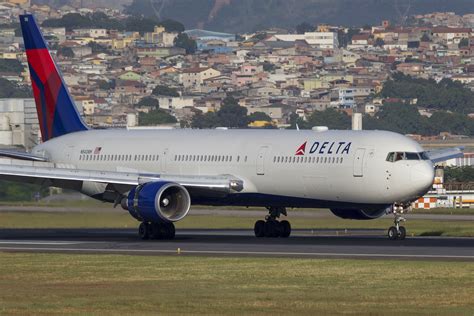
However, her plans quickly unraveled when Delta notified her of a mechanical issue affecting her initial flight. The airline rebooked her itinerary, rerouting her through São Paulo/Guarulhos International Airport (GRU) with an anticipated arrival in Rio by the afternoon of December 29.
Denied Boarding Despite Valid Documents
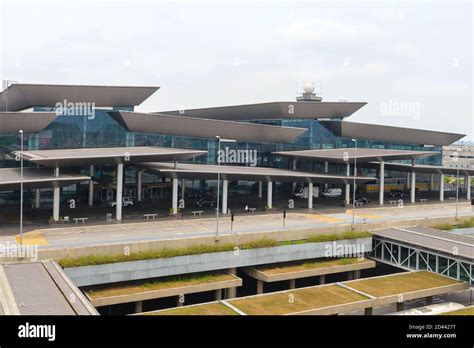
Upon reaching São Paulo, Bayer encountered an unexpected bureaucratic nightmare. Despite possessing a valid boarding pass for the short final leg to Rio de Janeiro, she was denied boarding because her name was inexplicably absent from the passenger manifest. The 40-minute domestic flight, operated by Delta’s Brazilian partner airline, could not resolve the issue independently. Their staff informed Bayer that only Delta’s intervention could correct the discrepancy.
Desperately seeking assistance, Bayer discovered that Delta’s customer service desk at São Paulo Airport was closed. With no one available to rectify the manifest error, she had no choice but to purchase a last-minute ticket for $675, securing an alternative flight to Rio.
Bayer finally arrived at her father’s hospital at approximately 6:00 p.m. on December 29, only to learn that his condition had deteriorated. Although she provided the required consent for surgery, doctors concluded the operation was now too risky. Tragically, her father passed away before it could be performed.
Emotional Distress and Legal Battle
In the aftermath of her father’s death, Bayer filed a lawsuit in a Texas district court, seeking $250,000 in damages for emotional distress. Her legal team argues that Delta’s mishandling of her travel — from the mechanical delay to the manifest error and the absence of support in São Paulo — directly contributed to the fatal outcome.
Delta’s legal defense acknowledges the operational disruptions but contends the airline met its contractual obligations. They emphasize that under the Montreal Convention, which governs international airline liability, emotional damages are generally excluded. Instead, compensation is capped at roughly $7,670, based on 5,346 Special Drawing Rights (SDR), unless gross negligence or intentional misconduct can be proven.
Montreal Convention and Passenger Rights Explored
The Montreal Convention, an international treaty ratified by over 130 countries, including the United States and Brazil, outlines airline liability for international air travel incidents. While it allows passengers to seek compensation for delays, injuries, or baggage issues, claims for emotional distress face stringent limitations.
For Bayer to secure damages exceeding the Convention’s cap, her legal team must demonstrate that Delta’s actions — specifically, the manifest oversight and unavailability of on-ground support — amounted to willful misconduct or gross negligence.
Legal experts note that such cases hinge on whether the airline’s failures were isolated incidents or systemic issues reflecting operational shortcomings. If Bayer’s attorneys can substantiate a pattern of inadequate passenger support or procedural lapses, they may strengthen the argument for higher compensation.
Airline Accountability in Crisis Situations
Bayer’s lawsuit reignites debate over airline accountability during emergencies, especially when passengers face urgent, time-sensitive family crises. Her experience exposes vulnerabilities in how airlines manage international connections, particularly when relying on partner carriers.
The breakdown in coordination between Delta and its Brazilian partner underscores the complexities of modern air travel, where multiple entities share responsibility but communication gaps can leave passengers stranded. In Bayer’s case, the manifest error — a fundamental administrative task — went uncorrected due to the absence of Delta’s staff at São Paulo Airport, despite the airline’s role in issuing her boarding documents.
Furthermore, the episode raises concerns about customer service accessibility, especially during irregular operations or outside regular business hours. Travelers facing emergencies often rely on prompt airline assistance, but Bayer’s inability to reach Delta personnel at a critical juncture exacerbated an already dire situation.
Potential Industry Impact of the Lawsuit
As Bayer’s legal battle progresses, the aviation industry is watching closely. A ruling in her favor, particularly one awarding significant emotional damages, could set a precedent for expanded passenger rights in emergency scenarios. Such an outcome might compel airlines to reexamine their protocols for handling irregular operations, interline agreements, and customer support.
Even if the court upholds the Montreal Convention’s liability cap, the lawsuit is likely to spark renewed scrutiny of airline procedures surrounding manifest accuracy, partner coordination, and support availability for passengers facing life-or-death circumstances.
Airlines already face regulatory pressure to minimize flight delays and ensure operational reliability. However, cases like Bayer’s underscore that mechanical issues and administrative errors can have life-altering consequences, far beyond missed meetings or vacations.
Conclusion: Navigating the Complexities of International Travel
The tragic outcome of Marcia Bayer’s journey reflects the intricate, often fragile, nature of global air travel. While airlines like Delta operate within a complex web of international regulations, partner agreements, and logistical challenges, passengers depend on these systems functioning flawlessly — especially when family emergencies arise.
Bayer’s lawsuit is more than a quest for financial redress; it is a stark reminder of the human stakes involved in airline operations. Whether the courts side with her or limit compensation under existing treaties, the case highlights the urgent need for improved passenger protections, particularly for those traveling under extraordinary, time-sensitive circumstances.
As the legal proceedings unfold, the airline industry faces critical questions about its responsibilities to passengers whose journeys are more than routine trips — they are desperate races against time where every delay can carry devastating costs.