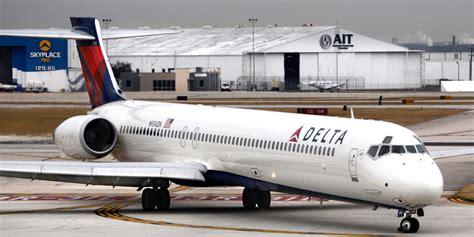
Marcia Bayer boarded her flight with more than luggage—she carried the weight of a life-or-death mission. When the Texas resident booked her emergency flight to Rio de Janeiro, she wasn’t chasing a vacation or business opportunity. She was racing against time to be by her critically ill father’s side. What unfolded instead has triggered a $250,000 lawsuit against Delta Air Lines, potentially setting a new benchmark for airline accountability and passenger rights.
A Flight Fueled by Urgency and Grief
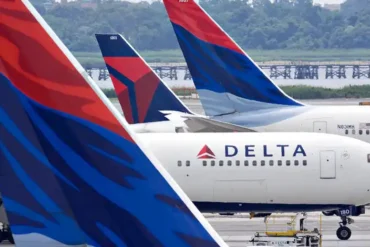
On December 26, 2024, Bayer received a phone call that changed everything. Her father, residing in Rio de Janeiro, Brazil, was gravely ill and urgently needed surgery. Under Brazilian law, a family member had to provide in-person consent for the medical procedure. The gravity of the situation left no room for hesitation. Bayer booked a last-minute ticket on Delta Air Lines, departing December 28 from Dallas-Fort Worth International Airport, with a scheduled connection in Atlanta en route to Rio.
But fate had other plans. The journey that was meant to save a life soon collapsed under a chain of logistical failures, administrative errors, and emotional devastation.
A Mechanical Breakdown with Ripple Effects
Delta’s initial flight plan was disrupted by an unexpected mechanical failure, a common yet critical threat in the aviation world. The airline swiftly rerouted Bayer’s connection, this time flying her through São Paulo’s Guarulhos International Airport instead of Atlanta. That decision would prove disastrous. The detour meant a delayed arrival in Rio—December 29, a full day later than planned.
Still, Bayer clung to hope. Her boarding pass to Rio de Janeiro was valid. The surgery window had not yet closed. But as her aircraft touched down in São Paulo, hope was swiftly replaced by heartbreak.
Denied Boarding, Abandoned at the Gate
In an inexplicable turn, Bayer was denied boarding on the final leg of her journey. Her name had vanished from the passenger list of Delta’s Brazilian partner airline. The boarding pass in her hand was rendered meaningless by an administrative ghosting. She searched for answers, but the Delta service desk was closed—no support, no agents, no solutions.
Left without recourse, Bayer made a devastating choice. She purchased a last-minute ticket for $675 out of her own pocket just to continue her mission. But hours had slipped away, and the cost was greater than dollars.
A Tragic Arrival Too Late
At 6:00 p.m. on December 29, Bayer finally arrived in Rio de Janeiro, weary and emotionally frayed. Though she managed to sign the necessary consent forms for her father’s surgery, the delay had pushed the procedure beyond a safe threshold. Doctors determined it was too risky to operate. Her father passed away shortly afterward.
The delay wasn’t just an inconvenience—it was a death sentence. And for Bayer, that reality demanded justice.
The $250,000 Lawsuit: A Legal Storm Brewing
Bayer has since filed a lawsuit in a Texas district court, seeking $250,000 in damages. The complaint alleges that Delta’s mechanical failure and booking errors directly caused her father’s death by obstructing her from delivering life-saving consent in time.
Delta, for its part, claims adherence to standard operating procedures and cites international aviation law—specifically the Montreal Convention—as a shield against liability. But Bayer’s legal team argues that gross negligence and willful misconduct rise above contractual fine print.
The Montreal Convention: Shield or Sword?
The Montreal Convention, ratified by over 130 countries, governs liability in international air travel. While it offers compensation for delays, injuries, and baggage loss, its terms are notoriously restrictive regarding emotional damages. The convention caps compensation for delays at about $7,670 (5,346 Special Drawing Rights) and often requires clear proof of financial or physical harm.
Bayer’s demand for $250,000 challenges these limits, arguing that Delta’s conduct exceeded ordinary failure and directly inflicted irrevocable emotional trauma. Her attorneys face an uphill battle—few courts have allowed such cases to pierce the protective veil of the Montreal Convention. Still, the emotional weight of Bayer’s story may tip the scales.
Operational Failures or Human Negligence?
Delta is likely to frame the incident as a tragic but legally non-actionable chain of events. The defense may point to the mechanical failure as a “routine disruption”, the denied boarding as a partner airline error, and the lack of service in São Paulo as an unfortunate circumstance. But each of these failures, taken together, paints a damning portrait of systemic breakdown.
In a travel world that sells the dream of connectivity and speed, this case asks: What happens when that promise collapses?
Emotional Damage: The New Frontier in Passenger Claims
Cases like Bayer’s mark a growing shift in air travel litigation. Emotional distress claims, once rare and dismissed as secondary, now sit at the center of evolving passenger rights debates. With rising expectations of customer service, digital support, and global reach, passengers no longer see missed flights as minor inconveniences.
They see them as failures of corporate responsibility—especially when the consequences go far beyond schedules.
Industry Implications: Every Airline Is Watching
This lawsuit is more than personal. It is a potential landmark case with implications that could reach across airlines, courts, and countries. Should Bayer win or reach a favorable settlement, airlines may face:
- Increased exposure to emotional damage claims.
- Higher costs for customer support systems.
- Pressure to overhaul interline coordination with partner carriers.
- Calls for regulatory reform on delay accountability.
Travel insurers, aviation attorneys, and consumer rights organizations are watching closely. Airline accountability, long debated in legal circles, may soon face a seismic shift.
A Spotlight on the Human Cost of Airline Failures
What makes Bayer’s case so compelling is its brutal simplicity: a daughter, trying to save her father, was blocked by preventable airline mistakes. It is a tragedy of mismanagement, inaccessibility, and inhuman systems.
And it’s not unique. Stories of missed funerals, delayed emergency reunions, and abandoned travelers have populated headlines more frequently as international travel returns to pre-pandemic intensity.
Beyond the Courtroom: What This Means for Travelers
The case sends a chilling message to travelers: you are not always protected, even when the stakes are as high as life or death. The disconnect between contractual obligations and real-world expectations remains vast.
And the industry’s response to this case could decide whether airlines will be held to a higher ethical and operational standard.
Will the Lawsuit Succeed?
Legal experts are split. Bayer’s team must prove that Delta’s conduct was so reckless that it violated not just best practices but legal obligations. Without a solid precedent in U.S. courts, success may depend on the court’s interpretation of “willful misconduct” under the Montreal Convention.
Delta’s attorneys are expected to argue that everything that occurred, while tragic, falls within accepted operational risk. But the emotional force of Bayer’s story may prove persuasive in ways technical arguments cannot suppress.
The Unanswered Question
Ultimately, no legal resolution can undo the loss. Yet one haunting question persists: Had Delta fulfilled its duty, could Bayer’s father still be alive?
The court may never answer that. But for the travel industry, Bayer’s case demands a reckoning. The time has come to move beyond disclaimers and delay vouchers—and toward a model of real accountability that puts people over policies.
The Verdict Ahead
As proceedings continue, Bayer’s case becomes more than just a lawsuit. It becomes a referendum on what airlines owe their passengers—not just legally, but morally. And it’s a sobering reminder that in the skies above, every lost minute has a name, a story, and sometimes, a grave cost.