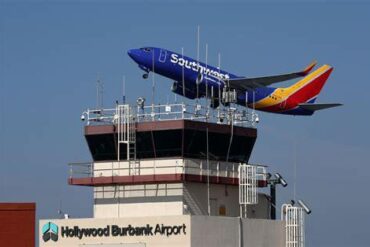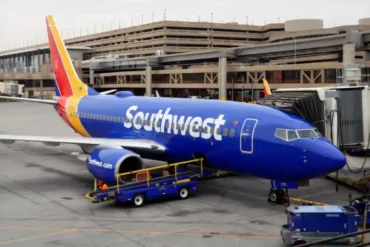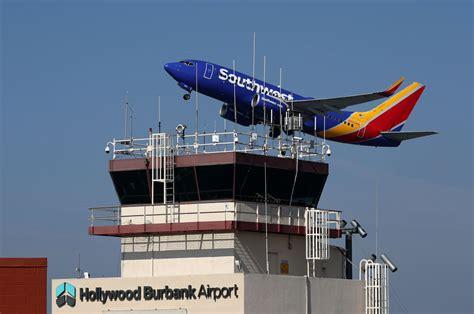
A routine domestic flight turned into a legal storm for Southwest Airlines when a passenger filed a $200,000 negligence lawsuit, claiming serious injuries from a mid-air accident involving a spilled ice cube. The case, filed in Missouri district court, is already raising significant questions about airline responsibility, crew training, and passenger safety standards within U.S. airspace.
Incident Aboard Flight WN4379: A Slip That Sparked a Lawsuit
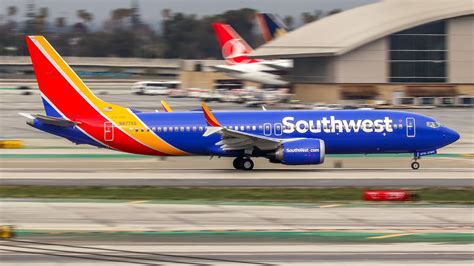
On May 20, during Southwest Airlines flight WN4379 from New York LaGuardia (LGA) to St. Louis Lambert International Airport (STL), passenger Donnell Sims suffered a sudden fall while en route to the lavatory. The cause? A rogue ice cube, left unattended on the cabin floor.
According to court filings, the mishap originated when a flight attendant accidentally spilled a cup of liquid and ice while performing trash collection during the final stages of the flight. Sims contends the crew member continued down the aisle without addressing the slippery hazard, leaving behind a danger that would soon have painful consequences.
Minutes later, Sims rose from his seat, unaware of the translucent cube lying in the carpeted aisle. He slipped, landed forcefully, and sustained injuries to his neck and back. Though flight attendants reportedly provided onboard medical support—including Tylenol—and arranged for emergency medical services (EMS) upon landing, Sims’ pain persisted. He eventually sought hospital treatment and, weeks later, filed a lawsuit citing two counts of negligence and demanding $100,000 per count.
Legal Grounds: When State Law Takes Over
Unlike international aviation incidents that fall under the Montreal Convention, domestic flights such as Sims’ are governed by state-level tort and negligence laws. That distinction fundamentally shifts the legal framework.
Under Missouri law, Sims’ claim centers on the premise that Southwest Airlines bears liability for its employee’s actions, particularly when those actions result in a known, unremedied hazard. His argument asserts that:
- The flight attendant created a safety risk by spilling the ice.
- The risk was not mitigated despite being observable.
- Southwest failed to train or enforce procedures for such incidents.
- The fall and resulting injuries were foreseeable and preventable.
While seemingly minor, cases like this can have outsized legal implications. Even one neglected detail—like a spilled ice cube—can turn into a multi-thousand-dollar liability for an airline.
Injury in the Skies: How Much is a Slip Worth?
Personal injury lawsuits within the aviation industry are not uncommon, but they are rarely publicized unless a substantial claim or unusual circumstances are involved. With $200,000 on the line, Sims’ case has already attracted attention for several reasons:
- Transparency: Most airline settlements are handled privately, meaning little public documentation exists regarding compensation.
- Medical Costs: Given the nature of the U.S. healthcare system, a single ER visit or spinal evaluation can rack up tens of thousands in bills, which plaintiffs typically seek to recover through legal channels.
- Precedent: A successful claim may influence airline policies or future lawsuit strategies.
Legal experts suggest that the suit’s outcome could hinge on Southwest’s documented safety protocols, the availability of surveillance or witness testimony, and the consistency of Sims’ medical records showing long-term injury.
Airline Responsibility: How Clean is Clean Enough?
The key to Sims’ case—and many like it—lies in the issue of reasonable duty of care. Airlines are obligated to maintain a safe environment for passengers, particularly in spaces like aisles and lavatories where movement is common. However, proving negligence requires demonstrating that Southwest:
- Knew or should have known about the ice hazard.
- Failed to act promptly or warn passengers.
- Had no mitigating factors that could excuse the oversight.
Airlines often argue that turbulence, limited space, and in-flight distractions create a fluid environment where not all hazards can be instantly resolved. However, plaintiffs argue that certain standards—especially when a hazard is created by crew action—must be upheld regardless of those challenges.
The Role of Cabin Crew: Prevention vs. Protocol
This lawsuit could also illuminate the depth of flight attendant training and the protocols used to manage in-flight accidents. If Southwest lacks specific training modules instructing crew members to immediately address physical hazards like spilled ice, that absence could bolster Sims’ case.
Moreover, if the attendant involved failed to alert fellow crew members, place a wet floor sign or caution tape, or otherwise mitigate the danger, it could represent a clear lapse in procedural discipline.
Southwest Airlines has not publicly commented on the incident or the pending lawsuit. However, their legal response will likely contest the scope of injury, the circumstances of the fall, and possibly Sims’ medical claims. In many such cases, defense teams attempt to minimize compensation by arguing pre-existing conditions, exaggerated symptoms, or lack of causal connection between the fall and the injury.
Behind the Curtain: The Quiet World of Airline Settlements
While the court filing is public, what happens next is likely to unfold behind closed doors. U.S. carriers, including Southwest, frequently settle injury claims outside the courtroom to avoid reputational harm and limit legal fees.
But this approach has a downside: lack of transparency. Because settlements typically involve non-disclosure agreements (NDAs), the public remains unaware of how much is paid or how often incidents like Sims’ occur. This secrecy can undermine broader discussions around airline accountability and safety practices.
If this case proceeds to trial—or is vigorously contested—it may offer rare insight into how major U.S. airlines manage internal investigations, train cabin crews, and handle civil litigation linked to passenger injuries.
Flying the Litigious Skies: Broader Implications for U.S. Aviation
Sims’ lawsuit reflects a larger national reality: In the absence of universal healthcare or robust passenger rights legislation, the courtroom remains a primary venue for compensating injury victims. Whether it’s turbulence-related trauma, falling luggage, or slippery substances, airline passengers have limited recourse unless they pursue private litigation.
This case also arrives amid increasing scrutiny of airline operations, from mechanical safety to customer service. In recent years, incidents involving dragged passengers, canceled flights, and crew misconduct have shaped public perception and prompted regulatory calls for higher standards.
While Sims’ fall may appear minor compared to high-profile aviation disasters, its legal impact could resonate far beyond the spilled ice cube. A successful outcome might:
- Encourage other passengers to report unsafe conditions.
- Spur airlines to revise cabin cleaning policies mid-flight.
- Lead to enhanced employee training on in-flight hazards.
Conclusion: A Small Slip, a Major Claim
What began as an everyday beverage service has escalated into a six-figure legal battle, testing the boundaries of in-flight safety responsibilities. As Donnell Sims pursues justice for injuries he claims were preventable, the case could shape how airlines balance speed, service, and safety in cramped cabin conditions.
With an injury that may appear trivial to some, the court will now decide whether Southwest Airlines’ failure to act turned an ice cube into a liability iceberg. Regardless of the verdict, this lawsuit serves as a potent reminder that even the smallest oversights at 30,000 feet can have serious consequences on the ground.