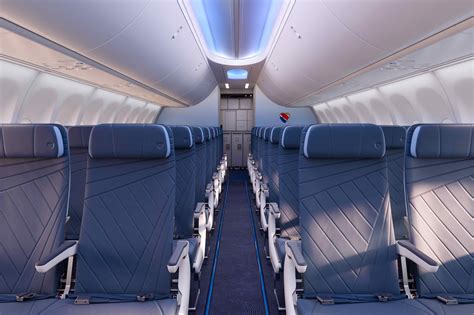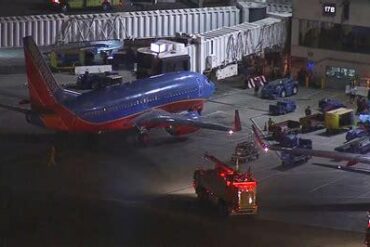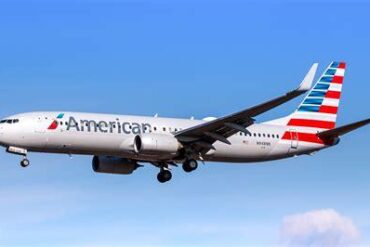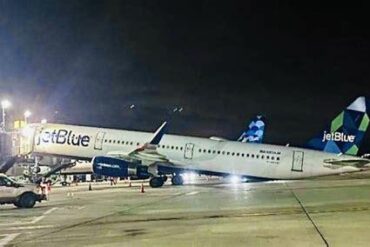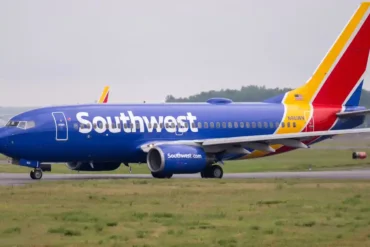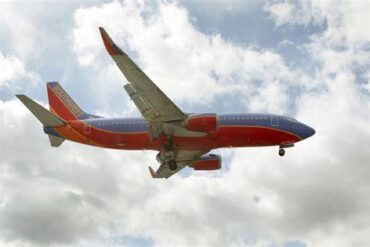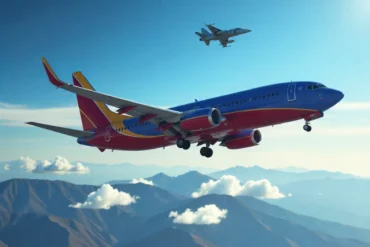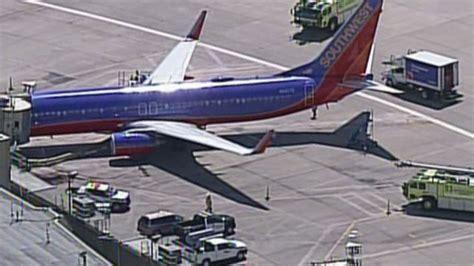
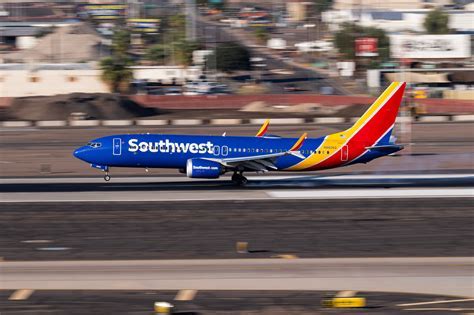
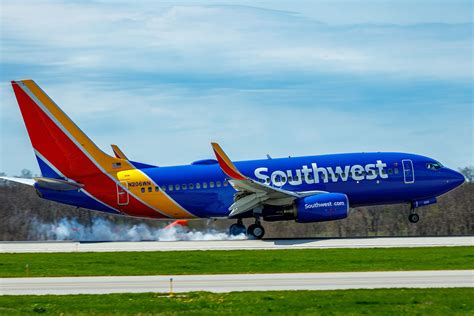
A routine Southwest Airlines flight from Dallas Love Field to Panama City, Florida became an unexpected airborne crisis when violent turbulence struck without warning during descent on June 14, 2025. The aircraft, a Boeing 737-700, was operating as Flight WN3508, with 143 passengers on board. As the plane pierced through unstable air currents near the Gulf Coast, the aircraft began to jolt aggressively, creating chaos in what had moments earlier been a serene cabin.
Witnesses aboard the flight described the terrifying moment when the cabin lights flickered, service carts rattled uncontrollably, and several passengers were thrown upward due to the intensity of the turbulence. The event unfolded so quickly that neither the passengers nor the crew had time to fully brace for impact. Despite the modern avionics of the aircraft, the atmospheric instability proved overwhelming, forcing the flight crew to abandon the original route and divert the aircraft to Jacksonville International Airport for an emergency landing.
Violent Weather Patterns Take a Toll on Air Travel
The sudden turbulence that impacted Flight WN3508 wasn’t a meteorological anomaly—it’s part of a larger pattern plaguing the aviation sector. Increasingly erratic climate behavior across the United States is amplifying the frequency and severity of turbulence, particularly in southern storm corridors like those surrounding Florida and the Gulf of Mexico.
Modern weather radars, though sophisticated, still struggle with the unpredictability of clear-air turbulence (CAT) and convective storm activity. In this instance, the turbulence was likely caused by a fast-developing storm cell just south of Panama City, which hadn’t yet registered prominently on real-time radar. The crew entered a holding pattern at 2,800 feet, attempting to wait out the storm, but were ultimately forced to divert after determining that the descent trajectory remained too hazardous for a safe landing.
Onboard Emergency and Medical Response
When the aircraft landed safely in Jacksonville, emergency medical teams were already waiting on the tarmac. At least one passenger sustained serious injuries as a result of being unrestrained during the episode. While no fatalities occurred, the incident prompted renewed scrutiny into passenger safety measures and the importance of seatbelt usage throughout the flight.
According to initial reports from Southwest, the injured individual was not wearing a seatbelt at the time of the turbulence. This mirrors findings from previous FAA data, which consistently link turbulence-related injuries to non-compliance with seatbelt advisories. It also underscores the call from aviation safety boards to emphasize continuous restraint use, even during calm portions of the flight.
Ripple Effects Across Airline Operations
The repercussions of the incident extended beyond the safety scare. The diversion disrupted Southwest’s tightly choreographed schedule, triggering a cascade of flight delays and rebookings. With Southwest Airlines operating on a high-frequency, rapid-turnaround model, a single disruption such as this can have extensive financial and logistical impacts.
Flight WN3508 was one of 19 scheduled rotations between Dallas and Panama City that week. The unexpected rerouting and delay created passenger backlog, impacted crew scheduling, and led to added operational costs in terms of fuel burn, airport fees, and crew overtime.
The Growing Menace of In-Flight Turbulence
Industry experts are sounding alarms: turbulence is not only becoming more common—it’s growing more dangerous. Researchers at the University of Reading in the UK estimate that climate change could double or even triple the frequency of severe turbulence in some air corridors over the coming decades.
As atmospheric jet streams shift and thermal instability increases, aircraft flying at cruising altitudes are encountering more unexpected pockets of violent air. Though aircraft like the Boeing 737-700 are designed to endure significant stress, the human toll from in-cabin injuries and the psychological trauma cannot be ignored.
Gaps in Current Safety Protocols
Despite numerous technological upgrades, turbulence remains one of the last frontiers of unpredictability in modern aviation. Pilots rely on PIREPs (Pilot Reports), radar updates, and turbulence detection systems, but often receive little or no advance warning—especially with rapidly forming storm systems over the Gulf.
The FAA mandates that passengers be briefed on seatbelt safety, but compliance enforcement is minimal. Airlines are now being urged to:
- Incorporate enhanced turbulence forecasting data from satellite and radar composites.
- Integrate real-time atmospheric modeling into cockpit displays.
- Provide more assertive and persistent cabin announcements about turbulence risks.
Regional Impact: Florida’s High-Risk Skies
The Gulf Coast air corridor—particularly routes into cities like Panama City, Tampa, Mobile, and New Orleans—is especially susceptible to sudden weather shifts. Warm ocean currents, dense humidity, and unstable pressure systems combine to form a volatile environment for incoming flights.
In the past three years alone, the region has seen a spike in unscheduled diversions and turbulence reports. Jacksonville, often used as an emergency diversion site due to its proximity and runway capacity, has handled an increasing number of these incidents, reflecting the broader climatological trend.
Regulatory and Technological Shifts on the Horizon
In response to the growing crisis, regulatory bodies including the FAA and National Transportation Safety Board (NTSB) are reviewing current turbulence classification systems. Discussions are underway to introduce a more granular turbulence scale, better reflect the true variability of in-flight conditions, and enhance cross-airline communication of weather threats.
Aircraft manufacturers like Boeing and Airbus are also exploring next-generation turbulence sensors that would allow for earlier detection and smoother evasive maneuvers. Meanwhile, airlines are expected to implement updated crew training programs that reflect the evolving risks of modern air travel.
What This Means for the Flying Public
For passengers, the implications are clear: flying through America’s skies—particularly during storm seasons—requires heightened awareness and preparedness. Experts recommend keeping seatbelts fastened at all times, remaining vigilant for crew instructions, and building in extra buffer time when connecting through weather-vulnerable regions.
While aircraft remain structurally safe, the psychological and physical impacts of severe turbulence can leave lasting effects. Increased reporting of in-flight anxiety and post-event travel aversion are contributing to an ongoing debate about how much more airlines can do to educate, prepare, and protect their passengers.
A Wake-Up Call for an Industry on Edge
Southwest Flight WN3508’s terrifying ordeal may be over, but its significance echoes far beyond the cabin walls of a single Boeing 737. The event is a stark reminder that aviation safety is inextricably tied to climate volatility—and that both the industry and its customers must adapt quickly.
As storms become fiercer and skies less predictable, every stakeholder in the aviation ecosystem—airlines, airports, regulators, and travelers—must confront a new reality: turbulence is no longer the exception. It’s becoming the norm.
Flight WN3508 is now back in service. But the lessons it has imparted, especially regarding passenger safety, real-time decision-making, and climate resiliency, are poised to influence air travel protocols for years to come.