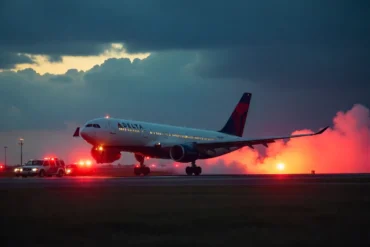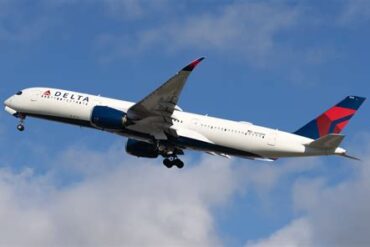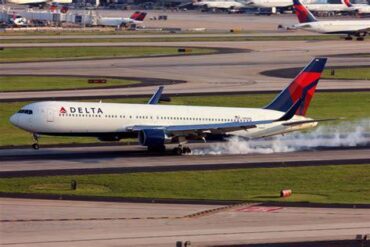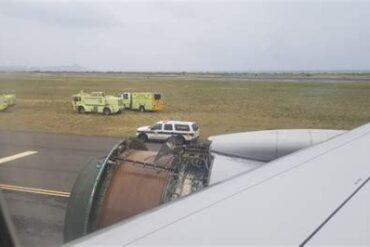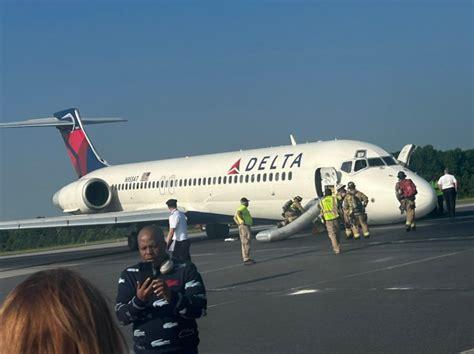
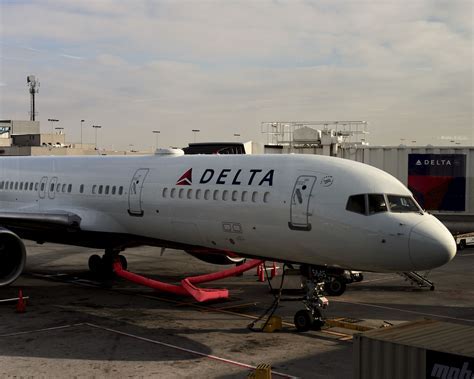
Delta Air Lines Flight 1576, a Boeing 757-200 en route from Atlanta (ATL) to Orlando (MCO), was forced to make an emergency landing at Cecil Airport (VQQ) in Jacksonville, Florida, on June 9, following a sudden cabin depressurization event that triggered the deployment of oxygen masks and caused momentary panic among passengers.
In-Flight Emergency: Chaos Over Calm Skies
The aircraft, carrying 206 passengers, was cruising at a normal altitude when passengers began to feel a noticeable change in cabin conditions. According to multiple onboard accounts, the temperature rose unexpectedly, followed swiftly by the sudden release of oxygen masks. Passengers reported a smoke-like haze in the cabin, although no active fire was later confirmed.
One of the passengers, Peter Stewart, a veteran traveler with nearly three million miles flown, said the experience eclipsed anything he had previously encountered. Sitting in the emergency exit row, Stewart had a front-row view of the rapid descent that followed. “The oxygen masks dropped, and we just started going down. Fast,” he recounted. The silence among passengers was described as “deathly quiet,” a stark contrast to the intense psychological stress inside the cabin.
An Uncommon Airport for a Commercial Jet
The aircraft diverted to Cecil Airport, a joint civilian-military facility not typically designated for large commercial aircraft like the Boeing 757. Yet the crew executed what observers and passengers described as a precise and expertly managed emergency descent.
The approach involved a steep descent and banking maneuver that Peter Stewart credited to the likely military background of the flight crew. “You could tell the pilots had serious flight experience. The plane turned hard and dropped in a controlled way. They knew exactly what they were doing,” he added.
Upon landing safely, the cabin erupted in relieved applause. No injuries were reported. The Federal Aviation Administration (FAA) has since opened an official investigation into the event, focusing on the cause of the depressurization and whether any mechanical failures were involved.
Smoke or Mist? Conflicting Reports Emerge
Initial passenger accounts suggested smoke or a strange mist in the cabin, which amplified fears of an onboard fire. However, Delta later confirmed that no fire or active smoke was detected on the aircraft. The haze may have been caused by rapid pressure changes or condensation from the oxygen systems—a not-uncommon byproduct during such emergencies.
Despite this clarification, the sensations experienced by passengers remained disturbing. Some described a “metallic odor” and warm airflow, symptoms often associated with pressurization system malfunctions. Such incidents, while rare, can escalate quickly and require immediate pilot response.
The Aircraft: Boeing 757-200
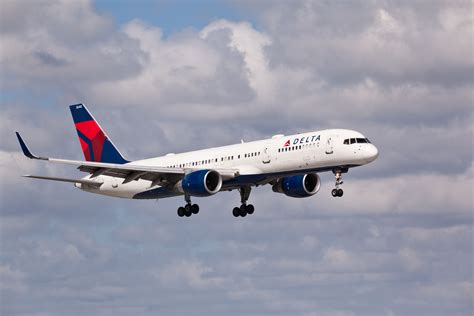
The aircraft involved, a Boeing 757-200, is a long-standing member of Delta’s fleet, often used on domestic and transcontinental routes. Known for its robust performance and reliability, the 757 still operates on many routes despite its aging status in commercial aviation.
Delta has invested significantly in maintenance and modernization programs for its older fleet, though incidents like these renew public concerns about aging aircraft. Maintenance logs and sensor readings from Flight 1576 will play a key role in the FAA’s ongoing investigation.
Delta’s Crisis Management and Passenger Support
Delta issued a formal statement shortly after the event, emphasizing that “safety comes before everything else.” The airline has arranged for passengers to complete their journey to Orlando via alternative ground transportation and committed to customer support and assistance.
The airline’s response, while swift, also raised questions about communication protocols. Passengers noted that the Wi-Fi went out shortly after the descent began, leading to moments of personal anxiety and emotional distress. Stewart mentioned he managed to send a brief message—“I love you”—to his family before losing connection.
A Lasting Psychological Impact
Though physically unharmed, many passengers were emotionally shaken. Stewart, who has flown for over 40 years, remarked that he might choose to drive rather than fly back to Atlanta. “It just changes you. You think about things differently after something like that.”
The psychological aftermath of in-flight emergencies is an area of increasing focus within the aviation industry. Experts point out that fear of flying can become significantly magnified after such events, even for seasoned travelers.
FAA Investigation and Broader Implications
The FAA’s investigation will include a comprehensive review of the aircraft’s pressurization system, maintenance records, crew communications, and cockpit voice recordings. Preliminary data suggest the depressurization event occurred at cruising altitude, which would have necessitated the urgent descent due to the limited time of useful consciousness without supplemental oxygen.
This event has also revived discussion around the suitability of non-commercial airports like Cecil for emergency landings. While the maneuver was executed flawlessly, the lack of traditional infrastructure, such as jetways or full-scale passenger services, posed logistical challenges.
Aviation Safety in Focus
Despite the scare, this incident underscores the robust safety protocols and pilot training standards in U.S. commercial aviation. Emergency landings, though rare, are handled with procedures that prioritize lives over logistics. The successful outcome of Delta Flight 1576 is a testament to those standards.
Still, the event remains a sobering reminder of the unpredictability of flight. It highlights the critical importance of routine maintenance, system redundancy, and the human element—particularly the expertise and judgment of experienced pilots.
Conclusion: A Flight Not Soon Forgotten
Delta Flight 1576 will remain etched in the memory of its passengers—not for where it was headed, but for how it ended. A routine flight from Atlanta to Orlando turned into an unforgettable descent into an unplanned destination. Through it all, the actions of a skilled flight crew, the resilience of the passengers, and the swift response by Delta personnel combined to turn potential tragedy into a story of survival and professionalism.
As the FAA continues its investigation, passengers are left to process an experience that, for many, changed their perception of air travel forever.