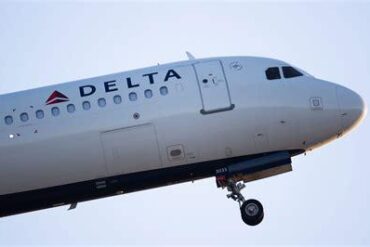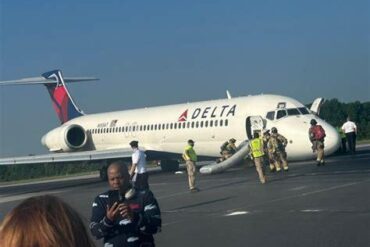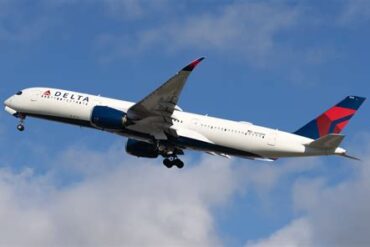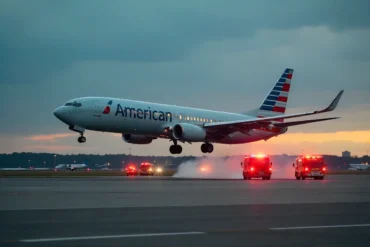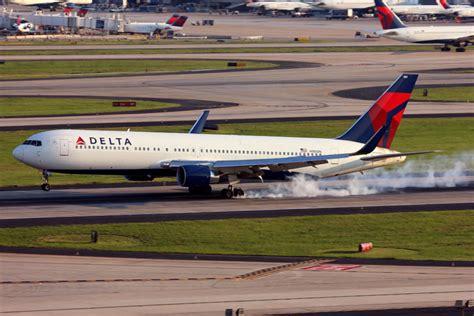
Delta Air Lines Flight 127, en route from Madrid to New York City, was forced to make an emergency landing on Terceira Island in the Azores on Sunday, July 6, 2025, after experiencing a serious engine malfunction mid-flight. The incident resulted in a prolonged and uncomfortable ordeal for passengers, many of whom found themselves stranded in a remote location with limited support and minimal infrastructure for more than a full day.
Mid-Flight Engine Trouble Forces Sudden Diversion
Flight 127, operated by a 21-year-old Airbus A330, had departed from Adolfo Suárez Madrid–Barajas Airport at around 1 PM local time. Just four hours into the transatlantic journey, the cockpit crew identified troubling signals indicative of a potential engine failure. Following established air safety procedures, the pilots opted for the nearest suitable airfield, directing the aircraft to Lajes Airport, a military airbase on Terceira Island — more than 1,600 kilometers off Portugal’s western coastline.
The aircraft landed safely approximately one hour after the engine irregularities were detected. While the technical decision was undoubtedly the right call from a safety standpoint, the choice of destination created a new set of complications. Terceira Island, primarily used for NATO and Portuguese military aviation, has limited commercial air support and is ill-equipped to handle sudden influxes of large groups of international passengers.
Passengers Face 29-Hour Stranding in Remote Military Base
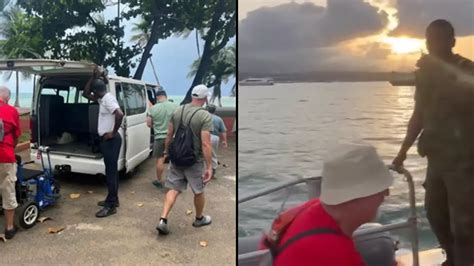
The unexpected landing marked only the beginning of what would become a grueling 29-hour delay. With minimal transportation options, scarce accommodations, and no regular commercial connections available, passengers were effectively trapped on the island with few updates and little comfort. The lack of communication, coupled with constrained access to food and amenities, compounded passenger frustrations.
Accounts from some stranded travelers described the environment as disorganized, with insufficient Delta staff on the ground and unclear guidance on next steps. Though Delta mobilized a response team, logistical constraints made rapid action difficult. Meanwhile, Terceira Island’s isolation and basic facilities did little to alleviate the distress experienced by those onboard.
Delta Dispatches Rescue Plane From New York
In response to the unfolding situation, Delta Air Lines deployed a recovery aircraft, Flight 9927, from John F. Kennedy International Airport (JFK). This aircraft departed several hours after the emergency landing and touched down in the Azores around 2 AM local time on Monday morning.
Despite the early arrival of the rescue aircraft, passengers were not boarded until nearly 9 PM later that day — enduring further delays that pushed the total disruption to over 31 hours. Eventually, Flight 9927 departed Terceira and landed at New York’s JFK Airport at 10:22 PM Eastern Time, bringing to an end an ordeal that left many passengers fatigued, frustrated, and dissatisfied with the airline’s handling of the crisis.
Delta Apologizes, Cites Safety as Paramount Priority
In a public statement issued shortly after the incident, a Delta spokesperson expressed regret over the disruption, emphasizing that the emergency diversion was undertaken out of an abundance of caution for passenger safety. The airline reiterated its adherence to FAA protocols that prioritize emergency rerouting to the nearest suitable airport.
While Delta’s emphasis on safety aligns with industry standards, the airline acknowledged the extended inconvenience and pledged to improve crisis communication protocols for future incidents. As more travelers return to the skies in record numbers post-pandemic, such challenges are becoming increasingly visible across major carriers.
Echoes of a 2023 Incident in the Same Location
The Terceira emergency landing is not without precedent. In 2023, another Delta flight — this time from Accra, Ghana to the United States — was also rerouted to Terceira due to an oxygen system malfunction. That group of passengers similarly endured a long stranding and voiced complaints of poor support.
Social media posts from that earlier incident detailed dire accounts, including passengers being told to drink from bathroom sinks and being chastised for expressing frustration. One passenger shared that a Delta representative advised them to be “grateful they weren’t stranded at sea” — a sentiment that did little to improve morale.
The repetition of such incidents at the same isolated location raises questions about the preparedness of airlines like Delta to manage emergency diversions to non-commercial destinations.
Terceira Island: A Strategic Airfield but Commercially Sparse
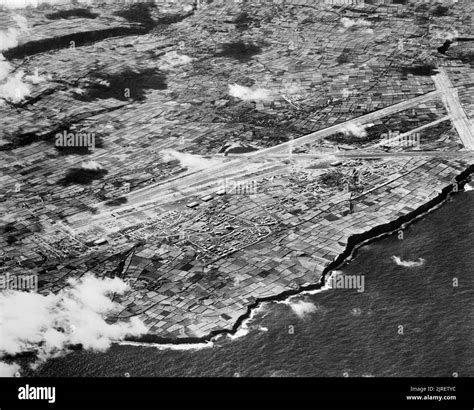
Terceira’s Lajes Air Base, while crucial for NATO military operations, lacks the commercial infrastructure necessary to accommodate wide-body aircraft filled with international travelers. The base is equipped for high-security, small-scale military traffic — not sudden diversions of 200+ civilian passengers.
The Azores archipelago, comprising nine volcanic islands, is a picturesque but geographically remote area located deep in the North Atlantic. That remoteness, while stunning for tourism, presents significant logistical barriers during emergencies. A lack of alternative transportation, shortage of available accommodations, and sparse commercial aviation traffic make managing unexpected detours particularly challenging.
The Crucial Role of Communication During Crisis
While technical failures can occur in even the most modern and well-maintained aircraft, how an airline communicates and coordinates during and after such events can make or break the customer experience. In the case of Delta Flight 127, many passengers cited a lack of clear communication, limited updates, and ambiguous rebooking information as sources of heightened stress.
Delta’s public apology, while necessary, falls short unless it is accompanied by meaningful changes in emergency response training, ground team coordination, and real-time passenger updates. Airlines must acknowledge that the perception of safety is not only about mechanics and procedures, but also about the emotional well-being of passengers caught in the middle of a crisis.
Modern Air Travel and the Rise of Unplanned Diversions
In an age of record-breaking flight volumes, aircraft are pushing farther across oceans and less populated airspaces. As a result, diversions to remote, under-equipped airports are becoming more frequent. When such events occur, they shine a light on the fragile balance between aviation efficiency and crisis management preparedness.
Passenger expectations are evolving. Modern travelers demand not only safe passage, but comfort, transparency, and dignity in the face of unexpected delays. Emergency plans that stop at the landing gear are no longer sufficient. Airlines must invest in end-to-end contingency protocols, encompassing accommodation, nutrition, medical needs, and psychological support.
What Airlines Must Learn From the Azores Incident
Delta’s emergency diversion of Flight 127, while ultimately a safe operation, highlights the urgent need for airlines to rethink their readiness for unscheduled landings in austere environments. Key takeaways include:
- Proactive coordination with local governments and military bases where diversions are likely.
- Deployment of mobile response teams trained in passenger care.
- Integration of live passenger alert systems that can update affected travelers in real time.
- Pre-approved agreements with hospitality vendors in remote zones.
In each of these areas, airlines can turn a high-stress event into a manageable, human-centered experience that builds rather than damages brand trust.
Looking Forward: A Passenger-Centric Recovery
Delta’s handling of the Azores incident reflects both commendable adherence to flight safety and critical deficiencies in passenger support and communication. In an age where customer experience is increasingly public, shared instantly across digital platforms, airlines can no longer afford to let even a minor oversight balloon into a PR disaster.

In the coming weeks, Delta’s efforts to engage with affected passengers and make amends will be scrutinized closely. Compensation packages, public transparency, and structural updates to crisis procedures will serve as indicators of the airline’s commitment to learning from its mistakes.
For travelers, the story serves as a reminder that even the most routine long-haul flight can be disrupted by forces beyond control. Preparedness, patience, and awareness remain vital when navigating the skies — particularly over the vast, isolated stretches of the North Atlantic.
Conclusion: A Wake-Up Call in the Middle of the Atlantic
The emergency landing of Delta Flight 127 on Terceira Island stands as a case study in both aviation resilience and operational vulnerability. It underscores the imperative for airlines to go beyond safety compliance and deliver holistic crisis management — even when faced with geographical and logistical extremes.
Ultimately, the real test of an airline’s value lies not just in flying thousands of miles uninterrupted, but in how it treats its passengers when the unexpected happens. In that regard, Delta — and the broader aviation industry — still has altitude to gain.