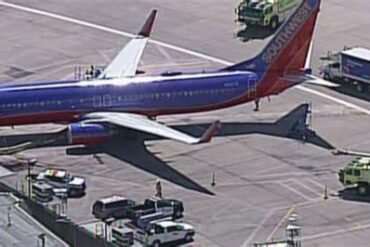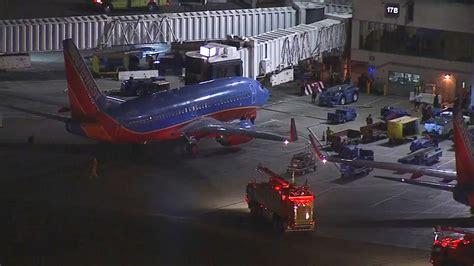
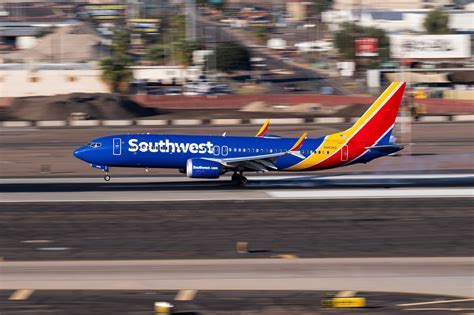
Southwest Airlines Flight WN3508, en route from Dallas Love Field (DAL) to Panama City, Florida (ECP) on June 14, 2025, was forced to make an emergency landing at Jacksonville International Airport (JAX) after encountering violent turbulence during descent. The incident, triggered by intense weather disruptions, resulted in a serious injury to one passenger and underscored the growing challenges turbulence poses to modern aviation.
The aircraft, a Boeing 737-700, departed Dallas at 10:05 AM under normal conditions and cruised smoothly at 39,000 feet until it began its descent into Florida. As it neared its destination, the flight encountered extreme convective activity and unstable air masses, which caused violent jolts as the aircraft descended through 2,800 feet. The turbulence was so severe that it injured a passenger who, according to preliminary reports, was not securely fastened with a seatbelt at the time.
Severe Turbulence Forces Emergency Diversion
Initially, the flight crew entered a holding pattern near Panama City for approximately 10 minutes, evaluating whether landing conditions would improve. However, the weather system intensified, and continuing the approach to Northwest Florida Beaches International Airport (ECP) became increasingly dangerous. Pilots made the swift decision to divert to Jacksonville — a location far enough from the storm system to ensure a safer landing environment.
The aircraft safely landed in Jacksonville after a flight time of 2 hours and 40 minutes, roughly 40 minutes longer than originally scheduled. Emergency medical personnel were on standby at the airport, and the injured passenger was quickly treated and transported to a local hospital. While no additional injuries were reported, the incident left a lasting impression on passengers and raised pressing concerns about in-flight safety during turbulent conditions.
Climate Instability Escalating Turbulence Incidents
This event is far from isolated. It reflects a broader and increasingly critical issue facing commercial aviation: rising turbulence incidents tied to climate instability. Meteorological experts point to climate change-driven atmospheric changes — including warmer air masses and more volatile jet streams — as key contributors to the growing frequency and intensity of turbulence.
Despite technological advancements in forecasting, turbulence remains inherently difficult to predict, especially when associated with rapidly developing storm cells. Pilots and dispatchers rely on data from satellites, radar, and pilot reports to assess flight paths, but clear-air turbulence and sudden atmospheric shifts often leave little reaction time.
Economic and Operational Fallout from Diversions
Flight WN3508’s diversion was more than just a safety maneuver — it carried significant economic and logistical consequences for Southwest Airlines. Unscheduled landings incur costs from multiple directions:
- Additional fuel consumed during extended flight time and holding patterns.
- Ground coordination at an alternate airport, including emergency services.
- Disruption to the aircraft’s original routing and schedule.
- Rebooking and accommodation needs for displaced passengers.
Even a single diversion can trigger a ripple effect throughout an airline’s network, especially when aircraft and crew rotations are tightly scheduled. For Southwest, a carrier known for its lean operational model and point-to-point network, the ripple effects of such incidents can be particularly disruptive.
Passenger Safety and the Seatbelt Imperative
Perhaps the most sobering aspect of this incident is the injury sustained by a passenger — a stark reminder of how turbulence can turn routine moments into dangerous ones in an instant. Safety experts have long emphasized the critical importance of wearing seatbelts while seated, regardless of whether the seatbelt sign is on or off.
According to data from the FAA, the majority of injuries during turbulence involve unbuckled passengers or crew. In many cases, passengers get up during periods of apparent calm, only to be caught off-guard by sudden vertical drops or upward jolts caused by unseen air currents. In this case, turbulence struck during descent — a phase typically associated with increased caution, but not always anticipated by travelers.
Flight crews are trained to communicate turbulence warnings clearly and reinforce the need for seatbelt compliance. However, passenger cooperation is a vital component of in-flight safety — one that must not be overlooked amid growing turbulence risks.
Pilots Navigating Weather Extremes in Florida’s Airspace
The Southeast U.S., and particularly Florida, presents unique meteorological challenges due to its subtropical climate, frequent thunderstorms, and proximity to tropical storm systems. During summer months, towering cumulonimbus clouds and rapid storm formations are common, creating high-risk descent and approach paths.
Pilots operating in this region are often forced to make quick decisions — balancing safety, fuel management, and passenger comfort. In this case, Southwest’s crew demonstrated textbook emergency judgment, prioritizing safety by aborting the Panama City landing and opting for Jacksonville, a well-equipped facility with ample runway length and strong emergency response infrastructure.
Weather-related diversions are not unusual in Florida, but the increasing intensity and unpredictability of storm systems are pushing even experienced flight crews to adapt in real time, often with limited visibility and narrow windows of opportunity.
The Role of Advanced Weather Technology — And Its Limits
Modern aircraft like the Boeing 737-700 are equipped with cutting-edge avionics, including:
- Windshear detection systems
- Onboard radar with turbulence mapping
- Flight management systems (FMS) with real-time weather integration
Despite these tools, turbulence — especially from convective weather — remains one of the most elusive threats in aviation. Sudden changes in air pressure or wind speed, particularly during ascent and descent, can evade radar detection. Additionally, turbulence experienced at altitude may differ significantly from what appears on radar screens.
This technological gap reinforces the importance of proactive avoidance strategies, real-time updates from other aircraft, and enhanced communication with air traffic control. It also highlights the need for continued investment in next-gen turbulence forecasting systems that integrate satellite data, AI-driven prediction models, and high-resolution weather simulations.
Preparing for a Turbulent Future in Air Travel
Southwest Airlines’ handling of the WN3508 diversion will likely be analyzed as part of a growing body of aviation safety case studies aimed at understanding the impacts of climate-driven turbulence. As the atmosphere grows more unstable, airlines must recalibrate their protocols, contingency strategies, and route planning methodologies to stay ahead of developing threats.
Airline executives, regulatory authorities, and meteorologists must work in tandem to:
- Expand pilot training for handling extreme weather events.
- Invest in real-time atmospheric data platforms.
- Enhance passenger education on turbulence and safety compliance.
- Rethink routing strategies to minimize exposure to turbulence hotspots.
A Joint Responsibility: Passengers and Airlines Alike
The incident aboard WN3508 underscores a fundamental truth: ensuring safety in turbulent skies requires cooperation from everyone on board. Airlines must deploy every available tool — from technology to crew training — to avoid or mitigate turbulence. But passengers must also do their part by:
- Following flight crew instructions.
- Keeping seatbelts fastened at all times while seated.
- Staying alert during weather announcements or turbulence alerts.
While turbulence injuries remain statistically rare, each preventable injury is one too many. As conditions in the skies grow more complex, collaboration between passengers and airlines becomes a critical line of defense.
Conclusion: A Wake-Up Call in the Clouds
The emergency diversion of Southwest Flight WN3508 serves as a timely reminder of the real-world consequences of turbulence in modern air travel. With one passenger injured and hundreds of lives momentarily in uncertainty, the event highlights not only the importance of operational agility in crisis but also the urgent need for broader adaptation in aviation protocols.
Climate volatility is no longer a future concern — it is reshaping the dynamics of air travel now. From aircraft manufacturers to air traffic controllers, from pilots to passengers, a comprehensive, safety-first mindset is needed to navigate this new era of unpredictable skies.