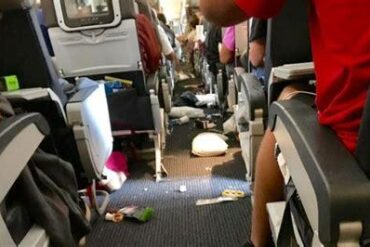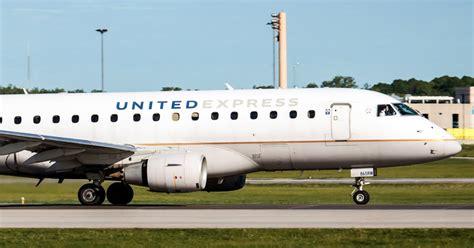
On the evening of Sunday, May 4, 2025, a routine regional flight turned into an alarming ordeal when SkyWest Flight 5690, operating under the United Express brand, was forced to make an emergency landing in Waco, Texas. The Bombardier CRJ-200 aircraft, which departed from Springfield-Branson National Airport in Missouri at 4:48 p.m. CT, encountered severe turbulence en route to George Bush Intercontinental Airport in Houston. What followed was a dramatic mid-air episode that injured five passengers and triggered an urgent response on the ground.
SkyWest Flight 5690: A Flight Derailed by Unexpected Turbulence
The flight had been progressing normally when it was suddenly disrupted by extreme turbulence. According to SkyWest, the aircraft experienced “severe turbulence” at an undisclosed point in the route, prompting immediate deviation from its planned course. Despite the aircraft’s modest capacity—carrying only 29 passengers and three crew members—the situation rapidly escalated when five individuals sustained injuries due to the violent atmospheric conditions.
The flight crew, recognizing the gravity of the situation, swiftly diverted to Waco Regional Airport. Upon landing, the airport was immediately mobilized for emergency medical support. Waco Fire Department, led by Acting Fire Chief Robby Bergerson, dispatched five emergency units and 13 personnel to assist and triage passengers on the tarmac.
Emergency Medical Response and Passenger Condition
After landing, emergency medical teams evaluated all passengers. Five were transported to local hospitals for treatment. According to SkyWest, all injuries were minor, but the incident underscored the real danger that turbulence can pose, even on relatively short regional flights.
SkyWest stated, “Medical personnel met and evaluated passengers, and five passengers were transported to the hospital. SkyWest and United are making sure all customers get the care they need.” The carrier dispatched a replacement aircraft to Waco to complete the journey, which departed for Houston at 1:17 a.m. CT the following morning.
Aircraft and Crew Details: CRJ-200’s Role in Regional Networks
The aircraft involved in the incident, the Bombardier CRJ-200, is a staple in regional air service. Known for its nimble design and seating for approximately 50 passengers, the CRJ-200 often serves shorter city-pair routes for major airlines under regional partnerships such as United Express. While capable of handling moderate turbulence, its smaller size compared to mainline aircraft can intensify the physical impact of weather disturbances.
The crew’s handling of the emergency has been praised, particularly for their rapid response and effective communication with air traffic control and emergency responders. Their actions ensured a safe landing and immediate care for those injured.
An Alarming Pattern in Recent U.S. Aviation Incidents
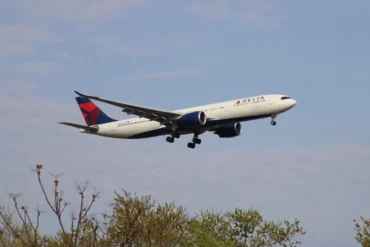
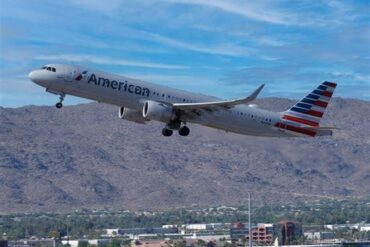
This event is not an isolated occurrence. The past weeks have seen an uptick in mid-air emergencies across U.S. airspace. Just one day prior, a FedEx cargo plane bound from Newark to Indianapolis struck a bird during takeoff, leading to a precautionary landing. And earlier in the week, a Delta Air Lines flight returned to Atlanta after the crew reported possible smoke onboard. In yet another disturbing episode, an American Airlines jet from New York to New Delhi was rerouted to Rome following a bomb threat.
These back-to-back incidents have intensified public scrutiny over flight safety and the resilience of airline operations under stress. While none of these incidents resulted in fatalities, they illustrate how dynamic and unpredictable modern air travel can be, especially when weather or technical issues intervene.
Understanding Turbulence: Invisible Yet Potent Threat
Turbulence is one of the most common causes of in-flight injuries, especially for passengers not wearing seatbelts. It can result from various meteorological phenomena such as jet streams, thunderstorms, or sudden atmospheric pressure changes. In most cases, pilots receive real-time updates to adjust altitude or routing to avoid turbulence. However, clear-air turbulence (CAT), which occurs in cloudless skies and is often undetectable by radar, remains particularly treacherous.
The Federal Aviation Administration (FAA) continues to advise passengers to remain seated with seatbelts fastened whenever possible. The SkyWest incident reinforces this advice as a standard safety precaution rather than a mere suggestion.
Airlines’ Response and Communication Strategy
Both SkyWest and United Airlines were swift in issuing statements and providing medical assistance to passengers. The replacement aircraft, coordinated overnight, ensured minimal disruption to onward travel. Public relations teams emphasized their commitment to customer care and operational safety.
However, the lack of clarity about where exactly the turbulence occurred leaves unanswered questions. Aviation experts are calling for more transparency, especially as data from aircraft sensors and pilot reports could inform future mitigation strategies.
Broader Implications for Regional Airlines
Regional carriers like SkyWest play a vital role in connecting smaller communities to major hubs. Yet, they often operate with older aircraft, leaner maintenance operations, and compressed scheduling, which can compound risks during unforeseen events. Although the CRJ-200 remains widely used, its aging fleet and relatively cramped cabins may raise questions about passenger comfort and safety during turbulence.
Airline analysts point out that while such aircraft are structurally sound and FAA-certified, modern replacements with improved turbulence-detection and mitigation systems are emerging across the industry. For now, carriers must rely heavily on crew training, communication protocols, and emergency coordination to manage such in-flight crises.
The Psychological Aftermath: Passengers and Public Perception
Even when injuries are minor, incidents involving emergency landings leave a lasting psychological mark. For passengers aboard Flight 5690, the ordeal turned what was meant to be a short domestic flight into a traumatic memory. The sudden jolt of severe turbulence, followed by the sight of emergency vehicles and hospital transports, likely shook confidence in flying for some.
For the general public, such incidents chip away at the perceived safety net of routine air travel. While aviation remains the safest mode of transport statistically, visible disruptions like this remind travelers of its fragility under unpredictable environmental stressors.
Looking Ahead: Strengthening Preventive Measures
The SkyWest turbulence incident demands an industry-wide introspection. First, it underscores the need for enhanced forecasting tools that detect clear-air turbulence. Secondly, it renews calls for mandatory seatbelt usage policies, especially during periods of increased weather instability. Thirdly, it raises questions about fleet modernization among regional carriers.
Meteorologists and aviation engineers are working on refining turbulence prediction algorithms, while some aircraft manufacturers are integrating real-time sensing systems that feed data into shared aviation networks. These advancements, combined with pilot feedback and FAA oversight, may reduce the likelihood of future emergencies.
Conclusion: A Wake-Up Call for Caution in the Skies
The emergency landing of SkyWest Flight 5690 serves as a stark reminder that even the most routine flights are not immune to the forces of nature. While five passengers sustained only minor injuries, the event underscores a critical lesson for the airline industry, regulators, and the flying public: turbulence is not trivial.
From emergency responders in Waco to airline dispatchers coordinating late-night relief flights, the episode revealed a system that, while stressed, ultimately functioned to protect lives. The challenge now lies in anticipating such events more accurately, communicating better with the public, and ensuring that regional aviation safety standards remain uncompromised in a rapidly evolving operational environment.