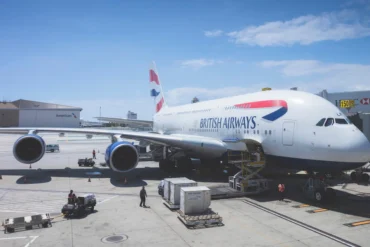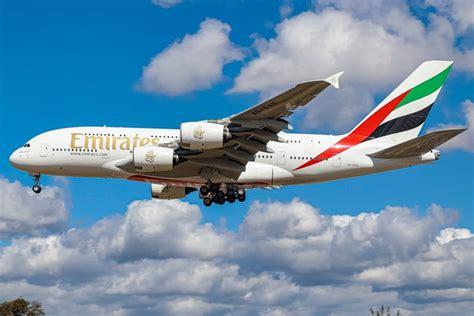
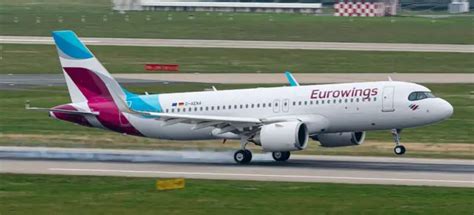
A routine European flight turned into a frightening in-flight incident when a Eurowings Airbus A320 encountered powerful wake turbulence generated by an Emirates Airbus A380, leaving five people injured despite the aircraft maintaining a separation distance greater than the minimum standards recommended by international aviation authorities.
Eurowings Flight EW635 Hit By Severe Wake Turbulence Over Bosnia And Herzegovina
Five occupants aboard a Eurowings flight traveling from Rhodes, Greece, to Cologne, Germany, sustained injuries after the aircraft unexpectedly flew into wake turbulence generated by an Emirates Airbus A380 cruising ahead on a similar route. The incident highlights the persistent challenges posed by wake vortices created by the world’s largest passenger aircraft, even when flight crews comply with established separation requirements.
The event occurred on May 30 while Eurowings Flight EW635 was operating a scheduled service between Rhodes International Airport and Cologne Bonn Airport. The Airbus A320 was cruising at Flight Level 360, approximately 36,000 feet, as it crossed the airspace near Sarajevo. Air traffic control subsequently cleared the aircraft to climb to Flight Level 380, placing it closer to the flight path previously occupied by Emirates Flight EK1, an Airbus A380 operating from Dubai to London Heathrow.
At the time of the climb, the Emirates superjumbo was reported to be approximately 7.6 nautical miles ahead of the Eurowings aircraft, a distance exceeding the seven-nautical-mile separation recommended by the International Civil Aviation Organization for operations involving an A380 and a smaller trailing aircraft.
Sudden Turbulence Throws Occupants Into Cabin Ceiling
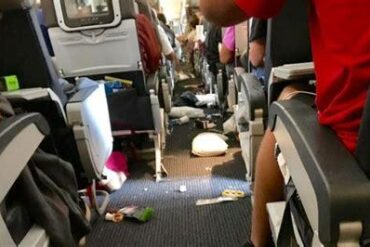
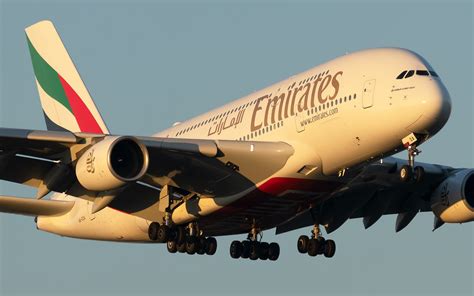
As the Airbus A320 climbed through approximately 37,600 feet, the aircraft encountered an unexpected area of severe wake turbulence. The disturbance was powerful enough to violently jolt the aircraft, throwing four passengers and one flight attendant into the cabin ceiling.
Witness accounts and operational reports indicate that the turbulence struck without warning, giving passengers and crew little time to react. While commercial aircraft are engineered to withstand significant aerodynamic forces, sudden encounters with concentrated wake vortices can create abrupt rolling and vertical motions capable of causing injuries to anyone not securely seated or restrained.
The turbulence encountered by the Eurowings aircraft appears to have been associated with the lingering wake generated by the Emirates A380. Due to its immense size and weight, the double-deck aircraft produces some of the strongest wake vortices in commercial aviation, capable of persisting far behind the aircraft under certain atmospheric conditions.
Following the encounter, the flight crew promptly initiated a descent back to Flight Level 360. Data indicates the aircraft descended at approximately 3,000 feet per minute while cabin crew provided first aid to those injured during the incident.
Flight Continues Safely To Cologne
Despite the injuries, the Airbus A320 remained fully controllable and suffered no immediately apparent structural damage. After assessing the situation, the flight crew determined that the safest course of action was to continue to Cologne rather than divert to an alternate airport.
Emergency medical services were positioned at the aircraft’s arrival gate upon landing. The injured passengers and crew member received medical attention before being transferred for further evaluation at a local hospital.
The aircraft itself remained on the ground in Cologne for more than four hours while technical inspections were carried out. Aviation investigators secured both the cockpit voice recorder and flight data recorder as part of the standard examination process. The additional inspections delayed the aircraft’s next scheduled service to Venice while engineers verified that no hidden damage had resulted from the turbulence encounter.
Meanwhile, Emirates Flight EK1 continued its journey to London Heathrow without interruption and landed normally.
Why The Airbus A380 Creates Exceptional Wake Turbulence
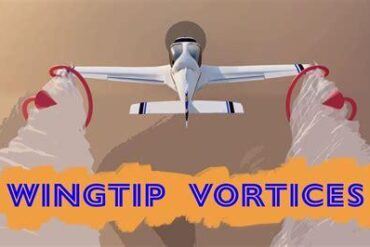
Wake turbulence is generated whenever an aircraft produces lift. As air flows around the wings, rotating vortices form behind the aircraft and descend through the atmosphere. The strength of these vortices depends largely on an aircraft’s weight, speed, and wing configuration.
The Airbus A380 occupies a unique position within commercial aviation due to its enormous size. With a maximum takeoff weight exceeding 575 tonnes, the aircraft generates wake vortices significantly stronger than those produced by most other airliners.
These vortices can persist for considerable distances behind the aircraft, particularly in stable atmospheric conditions where winds are insufficient to rapidly disperse them. Aviation experts note that wake turbulence generated by large aircraft can remain hazardous several miles behind the source aircraft, creating risks for smaller aircraft following similar flight paths.
ICAO Separation Standards And The Ongoing Safety Debate
International aviation regulators have long recognized the unique wake turbulence characteristics of the Airbus A380. The International Civil Aviation Organization established enhanced separation standards specifically for operations involving the superjumbo.
For aircraft such as the Airbus A320 operating at the same altitude or within 1,000 feet below an A380, a minimum separation distance of seven nautical miles is generally recommended. These standards were developed following extensive testing and operational analysis conducted after the aircraft entered commercial service.
What makes the Eurowings incident particularly notable is that the reported spacing between the two aircraft exceeded the prescribed threshold. This suggests that environmental factors, atmospheric stability, flight path geometry, or the persistence of wake vortices may have contributed to the encounter.
The event serves as another reminder that wake turbulence remains one of aviation’s most unpredictable hazards. While modern separation standards dramatically reduce risk, they cannot entirely eliminate the possibility of encounters under unusual conditions.
The incident also echoes previous high-profile wake turbulence events involving the Airbus A380, including a 2017 occurrence over the Arabian Sea in which a business jet reportedly experienced a dramatic upset after encountering the wake of an Emirates-operated superjumbo. Cases such as these continue to provide valuable data for regulators and safety investigators seeking to further refine procedures designed to protect aircraft operating in increasingly crowded international airspace.