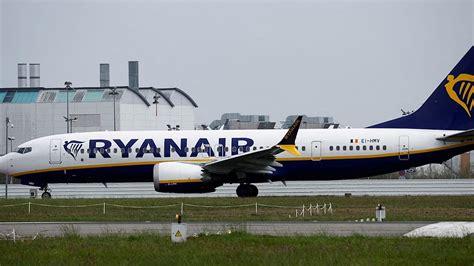
A Ryanair flight bound for Milan was forced to make an emergency landing in southern Germany on Wednesday night following an intense bout of turbulence caused by a powerful thunderstorm, leaving nine passengers injured and prompting questions about severe weather preparedness in European commercial aviation.
Chaos in the Skies: Berlin to Milan Flight Encounters Extreme Weather
On the evening of June 5, 2025, Ryanair flight FR1236, en route from Berlin-Brandenburg Airport (BER) to Milan-Bergamo Airport (BGY), was cruising at normal altitude when it encountered sudden and violent convective turbulence over southern Germany. The aircraft was quickly enveloped by the edges of a fast-moving electrical storm system, which had been forming over the Alpine region earlier that day.
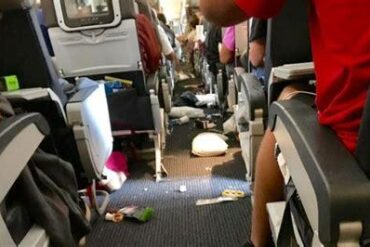
According to statements issued by Bavarian police, the turbulence was so severe that multiple passengers were thrown against the cabin interior. Cabin crew and unrestrained passengers reportedly slammed into overhead panels and seats.
Emergency Descent and Landing in Memmingen: A Swift Decision Under Pressure
Captain Markus H., the flight commander on duty, immediately declared an in-flight emergency to German air traffic control, requesting a diversion to the nearest available airport. After coordination with Deutsche Flugsicherung (DFS), the aircraft was granted priority clearance to land at Memmingen Airport (FMM) — a secondary regional hub located approximately 115 kilometers west of Munich.
The descent was executed rapidly but safely, and the Boeing 737-800 aircraft touched down at approximately 10:48 PM local time. Emergency services were already on standby, alerted by the pilot’s prior request for medical assistance on arrival.
Medical Response: Injuries Ranged from Minor to Serious
Upon landing, paramedics and firefighters boarded the aircraft to triage and treat injured passengers. According to Bavarian authorities, the injuries included:
- A woman with a head injury, likely sustained from a direct impact with a hard surface during turbulence.
- Her two-year-old child, who suffered bruises but was reportedly in stable condition.
- A 59-year-old woman experiencing severe back pain, suggesting possible spinal trauma or strain.
All three were transported to a local hospital for further examination and care. The remaining injured passengers were treated on-site by first responders, who worked with military efficiency to stabilize all affected.
Airline Response: Mixed Messages and Logistical Confusion
In a statement released early Thursday, Ryanair confirmed the incident and emphasized that the safety of its passengers and crew was its highest priority. The airline also indicated that a replacement flight had been arranged to continue the journey to Milan.
However, this claim stood in apparent contradiction to Bavarian police reports, which stated that passengers were instead transported by bus due to the German aviation authority’s refusal to immediately authorize further flight operations from Memmingen. This logistical inconsistency caused additional frustration among passengers, some of whom had already endured traumatic physical and emotional experiences.
Rising Incidence of Turbulence: A Broader Climate Trend?
The Ryanair incident adds to a growing pattern of turbulence-related injuries that have plagued the aviation sector in recent years. A number of meteorological experts have warned that climate change is intensifying upper-atmosphere instability, especially in mid-latitude jet streams over Europe and North America.
According to a study by the University of Reading, instances of clear-air turbulence (CAT) — the type most difficult for pilots to detect — have increased by over 55% on some transatlantic routes over the past four decades. This makes weather radar alone insufficient for avoiding such hazards, particularly in heavily trafficked air corridors.

Passenger Testimonies Paint a Grim Picture
Passengers aboard FR1236 have since shared harrowing accounts of the ordeal. Many described the turbulence as “like being on a rollercoaster without a seatbelt.”
One passenger, Elias Meier, a 34-year-old business traveler from Berlin, said:
“There was no warning. We hit a violent patch of air, and suddenly, people were screaming, drinks were flying, and someone hit the ceiling. It was like a movie — but worse, because it was real.”
Another traveler, Sara Conte, traveling with her young daughter, recalled how oxygen masks briefly dropped, though they were not needed for pressurization issues. Cabin crew did their best to keep people calm, she said, but several passengers were visibly shaken and required assistance after landing.
Cabin Crew Response Under Scrutiny and Praise
While the cause of the turbulence was undeniably meteorological, the response of the cabin crew has been both commended and analyzed. According to initial reports, flight attendants acted quickly, instructing passengers to remain seated and secure seatbelts — though for many, this warning came only moments before the turbulence struck.
Aviation safety analyst Dr. Klaus Eberhardt explained:
“It’s extremely difficult to anticipate and prepare for convective bursts at cruising altitude. The crew did what they could. The timing of the warning, if given too late, is more a reflection of how fast storm conditions escalated.”
Regulatory Oversight and Preventative Measures
In the wake of the incident, Germany’s Federal Bureau of Aircraft Accident Investigation (BFU) has opened a routine inquiry to determine if the aircraft’s onboard weather systems functioned as intended and whether standard operating procedures were followed.
Key elements being reviewed include:
- Weather routing choices made prior to takeoff.
- Effectiveness of predictive wind shear and turbulence alerting systems.
- Real-time coordination with Eurocontrol and regional weather agencies.
There are also calls from aviation safety advocates to mandate real-time satellite-based turbulence data sharing across European airlines, in order to improve avoidance strategies in similar future scenarios.
The Airport Perspective: Memmingen’s Role in Crisis Management
Memmingen Airport, a relatively small facility compared to Munich or Frankfurt, was nonetheless well-equipped to handle the emergency. Airport Director Anna Riechel stated in a press briefing that the airport activated its Category C emergency protocol, which included full coordination with regional fire brigades, police, and paramedics.
The landing marked one of the most serious mid-flight diversions in the airport’s recent history. In the hours following the incident, stranded passengers were offered food, water, and access to mobile charging stations while awaiting ground transport or flight reassignment.
Public Reactions and Media Scrutiny
The incident has sparked renewed debate over Ryanair’s safety protocols and crisis communication practices. While the airline’s quick public acknowledgment was praised, discrepancies between its account and that of Bavarian police have raised eyebrows among aviation journalists.
Critics have also pointed out Ryanair’s reliance on secondary airports, which, while cost-effective, may sometimes lack the infrastructure to support large-scale emergencies.
A viral social media post by travel blogger @FlySmartNina noted:
“Memmingen did an admirable job under pressure, but it highlights how budget airlines push boundaries on cost and convenience — often at the expense of contingency readiness.”
Looking Forward: Safety Innovations and Awareness
As aviation continues to grapple with the realities of increasingly volatile climate systems, airlines and regulators face pressure to update their risk assessment models and flight planning algorithms.
One emerging solution is the integration of machine learning models capable of analyzing complex weather data in real time, alerting pilots not just to present dangers, but also projected turbulence zones based on multi-variable simulations.
In the meantime, passenger awareness remains key. Fastening seatbelts during the entire flight — even when the sign is off — has once again proven a basic but critical measure in minimizing injury during unpredictable events.
Final Thoughts: A Near-Disaster Averted, But Questions Remain
While no fatalities occurred in the emergency landing of Ryanair flight FR1236, the incident serves as a sobering reminder of the fragility of modern flight amid unpredictable natural forces. The professionalism of the flight crew, the readiness of Memmingen Airport, and the rapid medical response collectively prevented what could have been a much worse outcome.
But as storms grow stronger and skies more treacherous, airlines must not only rely on human judgment but invest deeply in forecasting technologies, training protocols, and real-time weather intelligence. For the passengers of flight FR1236, the scars — physical and emotional — will take time to heal. For the industry, the lesson is clear: preparedness must evolve as fast as the atmosphere it flies through.