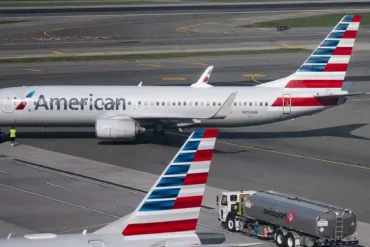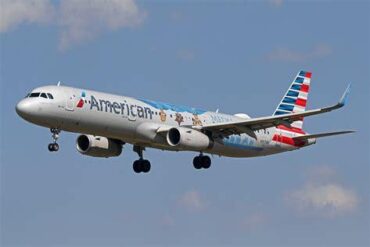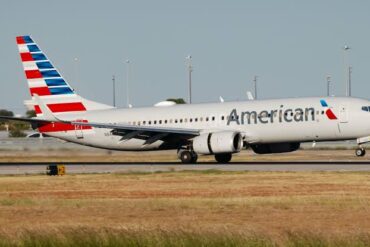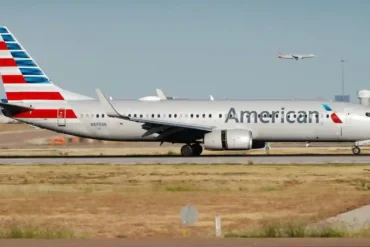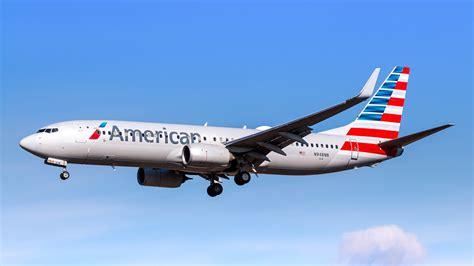
An American Airlines Boeing 737-800 operating a scheduled service from Tampa International Airport to Washington Ronald Reagan National Airport was forced to divert after suffering a tail strike during takeoff. The incident occurred on Sunday, February 15, when Flight AA3203 departed Runway 19R at Tampa and experienced contact between the aircraft’s rear fuselage and the runway surface during rotation. Despite the abnormal event, the aircraft initially continued its climb, eventually reaching 26,000 feet before the flight crew elected to divert to Jacksonville International Airport.
The diversion underscores both the resilience of modern airliners and the rigorous operational protocols that guide airline decision-making in real time. No injuries were reported among passengers or crew, and the aircraft landed safely in Jacksonville approximately one hour after departure.
Tail Strike During Takeoff From Tampa
Tail strikes typically occur during rotation, when pilots raise the aircraft’s nose to achieve liftoff speed. If the pitch angle becomes excessive or rotation is initiated too aggressively, the underside of the tail can scrape the runway. In this case, the 16-year-old 737-800 airframe encountered precisely such an event while departing Tampa.
Flight tracking data indicates the jet continued climbing normally after departure, suggesting that no immediate flight control anomalies were detected. The aircraft tracked northbound toward Washington, DC, before the crew made the decision to divert. Climbing to cruising altitude before diverting is not unusual in such situations; crews often stabilize the aircraft, complete checklists, and evaluate system indications before determining the safest course of action.
Jacksonville International Airport, located within Florida and offering appropriate maintenance resources, was selected as the diversion point. The aircraft landed without further incident, demonstrating the structural tolerance built into modern narrowbody designs.
Passenger Recovery and Operational Impact
Following the diversion, American Airlines arranged a replacement Boeing 737-800 to transport passengers to Washington. The substitute aircraft departed Jacksonville at 12:52 am local time on February 16 and arrived at Ronald Reagan National Airport at 02:19 am—nearly five hours later than originally scheduled.
For passengers, the delay was significant. For the airline, the logistical ripple effects were equally notable. Diversions require rapid coordination between flight operations, maintenance control, ground handling, crew scheduling, and customer service teams. Aircraft swaps must account for crew duty time limits, maintenance availability, gate assignments, and downstream network commitments.
Such disruptions highlight how even a brief runway contact event can cascade into operational complexity. Yet the swift deployment of a replacement aircraft demonstrates the built-in flexibility carriers maintain to mitigate passenger inconvenience.
Assessing Damage: What Happens After a Tail Strike
Once on the ground in Jacksonville, the aircraft underwent a thorough maintenance inspection. Tail strikes can range from superficial abrasion to more substantial structural compromise involving pressure bulkheads, fuselage skins, or internal support frames.
Maintenance teams typically conduct visual inspections, non-destructive testing, and structural assessments to determine the extent of damage. Particular attention is paid to the aft pressure bulkhead, a critical structural component that maintains cabin pressurization integrity.
In this case, flight tracking data suggests the damage was limited. The aircraft reportedly returned to commercial service the following day, operating a flight to Dallas roughly ten hours after landing in Jacksonville. Such a rapid return indicates that inspectors likely determined the structural impact was minor and within repairable limits.
However, tail strikes can vary dramatically in severity. In June 2024, another American Airlines 737-800 remained grounded for three days following a similar event. More severe examples exist, including a Cathay Pacific Airbus A350-1000 that suffered a tail strike in Hong Kong in November 2025 and has remained out of service for months due to the extent of damage sustained during a go-around maneuver.
These contrasting outcomes illustrate that while aircraft are engineered with safety margins, each incident demands meticulous evaluation.
Why Tail Strikes Happen — And How They’re Prevented
Tail strikes most commonly occur during takeoff or landing, particularly when rotation techniques, aircraft loading, or environmental factors combine unfavorably. Aircraft weight distribution, runway slope, wind conditions, and pilot control inputs all play roles in determining rotation dynamics.
Modern aircraft manufacturers have introduced systems designed to reduce the risk. Airbus equips certain newer models with pitch-limit indication systems on the Primary Flight Display, providing visual and audible cues when the aircraft approaches a critical pitch attitude. These systems enhance situational awareness at precisely the moment when margins are tight.
Boeing introduced a tail-strike protection system with the 777-300ER in 2003. This system monitors rotation rate and, if necessary, automatically adjusts elevator inputs to slow the pitch-up movement if the tail nears the ground. By moderating the rotation rate, the system acts as a safeguard against excessive pitch angles.
In 2024, Boeing filed a patent for an advanced tail strike detection system that would provide definitive cockpit alerts and enhanced diagnostic data for maintenance crews. Such innovations reflect a broader industry push toward predictive monitoring and rapid post-event analysis.
Structural Resilience and Aviation Safety Standards
Commercial aircraft are engineered with rigorous structural testing regimes. Fuselage sections endure simulated pressurization cycles, stress loading, and extreme operating conditions before entering service. Tail strike scenarios are part of certification modeling, ensuring that even in abnormal events, aircraft maintain structural integrity long enough for safe landing.
The Tampa incident reinforces an important principle in aviation safety: redundancy and disciplined procedure mitigate risk. The crew’s measured response, the aircraft’s structural durability, and the airline’s coordinated recovery effort collectively ensured that what could have been a serious event remained contained.
Air travel operates within narrow performance envelopes, particularly during takeoff and landing, where aerodynamic forces, weight, and runway geometry intersect in precise balance. When that balance is briefly disturbed, modern systems—human and mechanical—activate to restore stability.
The diversion of American Airlines Flight AA3203 ultimately serves as a reminder of aviation’s layered safety architecture. Even when metal meets asphalt unexpectedly, the system is designed not for perfection, but for resilience.