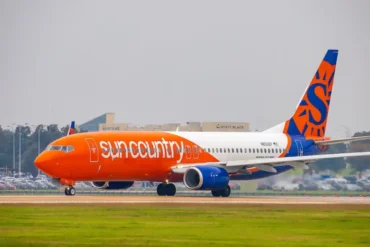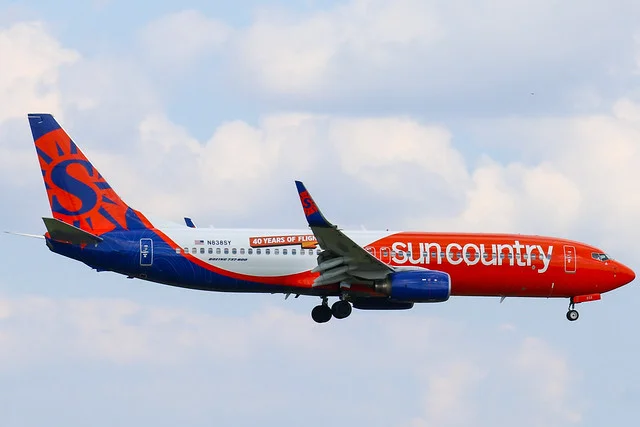
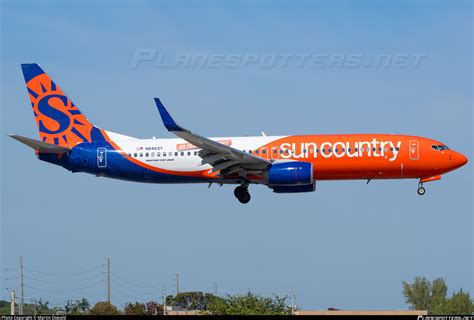
On December 29, 2025, a routine flight turned tense when a Sun Country Airlines Boeing 737-800 operating as Flight SY201 experienced a tail strike during takeoff from Milwaukee Mitchell International Airport (MKE). The aircraft, bound for Orlando International Airport (MCO), was forced to divert to Chicago O’Hare International Airport (ORD) after the incident, landing safely around 40 minutes later. The flight had originally departed Milwaukee at 09:22 am, delayed from its scheduled 07:30 am takeoff.
The aircraft, registered N851SY, reached an altitude of FL270 (27,000 feet) before the flight crew made the decision to reroute. The situation unfolded swiftly, with the 12-year-old aircraft landing safely on runway 28C at Chicago O’Hare at 10:04 am. Despite the scare, there were no reported injuries, and the event underscores the value of safety-focused engineering built into modern airliners.
Details of the Incident and Aircraft Response
The Federal Aviation Administration (FAA) issued a concise report on the occurrence, stating:
“AIRCRAFT INCURRED A TAIL STRIKE ON DEPARTURE AND POST FLIGHT INSPECTION REVEALED DAMAGE TO SKID SHOE, MILWAUKEE, WI.”
What could have become a more serious event was mitigated by a crucial piece of equipment: the tail skid, or skid shoe. Designed specifically to absorb the force of over-rotation during takeoff, this replaceable component prevented structural damage to the rear fuselage and pressure bulkhead. Its effectiveness allowed the aircraft to be declared airworthy again after a three-hour inspection and maintenance window in Chicago.
Aircraft Background: N851SY’s Journey to Sun Country
The aircraft involved is part of Sun Country’s all-Boeing 737 fleet, consisting primarily of 737-800s. N851SY began its life under Thomson Airways, which later became part of TUI Airways, serving European leisure routes for nearly a decade. It joined Sun Country in June 2023, where it was configured in an all-economy layout, accommodating 189 passengers in a 3-3 seating configuration.
Sun Country’s 737-800 fleet is one of the backbones of its operation, especially for leisure destinations such as Orlando, and the airline is also in the process of integrating five 737-900ERs that previously flew with Oman Air.
What Causes Tail Strikes—and How Dangerous Are They?
A tail strike occurs when the tail of an aircraft contacts the runway surface, typically during aggressive rotation at takeoff or a steep flare at landing. In this case, the over-rotation likely resulted from flight dynamics exacerbated by the delayed departure, weight conditions, or pilot technique.
Although often minor in immediate effect, tail strikes can be catastrophic if not correctly addressed. The China Airlines Flight 611 disaster in 2002, involving a Boeing 747-200, tragically illustrated the long-term risks. That aircraft broke apart in midair two decades after a tail strike due to improper repair procedures.
To mitigate such dangers, aircraft like the 737-800 are designed with tail skids that take the impact load. When these are damaged—as in this case—they can be swiftly replaced or repaired. The aircraft’s ability to re-enter service the same day demonstrates that the damage was isolated and effectively managed.
Flight Crew’s Quick Decision and Safe Handling
The flight crew’s choice to divert to Chicago O’Hare, just 70 miles south of Milwaukee, reflected good airmanship and adherence to operational safety protocols. Climbing to FL270 indicated no immediate flight performance issues, but opting to land allowed for inspection before continuing the long leg to Orlando.
The aircraft remained on the ground for roughly three hours, during which maintenance teams inspected the affected area, verified structural integrity, and confirmed that the damage did not extend beyond the skid shoe. Once cleared, the aircraft resumed its journey to Florida, reaching Orlando International Airport the same day.
Implications for Sun Country and Fleet Reliability
Sun Country Airlines has demonstrated a strong track record in fleet maintenance, and this event reinforces the value of preventative engineering and responsive maintenance culture. While the airline does not currently plan to acquire new aircraft, it is committed to operating its existing 737-800s into their 30s, supported by a robust inspection and repair strategy.
The airline’s strategic choice to extend the life of its aircraft highlights the importance of events like tail strikes being handled properly. The structural integrity of the aircraft depends on flawless execution of manufacturer-specified repair protocols—something Sun Country appears fully committed to.
Engineering Spotlight: The Role of the Tail Skid
The tail skid assembly is a vital feature on many narrow-body jets, including the 737 family. It is mounted on the lower aft fuselage and serves as a protective buffer. In the event of a tail strike, it helps:
- Absorb kinetic energy from runway contact.
- Prevent deformation of the fuselage and bulkhead.
- Allow for easy inspection and replacement compared to deeper structural repairs.
The presence of this component enabled Sun Country’s aircraft to avoid longer downtime and more expensive repair work. The minimal impact of the tail strike, thanks to the tail skid, stands as a testament to Boeing’s conservative design principles for this airframe.
The Bigger Picture: Safety Oversight and Reporting
The FAA’s immediate involvement, paired with the airline’s internal response, reflects the robust safety culture in U.S. aviation. Every tail strike is treated as a serious incident, requiring thorough inspection, documentation, and reporting—even when the outcome is benign.
Moreover, public awareness and transparency from outlets like the Aviation Herald ensure that aviation professionals and enthusiasts alike remain informed about potential hazards and best practices.
Conclusion: A Reminder of Precision and Vigilance
While Flight SY201’s tail strike may seem like a footnote in a routine day of flying, it serves as an essential case study in the intersection of engineering, training, and decision-making. From the tail skid’s protective role to the crew’s prompt diversion, each layer of the aviation safety net played its part.
As Sun Country Airlines continues to rely on its aging 737-800 fleet, events like this reinforce the necessity of meticulous maintenance, rigorous inspections, and adherence to procedural excellence. Tail strikes may be rare, but when they do happen, the difference between a minor incident and a future catastrophe lies in how they’re handled.