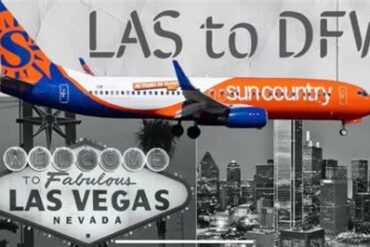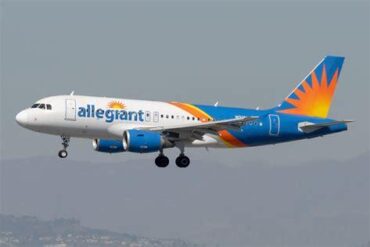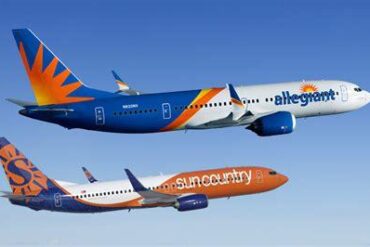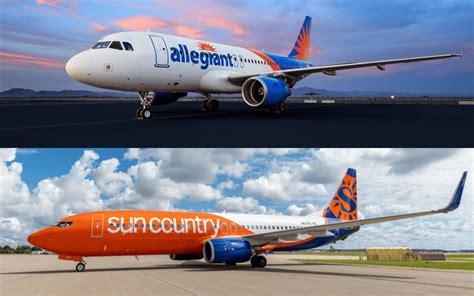
Sun Country Airlines is entering the final chapter of its four-decade history as plans move forward to fully integrate the carrier into Allegiant Air. Although travelers will continue to see Sun Country aircraft and branding for several years, company executives have confirmed that the airline’s independent identity will ultimately disappear once both carriers receive approval to operate under a single Federal Aviation Administration (FAA) operating certificate. The transition represents far more than a simple name change. It is the culmination of one of the most significant airline consolidations in the United States in recent years, creating a much larger leisure-focused airline with an expanded network, greater fleet flexibility, and stronger financial scale.
The merger officially closed in May, but the operational integration remains in its early stages. Until the FAA approves a unified operating certificate, both airlines must continue functioning independently with separate flight operations, maintenance programs, safety management systems, manuals, and crew training standards. This deliberate approach reflects the aviation industry’s rigorous regulatory requirements, where operational safety always takes precedence over corporate timelines.
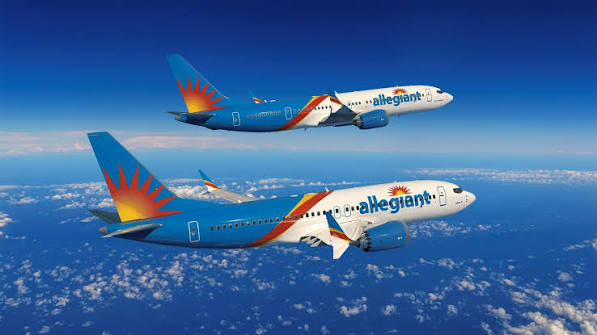
The eventual result will be a single Allegiant-branded airline serving approximately 22 million passengers annually across nearly 175 cities and more than 650 routes. Together, the companies will operate a combined fleet of roughly 195 aircraft, with an additional 30 aircraft on order and purchase options for another 80, providing substantial opportunities for long-term expansion.
FAA Single Operating Certificate Drives The Entire Integration
Obtaining a single FAA operating certificate is the defining milestone that determines when the two airlines can officially become one operational entity. Unlike a financial merger, an airline integration cannot simply combine branding overnight. Regulators require airlines to demonstrate that every aspect of their operations functions as one unified organization before granting approval.
This process includes integrating safety management systems, pilot operating procedures, cabin crew training, aircraft maintenance documentation, dispatch operations, flight planning, quality assurance programs, emergency response protocols, and operational oversight. Every manual must be harmonized, every procedure standardized, and every employee trained under the same operational framework before certification can be granted.
Allegiant has emphasized that this process will unfold gradually rather than rapidly. Company representatives have indicated that the transition will be measured in years rather than weeks, allowing the airline to prioritize safety, operational reliability, employee communication, and customer clarity throughout every phase of integration.
Sun Country Will Continue Flying During The Transition
Despite confirmation that the brand will eventually disappear, Sun Country Airlines will remain fully operational throughout the integration period. Passengers can continue booking flights, earning travel benefits, and flying aboard Sun Country aircraft while regulatory work progresses behind the scenes.
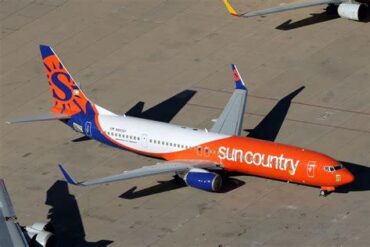
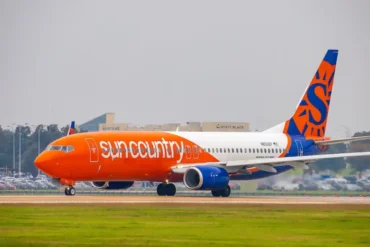
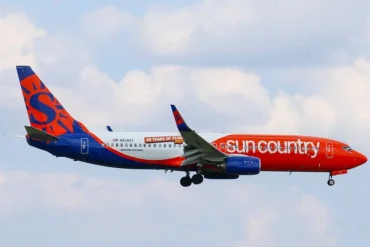
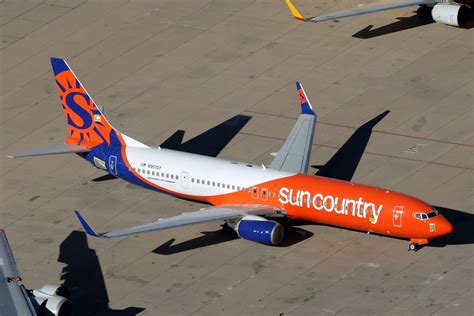
The airline’s existing fleet consists of 70 Boeing 737 Next Generation aircraft, including 47 passenger aircraft, 20 dedicated cargo freighters, and several additional aircraft that are leased or temporarily stored. Those aircraft continue operating under Sun Country’s existing FAA certificate until regulatory approval allows both carriers to merge operationally.
Equally important, Allegiant has reaffirmed its commitment to maintaining a significant operational presence at Minneapolis-Saint Paul International Airport. Rather than reducing the airline’s footprint, Minneapolis is expected to remain a critical base supporting passenger operations, maintenance activities, and corporate functions after the brand transition is complete.
A Four-Decade Airline Brand Nears Its Final Flight
The retirement of the Sun Country name will close a remarkable chapter that began in 1982, with commercial operations commencing in early 1983. Over more than forty years, the airline continually reinvented itself as market conditions evolved.
Originally operating as a traditional scheduled airline, Sun Country gradually transformed into a hybrid leisure carrier that balanced scheduled passenger service with charter operations and an increasingly valuable cargo business. Rather than competing directly with the largest network airlines, it focused on seasonal leisure demand, vacation destinations, and operational flexibility.
Its partnership with Amazon became one of the airline’s defining strategic achievements in recent years. Operating 20 Boeing 737 freighters, Sun Country established itself as an important cargo provider supporting Amazon’s expanding logistics network while simultaneously maintaining scheduled passenger services across North America and popular international vacation markets.
Although the familiar livery and corporate identity will eventually disappear, the operational capabilities built over decades are expected to become integral components of Allegiant’s future business model.
Complementary Networks Strengthen The Combined Airline
One reason analysts view the merger favorably is the complementary nature of both airlines’ route structures. Allegiant has historically specialized in connecting smaller American communities directly with popular vacation destinations through a point-to-point operating model that avoids traditional airline hubs.
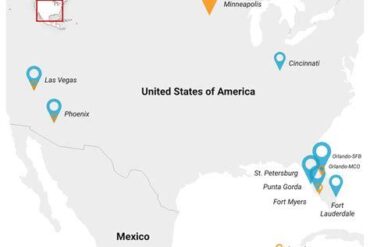
Sun Country, meanwhile, offers stronger exposure to larger metropolitan markets while serving destinations across the United States, Mexico, Central America, Canada, and the Caribbean. The airline also contributes substantial charter experience and cargo expertise that Allegiant previously lacked on the same scale.
The combined operation incorporates approximately 551 Allegiant routes alongside 105 Sun Country routes, dramatically expanding network coverage while preserving the flexible scheduling philosophy that has characterized both companies for years. Rather than relying heavily on connecting passengers through major hubs, the enlarged airline intends to continue emphasizing nonstop leisure travel where seasonal demand creates the greatest profitability.
Operational Integration Extends Beyond Aircraft And Branding
Repainting aircraft and replacing airport signage represent only a small fraction of the integration effort. Behind the scenes, airline mergers involve some of the most technically demanding projects in commercial aviation.
Reservation systems must be combined so passengers experience a seamless booking process. Loyalty programs require harmonization to preserve customer benefits while establishing a unified rewards structure. Maintenance scheduling, spare parts inventories, engineering documentation, crew bidding systems, dispatch software, airport contracts, supplier agreements, and employee work rules all require careful coordination.
Every successful integration depends on minimizing disruption while maintaining reliable flight operations. Even relatively minor inconsistencies between procedures can introduce unnecessary operational complexity, making careful planning essential throughout the multi-year transition.
Financial Scale Creates New Growth Opportunities
The approximately $1.5 billion transaction, including assumed debt, significantly increases Allegiant’s competitive scale within the American airline industry. Following completion of the merger, the company becomes the eighth-largest airline in the United States, positioning it more effectively against both low-cost competitors and larger network carriers.
Management expects approximately $140 million in annual synergies within three years, generated through procurement efficiencies, improved fleet utilization, optimized scheduling, expanded network planning, and lower operating costs achieved through greater purchasing power. Those anticipated savings provide additional resources for future investment while strengthening profitability across seasonal markets.
Fleet flexibility also improves substantially. With nearly 200 aircraft available and dozens more on order or under option, the airline gains greater ability to allocate capacity where demand is strongest throughout the year. That flexibility has long been central to both companies’ business models and should become even more valuable under a unified operation.
The Sun Country Legacy Will Continue Under Allegiant
Although the Sun Country brand will ultimately vanish from airport terminals and aircraft fuselages, many of its defining strengths will remain firmly embedded within the combined airline. Its experienced workforce, Minneapolis operational base, Boeing 737 expertise, cargo division, charter capabilities, and established leisure network all become strategic assets supporting Allegiant’s next phase of growth.
The final disappearance of the Sun Country name depends entirely on successful FAA approval of a single operating certificate and completion of every operational integration milestone. Until then, both airlines will continue flying independently while steadily building the foundation for a unified future. When that transition is finally complete, one of America’s most recognizable leisure airline brands will conclude its independent journey, but its people, aircraft, operational experience, and market presence will continue shaping the future of a significantly larger Allegiant Airlines.