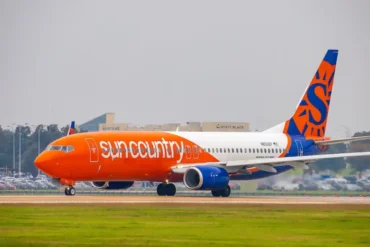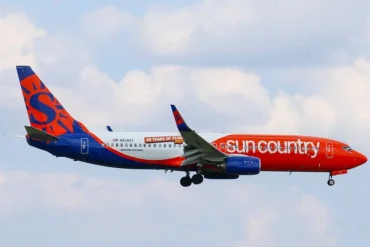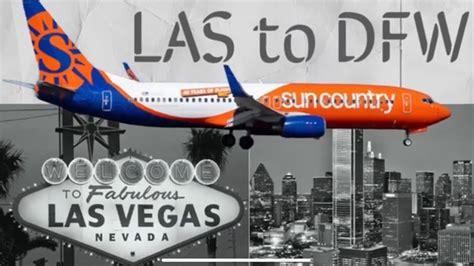
Sun Country Airlines has long occupied an unusual niche in the American aviation ecosystem. Neither a pure ultra-low-cost carrier nor a traditional network airline, it carved out relevance through a hybrid model that blended leisure routes, charter flying, and cargo contracts, all anchored at Minneapolis–St. Paul International Airport. That balancing act is now approaching its end. With Allegiant Air agreeing to acquire Sun Country in a roughly $1.5 billion cash-and-stock transaction, the countdown has begun toward the disappearance of another independent low-cost brand from the US market.
The deal, announced in January 2026, reflects a broader structural truth about modern aviation: scale matters more than identity. As costs rise, competition intensifies, and regulators tolerate fewer fragile airlines, consolidation has become less an exception than an inevitability. Sun Country’s sunset is not just a corporate transaction; it is a signal of where the low-cost sector is heading and what travelers should expect as choice gradually gives way to concentration.
A Low-Cost Carrier With A Different DNA
Sun Country was never built like its low-cost peers. While airlines such as Spirit and Frontier pursued relentless cost minimization and dense route overlap, Sun Country adopted a hybrid operating strategy. Leisure flying formed the backbone of its scheduled network, particularly to warm-weather destinations, but the airline also leaned heavily on charter operations and a long-term cargo contract with Amazon. This diversification helped stabilize revenue during seasonal swings that often punish leisure-focused carriers.
At Minneapolis–St. Paul International Airport, Sun Country became the primary low-cost counterweight to Delta Air Lines’ dominant hub, injecting fare discipline into a market otherwise shaped by one of the world’s most powerful network carriers. That role gave Sun Country strategic relevance well beyond its fleet size, even as it remained comparatively small in national market share.
The challenge was sustainability. Operating as an independent public airline meant absorbing volatility alone. Fuel prices, labor costs, aircraft maintenance, and competitive responses from larger rivals all weighed more heavily on a carrier without the buffer of scale. Over time, independence became less a badge of honor and more a financial constraint.
The Allegiant Deal And What It Actually Means
Under the agreed terms, Sun Country shareholders will receive 0.1557 Allegiant shares plus $3.10 in cash per share, implying a valuation of approximately $18.89 per share and a near 20% premium to Sun Country’s pre-announcement trading price. If approved by regulators and shareholders, the transaction is expected to close in the second half of 2026.
Critically, the combined airline is expected to operate under the Allegiant name, effectively retiring the Sun Country brand. While both carriers will initially continue flying under separate FAA operating certificates, history suggests this dual structure is temporary. Once training, safety systems, and procedures are aligned, Sun Country’s operational identity will be folded into Allegiant’s larger framework.
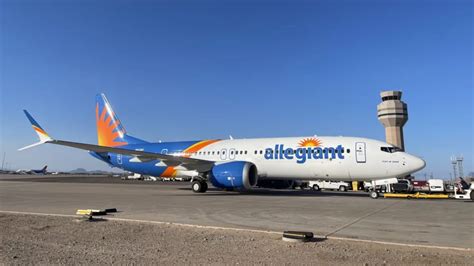
For Allegiant, the appeal is scale without excessive overlap. The combined network would encompass more than 650 routes, serve roughly 175 cities, and operate close to 195 aircraft, largely centered on the Boeing 737 family. Management estimates $140 million in annual cost and revenue synergies by the third year after integration, driven by procurement leverage, fleet optimization, and more efficient network planning.
Why Consolidation Keeps Winning In US Aviation
This acquisition fits neatly into a decade-long pattern. US airlines have learned, sometimes painfully, that fragmented competition rarely delivers durable profitability. Mergers have reduced capacity wars, stabilized pricing, and improved balance sheets, even as they narrowed consumer choice.
Low-cost carriers, once the great disruptors, now face their own reckoning. Ultra-low fares are politically popular but economically fragile, particularly as labor groups secure better contracts and aircraft manufacturers struggle with delivery delays. In that environment, a standalone airline with limited bargaining power becomes vulnerable.
Sun Country’s sale reflects a rational calculation. The airline secured a premium exit for shareholders while transferring long-term competitive risk to a larger operator better equipped to manage it. Allegiant, in turn, gains diversification and a meaningful Midwestern foothold without paying the cost of organic expansion.
Minneapolis–St. Paul: The Strategic Battleground
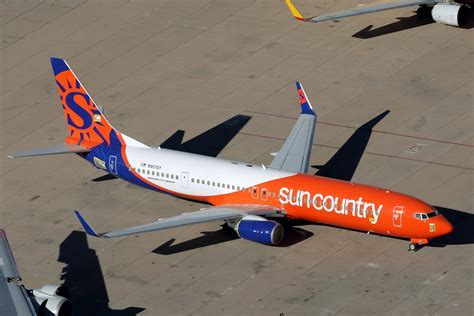
No airport will feel this merger more acutely than MSP. Sun Country’s presence there has long constrained Delta’s pricing power on leisure routes, particularly to Florida, the Southwest, and Mexico. The key question is not whether flights will continue in the near term, but how Allegiant will deploy capacity over the long run.
If Allegiant chooses to lean into MSP as a strategic base, travelers could see more nonstop leisure routes and sustained fare competition on select city pairs. If, however, management decides the hub’s competitive intensity is not worth the margin pressure, capacity could gradually be redeployed to less contested markets.
Analysts describe MSP as a wild card. Allegiant’s historic model favors underserved secondary cities over head-to-head hub battles. Whether that philosophy evolves post-merger will largely determine whether Minneapolis travelers benefit or lose out as Sun Country disappears as an independent actor.
What Allegiant Gains Beyond Routes
Beyond network expansion, Sun Country brings operational assets Allegiant does not currently possess at scale. The Amazon cargo contract provides predictable revenue insulated from leisure demand cycles, while the charter business offers flexibility to deploy aircraft profitably outside the scheduled network.
This hybrid revenue base is particularly valuable during economic downturns, when discretionary travel softens. Allegiant has traditionally been more exposed to leisure volatility. Absorbing Sun Country’s diversified model could make the combined airline more resilient than many ultra-low-cost peers.
There is also a cultural dimension. Sun Country’s workforce brings experience operating in a highly competitive hub environment, something Allegiant has historically avoided. Integrating that expertise could subtly shift Allegiant’s strategic confidence over time.
Why Sun Country Chose To Sell Now
Timing matters. Sun Country entered public markets with a compelling growth story, but sustaining that narrative independently would have required continued capital investment and tolerance for volatility. Rising costs and an increasingly consolidated competitive landscape narrowed the margin for error.
The acquisition offers certainty. Shareholders receive immediate value, employees gain the backing of a larger organization, and the airline avoids the slow erosion that often precedes distress sales. From a strategic perspective, selling from a position of relative strength is far preferable to waiting until market conditions dictate harsher terms.
Sun Country’s leadership also recognized that remaining relevant at MSP would become more expensive over time. Competing against Delta requires scale, marketing muscle, and the willingness to endure prolonged fare battles. Under Allegiant’s umbrella, that fight becomes optional rather than existential.
Short-Term Calm, Long-Term Change For Passengers
In the immediate future, passengers should expect minimal disruption. Flights will continue to operate, tickets will be honored, and schedules will remain largely intact through the regulatory review period. The real changes will unfold gradually, often invisibly.
Over time, travelers may notice shifts in fare structures, loyalty programs, and onboard offerings as systems are harmonized. Allegiant’s à la carte pricing philosophy could become more prominent, while Sun Country’s distinct brand identity fades into memory.
The trade-off is familiar. Consolidation can mean fewer flash sales and less aggressive discounting, but it can also result in more stable schedules and fewer abrupt route cancellations. For leisure travelers, the experience may become more predictable, if less adventurous.
Competitive Ripples Beyond Minnesota
While MSP is the focal point, the merger’s implications extend nationally. One fewer independent low-cost carrier reduces competitive pressure in thin markets where Sun Country previously provided the only meaningful fare alternative. In those cities, prices may creep upward as choices narrow.
At the same time, Allegiant’s expanded network could introduce new nonstop links that did not previously exist, particularly between secondary cities. The net effect will vary by region, reflecting the complex trade-offs inherent in consolidation.
From a policy perspective, the deal will test regulators’ tolerance for further concentration in the low-cost segment. While Allegiant and Sun Country overlap minimally, the symbolic loss of another independent brand may attract scrutiny even if the economic case is defensible.
The End Of A Familiar Name
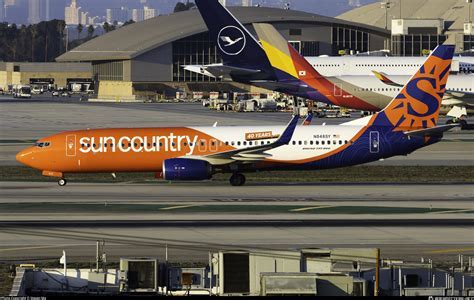
Brand disappearances carry emotional weight disproportionate to their balance sheets. For many travelers, Sun Country represented an affordable escape, a familiar tail at the gate, or a reliable alternative in a Delta-dominated airport. Its removal underscores how aviation history is written not only in aircraft and routes, but in names that quietly vanish.
This does not mean the service itself disappears. Aircraft will still fly, crews will still work, and passengers will still reach their destinations. What changes is the competitive narrative. Without Sun Country as an independent actor, the market becomes incrementally more consolidated, incrementally more rational, and incrementally less chaotic.
A Snapshot Of An Industry In Transition
The Allegiant–Sun Country deal is smaller than some recent airline mergers, but its symbolism is outsized. It highlights the diminishing space for mid-sized, independent low-cost carriers in a market that increasingly rewards scale, diversification, and financial resilience.
For Allegiant, the acquisition is a calculated bet on growth without redundancy. For Sun Country, it is a dignified exit that preserves value and continuity. For passengers, it is another reminder that the airline industry evolves not through sudden revolutions, but through a steady accumulation of strategic decisions.
Sun Country’s sunset does not mark the end of low-cost flying in the United States. It marks the end of a particular experiment in independence, one that served its market well but ultimately could not escape the gravitational pull of consolidation.