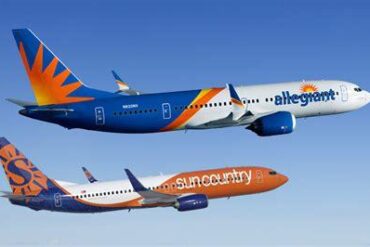
The proposed merger between Allegiant Air and Sun Country Airlines arrives at a tense moment for US aviation consolidation, when regulators are no longer giving airline tie-ups the benefit of the doubt. Yet this $1.5 billion cash-and-stock transaction stands apart from recent blocked deals, not because it avoids scrutiny, but because its structure, market impact, and strategic logic are fundamentally different.
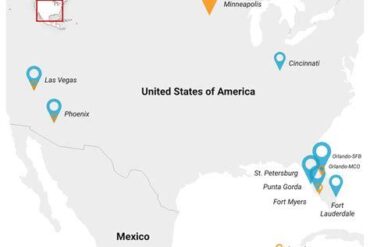
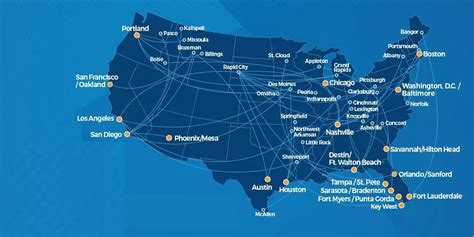
Announced on January 11, 2026, Allegiant’s plan to acquire Sun Country values the Minneapolis-based carrier at $18.89 per share, combining 0.1557 Allegiant shares with $4.10 in cash for each Sun Country share. Including net debt, the deal prices Sun Country at roughly $1.5 billion. On paper, the transaction creates a leisure-focused airline serving 22 million passengers annually, operating more than 650 routes across 195 cities in the US, Mexico, Central America, Canada, and the Caribbean. On a deeper level, it presents the Department of Justice with a far more nuanced antitrust question than the failed JetBlue–Spirit merger.
Why Regulators Are Paying Attention This Time
The DOJ’s modern antitrust posture toward airlines is shaped by hard lessons from past consolidation. The Spirit–JetBlue deal collapsed under concerns that eliminating a major ultra-low-cost carrier would raise fares nationwide. By contrast, the Alaska Airlines–Hawaiian Airlines merger survived review because it preserved competition while strengthening a niche network operator.
The Allegiant–Sun Country proposal falls closer to the latter category. Both airlines are mid-sized, leisure-oriented carriers with limited overlap and minimal dominance at slot-constrained hubs. Unlike Spirit and JetBlue, neither airline defines price discipline across the broader domestic market. Their competitive pressure is localized, seasonal, and heavily leisure-driven.
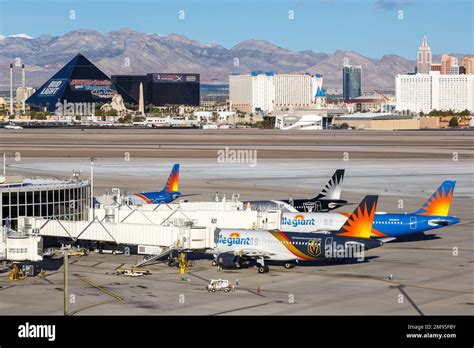
Crucially, Allegiant and Sun Country do not compete head-to-head on a large scale. Allegiant’s model centers on point-to-point leisure routes from secondary cities, while Sun Country complements that strategy with charter operations and seasonal leisure flying, particularly from the Midwest. This limited overlap reduces the likelihood that the DOJ will see the deal as eliminating meaningful competition on core routes.
A Fleet Strategy That Strengthens, Not Shrinks, Capacity
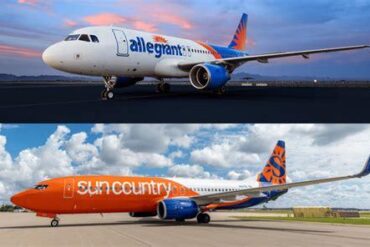
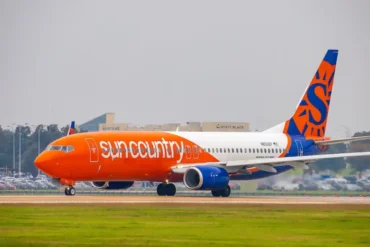
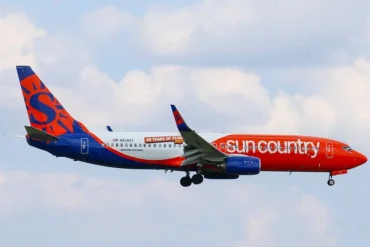
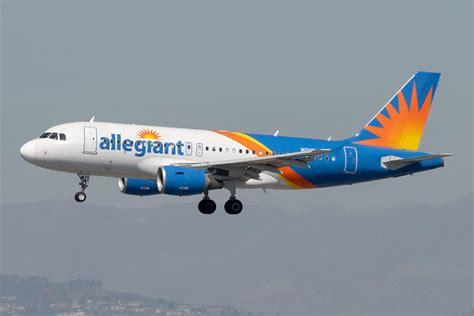
One of the more overlooked aspects of the merger is fleet composition. Allegiant currently operates 84 Airbus A320-200s, 31 A319s, and 16 Boeing 737 MAX aircraft, with an average fleet age of 12.3 years. It also has 34 additional 737 MAX aircraft on order, plus options for 80 more. Sun Country brings a fleet of 65 Boeing 737-800s and three 737-900ERs, averaging 16.9 years.
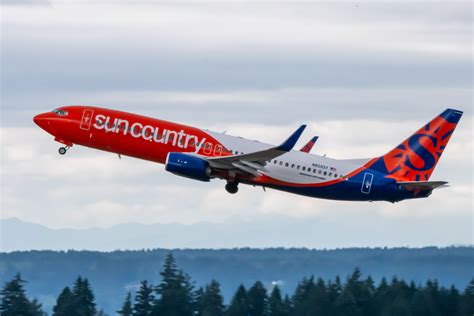
From a regulatory perspective, this matters. The combined airline is not reducing capacity or grounding aircraft to extract pricing power. Instead, it is gaining operational flexibility, allowing Airbus and Boeing aircraft to be deployed where returns are strongest. Allegiant has explicitly framed the deal as a way to maximize utilization of its 737 MAX fleet rather than shrink supply, an argument regulators tend to view favorably.
Market Power Remains Concentrated Elsewhere
Perhaps the most compelling factor working in the merger’s favor is scale—or rather, the lack of excessive scale. Even combined, Allegiant and Sun Country remain dwarfed by the so-called Big Four: American, United, Delta, and Southwest. Those four airlines collectively control around 70% of the US domestic market, a statistic Allegiant itself highlighted in its announcement.
The DOJ has historically been more tolerant of mergers that strengthen smaller competitors against entrenched giants. This logic helped Alaska and Hawaiian secure approval, and it applies here as well. Allegiant and Sun Country are not buying market dominance; they are buying resilience, cost efficiency, and network breadth in a leisure segment that remains highly fragmented.
Synergies Without the Usual Red Flags
Allegiant projects approximately $140 million in annual synergies within three years of integration. Unlike past airline mergers where synergies were code for capacity cuts or fare increases, these savings are largely tied to network expansion, cross-selling opportunities, and improved aircraft utilization.
The combined airline would be better positioned to offer travelers more nonstop leisure options without funneling passengers through congested hubs. For regulators, this distinction is critical. Consumer choice is not being narrowed; it is being repackaged and expanded within a specific travel niche.
Leadership Continuity and Governance Stability
Governance structure also plays a subtle but important role in regulatory perception. Allegiant CEO Gregory C. Anderson is set to lead the combined company, while Sun Country CEO Jude Bricker, a former Allegiant executive, will join Allegiant’s board. Both boards have unanimously approved the deal, signaling internal alignment and reducing execution risk—another factor regulators quietly weigh.
The transaction is expected to close in the second half of 2026, pending federal antitrust review and customary approvals. There is no aggressive timeline pressure, no apparent attempt to rush regulators, and no structural complexity designed to obscure market impacts.
Why This Merger Is Likely to Survive DOJ Review
The DOJ will still examine route overlap, pricing behavior, and potential consumer harm. That is inevitable. Yet the Allegiant–Sun Country merger avoids the core issues that doomed recent airline tie-ups. It does not remove a nationwide price leader, does not consolidate power at major hubs, and does not meaningfully reduce consumer choice.
Instead, it creates a stronger leisure carrier designed to compete in the long shadow of much larger airlines. In today’s regulatory climate, that difference may be decisive.