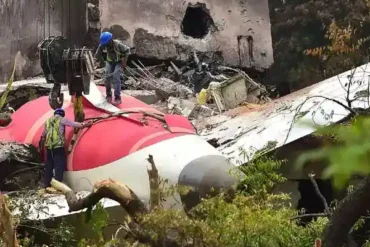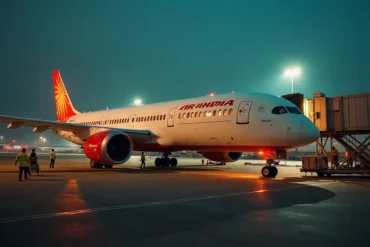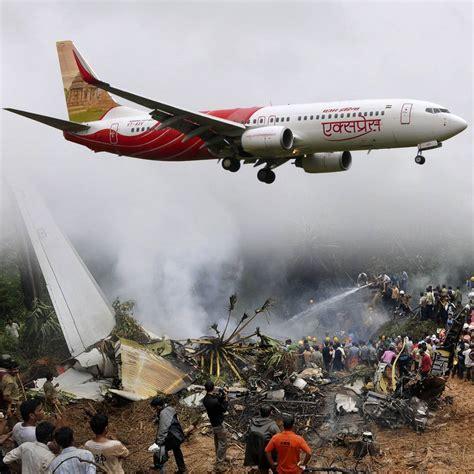
Singapore Airlines has finally addressed the controversy surrounding its perceived silence following the recent Air India crash at Ahmedabad, after sharp public remarks by former Civil Aviation Minister Praful Patel. The incident, involving Air India Flight AI171, thrust Singapore Airlines (SIA) into the spotlight due to its 25.1% stake in the Tata Group-owned carrier and its operational ties through the merged Vistara-Air India entity.
The crash, which is currently under investigation by the Directorate General of Civil Aviation (DGCA), has raised profound concerns over accountability, safety oversight, and the responsibilities of foreign stakeholders in India’s increasingly globalized aviation sector.
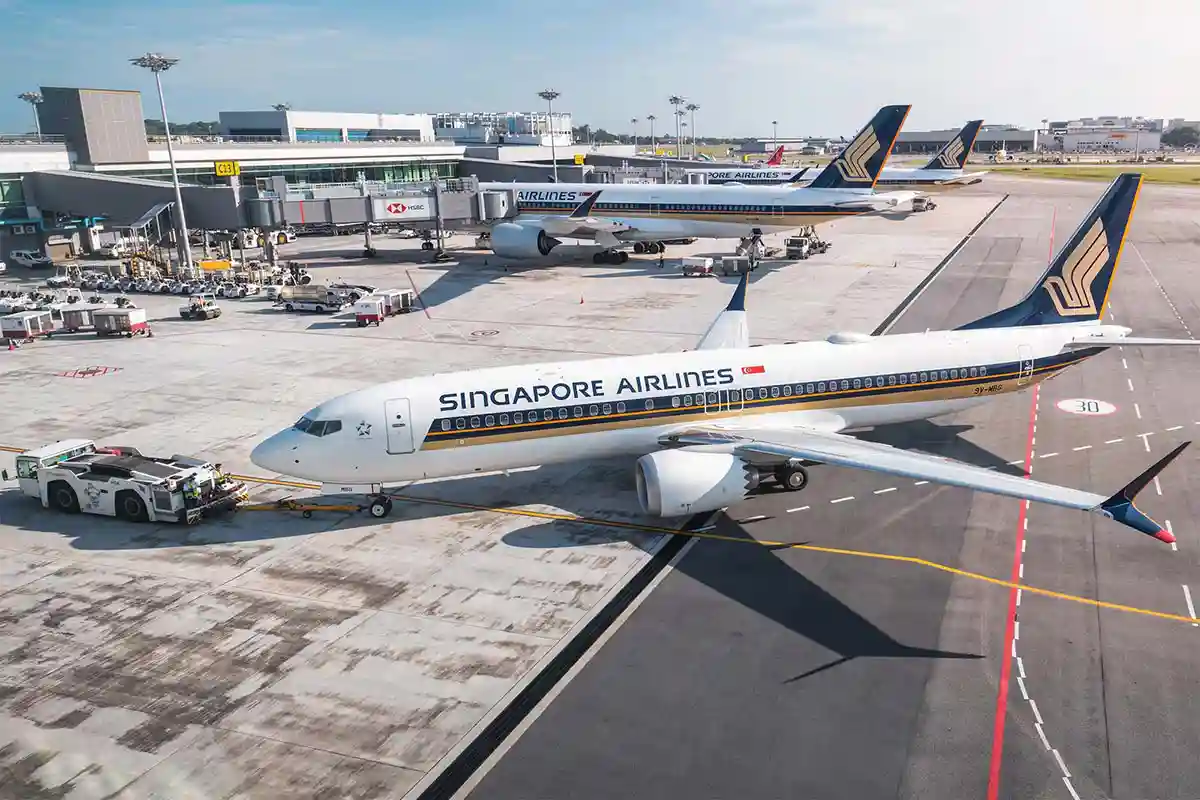
SIA’s Strategic Silence: A Calculated Delay or Misjudged Response?
Singapore Airlines’ initial silence drew sharp criticism from Indian aviation figures, most notably Praful Patel, a Rajya Sabha MP and former aviation minister. Patel took to social media to question why a major stakeholder with significant operational involvement remained muted in the aftermath of the AI171 crash. He emphasized that SIA was not merely a financial investor, but also directly engaged in the management and maintenance of Air India’s long-haul fleet, particularly its Boeing 787 Dreamliners.
Responding to these concerns, Singapore Airlines issued a formal statement expressing condolences for the tragedy and confirming its active collaboration with Tata Sons and Air India. The airline clarified that while operational responsibility for AI171 lies squarely with Air India, it has been involved in ongoing support efforts since the incident occurred.
“We are in regular communication with both Tata Sons and Air India and are offering full support during this critical time,” SIA said, reaffirming its commitment to the partnership.
A Tangled Web of Responsibility: The SIA–Tata–Air India Nexus
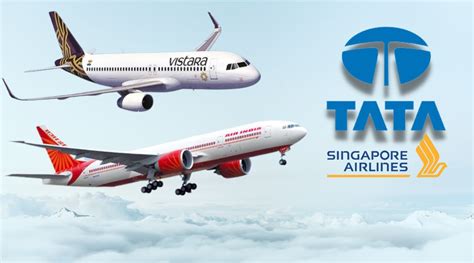
SIA’s stake in Air India is more than just a footnote in corporate investment strategy. The airline became deeply embedded in India’s aviation sector following the 2024 merger of Vistara with Air India, a move that consolidated SIA’s 25.1% stake in the restructured national carrier. The strategic alliance was expected to rejuvenate Air India’s operational credibility and market competitiveness.
The merger brought in Campbell Wilson, former CEO of Scoot (a subsidiary of SIA), as the head of Air India. Moreover, several SIA executives now occupy key positions within Air India’s management. The codeshare agreements between the two airlines span 11 Indian cities and 40 international destinations, encompassing 56 weekly flights—a significant operational overlap that solidifies the interdependency between the carriers.
Beyond administrative leadership, SIA Engineering Company (SIAEC) plays a pivotal role in maintaining Air India’s wide-body fleet, especially the Boeing 787s, which have now come under DGCA’s microscope. This mechanical integration raised legitimate questions about whether SIA should have adopted a more transparent stance sooner, especially given the nature of the crash.
The Tragedy of AI171: What We Know So Far
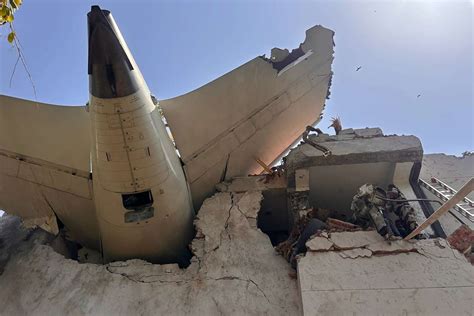
Air India Flight AI171, operating a scheduled service to Ahmedabad, suffered a serious technical failure that early reports attribute to a rare dual engine power loss, a phenomenon almost unheard of in modern aviation. While no fatalities occurred, the incident was serious enough for the DGCA to mandate emergency inspections of all 787s operated by Indian carriers.
The investigation has so far revealed no widespread safety faults across the 24 aircraft that have completed inspections, but regulators have raised red flags over maintenance oversight and coordination lapses. These issues directly implicate the maintenance systems supported by SIAEC, further intensifying the scrutiny faced by Singapore Airlines.
The Political Undercurrent: Stakeholders, Sovereignty, and Safety
Patel’s criticisms go beyond corporate silence; they speak to a broader concern about foreign influence in national infrastructure, especially one as sensitive as civil aviation. While foreign investment brings in capital and expertise, it also muddles lines of jurisdiction and accountability—as is now evident.
Singapore Airlines, a model of efficiency and safety in global aviation, finds itself navigating not just technical issues, but also reputational landmines. India’s aviation ecosystem is still adapting to post-privatization dynamics, and stakeholders are watching closely to see how global partners like SIA respond under pressure.
There is also a perception issue: had SIA proactively addressed the crash with empathy and transparency, the backlash could have been avoided or at least softened. Silence in a crisis often reads as indifference, especially to the public and families of affected passengers.
SIA’s Public Statement: Strategic Realignment or Damage Control?
The tone of SIA’s official communication appears carefully measured—a blend of diplomatic regret and behind-the-scenes assurance. The airline reiterated its support for Air India’s operations and pledged to “assist wherever required” in the ongoing investigation and recovery efforts.
While some industry analysts argue that SIA acted appropriately given its indirect role, others maintain that the moral obligation of a stakeholder—especially one with such deep operational and managerial entanglement—extends beyond corporate limits. In a sector where public trust is paramount, perception often weighs as heavily as actual responsibility.
Broader Implications for India’s Aviation Landscape
The AI171 incident and SIA’s delayed response also reignite discussions on the future of India’s aviation oversight. The DGCA’s swift reaction—including fleet-wide inspections and the public release of preliminary findings—suggests a more proactive regulatory culture emerging in response to global integration.
But the episode also highlights the fragile state of India’s legacy carriers, even under new management. Air India, bolstered by Tata’s revival plans and SIA’s international credibility, was in the midst of a brand overhaul and customer service renaissance. Now, the crash threatens to unravel that fragile momentum.
Air India’s recent safety strides—including achieving the IATA Operational Safety Audit (IOSA) certification in 2024—are now under renewed evaluation. Confidence, once shaken by mechanical failure and delayed communication, will not be easily rebuilt.
Conclusion: A Defining Moment for Singapore Airlines in India
Singapore Airlines’ response to the Air India crash may ultimately be a case study in crisis communication, stakeholder responsibility, and cross-border aviation governance. The airline has long been viewed as a benchmark for operational excellence, but its role in this incident serves as a sobering reminder that transparency and timing matter as much as technical competence.
As investigations continue and regulatory scrutiny sharpens, SIA’s actions in the coming weeks will be critical in shaping its long-term reputation in India—a market it has invested heavily in, and one that could very well define the next chapter of its global expansion.
Whether this incident results in policy changes, tighter oversight, or shifts in public-private partnerships, one fact is clear: in aviation, silence is seldom golden—especially when lives and public trust are on the line.