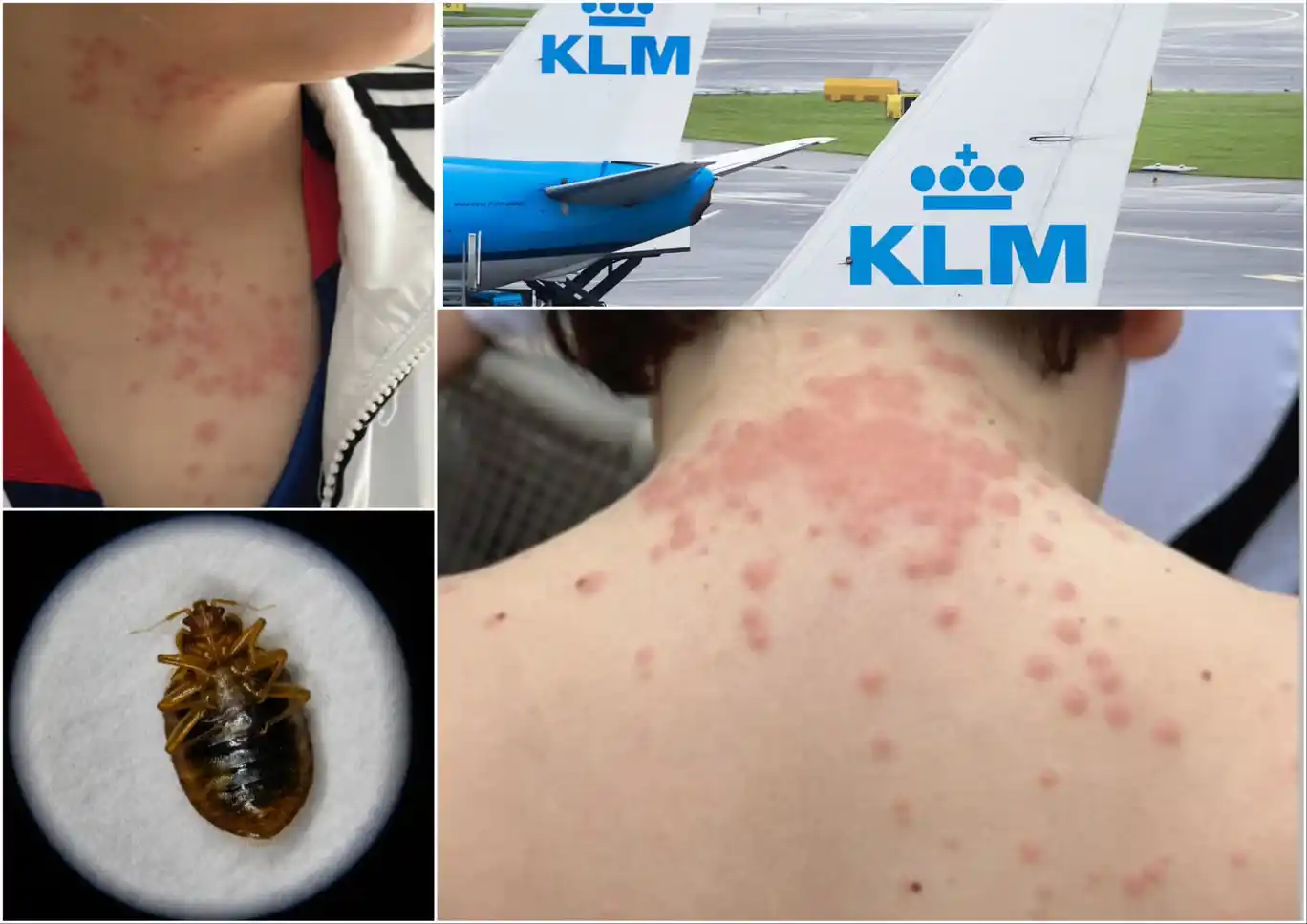
A disturbing pattern of negligence is unfolding at KLM Royal Dutch Airlines, as yet another passenger has come forward detailing a horrific experience involving bed bugs aboard a transcontinental flight. This comes on the heels of a $200,000 lawsuit filed by a Virginia family, who allege that they were bitten and tormented by a severe infestation on a recent journey from the United States to Europe. The new revelation casts a spotlight on KLM’s handling of sanitation, safety protocols, and its apparent lack of response to passenger complaints.
Virginia Family Files $200,000 Lawsuit Over Bed Bug Infestation
On March 21, 2025, Lisandra Garcia and her family of four boarded a KLM flight from Atlanta (ATL) to Amsterdam (AMS) after connecting via Delta. Just two hours into the overnight flight, what should have been a peaceful journey turned into a tormenting ordeal. Garcia reported a sudden, intense itchiness, followed by the horrifying discovery of live bed bugs crawling on her clothes. As she inspected further, she realized that multiple bugs had infiltrated her seat and belongings.
Despite showing visible signs of bites and alerting the flight crew immediately, the response was staggeringly indifferent. The family alleges in their legal filing that KLM flight attendants urged them to stay quiet to prevent panic rather than offering assistance or relocation. Their pleas were ignored, and they were forced to endure the remainder of the flight seated among active bed bug nests.
Inaction and Negligence: A Pattern Emerges
This case has not emerged in isolation. In a chillingly similar incident, Rosco Kalis, founder of the cryptocurrency security platform Revoke.cash, recounted his own bed bug encounter on a KLM flight to Korea in October 2025. Kalis described seeing a bug crawling on his wife’s sweater mid-flight, which led to a full inspection of their seat area. To their horror, they discovered “dozens of eggs and multiple adult and young bed bugs” nestled deep within the seat headrests.
Kalis immediately reported the infestation upon arrival. Yet, to this day, KLM has failed to respond to his complaint. No apology, no investigation, no attempt at restitution. For both Kalis and the Garcia family, this silence speaks volumes.
Visual Evidence Paints a Shocking Picture
Both victims provided damning evidence to support their accounts. The Garcia family submitted photographs of their bitten arms and legs, as well as a KLM napkin smeared with crushed bugs, to the court in Roanoke, Virginia. Kalis shared close-up images and videos of the infestation, showing clusters of bugs embedded in seat crevices—proof that these were not isolated stowaways but the result of long-term, unchecked breeding.
The extent of the infestations in both reports implies a deeply rooted sanitation failure. Bed bugs do not spread or breed overnight. The presence of multiple life stages—including eggs—suggests the insects had been allowed to thrive over weeks or even months on KLM aircraft.
How Do Bed Bugs Invade Commercial Flights?
While many may associate bed bugs with unclean motels or hostels, these pests are remarkably adaptable. They hitchhike on passengers, hiding in bags, clothing, and personal items. Once onboard, they embed themselves in the upholstery, carpet, and dark recesses of seats and overhead bins.
Worse still, bed bugs can survive for months without feeding, making them a pernicious presence on aircraft that are in near-constant use. Unless spotted and reported, these insects can endure multiple rotations, spreading to new passengers and cargo silently.
While airlines like KLM insist that they follow cleaning protocols, it’s clear that standard cabin tidying—especially during tight turnarounds—is grossly insufficient to combat these resilient pests. Bed bugs require specialized intervention: high-heat treatments, deep sanitization, and chemical fogging—none of which appear to be standard or timely responses for KLM.
Why KLM’s Response (Or Lack Thereof) Is Alarming
The core issue is not just the presence of bed bugs—it’s how KLM has chosen to respond to credible complaints supported by physical and photographic evidence. Rather than offering refunds, relocation, or apologies, KLM has opted for silence.
This silence hints at systemic negligence. Airlines have a clear protocol when pests are discovered during a flight:
- Relocate affected passengers to new seats (if possible)
- Quarantine the aircraft upon landing
- Perform deep-cleaning or maintenance checks
- Log incidents and follow up with those affected
The failure to follow even these basic steps in both the Garcia and Kalis cases raises serious questions about passenger health and safety, not to mention KLM’s liability.

What Airlines Are Supposed to Do to Combat Bed Bugs
Modern aircraft have access to a range of pest control solutions that are FAA-compliant and highly effective:
- High-temperature cabin treatments using electric heaters kill bed bugs at all life stages.
- Low-moisture steamers treat fabric seams and seat cushions without damaging electronics.
- Antimicrobial and insecticidal fogging reaches hard-to-access areas like seat backs and air vents.
- Top-of-descent spraying with aerosols minimizes bug transmission at destination gates.
Most importantly, routine deep-cleaning schedules are essential. But such services are expensive and time-consuming, often postponed unless mandated by clear incidents—an approach that prioritizes cost savings over passenger well-being.
Passenger Outrage and Reputation Damage
In an era where customer experiences are instantly shareable on platforms like X (formerly Twitter), TikTok, and Reddit, KLM’s reputation is taking a severe hit. Kalis’s post alone has garnered tens of thousands of views, triggering a flood of other testimonials about dirty cabins, unresponsive support, and substandard hygiene.
Trust is critical in aviation. Passengers expect more than just safe landings—they expect a clean, humane environment. By ignoring and minimizing complaints, KLM risks becoming the poster child for neglect in commercial aviation.
Legal Implications for KLM
The $200,000 lawsuit filed in Virginia is likely just the beginning. If courts side with the Albuquerque family, the case could set a precedent, encouraging more passengers to come forward and demand accountability. Worse for KLM, class-action lawsuits are a looming possibility if patterns of systemic neglect are established.
Airlines operating transcontinental flights must meet international hygiene standards. Bed bug infestations onboard suggest not just inconvenience but potential violations of health codes and air travel safety guidelines.
A Wake-Up Call for the Aviation Industry
This saga should not just concern KLM. It should resonate across the global airline industry. As travel rebounds post-pandemic, airlines are under pressure to cut costs while maintaining high-volume operations. In such an environment, it’s easy for sanitation protocols to slip. But the consequences—both legal and reputational—can be devastating.
It’s time for airlines to reassess their cleaning schedules, invest in preventive treatments, and—most importantly—treat passenger complaints seriously. A single flight with an infestation is a crisis. Two in as many months is an epidemic.
Final Thoughts: Cleanliness Is Not Optional at 35,000 Feet
Flying is an act of trust. Passengers surrender their time, comfort, and bodies to enclosed spaces for hours at a time. They expect safety not just from mechanical failure, but from biological threats like bed bugs.
KLM now stands at a crossroads. Will it acknowledge its failure, make restitution, and overhaul its internal policies? Or will it continue to ignore its passengers, betting that short memories and buried tweets will allow business as usual?
For the Garcia family, for Rosco Kalis, and for countless travelers concerned about what’s lurking beneath their airline seat cushions, the answer cannot come soon enough.