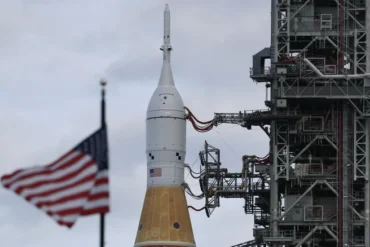
After years of anticipation and billions in investment, NASA’s Artemis II mission has encountered yet another serious delay, intensifying scrutiny around the agency’s long-awaited return to crewed lunar exploration. What was meant to mark a triumphant step toward humanity’s first astronaut journey beyond low-Earth orbit in more than half a century is now mired in technical setbacks, forcing NASA to postpone its planned March launch attempt and initiate a full rollback of the towering Space Launch System (SLS) rocket.
The setback is not symbolic. It is mechanical, procedural, and deeply consequential.
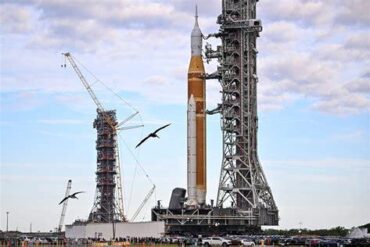
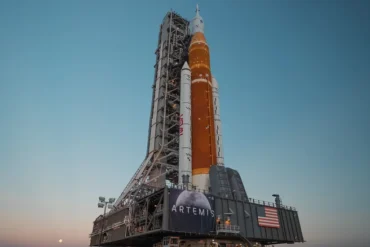
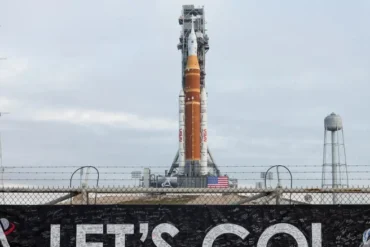
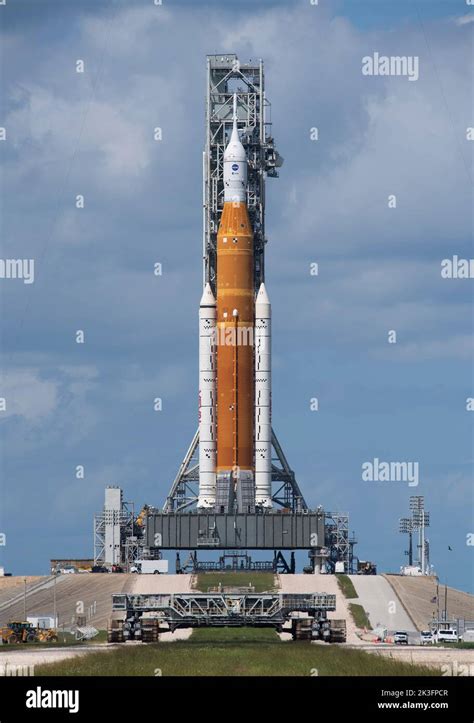
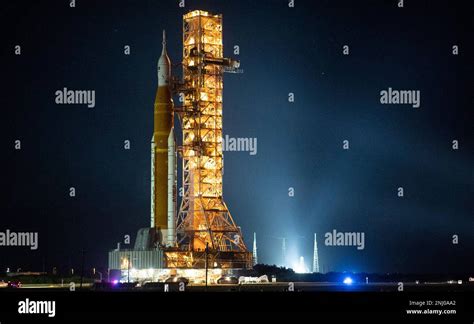
At the heart of the latest disruption lies a newly discovered helium leak in the SLS upper stage, an issue serious enough to halt countdown preparations and compel engineers to move the 322-foot rocket back to the Vehicle Assembly Building (VAB) at Kennedy Space Center. A rollback is not a trivial maneuver. The massive crawler-transporter must carry the fully stacked rocket four miles from Launch Complex 39B back to the VAB, a journey that takes roughly 12 hours at a walking pace. Once inside, teams can begin detailed inspections and repairs under controlled conditions.
Helium Leak in SLS Upper Stage Raises New Risks
Unlike previous hydrogen fueling leaks that occurred during propellant loading, this new helium issue strikes at a more sensitive layer of mission reliability. The SLS upper stage relies on high-pressure helium to maintain proper tank pressurization and to ensure stable environmental conditions for the cryogenic liquid hydrogen and liquid oxygen propellants. Helium acts as an invisible regulator, preventing structural collapse of fuel tanks and ensuring steady engine performance.
A leak in this system is more than an inconvenience. It introduces uncertainty in pressure control, which can compromise engine ignition stability and overall propulsion performance during critical phases of ascent. Engineers cannot afford ambiguity in these margins. Crewed missions demand absolute confidence.
This distinction is crucial. Hydrogen leaks are often associated with fueling operations and can sometimes be addressed procedurally. A helium leak embedded in the upper stage architecture requires physical inspection, potential component replacement, and rigorous revalidation testing. The margin for error shrinks considerably when human lives are involved.
A Pattern of Artemis Technical Challenges
The current delay does not exist in isolation. Artemis I, the uncrewed precursor mission launched in 2022, experienced its own series of complications, including hydrogen leaks and concerns regarding the Orion spacecraft’s heat shield performance during reentry. Post-flight analysis revealed unexpected charring patterns that demanded further review before committing astronauts to the system.
Although NASA publicly downplayed the severity of those earlier findings, the cumulative effect of repeated anomalies has amplified skepticism. Artemis II was supposed to benefit from lessons learned. Instead, it has inherited some of the same engineering fragilities.
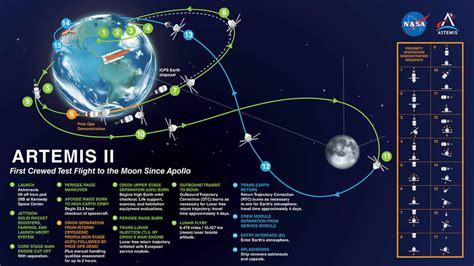
The Artemis II mission profile is ambitious. Four astronauts will orbit the Moon without landing, testing deep-space life support, navigation systems, and the European Service Module in a real operational environment. It represents the first time humans will venture beyond low-Earth orbit since Apollo 17 in 1972. Expectations are immense. So is pressure.
Each additional delay reshapes scheduling for Artemis III, the mission intended to land astronauts near the lunar south pole. The Artemis architecture is sequential. A slip in one mission cascades into the next.
Rollback to the Vehicle Assembly Building: What Happens Next
Returning the SLS to the VAB allows NASA engineers to perform diagnostic assessments under full structural support. The rollback effectively pauses the launch campaign, resetting timelines that were already under strain. Inspection of the helium system will likely involve:
- Leak localization using pressure decay analysis
- Component integrity checks within the upper stage plumbing
- Replacement or resealing of suspect valves or fittings
- Requalification testing prior to pad rollout
This is not merely troubleshooting; it is systems validation at the highest safety threshold. Crewed exploration leaves no room for “close enough.”
Artemis II Delay and the Shadow of Starliner
The broader space community cannot ignore parallels to Boeing’s troubled Starliner program, which suffered repeated delays before achieving operational readiness. While the engineering contexts differ, the perception risk is similar. High-profile delays erode public confidence, even when they reflect prudent safety measures.
NASA’s Artemis program carries geopolitical significance as well. The agency is not simply launching astronauts; it is leading an international coalition aimed at establishing sustained lunar presence under the Artemis Accords framework. Delays complicate diplomatic timelines and industry contracts tied to lunar infrastructure development.
The Road Ahead for NASA’s Lunar Ambitions
For now, NASA is targeting a rollback within the week, with no confirmed new launch date. Engineers must first understand the root cause of the helium leak before committing to another countdown attempt. Transparency in the investigative process will be critical to maintaining credibility.
Spaceflight has always demanded resilience. The Apollo program endured catastrophic setbacks before succeeding. The Artemis program may ultimately follow a similar arc—slow, methodical, and occasionally frustrating.
Yet the physics remains unforgiving. Rockets do not care about deadlines. They obey thermodynamics, pressure differentials, and material tolerances. Artemis II stands at the intersection of ambition and engineering reality. The coming weeks will determine whether NASA can convert caution into confidence and move one step closer to humanity’s next voyage around the Moon.