The announcement that NASA’s Artemis III moon landing was cancelled sent a tremor through the global space community. For a program designed to mark humanity’s triumphant return to the lunar surface after more than fifty years, the decision felt seismic. Yet beneath the headlines lies a more nuanced shift: Artemis III has not vanished from existence. It has been fundamentally redefined, reshaped into a mission that prioritizes technical maturity over spectacle.
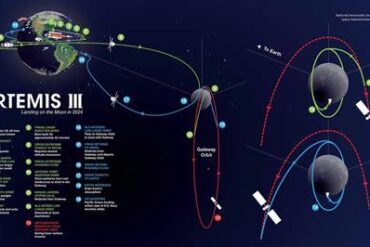
Artemis III was meant to deliver astronauts to the lunar south pole, a region of immense scientific interest due to its permanently shadowed craters and potential water ice deposits. It would have been the first human landing since Apollo 17 in 1972, closing a historic gap and inaugurating a new era of sustained exploration. Instead, NASA has recalibrated its roadmap, citing delays and system challenges that ripple backward through the Artemis timeline.
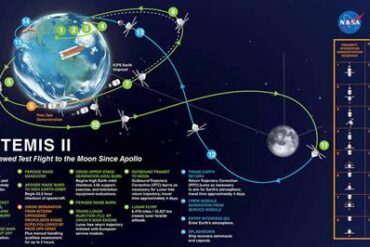
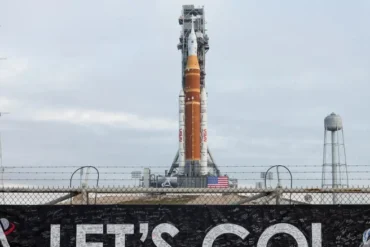
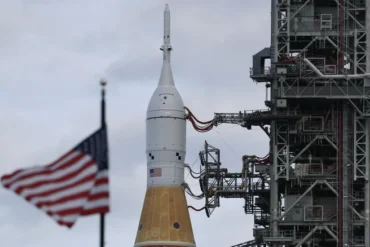
Artemis I, the uncrewed test of the Space Launch System (SLS) and Orion spacecraft, proved that the hardware could survive the journey around the Moon and back. Artemis II, the crewed lunar flyby, has faced schedule shifts and technical hold-ups, now targeting launch as early as April. These cascading delays forced a strategic reckoning. NASA Administrator Jared Isaacman announced at Kennedy Space Center that the existing configuration “is just not the right pathway forward,” signaling a decisive pivot rather than a retreat.
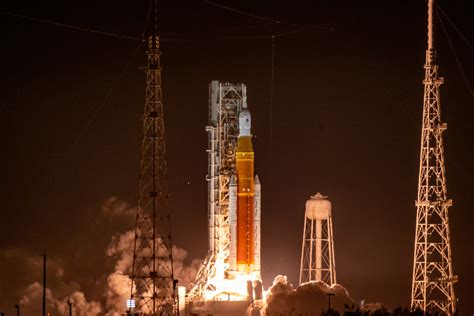
Artemis III Reclassified: From Lunar Landing to Low-Earth Orbit Mission
Technically, Artemis III is still happening, but not as the world expected. Instead of descending to the Moon’s surface, the mission will operate in low-Earth orbit (LEO), serving as a high-stakes systems validation and crew training exercise. This shift reflects a philosophical reset inside NASA: prioritize incremental progress, eliminate avoidable risk, and refine spacecraft integration before committing to a lunar descent.
The change underscores the complexity of orchestrating modern spaceflight. Artemis missions involve not only SLS and Orion, but also lunar lander systems, next-generation spacesuits, advanced docking maneuvers, and international partnerships. A weakness in any link can jeopardize the entire chain. By converting Artemis III into an orbital mission scheduled for mid-2027, NASA buys time to resolve integration challenges while preserving crewed flight momentum.
Why NASA Cancelled the Original Lunar Landing Plan
The cancellation is rooted in compounded delays and technical uncertainties. Artemis II’s shifting timeline directly impacted downstream missions. Every postponed test compresses preparation windows and intensifies risk. Software refinements, propulsion evaluations, and life-support system verifications require methodical validation. Rushing such processes in human spaceflight history has rarely ended well.
NASA’s public stance emphasizes returning “to basics.” That phrase carries weight. It suggests a renewed focus on engineering fundamentals, procedural discipline, and hands-on operational experience for mission teams. The Artemis architecture is far more intricate than Apollo’s relatively linear approach. Today’s missions aim not just to plant a flag, but to establish infrastructure for sustained lunar presence and eventual Mars expeditions.
Artemis IV: The New Target for Humanity’s Lunar Return
The responsibility for the next moon landing now shifts to Artemis IV, projected for 2028 if development milestones proceed smoothly. That mission is expected to deploy astronauts to the lunar surface, likely leveraging much of the technology originally intended for Artemis III. The mission map, scientific objectives, and hardware concepts remain largely intact. What has changed is timing and sequence.
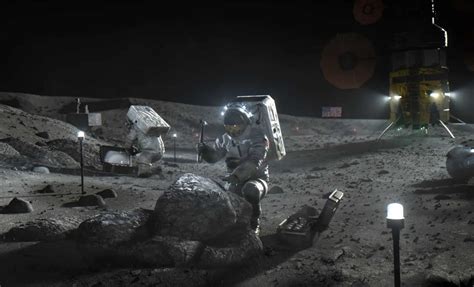
Artemis IV may still utilize next-generation lunar rovers and explore the resource-rich south polar region. The delay could even strengthen the mission’s scientific yield by allowing further refinement of landing systems and surface operations protocols. In space exploration, patience often translates into precision.
The Bigger Picture: Strategic Evolution, Not Retreat
It is tempting to interpret the cancellation as a setback. In reality, it reflects the tension between ambition and pragmatism. NASA’s Artemis program is designed as a multi-decade enterprise, not a single headline-grabbing event. By shifting Artemis III into Earth orbit, NASA preserves forward motion while mitigating risk.
The United States remains committed to returning astronauts to the Moon. The strategic recalibration highlights an essential truth about deep-space exploration: progress is rarely linear. Engineering frontiers are conquered through iteration, adaptation, and relentless testing. Artemis III’s transformation into an orbital mission may ultimately strengthen the foundation upon which Artemis IV lands.
Humanity’s next footprint on the Moon has been postponed, not erased. In the long arc of exploration, a delay of a year or two is a minor adjustment. The greater story is that the architecture for sustained lunar presence is still under construction. The path forward now emphasizes resilience over speed, and in the unforgiving vacuum of space, resilience wins.