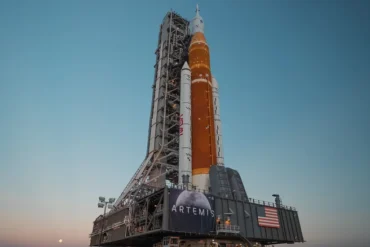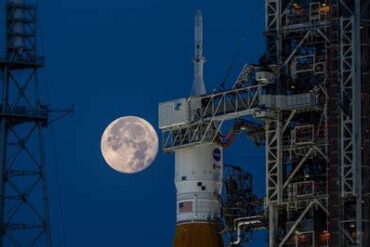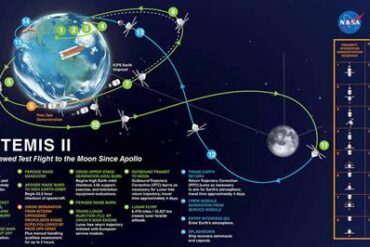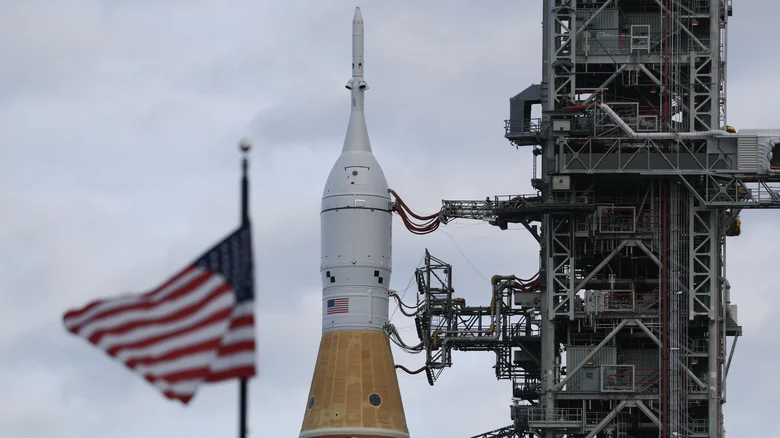
NASA is preparing to send astronauts beyond Earth orbit for the first time in more than half a century, marking a pivotal moment in modern spaceflight. Artemis II, the first crewed mission of the Artemis program, is designed to carry humans around the Moon and back, testing systems that will eventually support lunar landings. Yet beneath the ambition and symbolism, a serious technical concern has emerged. The Orion spacecraft heat shield, a component essential for astronaut survival during reentry, has become the focus of intense scrutiny and debate.
The concern traces back to Artemis I, Orion’s uncrewed test flight. During its high-speed return through Earth’s atmosphere, the spacecraft endured temperatures hotter than the surface of the Sun. Engineers expected the heat shield’s protective layer to char and erode evenly. Instead, the material behaved unpredictably. Rather than shedding cleanly, the surface developed cavities, leaving behind uneven damage patterns that challenged preflight models and assumptions.
This anomaly matters because Artemis II will not be empty. Astronauts will be strapped inside Orion, relying entirely on that same protective system. The heat shield design is nearly identical, using Avcoat, a resin-based ablative material originally developed for the Apollo program. While proven historically, its modern manufacturing process and behavior under Artemis-specific flight conditions appear less predictable than expected.
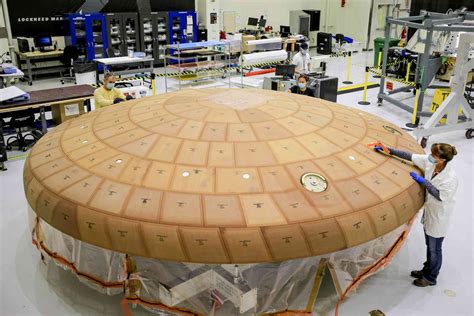
NASA’s internal review concluded that the damage, while surprising, did not compromise crew safety. Rather than redesign the heat shield, the agency opted to adjust Orion’s atmospheric entry trajectory. The revised plan exposes the spacecraft to a higher heat load for a shorter, more intense period. According to NASA engineers, advanced simulations and arc jet testing suggest this profile reduces cracking and cavity formation within the Avcoat layer.
NASA Administrator Jared Isaacman publicly expressed confidence in the solution, emphasizing that the decision was grounded in data-driven analysis and extensive testing. From the agency’s perspective, altering the entry profile avoids costly delays while maintaining acceptable safety margins. Artemis II’s launch window, currently no earlier than February 6, 2026, reflects confidence that the issue is understood and controlled.
Why the Heat Shield Matters More Than Ever
A heat shield is not a secondary system. It is the final barrier between astronauts and catastrophic failure. At reentry speeds exceeding 25,000 miles per hour, even minor material flaws can cascade into life-threatening outcomes. The Artemis missions push Orion into faster lunar-return velocities than low-Earth-orbit vehicles, increasing thermal stress and narrowing tolerances.
Experts Divided Over NASA’s Fix
Not all veterans of human spaceflight are reassured. Former astronaut and aerospace engineer Dr. Charlie Camarda has openly criticized the approach, calling the trajectory-based solution reckless. He argues that changing flight conditions to accommodate a material problem treats symptoms rather than causes, potentially masking deeper design vulnerabilities.
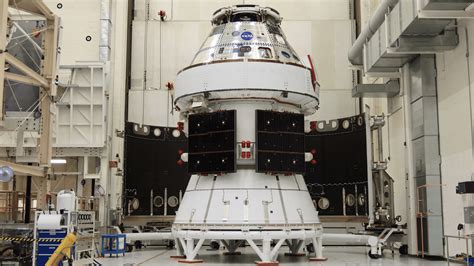
Another former astronaut, Dr. Danny Olivas, initially shared similar concerns, stating the heat shield was not what NASA would ideally provide to its crews. However, after reviewing updated modeling and trajectory adjustments, Olivas has since softened his stance. As a member of the independent review team, his revised assessment carries weight, underscoring how divided expert opinion remains.
A High-Stakes Countdown to Artemis II
NASA has not ignored dissent, but it is clearly betting on engineering analysis over redesign. History suggests the agency does not knowingly gamble with astronaut lives, yet history also shows that breakthroughs often arrive alongside risk. Artemis II stands at that uneasy intersection. When Orion returns from its lunar loop, the performance of its heat shield will speak louder than any press briefing, shaping the future of human exploration beyond Earth.