The quest for materials that can endure extreme temperatures without compromising integrity has long driven innovation in aerospace engineering. NASA’s Alloy GRX-810, developed through a groundbreaking combination of nanotechnology and additive manufacturing, represents a monumental leap forward in high-temperature materials science. Capable of withstanding environments up to 2,000 degrees Fahrenheit, this material is not only heat-resistant—it is a paradigm-shifting solution for next-generation spacecraft and propulsion systems.
The Birth of GRX-810: Advanced Material for Extreme Environments
In the crucible of cutting-edge aerospace demands, GRX-810 emerged as an answer to persistent limitations of traditional alloys. Developed by NASA researchers using an Oxide Dispersion Strengthened (ODS) methodology, the material integrates nanoscale oxide particles within a metallic matrix, producing a hybrid alloy with extraordinary strength and flexibility. Unlike conventional alloys that degrade rapidly under thermal stress, GRX-810 demonstrates 1,000 times the durability of earlier NASA materials.
What sets GRX-810 apart is its ability to thrive in the thermomechanical hellscapes of space exploration. While traditional metals soften, deform, or even fail beyond 1,500°F, GRX-810 maintains both its mechanical resilience and structural integrity, making it an ideal candidate for components subjected to extreme thermal and pressure fluctuations.
From Simulation to Reality: Pioneering the Development Process
Before physically producing GRX-810, NASA employed a rigorous simulation-based approach, leveraging computational thermodynamics to identify the optimal elemental composition. This high-efficiency method reduced the number of physical iterations needed, accelerating development while cutting costs.
In just 30 simulations, researchers pinpointed the precise oxide particle distribution required to enhance creep resistance, tensile strength, and thermal stability. Once synthesized via additive manufacturing (3D printing), the alloy not only matched simulation data but exceeded performance benchmarks in testing environments.
The result: a superalloy with unmatched potential for use in rocket engines, liquid fuel injectors, hypersonic vehicles, and deep-space probes. GRX-810 isn’t just an experimental material—it’s a ready-for-flight technological breakthrough.
The Power of Oxide Dispersion Strengthening (ODS)
ODS alloys are distinguished by the uniform dispersion of nano-oxides within a metal base, a feature that confers remarkable resistance to high-temperature degradation. In the case of GRX-810:
- Oxide nanoparticles impede dislocation movement, strengthening the material.
- They improve creep resistance, essential for maintaining shape under continuous stress.
- They enhance oxidation resistance, ensuring long-term stability in oxygen-rich, high-temp conditions.
These characteristics converge to create a material that is simultaneously lightweight, high-strength, and extraordinarily heat-tolerant—a triad of properties rarely found together in traditional aerospace metals.
The Role of 3D Printing in GRX-810’s Production
Key to the feasibility and scalability of GRX-810 is its additive manufacturing process, particularly via Direct Metal Printing (DMP). Performed in collaboration with 3D Systems, this technique allows the precise layering of the alloy in complex geometries, crucial for designing intricate aerospace components.
This method:
- Reduces waste through targeted material deposition.
- Enables customization of component shapes for unique engineering constraints.
- Ensures consistency in oxide dispersion throughout the alloy structure.
NASA’s ability to print GRX-810 with micron-level precision ensures that the alloy is not only strong but also economically viable at production scale.
Strategic Partnerships and the Path to Commercialization
In 2023, GRX-810’s performance was validated by 3D Systems’ DMP platform. Following these successful trials, NASA granted exclusive licenses to four U.S. companies in 2024:
- Carpenter Technology Corporation
- Elementum 3D
- Linde Advanced Material Technologies
- Powder Alloy Corporation
These companies began production and distribution of GRX-810, marking a significant step toward widespread aerospace integration. Elementum 3D, in particular, has since ramped up large-scale manufacturing, supplying GRX-810 not only to aerospace manufacturers but to commercial industries seeking high-temp solutions.
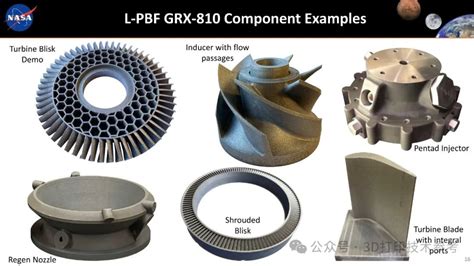
NASA’s strategic dissemination of the alloy ensures that both governmental and private sector partners have access to this revolutionary material, potentially transforming applications across:
- Spacecraft and satellite components
- Jet engine parts
- Thermal shielding systems
- Hypersonic sensor housings
Real-World Applications and Early Testing Successes
Early use cases for GRX-810 have confirmed its exceptional capabilities. Liquid jet rocket engine injectors fabricated with the alloy demonstrated outstanding performance under continuous thermal cycling and mechanical stress. The consistency in results reflects GRX-810’s resilience in mission-critical aerospace environments.
By 2025, Vectoflow, a European air flow data systems firm, had begun integrating GRX-810 into its high-temperature flow sensors—a move that highlights the alloy’s appeal beyond U.S. borders. This early adoption in sensor systems signifies broader utility in aerodynamic testing, supersonic flight, and thermal measurement devices.
Award-Winning Innovation: NASA’s Glenn Research Center Recognition
In recognition of the technological leap achieved with GRX-810, NASA awarded its 2024 Commercial Invention of the Year to the Glenn Research Center. The award underscores both the scientific ingenuity and practical relevance of the new material.
The recognition also strengthens GRX-810’s profile as not just a theoretical advance, but as a validated, peer-recognized solution ready to support current and future space missions. It signals confidence within the scientific community that the alloy can deliver tangible improvements in efficiency, safety, and mission longevity.
GRX-810 vs. Conventional Alloys: A Comparative Edge
The contrast between GRX-810 and legacy aerospace materials is stark. Where conventional superalloys begin to oxidize or lose strength at 1,700°F, GRX-810 operates efficiently well beyond that range. Its properties include:
- Creep resistance at 2,000°F
- Oxidation resistance under prolonged exposure
- Higher fracture toughness, reducing crack propagation
- Enhanced fatigue life, even under fluctuating loads
These metrics redefine performance baselines for rocket nozzles, combustion chambers, and thermal shielding skins.
Beyond Aerospace: Multisector Potential of GRX-810
Although born from the high demands of space exploration, the alloy’s unique properties offer promising applications in other high-temperature industries, such as:
- Automotive turbo systems
- Industrial turbines and reactors
- Energy sector components (especially geothermal and nuclear systems)
Its ability to retain form and function under extreme stress makes it an ideal material wherever thermal, mechanical, and chemical extremes converge.
The Future of Extreme Materials: What Comes After GRX-810?
GRX-810 may well be a stepping stone toward a new class of superalloys that merge nanotechnology, AI-driven simulation, and additive manufacturing into scalable production pipelines. As materials science continues to evolve, we can expect future variants to incorporate smart self-healing properties, real-time stress diagnostics, and adaptive microstructures that respond to environmental changes.
NASA’s approach with GRX-810—emphasizing predictive modeling, rapid prototyping, and strategic licensing—offers a blueprint for next-generation material development across defense, commercial, and energy domains.
Conclusion: A Material Worthy of the Stars
In GRX-810, NASA has created more than just a heat-resistant alloy. It has ushered in a new age of materials engineered at the nanoscale, produced through digital fabrication, and tailored for the harshest environments known to humanity. As the aerospace industry pushes toward Mars, lunar bases, and deeper interstellar exploration, materials like GRX-810 will be the silent champions enabling such dreams to take flight.
Its journey from simulation to global deployment exemplifies the future of innovation—where computation, collaboration, and cutting-edge science converge to solve humanity’s most extreme engineering challenges.