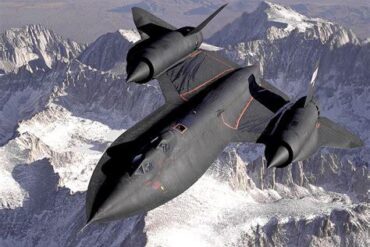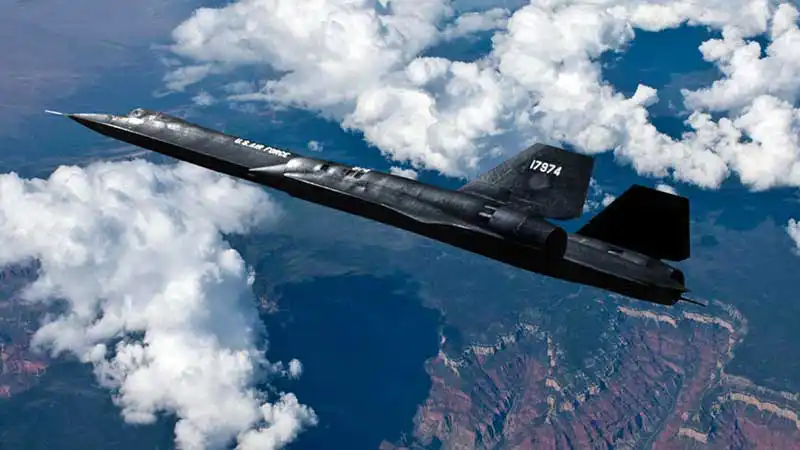
The story of the Lockheed SR-71 Blackbird is not merely about speed—it is about surviving the brutal physics that speed imposes. At velocities exceeding Mach 3, the aircraft doesn’t just cut through the air; it compresses, ignites, and wrestles with it. Every inch of its fuselage becomes a battlefield where heat, pressure, and structural integrity collide. The genius of the Blackbird lies in how it transforms this hostile environment into a manageable system, turning extreme thermal stress into an engineered advantage.
At cruising altitude above 80,000 feet, where the atmosphere thins into near-vacuum conditions, the SR-71 experiences skin temperatures that soar beyond 1,000 degrees Fahrenheit. Traditional aerospace materials would soften, warp, or fail outright under such conditions. Yet the Blackbird thrives, its structure designed not just to endure heat—but to rely on it.
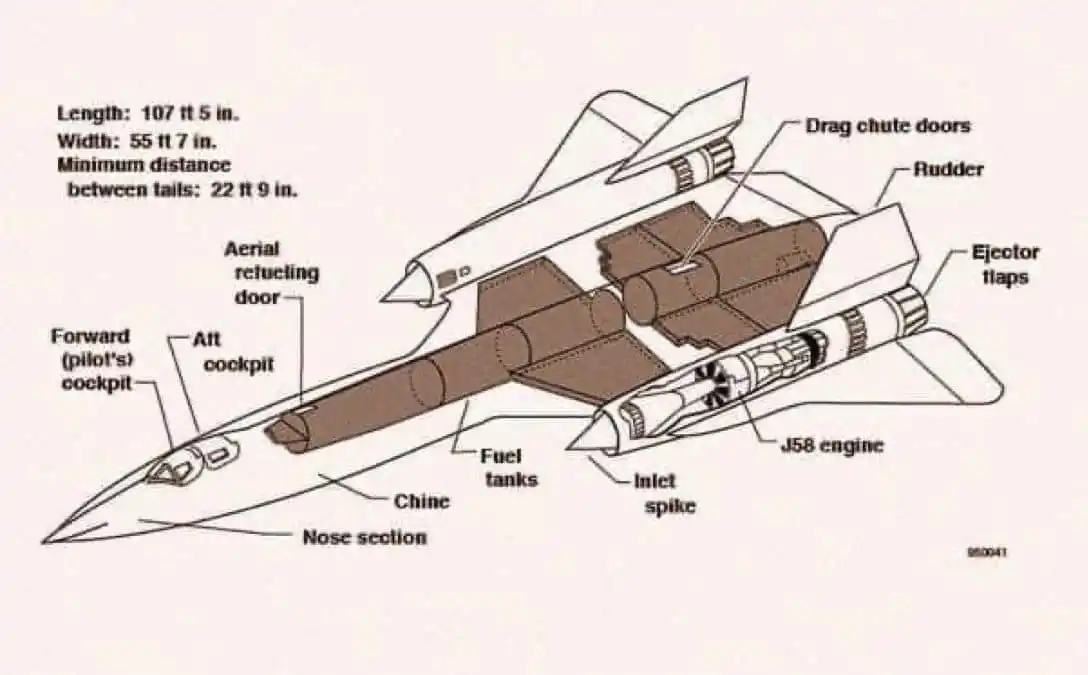
This remarkable resilience begins with a bold material choice: titanium. More than 93% of the SR-71’s airframe is constructed from this exotic metal, forming a fuselage that behaves unlike anything before or since. But titanium alone is not the full answer. The Blackbird’s survival depends on a sophisticated interplay of material science, thermal engineering, and aerodynamic design—an integrated system where every component contributes to managing heat.
Titanium as a Structural Shield Against Mach 3 Heat
Titanium was selected for the SR-71 not simply because it is strong, but because it maintains structural integrity at temperatures that would cripple aluminum or steel. At Mach 3, friction with air molecules generates intense thermal energy, heating the aircraft’s skin to levels comparable to a furnace. Titanium’s high melting point and exceptional strength-to-weight ratio make it uniquely suited for this environment.
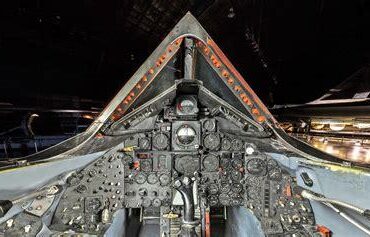
However, titanium introduces a paradox. While it resists deformation under heat, it is also an efficient conductor of thermal energy. This means that the heat absorbed by the outer skin can quickly migrate inward, threatening sensitive avionics, hydraulic systems, and even the cockpit. Without mitigation, the very material that protects the aircraft externally could compromise it internally.
Engineers addressed this challenge by refusing to treat titanium as a standalone solution. Instead, they integrated it into a broader thermal management system—one that actively redistributes and dissipates heat rather than merely resisting it.
The Fuel That Cools: JP-7 as a Liquid Heat Sink
One of the most ingenious aspects of the SR-71’s design is its use of fuel as a cooling medium. The aircraft runs on JP-7, a specialized fuel formulated with an exceptionally high flash point. Unlike conventional jet fuels, JP-7 can absorb enormous amounts of heat without igniting, making it ideal for thermal regulation.
Before combustion, the fuel circulates through a network of heat exchangers embedded throughout the aircraft. As it flows, it absorbs heat from the titanium fuselage, engine oil systems, and even the cockpit environment. This process effectively turns the entire fuel system into a mobile cooling circuit, drawing thermal energy away from critical components.
This approach accomplishes two critical objectives simultaneously. First, it prevents overheating of internal systems, preserving operational reliability. Second, it preheats the fuel before combustion, improving engine efficiency under extreme conditions. The result is a closed-loop system where heat is not wasted but repurposed.
The brilliance of this design lies in its simplicity and efficiency. Instead of adding bulky cooling systems, engineers leveraged an existing necessity—fuel—and transformed it into a vital thermal management tool.
Black Paint That Radiates Heat Into the Sky
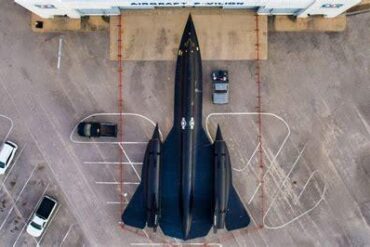
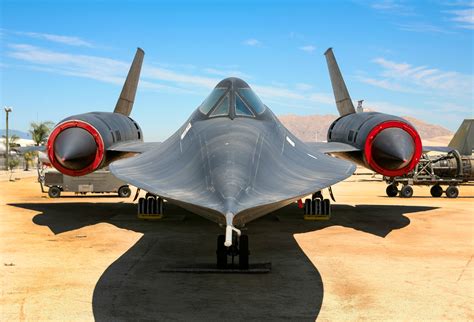
The SR-71’s iconic black finish is often associated with stealth, but its primary function is thermal. The aircraft is coated in a სპეციally formulated high-emissivity paint designed to maximize heat radiation. In the thin upper atmosphere, where convective cooling is minimal, radiative heat transfer becomes essential.
Black surfaces are highly effective at emitting infrared radiation. By coating the aircraft in this material, engineers enabled the fuselage to shed heat more efficiently into the surrounding environment. This seemingly simple choice reduces internal temperatures by tens of degrees, contributing significantly to overall thermal stability.
The paint also plays a secondary role in reducing radar visibility, but its thermal properties are what make it indispensable. Without this radiative layer, the heat absorbed by the titanium structure would accumulate, pushing internal systems beyond safe limits.
Expansion by Design: Engineering for Growth Under Heat
At Mach 3, the SR-71 does something counterintuitive—it grows. The intense heat causes the titanium fuselage to expand by several inches in length. For most aircraft, such expansion would introduce catastrophic stress, leading to buckling or structural failure. The Blackbird, however, was designed with this expansion in mind.
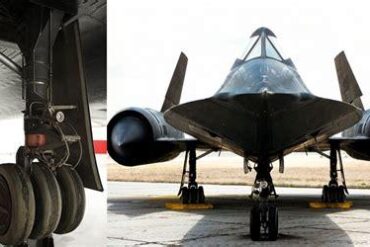
Engineers incorporated deliberate gaps between fuselage panels, allowing the structure to expand freely as temperatures rise. On the ground, these gaps are clearly visible, giving the aircraft a loose, almost unfinished appearance. During flight, as the temperature increases, the panels expand and seal tightly, forming a smooth, aerodynamic surface.
This design philosophy extends to the fuel tanks, which are integrated into the aircraft’s outer skin. Because flexible liners would not survive the heat, the tanks rely on the expansion of the metal itself to achieve a proper seal. This is why the SR-71 famously leaks fuel while on the runway—a characteristic that is not a flaw, but a direct consequence of its thermal engineering.
Corrugated Skin: Flexibility in a Supersonic World
Beyond panel gaps, the SR-71 employs another unconventional feature: corrugated skin sections. These ridged surfaces resemble the folds of an accordion, allowing the metal to expand and contract without distorting its overall shape.
At supersonic speeds, maintaining aerodynamic integrity is critical. Any warping or uneven expansion could disrupt airflow, increasing drag and compromising stability. The corrugated design absorbs thermal expansion in a controlled manner, preserving the aircraft’s sleek profile even under extreme conditions.
This approach reflects a deeper engineering philosophy—embracing the realities of high-speed flight rather than resisting them. Instead of forcing materials to behave rigidly, the SR-71 allows them to flex, adapt, and respond dynamically to their environment.
The Cold War Origin of a Titanium Marvel
The creation of the SR-71 was driven by the intense pressures of the Cold War, where intelligence gathering demanded unprecedented speed and altitude. Designed by the legendary engineer Kelly Johnson and developed within Lockheed’s Skunk Works, the aircraft pushed the boundaries of what was technologically possible.
Ironically, much of the titanium used in the Blackbird originated from the very adversary it was designed to surveil. Through a network of shell companies, the United States acquired titanium from the Soviet Union, which at the time had more advanced production capabilities for the metal. This twist of geopolitical strategy underscores the lengths to which the program went to achieve its goals.
The result was an aircraft that redefined reconnaissance. Capable of outrunning threats rather than evading them, the SR-71 relied on speed as its primary defense. Surface-to-air missiles posed a constant risk, but the Blackbird’s response was simple: accelerate beyond their reach.
Thermal Stress as a System, Not a Problem
What sets the SR-71 apart is not any single innovation, but the integration of multiple systems into a cohesive whole. Titanium provides structural resilience, JP-7 fuel absorbs and redistributes heat, black paint radiates thermal energy, and expansion-friendly design prevents structural failure. Each element addresses a specific challenge, but together they form a comprehensive solution.
This systems-level thinking is what allows the aircraft to operate in an environment that would destroy conventional designs. Rather than isolating problems, engineers embraced the interconnected nature of thermal dynamics, creating a machine where every component contributes to overall stability.
The Blackbird does not fight heat—it manages it, channels it, and ultimately uses it to its advantage.
Maintenance Realities of a Thermal Titan
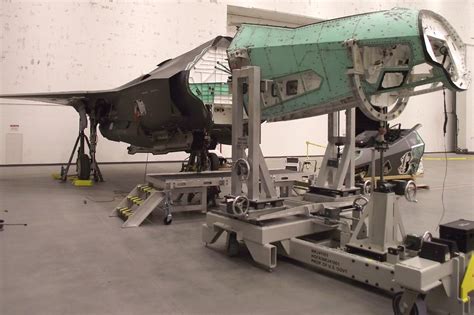
Operating an aircraft under such extreme conditions comes at a cost. The SR-71 requires extensive maintenance after each mission, with inspections covering every inch of the fuselage. The repeated cycles of heating and cooling place immense stress on materials, leading to wear that must be meticulously managed.
Turnaround times can stretch for days, as technicians repair minor damage, replace components, and ensure that the aircraft remains mission-ready. This intensive maintenance regime reflects the delicate balance between performance and durability. The Blackbird’s capabilities are unmatched, but they demand constant attention.
Despite these challenges, the aircraft achieved an extraordinary operational record, accumulating tens of thousands of flight hours and setting performance benchmarks that remain unbroken.
Speed Beyond Limits: Where Heat Defines Performance
The SR-71’s speed is both its greatest strength and its greatest challenge. Traveling at over 2,100 miles per hour, the aircraft generates heat at a rate that defines every aspect of its design. Even its defense strategy is rooted in speed—when threatened, it simply accelerates, leaving missiles struggling to keep up.
This performance is not just a testament to powerful engines, but to the ability of the fuselage to withstand the resulting thermal stress. Without its advanced heat management systems, such speeds would be impossible. The aircraft’s structure is not merely a shell; it is an active participant in sustaining flight.
A Legacy Forged in Heat and Innovation
The Lockheed SR-71 Blackbird remains one of the most extraordinary achievements in aerospace engineering. Its titanium fuselage is more than a material choice—it is the foundation of a comprehensive approach to managing extreme thermal stress.
By combining advanced materials with innovative systems, the Blackbird transforms the challenges of high-speed flight into opportunities for engineering excellence. It stands as a reminder that true innovation often lies not in avoiding limitations, but in mastering them.
Decades after its retirement, no aircraft has surpassed its unique combination of speed, altitude, and thermal resilience. The SR-71 does not merely endure the heat of Mach 3 flight—it defines what is possible within it.