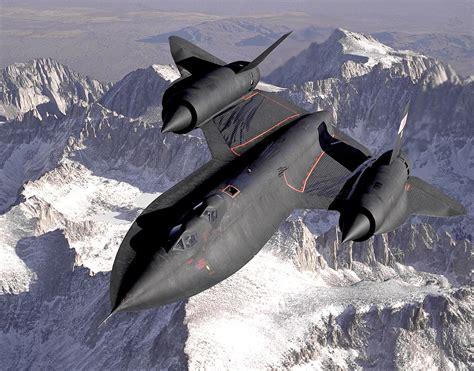
The Lockheed SR-71 Blackbird remains one of the most extraordinary aircraft ever constructed. Capable of cruising at speeds exceeding Mach 3 and operating at altitudes above 85,000 feet, it represented a technological leap so dramatic that many of its records still stand today. Yet one of the most fascinating aspects of the aircraft was not its speed, altitude, or reconnaissance capabilities. It was the astonishing reality that the United States secretly acquired much of the titanium needed to build the aircraft from the Soviet Union—the very adversary the SR-71 was designed to spy upon.
The story sounds almost fictional. During the height of the Cold War, while Washington and Moscow competed across military, political, and technological fronts, American intelligence agencies quietly orchestrated a covert procurement network that moved strategic materials from Soviet mines to American factories. Through a web of shell corporations, third-party intermediaries, and carefully crafted cover stories, the Central Intelligence Agency managed to secure thousands of tons of titanium that ultimately became the skin and skeleton of one of history’s most legendary aircraft.
The irony was profound. Soviet workers mined and refined the metal, Soviet export officials approved the sales, and Soviet cargo ships transported the material. Years later, that same titanium would race across the edges of Soviet airspace aboard a reconnaissance aircraft that no interceptor or missile system could reliably catch.
Why the SR-71 Blackbird Needed Titanium
The origins of this unusual procurement operation began with a fundamental engineering challenge. Lockheed’s secretive Skunk Works division, led by the legendary Clarence “Kelly” Johnson, was tasked with creating an aircraft capable of sustained flight at speeds beyond Mach 3.
At those velocities, air friction becomes a severe problem. As an aircraft pushes through the atmosphere, tremendous heat builds across its surface. Conventional aluminum alloys, widely used in military aircraft during the 1950s and 1960s, lose much of their structural integrity when exposed to such extreme temperatures.
Engineers quickly realized that traditional materials simply would not survive the operational environment envisioned for the A-12 Oxcart and the later SR-71 Blackbird. During flight, portions of the airframe could exceed 600 degrees Fahrenheit (315 degrees Celsius), temperatures capable of weakening conventional aerospace metals.
Titanium offered the solution. The metal possessed an extraordinary combination of characteristics: exceptional strength, relatively low weight, resistance to corrosion, and remarkable performance under high temperatures. For the Blackbird, titanium was not merely advantageous—it was essential.
More than 90 percent of the aircraft’s structure ultimately consisted of titanium alloys, making it one of the most titanium-intensive aerospace programs ever undertaken.
America’s Titanium Problem
Although the United States possessed immense industrial capabilities, it faced a significant obstacle. Domestic supplies of the specific titanium ore and processed materials required for the Blackbird program were limited.
The Soviet Union, meanwhile, was one of the world’s largest producers of titanium and titanium-related raw materials. Soviet mining operations generated substantial quantities of rutile ore, a key source used in titanium production.
This created a paradox. The aircraft designed to monitor Soviet military activity depended upon materials largely controlled by Soviet industry.
Publicly purchasing enormous quantities of titanium for a secret reconnaissance aircraft was impossible. Such procurement would have attracted attention from foreign intelligence services and potentially revealed the existence of one of America’s most sensitive Cold War projects.
The CIA therefore devised a solution worthy of a spy novel.
The CIA’s Global Network of Front Companies
To conceal the true destination of the titanium, the CIA established and managed a network of shell corporations operating across multiple countries. These entities appeared to be ordinary commercial businesses engaged in legitimate industrial activities.
The companies maintained believable business records, conducted routine transactions, and operated through countries that would not immediately arouse suspicion among Soviet trade officials.
Instead of placing large centralized orders, the purchases were distributed among numerous entities. Each company claimed to need titanium for different civilian purposes. Some purportedly manufactured industrial machinery. Others claimed involvement in chemical processing equipment, agricultural infrastructure, or textile production.
One particularly memorable cover story suggested that vast quantities of titanium were needed to manufacture commercial pizza ovens.
While the explanation may sound humorous today, it possessed a critical advantage: it was technically plausible.
Titanium’s resistance to heat and corrosion made it useful in food processing and commercial cooking equipment. Soviet export officials reviewing purchase requests saw no obvious reason to suspect a connection to a classified American reconnaissance aircraft.
The Art of Disappearing a Shipment
The CIA did more than create fake companies. It engineered an elaborate logistics system designed to obscure ownership throughout the shipping process.
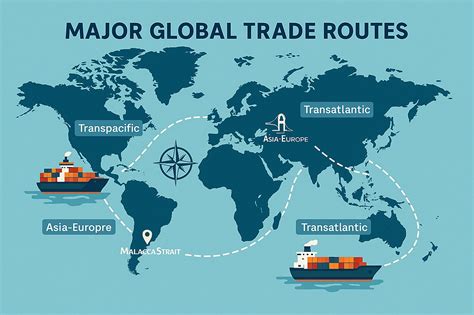
A front company located in one country would place an order for titanium. After the cargo vessel departed a Soviet port, ownership might be transferred to another company in a second country. During transit, additional sales could occur.
By the time the shipment reached its destination, the legal ownership trail had become so convoluted that tracing the cargo back to the U.S. government was extraordinarily difficult.
In many cases, ownership changed several times before a vessel completed its voyage. Documentation evolved continuously, creating layers of separation between Soviet producers and the ultimate American recipients.
The strategy exploited the growing complexity of international trade. Long before globalization became a household term, intelligence agencies recognized that interconnected commercial networks could provide powerful cover for covert operations.
Why Soviet Officials Allowed the Sales
The success of the operation depended not only on CIA ingenuity but also on economic realities inside the Soviet Union.
During the 1960s, Soviet planners faced persistent challenges in obtaining hard currency from Western nations. Exports represented an important source of valuable foreign exchange.
Titanium and related raw materials generated revenue that Soviet authorities needed. As a result, export officials often prioritized sales opportunities when transactions appeared commercially legitimate.
Economic incentives created vulnerabilities. Factory managers, mining administrators, and trade officials were frequently evaluated according to production targets and export performance. Surplus materials could be sold internationally, generating additional revenue and helping fulfill state economic objectives.
The CIA carefully structured purchases to resemble ordinary market demand. Rather than creating sudden spikes that might raise alarms, procurement patterns mirrored natural fluctuations in industrial consumption.
This approach ensured that the purchases blended into broader global trade activity.
Some accounts from former Blackbird personnel suggest Soviet officials accepted the commercial explanations partly because they aligned with existing perceptions about Western consumer culture. Claims involving food production equipment and expanding fast-food industries seemed entirely believable.
Whether viewed as intelligence brilliance or bureaucratic oversight, the result was the same: thousands of tons of strategic material crossed geopolitical boundaries without revealing their ultimate purpose.
Transforming Soviet Titanium into an American Superplane
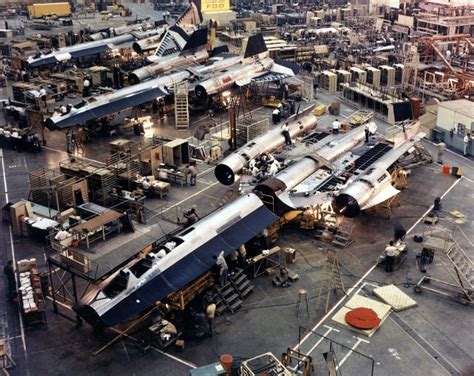
Once the titanium arrived in the United States, the challenge shifted from procurement to manufacturing.
Working under intense secrecy, Lockheed’s Skunk Works team pioneered entirely new methods for machining, welding, and shaping titanium components. At the time, large-scale titanium aerospace construction remained largely uncharted territory.
Titanium proved notoriously difficult to work with. Traditional manufacturing techniques frequently failed. Specialized tooling, fabrication procedures, and quality-control processes had to be developed from scratch.
Engineers essentially created a new industrial discipline while simultaneously building one of the world’s most advanced aircraft.
The majority of the SR-71’s structure utilized advanced beta titanium alloys, including Ti-13V-11Cr-3Al, which incorporated vanadium, chromium, and aluminum to achieve exceptional high-temperature performance.
Other specialized alloys appeared throughout the aircraft. Components exposed to especially intense thermal stress required unique material formulations tailored to specific operational demands.
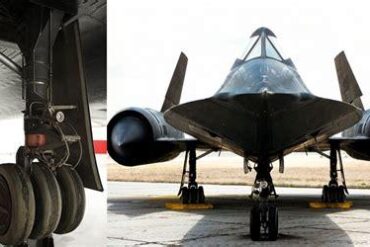
The aircraft’s landing gear alone incorporated some of the largest titanium forgings ever produced at the time.
Engineering an Aircraft for Extreme Heat
The SR-71’s titanium structure formed the foundation of a broader thermal management system unlike anything previously attempted.
At Mach 3 speeds, heat became a constant engineering concern. The aircraft’s skin expanded significantly during flight. Gaps intentionally built into the airframe on the ground would close once temperatures increased at cruising speed.
Titanium helped dissipate heat, but additional innovations were necessary.
The aircraft’s famous black paint served a practical purpose beyond aesthetics. The coating enhanced thermal radiation, helping the aircraft shed accumulated heat more efficiently.
Meanwhile, the specially formulated JP-7 fuel functioned as a coolant before combustion. Circulating through various systems, it absorbed heat generated by the aircraft’s operation.
The fuel itself became legendary because of its stability. Its flash point was so high that igniting it under normal conditions proved remarkably difficult.
Inside the cockpit, pilots relied on full-pressure suits resembling those worn by astronauts. Operating the Blackbird meant functioning in an environment closer to spaceflight than traditional aviation.
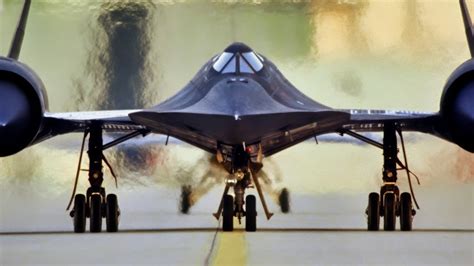
The Birth of Early Stealth Technology
Although speed served as the aircraft’s primary defense, the SR-71 also pioneered concepts that would later define stealth aviation.
Kelly Johnson and his engineers understood that reducing radar visibility could enhance survivability. Long before modern stealth aircraft emerged, the Blackbird incorporated design features specifically intended to reduce radar detection.
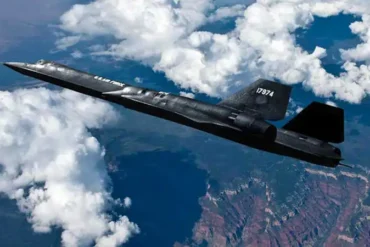
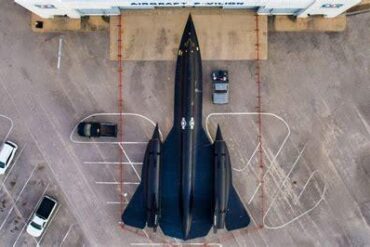
Among the most distinctive were the aircraft’s chines—sharp extensions running along both sides of the fuselage. Originally developed to improve aerodynamic stability, they also helped redirect radar energy away from hostile sensors.
The twin vertical stabilizers tilted inward at approximately fifteen degrees, reducing radar reflections that would otherwise bounce directly back toward enemy radar stations.
Engineers also developed specialized coatings containing iron ferrite particles. These materials absorbed portions of incoming radar energy and converted them into heat, reducing reflected signals.
Collectively, these innovations reportedly reduced the aircraft’s radar signature by as much as 90 percent compared with similarly sized aircraft of the era.
The SR-71 therefore represented not only a breakthrough in speed but also a crucial stepping stone toward the stealth technologies used by aircraft such as the F-22 Raptor, F-35 Lightning II, and B-21 Raider.
Kelly Johnson and the Skunk Works Revolution
Behind every aspect of the Blackbird program stood the extraordinary leadership of Kelly Johnson.
Few aerospace engineers have shaped aviation history as profoundly. Johnson possessed a rare combination of technical brilliance, practical intuition, and relentless focus on efficiency.
His Skunk Works division operated according to a unique philosophy emphasizing streamlined management, minimal bureaucracy, and rapid decision-making. Teams remained small, highly specialized, and intensely focused on solving specific engineering challenges.
Johnson famously embraced the principle of “Keep It Simple, Stupid,” often abbreviated as KISS. While the Blackbird itself was technologically sophisticated, many of its solutions reflected straightforward engineering logic applied with exceptional discipline.
Under his leadership, Skunk Works transformed ambitious concepts into operational reality with remarkable speed.
The titanium procurement challenge, the thermal management system, the radar reduction features, and the Mach 3 performance envelope all reflected the innovative culture Johnson cultivated.
The Extraordinary Irony of the Blackbird Program
Few Cold War stories capture the complexity of global competition quite like the titanium procurement operation behind the SR-71 Blackbird.
The Soviet Union unknowingly supplied critical materials for an aircraft that would become one of America’s most effective intelligence-gathering platforms. Through carefully constructed front companies, deceptive commercial narratives, and sophisticated international logistics, the CIA transformed geopolitical rivalry into a strategic advantage.
The operation highlighted an enduring truth about intelligence and warfare: technological superiority often depends as much on supply chains and resource acquisition as it does on engineering breakthroughs.
Without titanium, the Blackbird could never have achieved its legendary performance. Without the CIA’s clandestine procurement network, acquiring sufficient quantities of that titanium would have been nearly impossible. And without Kelly Johnson’s Skunk Works team, the raw metal would never have become the sleek, black aircraft that redefined the limits of flight.
In the end, one of the most advanced spy planes ever built owed its existence, in part, to the industrial output of the nation it spent decades observing. The SR-71 Blackbird remains a masterpiece of aerospace engineering, but it is also a reminder that some of history’s most remarkable achievements emerge from the most unexpected contradictions.