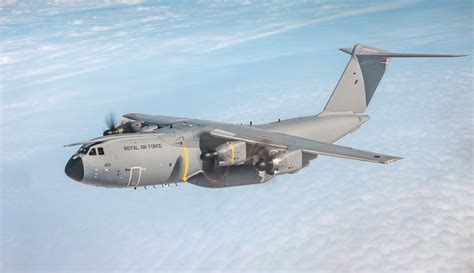
The Royal Air Force (RAF) operates a network of stations across the United Kingdom, each designed around a particular operational requirement. Among them, seven main operating bases stand out for the scale and importance of the aircraft, personnel, and missions they support. From fighter defenses over British airspace to global air mobility, intelligence gathering, and maritime patrol, these stations form the backbone of modern British air power.
The seven principal bases are RAF Waddington, RAF Brize Norton, RAF Benson, RAF Odiham, RAF Coningsby, RAF Marham, and RAF Lossiemouth. Although their missions differ considerably, they are closely connected. Intelligence supports combat operations, airlift moves personnel and equipment, tankers extend aircraft endurance, helicopters provide battlefield mobility, and maritime patrol aircraft protect the waters surrounding the United Kingdom.
The geographical distribution of these bases is equally significant. Stations in Lincolnshire and Norfolk provide major combat and intelligence capabilities, Oxfordshire hosts much of the RAF’s strategic mobility and rotary-wing infrastructure, while Scotland provides an essential northern position for maritime surveillance and air defense. Together, these locations give the RAF the ability to respond to threats at home while supporting operations far beyond British territory.
RAF Waddington: The RAF’s Intelligence and Surveillance Hub
Located in Lincolnshire, RAF Waddington has a mission that is less visible than fighter operations but absolutely essential to modern warfare. The station is the RAF’s principal center for intelligence, surveillance, target acquisition, and reconnaissance (ISTAR) activities. Its aircraft and personnel collect information that can influence decisions across the entire operational chain.
Waddington has been associated with sophisticated surveillance aircraft including the Boeing RC-135 Rivet Joint, an aircraft designed to gather electronic intelligence from the electromagnetic environment. Such missions provide commanders with information about communications, radar activity, and other electronic signals. The intelligence collected can help establish a much clearer picture of potential threats and military activity.
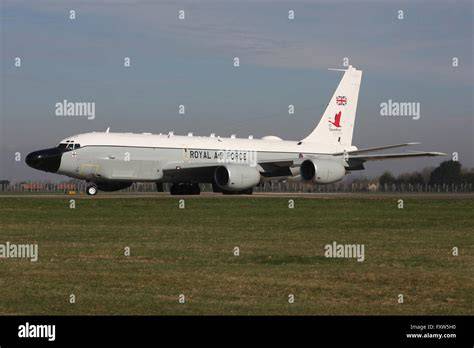
The station has also operated the Sentinel R1, which provided wide-area ground surveillance and intelligence capabilities, while the RAF’s airborne early warning and command-and-control requirements have historically included the E-3D Sentry. These capabilities demonstrate why Waddington is much more than an airfield. It is an important node where information, analysis, aircraft, and operational planning converge.
RAF Brize Norton: Britain’s Air Mobility Powerhouse
RAF Brize Norton in Oxfordshire is the RAF’s largest station and the centerpiece of Britain’s strategic air mobility network. Its primary responsibility is moving people, equipment, and supplies around the world while also providing aerial refueling support.
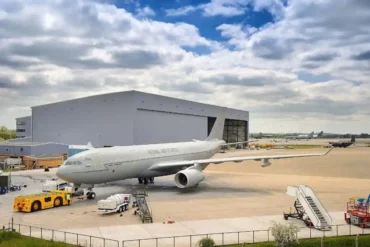
The base is home to aircraft such as the Airbus A400M Atlas and Airbus A330 MRTT Voyager. The A400M provides substantial tactical and strategic airlift capacity, allowing the RAF to transport troops and heavy equipment while operating from a wide range of airfields. The Voyager, meanwhile, combines passenger and cargo transport with an important aerial refueling role.
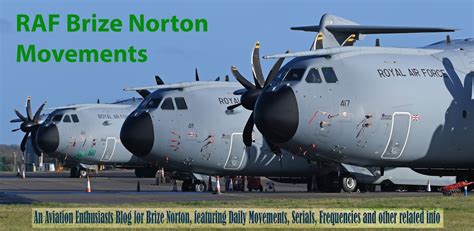
The importance of Brize Norton becomes particularly obvious during overseas deployments and humanitarian emergencies. Military forces require a reliable method of reaching distant theaters, while disaster-relief operations can demand the rapid movement of personnel, medical supplies, vehicles, and other essential equipment.
Aerial refueling adds another dimension. By transferring fuel in flight, Voyager aircraft can extend the endurance and effective range of RAF fighters and other aircraft. Brize Norton therefore supports missions that may begin hundreds or thousands of miles from British soil.
RAF Benson: Tactical Rotary-Wing Operations
RAF Benson, also in Oxfordshire, is closely associated with the RAF’s rotary-wing community. Its role centers on tactical helicopter operations, where the ability to transport people and equipment rapidly can be more important than speed or altitude.
The station has historically been home to the Puma helicopter, a medium-lift aircraft used for tactical transport and a wide range of support missions. Helicopters operating from Benson can provide mobility in environments where conventional fixed-wing aircraft cannot easily reach.
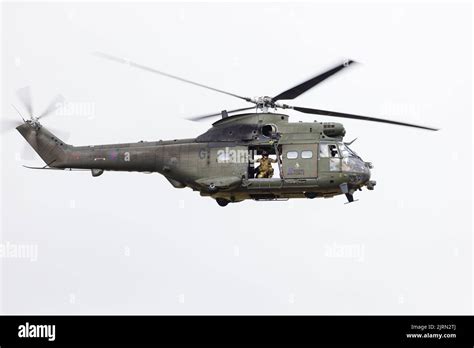
This flexibility makes rotary-wing forces valuable during military operations, emergency responses, and humanitarian missions. Helicopters can move personnel into difficult terrain, evacuate casualties, deliver supplies, and support specialist forces. Their ability to land close to an objective gives commanders options that conventional aircraft cannot always provide.
RAF Odiham: Home of the Chinook Force
Further south in Hampshire, RAF Odiham is the principal home of the UK’s Chinook force. The Boeing CH-47 Chinook is one of the RAF’s most recognizable heavy-lift helicopters and provides capabilities that are fundamentally different from those of fighter aircraft.
The Chinook’s tandem-rotor design allows it to carry substantial loads over considerable distances. In military service, that means transporting troops, artillery, vehicles, ammunition, and other equipment. The aircraft can also perform humanitarian missions and support disaster-relief operations when conventional transportation infrastructure is damaged or unavailable.
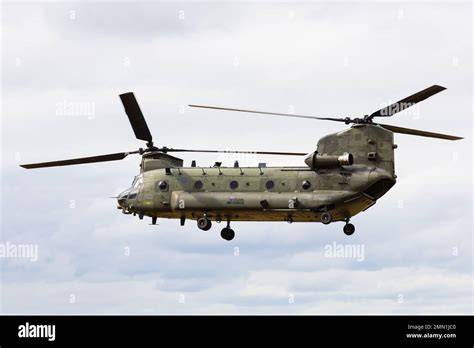
The relationship between RAF Odiham and RAF Benson illustrates how the RAF’s helicopter force is divided across specialized capabilities. Rather than relying exclusively on fast jets, the service needs aircraft capable of moving forces through complex environments. Rotary-wing aviation provides that essential tactical mobility.
RAF Coningsby: The Typhoon Fighter Stronghold
RAF Coningsby in Lincolnshire is one of the RAF’s most important combat-air stations and the principal home of the Eurofighter Typhoon. The aircraft performs multiple roles, including air defense, interception, reconnaissance, and ground attack.
One of its most important responsibilities is Quick Reaction Alert (QRA). Fighter aircraft maintained at a high state of readiness can be launched when an unidentified or potentially threatening aircraft approaches British-controlled airspace. This gives the RAF a rapid-response capability that is central to national air defense.
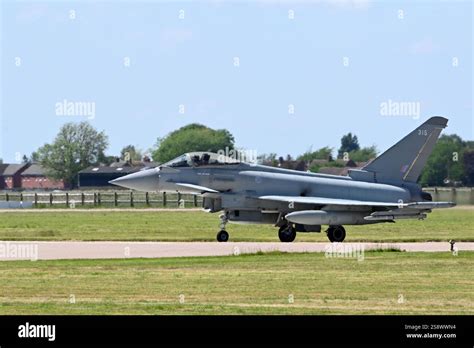
The Typhoon’s combination of speed, sensors, weapons, and maneuverability allows it to perform both defensive and offensive missions. Its role at Coningsby also reflects the RAF’s broader requirement for a combat aircraft that can adapt to different operational environments.
RAF Marham: The F-35B Lightning II Base
RAF Marham in Norfolk provides another critical element of Britain’s combat-air capability. It is strongly associated with the UK’s F-35B Lightning II force, the fifth-generation stealth fighter operated jointly with the Royal Navy.
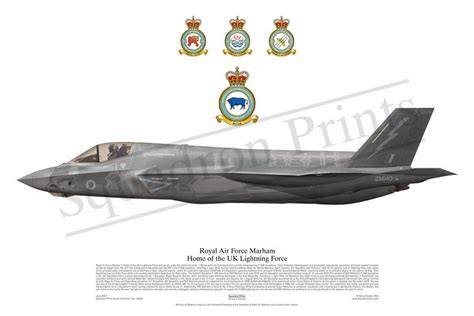
The F-35B introduces capabilities that differ substantially from those of earlier fighter generations. Its stealth characteristics, advanced sensors, data fusion, and networked warfare capabilities allow pilots to build a detailed understanding of the battlespace while reducing the aircraft’s detectability.
The F-35B’s short-takeoff and vertical-landing capability is particularly important because the aircraft is designed to operate not only from conventional runways but also from the UK’s Queen Elizabeth-class aircraft carriers. RAF Marham consequently has an important role in supporting Britain’s land-based and carrier-based fast-jet capability.
RAF Lossiemouth: Northern Air Defense and Maritime Patrol
On the Moray coast of Scotland, RAF Lossiemouth occupies a strategically important position overlooking the North Atlantic and northern approaches to the United Kingdom. Its responsibilities include maritime patrol and northern air defense, making it one of the RAF’s most strategically significant stations.
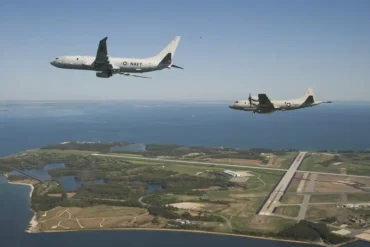
The base operates the Boeing P-8A Poseidon, a maritime patrol aircraft designed for missions including anti-submarine warfare, surveillance, and search and rescue. The aircraft’s capabilities are particularly relevant in the North Atlantic, where monitoring maritime activity and protecting important sea routes remain major security priorities.
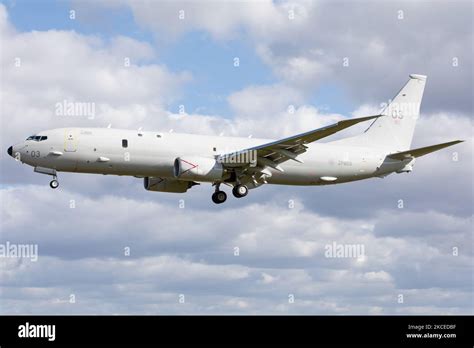
Lossiemouth is also associated with Typhoon aircraft assigned to northern Quick Reaction Alert duties. This positioning gives the RAF the ability to respond rapidly to potential airspace threats approaching from northern directions while maintaining a strong presence in Scotland.
The combination of Poseidon maritime surveillance and Typhoon air defense gives Lossiemouth an unusually broad strategic role. It helps protect both the skies above the United Kingdom and the waters surrounding its northern approaches.
How the Seven RAF Bases Work Together
These seven stations are best understood as parts of a single operational system rather than isolated airfields. RAF Waddington gathers and processes intelligence, while RAF Coningsby and RAF Marham provide advanced combat-air capabilities. RAF Lossiemouth extends air defense and maritime surveillance into the North Atlantic, while RAF Brize Norton provides the global mobility and aerial refueling necessary to sustain distant operations.
Meanwhile, RAF Benson and RAF Odiham provide rotary-wing mobility for demanding tactical and humanitarian missions. Their helicopters can move personnel and equipment where fixed-wing aircraft cannot, creating another layer of flexibility for British forces.
This division of responsibilities is crucial because modern military operations rarely depend on a single aircraft type or airfield. A fighter may require intelligence before being deployed, tanker support to remain airborne longer, transport aircraft to move personnel and equipment, and helicopters to deliver forces into difficult terrain. The seven main operating bases collectively provide many of those capabilities.
The Strategic Importance of the RAF’s Main Operating Bases
The seven main operating bases demonstrate the breadth of the modern Royal Air Force. They are not simply places where aircraft are parked and maintained. They are operational centers supporting intelligence collection, air defense, maritime security, strategic transportation, aerial refueling, combat aviation, and battlefield mobility.
Their locations also reflect Britain’s geography and security requirements. Bases in southern and central England support global mobility and expeditionary operations, while stations in Lincolnshire and Norfolk provide major combat and intelligence capabilities. Further north, Lossiemouth provides an essential position for protecting the United Kingdom’s northern airspace and surrounding maritime approaches.
Together, RAF Waddington, RAF Brize Norton, RAF Benson, RAF Odiham, RAF Coningsby, RAF Marham, and RAF Lossiemouth form a remarkably diverse network. Each base performs a distinct job, but their real strength comes from how those missions connect. That integrated structure allows the RAF to maintain readiness at home while retaining the ability to project British air power, intelligence, mobility, and humanitarian support well beyond the United Kingdom.