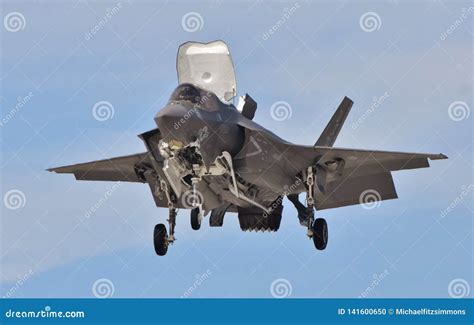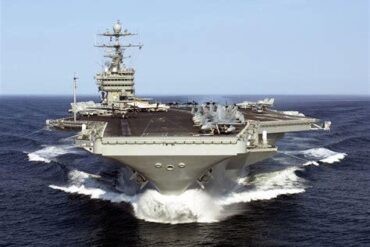
The United States Navy dominates the seas not only with its fleet of 11 supercarriers, but also with a vital armada of 9 mini aircraft carriers—formally classified as amphibious assault ships. While these smaller vessels may not match the sheer scale of their larger nuclear-powered siblings, they are instrumental in force projection, amphibious warfare, aviation support, and rapid crisis response. Designed to carry helicopters, vertical takeoff jets like the F-35B Lightning II, and even unmanned aerial vehicles (UAVs), these ships enable flexible, mobile, and sustained military operations across the globe.
These mini carriers offer a strategic blend of combat versatility and humanitarian reach, allowing the Navy to adapt in diverse theaters of war and disaster relief. They are divided into two primary classes currently active in the fleet: the Wasp-class and the America-class. Each class fulfills overlapping yet distinct roles, shaped by advances in aviation integration, propulsion technology, and mission requirements.
Wasp-Class Amphibious Assault Ships: Proven Combat Workhorses
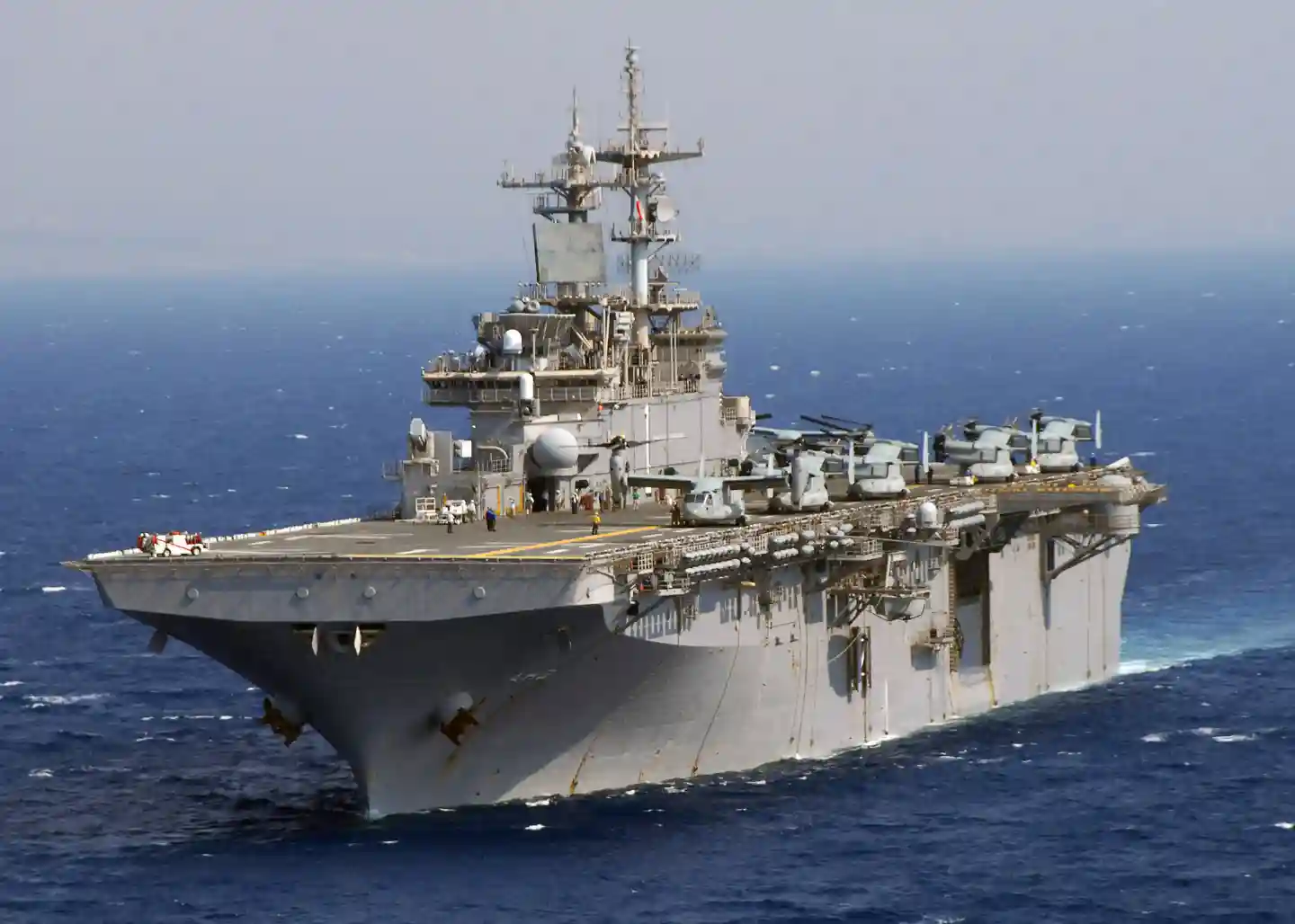
Commissioned starting in 1989, the Wasp-class amphibious assault ships were engineered as successors to the aging Tarawa-class. The lead ship, USS Wasp (LHD-1), set the standard for a new generation of aviation-capable platforms tailored for amphibious missions. Despite being called “mini carriers,” these ships are anything but small. Each vessel stretches 844 feet in length and displaces nearly 44,000 tons when fully loaded. That’s about two-thirds the length and nearly half the displacement of a Gerald R. Ford-class supercarrier.
These ships serve as the spearhead of U.S. Marine Expeditionary Units (MEUs). Housing over 1,600 Marines, they are capable of launching ground forces onto hostile shores via landing craft and air assets. Their aviation decks routinely support aircraft like:
- AV-8B Harrier II (now replaced by F-35B)
- CH-53E Super Stallion heavy-lift helicopters
- MV-22 Osprey tilt-rotors
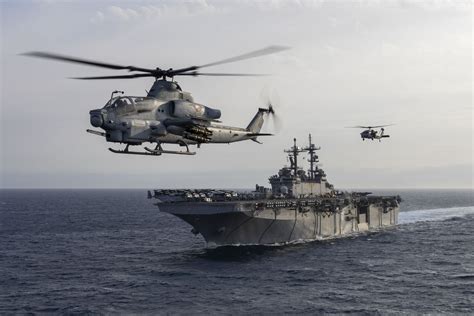
- AH-1Z Viper and UH-1Y Venom attack/support helicopters
Operational flexibility extends to medical facilities, a well deck for amphibious vehicles, and command-and-control centers—essential for joint-force operations.
Among the eight ships originally built, seven remain active as of 2025:
- USS Essex (LHD-2)
- USS Kearsarge (LHD-3)
- USS Boxer (LHD-4)
- USS Bataan (LHD-5)
- USS Iwo Jima (LHD-7)
- USS Makin Island (LHD-8)
The USS Bonhomme Richard (LHD-6) was decommissioned following a catastrophic fire in 2020, underscoring the risks these vital vessels face even in peacetime.
America-Class Amphibious Assault Ships: The Next Generation of Mini Carriers
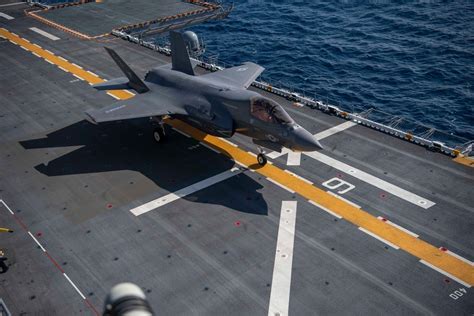
Launched in 2014, the America-class builds upon lessons learned from previous classes, prioritizing aviation superiority and next-gen aircraft compatibility. The lead ship, USS America (LHA-6), was designed from the keel up to support modern platforms like the F-35B and MV-22. The result is a vessel with enhanced flight deck design, reinforced structures for jet exhaust, and increased aviation fuel and maintenance capacity.
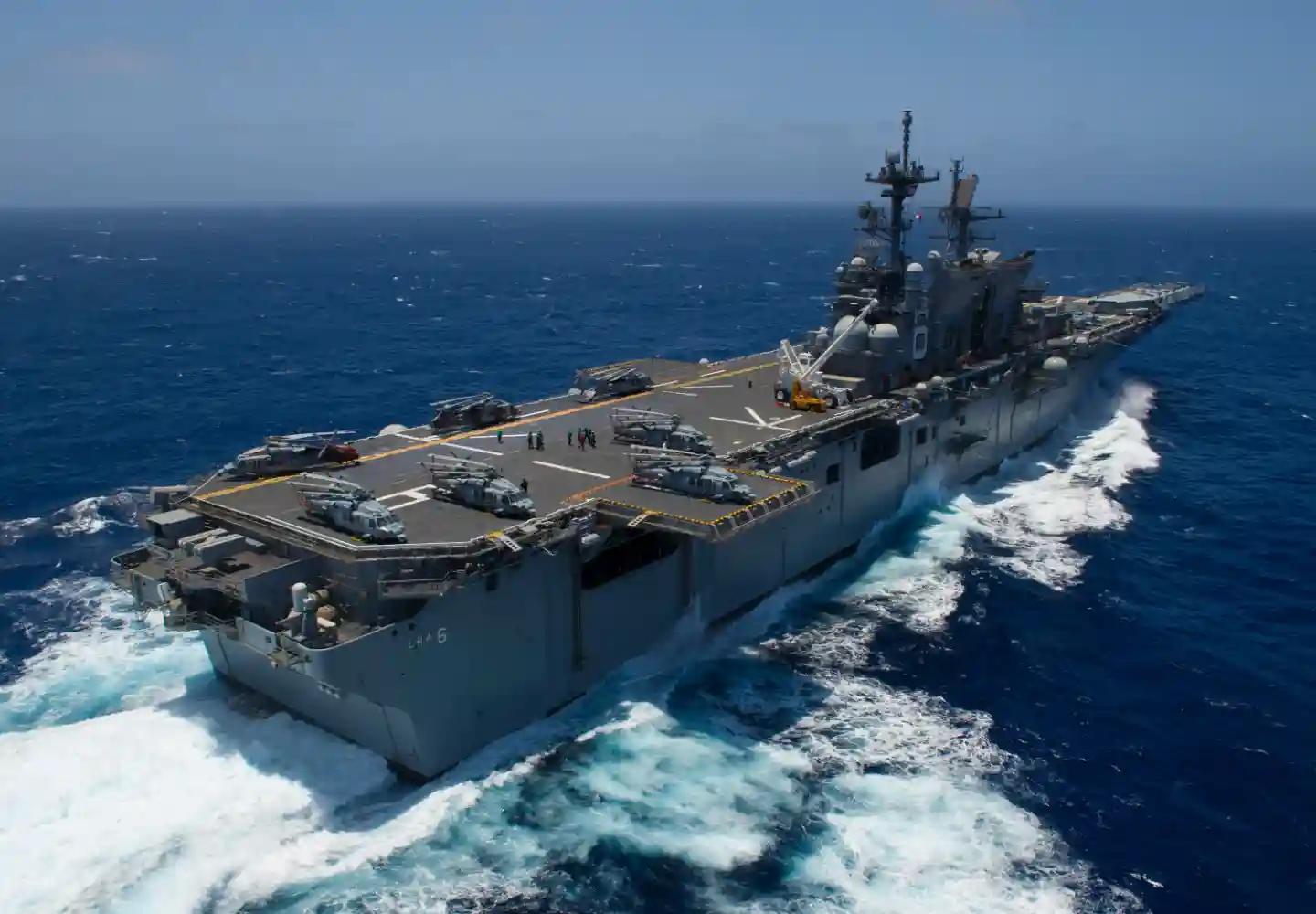
Like their Wasp-class predecessors, America-class ships measure 844 feet in length, but they displace slightly more—over 50,000 tons—due to internal redesigns. These include the elimination of a traditional well deck in early versions to maximize aviation capabilities. The configuration allows for rapid, sustained flight operations, providing air dominance in regions where a full-sized carrier presence may not be feasible.
Key technical innovations include:
- Hybrid-electric propulsion system: combines gas turbines and diesel generators for better fuel economy and reduced maintenance.
- Advanced command systems for joint amphibious and air missions.
- Accommodation for over 1,000 sailors and 1,600 Marines with full combat gear.
Currently, two America-class ships are in service:
- USS America (LHA-6)
- USS Tripoli (LHA-7)
A third, the USS Bougainville (LHA-8), reintroduces a well deck to rebalance aviation and landing force capabilities. Eight more vessels are in the planning and construction pipeline, eventually replacing all Wasp-class and legacy amphibious ships.
Multi-Role Capabilities Beyond Combat
While these mini carriers are built for war, their utility extends far beyond kinetic missions. Due to their extensive onboard medical facilities, flight decks, and command centers, they serve as first responders to humanitarian crises and natural disasters. Their ability to house hundreds of personnel and launch helicopters and tilt-rotors makes them ideal platforms for evacuation, supply delivery, and emergency medical aid.
This was evident during post-hurricane operations in Haiti and the Philippines, where amphibious assault ships delivered critical assistance within hours of landfall. They’ve also supported search-and-rescue efforts and maritime security patrols in strategic waterways like the Persian Gulf and the South China Sea.
Drone and UAV Integration: Expanding Capabilities
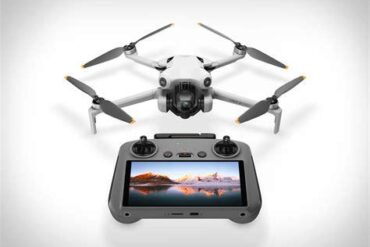
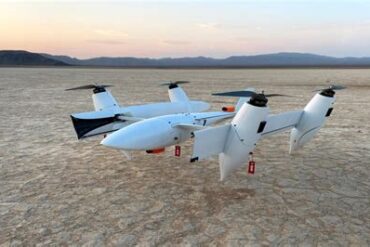
A rapidly evolving aspect of these mini carriers is their expanding role in unmanned aerial vehicle operations. The expansive, unobstructed flight decks and aviation support systems make them prime platforms for launching and recovering drones for ISR (Intelligence, Surveillance, Reconnaissance) and strike missions.
As the U.S. Navy accelerates its uncrewed systems strategy, America-class vessels in particular are being tested with a wide array of UAV platforms. These include the MQ-8 Fire Scout, ScanEagle, and new stealth drones capable of vertical takeoff. In the future, these ships could become drone-centric carriers, tailored to rapidly deploy UAV squadrons in contested areas where larger carriers are at risk or unavailable.
The Strategic Role of Mini Carriers in Naval Doctrine
From the South China Sea to the Persian Gulf, amphibious assault ships offer tactical agility, enabling the U.S. to station forward-deployed forces in hotspot regions. Their ability to operate independently or as part of Amphibious Ready Groups (ARGs) and Expeditionary Strike Groups (ESGs) provides unmatched flexibility. These formations typically consist of:
- 1 Amphibious Assault Ship (LHA/LHD)
- 1 Dock Landing Ship (LSD)
- 1 Amphibious Transport Dock (LPD)
Together, they support full-spectrum operations—from deterrence and sea control to crisis intervention and amphibious warfare. With new threats emerging from peer rivals like China and Russia, these versatile platforms are more relevant than ever.
A Glimpse Into the Future: America-Class to Dominate
The U.S. Navy’s future amphibious strategy is clear: all roads lead to the America-class. As older Wasp-class vessels retire, they will be replaced one-for-one with upgraded America-class ships. The stated fleet requirement is 11 large-deck amphibious assault ships, mirroring the count of nuclear-powered aircraft carriers.
This parity ensures the Navy can deploy carrier-like air power from mini platforms anywhere in the world, either alongside supercarriers or in independent roles. According to Capt. Chris Mercer, Amphibious Warfare program manager, the Navy aims to procure a new large-deck amphibious ship every four to five years, maintaining an effective rotation of active, reserve, and maintenance status ships.
Conclusion: Why Mini Carriers Matter More Than Ever
While the spotlight often shines on the Gerald R. Ford and Nimitz-class supercarriers, it’s the nine mini aircraft carriers that silently ensure America’s global dominance at sea. Whether projecting Marine forces onto foreign shores, launching F-35Bs over contested zones, or ferrying disaster relief into decimated coastal towns, these vessels carry out high-stakes missions with precision and reliability. With technological evolution, increased UAV integration, and expanded aviation support, their role is only growing in scope and importance.
In 2025, the U.S. Navy stands unrivaled with 20 active flat tops: 11 nuclear-powered aircraft carriers and 9 amphibious assault ships. Each of these mini carriers plays a pivotal role in shaping a future of agile, multi-domain warfare—and no global navy comes close.