The United States Air Force operates one of the most expansive and sophisticated training ecosystems in the world, designed to prepare airmen, guardians, and joint-force partners for the full spectrum of modern warfare. With hundreds of thousands of active-duty, reserve, and National Guard personnel, the Air Force relies on a carefully structured network of large training bases to deliver everything from basic military discipline to advanced fifth-generation combat tactics. These installations are not merely schools; they are strategic assets that shape doctrine, integrate allies, and sustain American air dominance.
Training responsibilities are primarily coordinated under the Air Education and Training Command (AETC), while other Major Commands support specialized missions tied to combat readiness, intelligence, and weapons employment. The seven largest Air Force training bases stand apart due to their sheer trainee throughput, mission complexity, and global influence. Each base fulfills a distinct role, forming a layered system where initial training, technical mastery, and high-end combat preparation converge.
Sheppard Air Force Base: The Global Engine of Technical and Pilot Training
Sheppard Air Force Base in Wichita Falls, Texas, is the largest and most diverse training installation in the Air Education and Training Command. Unlike any other base, Sheppard uniquely combines large-scale technical instruction with advanced flying training, making it a cornerstone of U.S. and allied airpower development.
The 82nd Training Wing alone produces roughly half of all Air Force technical training graduates, offering more than 900 formal courses across aircraft maintenance, munitions, logistics, civil engineering, and even nuclear operations. Annually, over 60,000 trainees from the Air Force, other U.S. services, and allied nations cycle through its classrooms and hangars. This constant throughput creates a living industrial-scale learning environment where doctrine and technology evolve in real time.
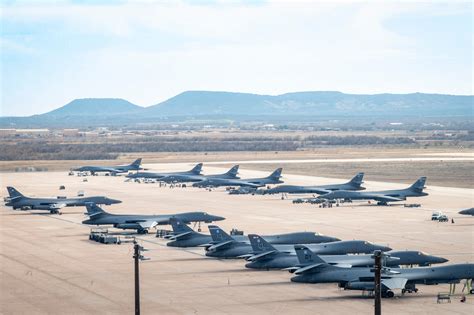
Equally strategic is Sheppard’s role as host of the Euro-NATO Joint Jet Pilot Training (ENJJPT) program, the world’s only fully integrated, multinational pilot training initiative. Fourteen NATO partner nations share resources, aircraft, and instructors, producing fighter-ready pilots who already understand coalition operations before they ever reach an operational squadron. Graduates of ENJJPT often transition directly into advanced fighter platforms, carrying with them a deeply ingrained culture of interoperability.
Joint Base San Antonio–Lackland: Where the Air Force Is Born
Joint Base San Antonio–Lackland holds a singular and symbolic role as the Gateway to the Air Force. It is the sole location for Air Force and Space Force Basic Military Training, transforming civilians into disciplined service members through an intense 7.5-week program. Approximately 36,000 recruits pass through Lackland every year, making it one of the most consistently active military training sites in the world.
The focus at Lackland is unapologetically foundational. Recruits are immersed in core values, military customs, physical conditioning, and weapons handling, all while learning to operate under stress and strict discipline. This early conditioning is strategically vital, as it establishes a “warrior-first” mindset that carries forward into every career field.
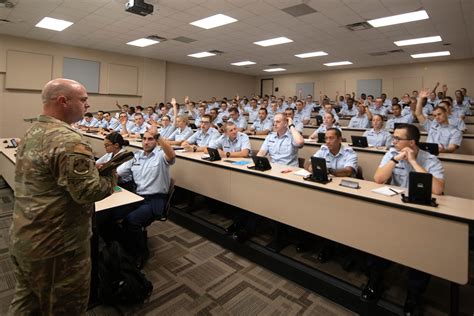
Beyond basic training, Lackland is also a hub for technical and specialty pipelines. The 37th Training Wing manages schools for logistics, security forces, and support specialties, while the base also hosts the opening phases of Special Warfare selection, where physical and psychological resilience are rigorously tested. Its role in training all Department of Defense military working dogs and handlers further reinforces Lackland’s unique position in shaping force readiness across multiple domains.
Keesler Air Force Base: The Nerve Center of Cyber and Electronics Training
Keesler Air Force Base in Mississippi stands as the Air Force’s center of excellence for electronics, information technology, and cyberspace training. With roughly 30,000 students annually enrolled in more than 2,700 active courses, Keesler operates at a scale comparable to a major technical university—except its graduates deploy directly into operational theaters.
On any given day, thousands of trainees fill classrooms focused on network operations, cybersecurity, air traffic control, and electronic warfare systems. The base is also the Air Force’s primary training ground for weather specialists, including experts in tropical cyclone forecasting, a capability critical for both military operations and humanitarian response.
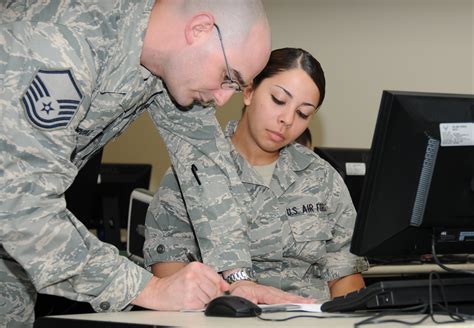
Keesler’s designation as a Joint Training Installation underscores its strategic importance. Personnel from every branch of the U.S. military, along with federal agencies, train side by side, fostering interoperability in information-dominant warfare. As modern conflicts increasingly hinge on data superiority and network resilience, Keesler quietly underpins nearly every Air Force mission worldwide.
Nellis Air Force Base: The Crucible of Advanced Air Combat
Nellis Air Force Base in Nevada is synonymous with realistic, large-scale combat training. As home to the U.S. Air Force Warfare Center, Nellis oversees advanced tactical instruction that pushes experienced crews to their limits. More than 25,000 personnel participate annually in its flagship exercises, most notably the legendary Red Flag series.
Red Flag replicates the first ten combat missions of a war, historically the most dangerous phase for aircrews. Using the vast Nevada Test and Training Range, which spans over 12,000 square miles of airspace, these exercises integrate fighters, bombers, tankers, intelligence platforms, and space and cyber assets into a single, contested battlespace.
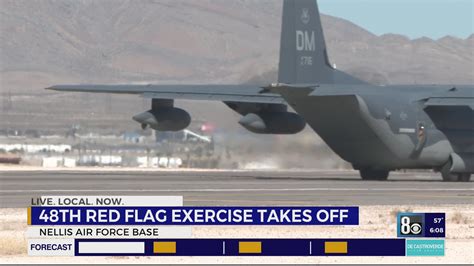
Beyond Red Flag, Nellis hosts cutting-edge exercises like Bamboo Eagle and Virtual Flag, emphasizing agile combat employment, maritime strike scenarios, and coalition integration. Graduates of the USAF Weapons School—often called “patch wearers”—return to their units as tactical leaders, ensuring that lessons learned at Nellis ripple across the entire force.
Goodfellow Air Force Base: The Intelligence and Firefighting Nexus
Goodfellow Air Force Base in Texas may be geographically modest, but its strategic impact is outsized. It is the Air Force’s primary hub for Intelligence, Surveillance, and Reconnaissance (ISR) training, producing analysts who directly support global operations. Each year, between 10,000 and 12,000 trainees graduate from Goodfellow’s highly specialized programs.
The 17th Training Wing and associated intelligence units collectively train thousands of analysts annually, while the 344th Military Intelligence Battalion educates personnel from across the Department of Defense. This concentration of intelligence expertise ensures consistent standards in threat analysis, targeting, and information fusion.
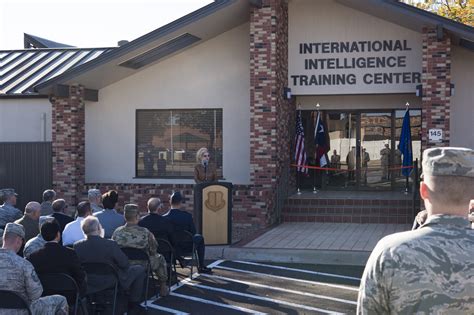
Goodfellow is also home to the Department of Defense’s only Fire Academy, graduating over 2,400 firefighters every year. These specialists deploy worldwide to protect airfields, ships, and forward operating bases, making Goodfellow a critical node in both combat and disaster-response readiness.
Eglin Air Force Base: Where Weapons, Special Operations, and Training Converge
Eglin Air Force Base in Florida occupies a unique dual role as both a premier test and evaluation center and a high-volume training installation. While exact trainee numbers are difficult to quantify due to classified programs, estimates suggest well over 10,000 personnel train at Eglin annually.
The 33rd Fighter Wing’s Integrated Training Center supports pilot and maintainer education for advanced aircraft and weapons systems, serving not only the Air Force but also the Navy, Marine Corps, and allied nations. At the same time, Eglin provides highly specialized environments for special operations forces and intelligence professionals, graduating elite cohorts each year.
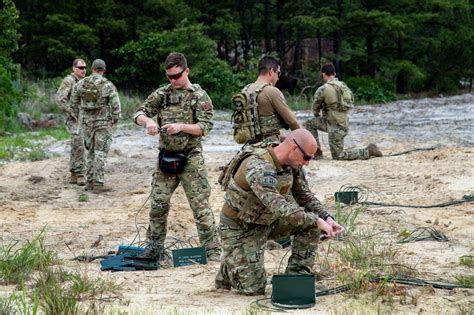
Eglin’s multiservice presence is unmatched. It hosts the Naval School of Explosive Ordnance Disposal and the Army’s 6th Ranger Training Battalion, which conducts the final phase of Ranger School. This convergence of elite training pipelines reinforces Eglin’s role as a joint-force integration powerhouse.
Luke Air Force Base: The Epicenter of F-35 Pilot Mastery
Luke Air Force Base in Arizona has emerged as the world’s foremost training hub for the F-35 Lightning II, the most advanced fighter aircraft in service today. Following its full transition from the F-16, Luke now trains approximately 75 percent of all F-35 pilots globally, a responsibility unmatched by any other installation.
The 56th Fighter Wing, the Air Force’s largest fighter wing, oversees this mission, supported by the largest F-35 simulator complex in the world, featuring 32 high-fidelity simulators. These systems allow pilots to rehearse complex fifth-generation tactics, sensor fusion, and networked warfare in a controlled environment before taking to the skies.
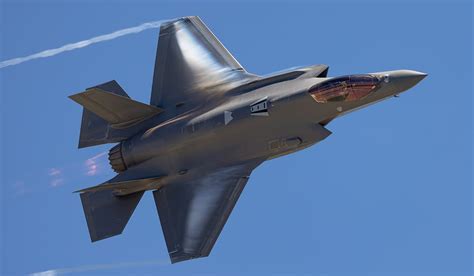
Luke’s access to the Barry M. Goldwater Military Training Range, spanning 1.9 million acres, provides unparalleled airspace for high-speed, long-range tactical training. The base also continues specialized F-16 instruction for the Republic of Singapore Air Force, underscoring Luke’s enduring role in allied force development even as platforms evolve.
Strategic Significance of America’s Largest Training Bases
Collectively, these seven training bases form the backbone of U.S. Air Force readiness. Each installation specializes in a distinct layer of capability—from basic discipline and technical expertise to elite combat leadership and advanced weapons employment. Their scale allows the Air Force to standardize training while rapidly adapting curricula to emerging threats, new technologies, and shifting geopolitical realities.
Just as importantly, these bases act as integration hubs for joint and allied forces, ensuring that American airpower does not operate in isolation. In an era defined by coalition warfare, contested domains, and rapid technological change, the strategic value of these training centers extends far beyond their runways and classrooms. They are where airpower is not only taught, but continuously redefined.