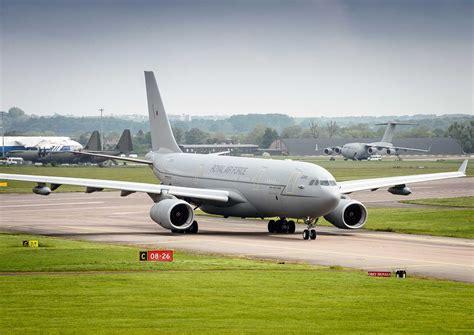
The Royal Air Force maintains a network of highly strategic airbases, each meticulously designed to serve specialized roles in defense, rapid deployment, and global operations. Among the thirty active RAF stations in the United Kingdom, seven stand out due to their sheer size, operational capacity, and strategic significance. While RAF Spadeadam claims the title of the largest in terms of acreage at 9,600 acres, its focus on electronic warfare excludes it from flying operations. The seven primary flying bases, however, represent the backbone of the RAF’s global airpower projection and homeland defense.
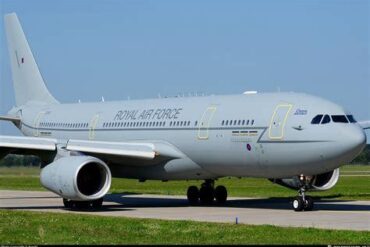
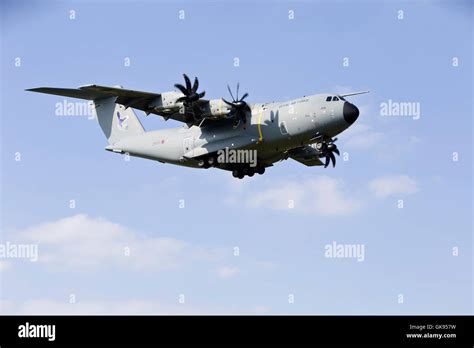
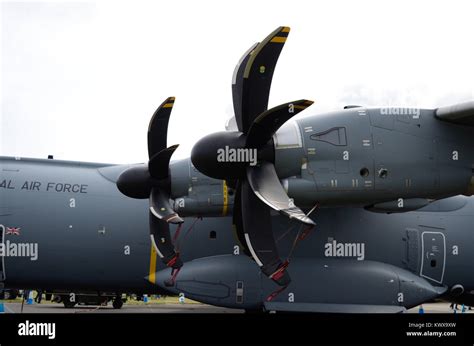
RAF Brize Norton in Oxfordshire anchors the UK’s air mobility capabilities, spanning approximately 1,200 acres. Home to around 5,800 service personnel and supplemented by 300 civilian staff plus 1,200 contractors, Brize Norton is the heart of the RAF’s Air Mobility Force. It operates an extensive fleet including eight Boeing C-17A Globemaster III heavy transports, 22 Airbus A400M Atlas tactical airlifters, and 14 Airbus Voyager aerial refueling tankers, five of which are operated by AirTanker. The base’s strategic function is to provide rapid global mobility, supporting UK overseas operations, joint exercises, and air-to-air refueling for fast jets during both combat and homeland defense missions. Units stationed at Brize Norton include No. 10, 24, and 30 Squadrons, alongside specialized units such as the 206 Test and Evaluation Squadron and the No. 1 Tactical Police & Security Squadron. The combination of heavy-lift transport and aerial refueling capability makes RAF Brize Norton indispensable for sustaining long-range air operations and ensuring the UK’s strategic reach.
RAF Leeming in North Yorkshire covers roughly 1,260 acres and is recognized as a central hub for expeditionary air operations and training exercises. Its historical legacy dates back to the Cold War, where it served primarily as a training base. In contemporary operations, Leeming is equipped to host the Quick Reaction Force and provides a deployable RAF communications cadre through the No. 90 Signals Unit and the No. 135 Expeditionary Air Wing. These units allow the RAF to project force rapidly on an expeditionary basis. The base is also strategically positioned near key training areas like Spadeadam, Otterburn, and Catterick, facilitating advanced tactical exercises. RAF Leeming houses the Qatar Emiri Air Force / RAF Hawk Training Squadron, operating BAE Systems Hawk jets for advanced pilot training, blending international cooperation with tactical readiness.
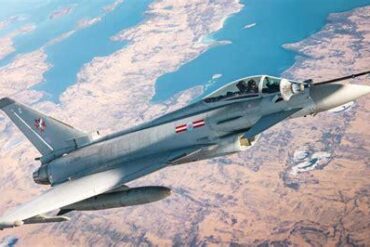
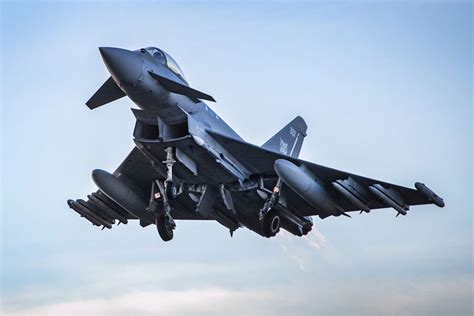
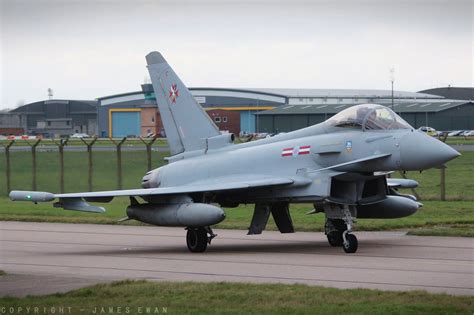
RAF Lossiemouth, occupying approximately 1,400 acres in Scotland, serves as the northern sentinel of UK airspace. It is the only Scottish RAF base operating fighter jets following the closure of RAF Leuchars in 2015, although Leuchars retains a backup airfield role. Lossiemouth’s squadrons, primarily Eurofighter Typhoons, serve on Quick Reaction Alert duties, intercepting Russian bombers or other hostile aircraft approaching northern UK airspace. Beyond air defense, the base’s Poseidon MRA1 maritime patrol aircraft provide critical surveillance over the North Atlantic, safeguarding NATO maritime interests. The base hosts four Typhoon combat aircraft squadrons, three Poseidon maritime patrol squadrons, a dedicated RAF Regiment squadron, and a Royal Auxiliary Air Force Regiment reserve squadron. This combination of combat and surveillance assets makes RAF Lossiemouth a linchpin in both national and NATO defense strategy.
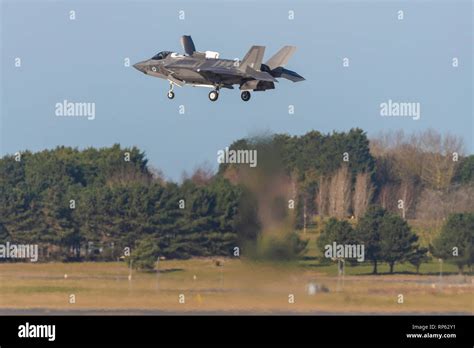
RAF Marham in Norfolk, encompassing around 1,650 acres, is synonymous with the Lockheed Martin F-35B Lightning II, the STOVL stealth fighter shared with the Royal Navy. With 38 F-35Bs delivered to date and plans to expand to 72 jets, Marham is central to the UK’s fifth-generation fighter capability. Over 3,600 personnel, including service members, civil servants, and contractors, support the operation of squadrons such as No. 207 and No. 617. Beyond fighter operations, the base integrates logistics, weapons, and radar specialists, ensuring the RAF’s cutting-edge capabilities are fully realized. In comparison, RAF Lakenheath, while technically an RAF station, functions as a USAF base hosting F-35 and F-15 squadrons, highlighting the strategic integration of Anglo-American defense assets in the region.
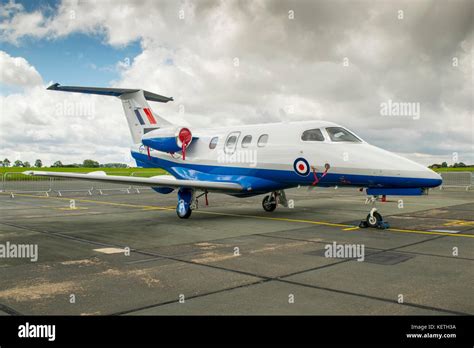
RAF Cranwell, the largest UK-based airfield in terms of geographic size at 2,500 acres, is both operational and educational in its role. Located in Lincolnshire, Cranwell houses the RAF College, the world’s first Air Academy, which continues to train the next generation of RAF officers. Beyond officer education, the base hosts RAF Recruitment, Air Cadets, No. 3 and No. 6 Flying Training Schools, the Central Flying School, the Air Warfare School, and the Tedder and Robson Leadership Academies. Training aircraft such as the Embraer Phenom T1, Grob Prefect T1, and Grob Tutor T1 provide multimission and elementary flight training. Cranwell’s integration of officer education, flight instruction, and operational readiness ensures that personnel across the RAF remain capable of adapting to both peacetime and wartime demands.
RAF Akrotiri in Cyprus covers 5,260 acres and is the UK’s strategic outpost in the Eastern Mediterranean. Originally established under British sovereignty in the mid-20th century, Akrotiri has evolved into a Permanent Joint Operating Base critical for Middle Eastern operations. It functions as a forward operating hub, supporting fast jet deployments, strategic airlift, and aerial refueling operations. Units such as 84 Squadron operate helicopters, while Typhoons, Voyagers, and A400Ms frequently deploy from the base. Akrotiri also provides search and rescue and aerial firefighting capabilities for Cyprus. Its location allows the RAF to project airpower across the Middle East efficiently, maintaining surveillance, interdiction, and rapid response capacity far from the UK mainland.
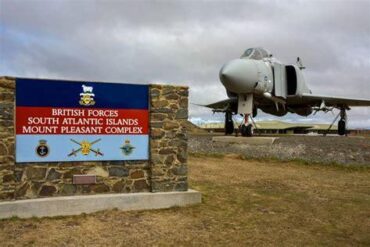
RAF Mount Pleasant in the Falkland Islands is the crown jewel of British overseas RAF installations, covering an expansive 8,300 acres. Established after the 1982 Falklands conflict, Mount Pleasant provides permanent fighter and transport capability in the South Atlantic, with four Tranche 1 Eurofighter Typhoons, an Airbus A400M, and a Voyager tanker based permanently. The airbase underpins the defense of the Falklands and serves as a launch point for the No. 905 Expeditionary Air Wing. Beyond aircraft, Mount Pleasant supports extensive ground operations, including radar, weapons maintenance, and logistics functions. A notable feature of the base is the ‘Death Star Corridor,’ a half-mile-long enclosed passage linking barracks to the mess, designed to shield personnel from extreme Antarctic winds. RAF Ascension Island operates in tandem, providing a crucial refueling point midway between the UK and the Falklands, enabling long-range operations in the South Atlantic. Mount Pleasant’s strategic importance is magnified by its remote location, serving both as a defensive bastion and a forward staging post capable of supporting operations across the Atlantic.
RAF Brize Norton’s combination of mobility, heavy transport, and aerial refueling capabilities ensures the UK can deploy forces globally within hours. Leeming complements this mobility with deployable expeditionary forces and training units that prepare RAF personnel for rapid operational deployment. Lossiemouth safeguards the northern approach to the British Isles, providing both interception capabilities and maritime surveillance essential for NATO obligations. Marham projects fifth-generation air combat capability with the F-35B, enhancing the RAF’s stealth and strike potential. Cranwell nurtures officer leadership and provides foundational flying training, ensuring continuity of skills and tactical knowledge. Overseas, Akrotiri and Mount Pleasant extend the RAF’s reach, enabling strategic presence in geopolitically sensitive regions. Collectively, these seven bases represent a seamless integration of operational readiness, strategic projection, and training excellence.
The operational synergy across these bases is underpinned by specialized squadrons and integrated air operations. For instance, RAF Brize Norton’s tankers not only support UK aircraft but also facilitate NATO exercises and international deployments. RAF Leeming’s proximity to training grounds like Otterburn and Spadeadam enhances operational preparedness, while its collaboration with the Qatar Emiri Air Force underscores the RAF’s role in multinational force projection. Lossiemouth’s dual role in air defense and maritime reconnaissance ensures coverage of critical northern approaches. Marham’s F-35Bs, operating alongside the Royal Navy’s carrier air wings, provide unmatched flexibility in both land- and sea-based operations. Cranwell ensures that leadership, tactical proficiency, and officer training remain central to RAF capabilities, feeding talent into operational squadrons. Akrotiri and Mount Pleasant extend the UK’s power projection into the Eastern Mediterranean and South Atlantic, acting as vital nodes in global logistics and rapid-response operations.
The historical significance of these bases cannot be overstated. RAF Cranwell, as the world’s first Air Academy, has defined officer training standards for nearly a century. RAF Brize Norton’s role in post-Cold War humanitarian and military airlift operations illustrates the enduring strategic flexibility of transport and tanker fleets. RAF Leeming, once a Cold War Quick Reaction Force hub with Panavia Tornado F3s, demonstrates the evolution of the RAF’s tactical priorities. Lossiemouth’s adaptation to modern air defense needs, including Typhoon QRA and Poseidon maritime patrols, reflects the constant recalibration of defense strategies in response to emerging threats. RAF Marham’s adoption of the F-35B integrates stealth, networked warfare, and joint operations with naval assets, signaling the RAF’s entry into fifth-generation combat readiness. Akrotiri and Mount Pleasant exemplify how the UK maintains forward-deployed power in geopolitically sensitive regions, blending sovereignty with operational reach.
The physical infrastructure at these bases supports both immediate operational readiness and long-term sustainability. Mount Pleasant’s design accounts for extreme environmental conditions in the South Atlantic, while Akrotiri’s facilities provide robust support for high-tempo operations in the Mediterranean. Cranwell’s extensive training infrastructure, including flight simulators, classrooms, and leadership academies, ensures a continuous pipeline of skilled officers. Brize Norton’s logistics and maintenance facilities accommodate the largest RAF aircraft, including the A400M and C-17A, while Leeming and Marham integrate operational and training capabilities to maintain combat effectiveness. Lossiemouth combines air defense infrastructure with advanced maritime surveillance facilities, enabling multifaceted operational tasks. These considerations ensure that the RAF’s largest bases remain capable of handling both peacetime training and rapid deployment in crisis scenarios.
The strategic relevance of these bases extends beyond aircraft operations. Personnel across these stations engage in intelligence, logistics, cyber operations, and joint exercises with allied forces. This multidimensional approach allows the RAF to maintain global influence while defending national interests. The integration of technology, personnel, and infrastructure ensures that each base fulfills a specific role, creating a networked system that magnifies the UK’s airpower effectiveness. Forward-deployed bases like Akrotiri and Mount Pleasant act as unsinkable aircraft carriers, enhancing the UK’s ability to project power and support allied operations in distant theaters. Meanwhile, home-based stations such as Brize Norton and Cranwell provide the backbone for training, logistics, and rapid response, highlighting the importance of domestic infrastructure in supporting overseas operations.
In conclusion, the seven largest RAF bases represent the convergence of operational scale, strategic foresight, and international collaboration. From Brize Norton’s unparalleled air mobility to Cranwell’s world-class training programs, each base plays a distinct yet interconnected role in maintaining the RAF’s effectiveness. Overseas bases, Akrotiri and Mount Pleasant, provide the UK with critical forward operating positions, enabling rapid response and sustained presence in geopolitically sensitive regions. Collectively, these stations form a network of operational readiness, strategic deterrence, and global power projection, underpinning the UK’s status as a leading airpower nation. Whether in rapid deployment, air defense, advanced fighter operations, or multinational training and cooperation, these bases ensure the RAF remains agile, capable, and strategically influential on the global stage.
The meticulous planning, geographic positioning, and operational specialization of these bases illustrate how airpower is not merely about aircraft but about the infrastructure, personnel, and integrated capabilities that sustain global reach. Each station reflects a balance between tradition, technological advancement, and strategic necessity, ensuring that the Royal Air Force can respond effectively to contemporary security challenges while preparing for the future. The UK’s ability to project power, train elite officers, and maintain rapid-response capabilities hinges on these critical hubs, solidifying their status as the pillars of British air supremacy.
From the heart of Oxfordshire to the windswept Falklands, the RAF’s largest bases exemplify the synergy of scale, technology, and strategic intent. They embody the UK’s commitment to global defense, rapid operational reach, and the continuous cultivation of elite air personnel, securing a commanding presence both at home and abroad.