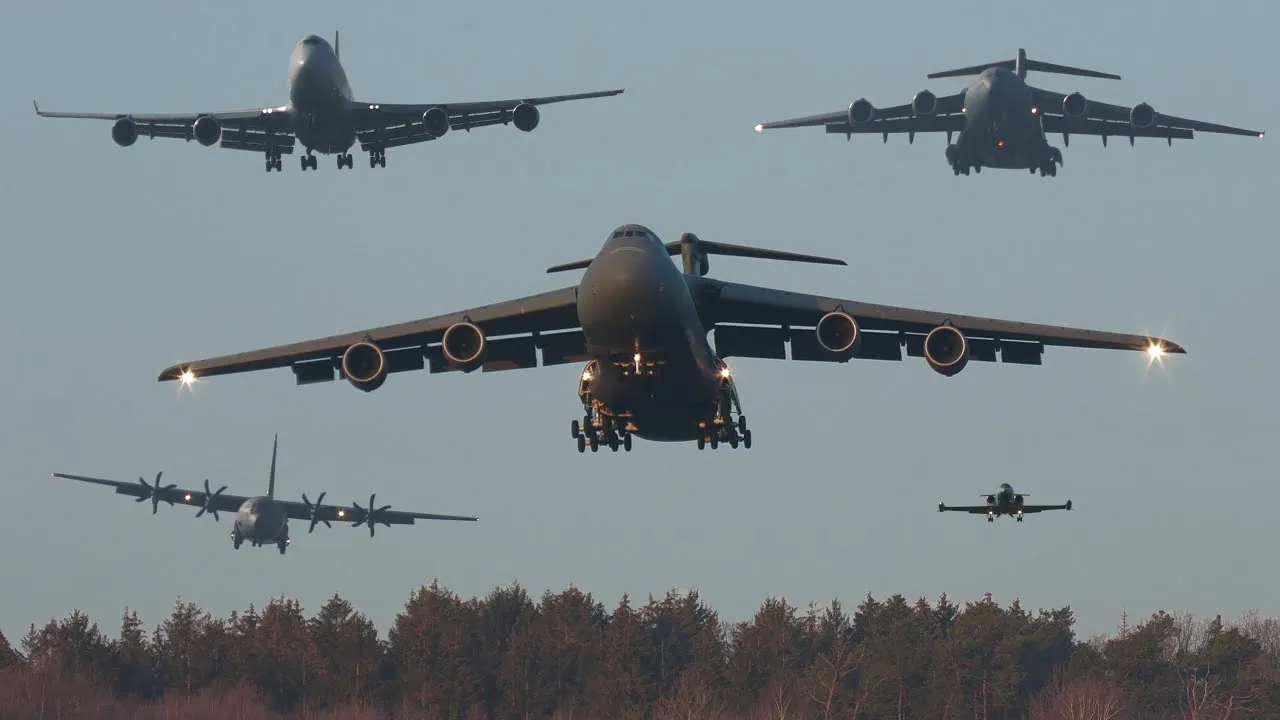
Europe hosts the most concentrated cluster of forward-deployed American airpower outside the United States, forming a lattice of bases that anchor NATO’s deterrence, intelligence, and rapid-response posture. These installations are not relics of the Cold War; they are evolving, expanding, and rearming to meet a security environment defined by great-power competition, persistent regional instability, and the accelerating pace of aerospace warfare.
What distinguishes Europe’s largest air force bases is not just their size, but their strategic geometry. Positioned along critical maritime routes, near potential flashpoints, and integrated with allied forces, they enable the United States and NATO to project power, gather intelligence, and sustain operations across three continents. Each base functions as both a sovereign military hub and a multinational command ecosystem, tightly woven into host-nation infrastructure and alliance doctrine.
The following analysis examines Europe’s seven largest US-linked air force bases, ranked by scale and strategic weight, revealing how each installation contributes to air dominance, nuclear deterrence, logistics superiority, and alliance cohesion in an era of renewed geopolitical friction.
7. RAF Mildenhall – Europe’s Strategic Refueling and Special Operations Gateway
RAF Mildenhall occupies a deceptively quiet corner of eastern England, yet its operational tempo rivals that of far larger installations. Its defining role is aerial refueling, making it the primary enabler of long-range air operations across Europe, the Arctic, and the North Atlantic. The presence of the 100th Air Refueling Wing ensures that US and NATO aircraft can remain airborne longer, strike farther, and reposition rapidly during crises.
Beyond fuel, Mildenhall is a nerve center for special operations and intelligence collection. Assets such as the RC-135 Rivet Joint provide persistent electronic surveillance along NATO’s eastern flank, while CV-22 Ospreys and MC-130J aircraft support covert insertion, extraction, and resupply missions. This combination turns the base into a hybrid platform where intelligence, mobility, and special warfare intersect.
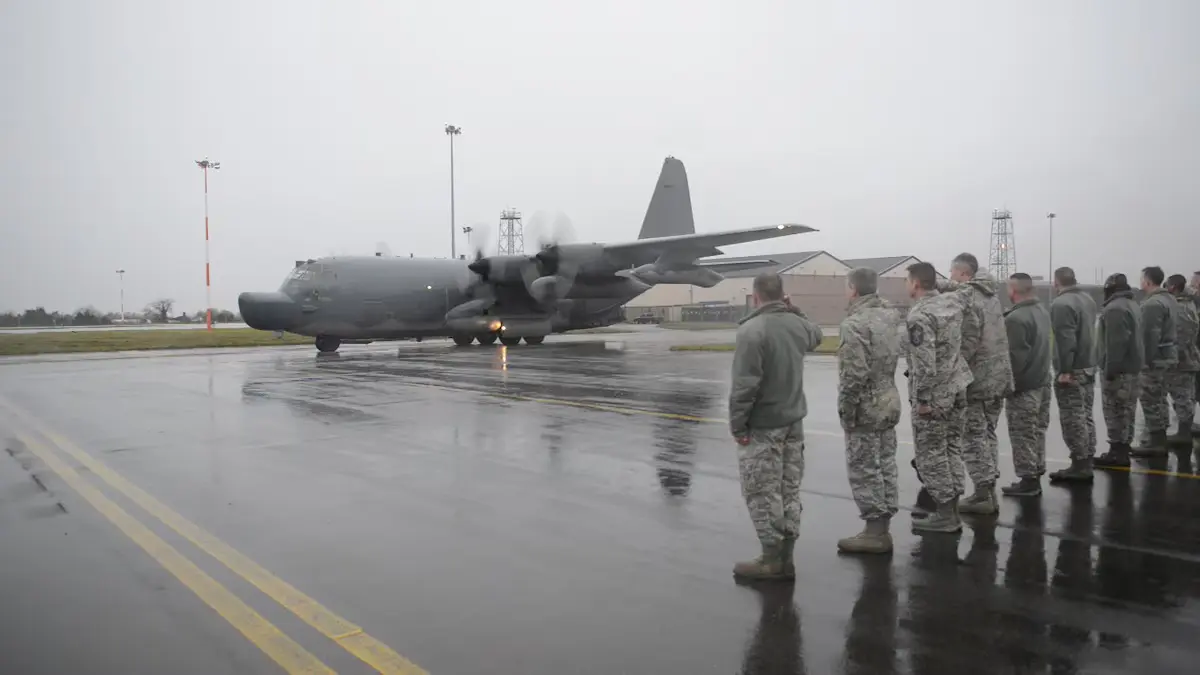
Maritime surveillance has grown increasingly central to Mildenhall’s mission set. In early 2026, aircraft operating from the base tracked Russian-flagged tankers across the North Atlantic, highlighting its role in monitoring gray-zone activities that blur the line between civilian shipping and strategic logistics. Following the cancellation of its planned closure, Mildenhall is undergoing recapitalization to modernize infrastructure that supports a community of roughly 14,000 personnel and dependents, reinforcing its long-term relevance.
6. Spangdahlem Air Base – NATO’s Frontline Fighter and Nuclear Custodian
Spangdahlem Air Base in southwest Germany is a study in operational readiness. Unlike installations focused primarily on support or logistics, Spangdahlem is a combat base first and foremost, hosting the only US Air Force F-16 fleet in Europe dedicated to Suppression of Enemy Air Defenses. This specialization places the base at the forefront of any high-intensity conflict scenario involving advanced surface-to-air missile systems.
The base’s strategic value is magnified by its role in Agile Combat Employment. Fighters deploy regularly from Spangdahlem to austere airfields across Eastern Europe, demonstrating NATO’s ability to disperse and survive under threat. This capability complicates adversary targeting and underscores the alliance’s shift away from predictable basing models.
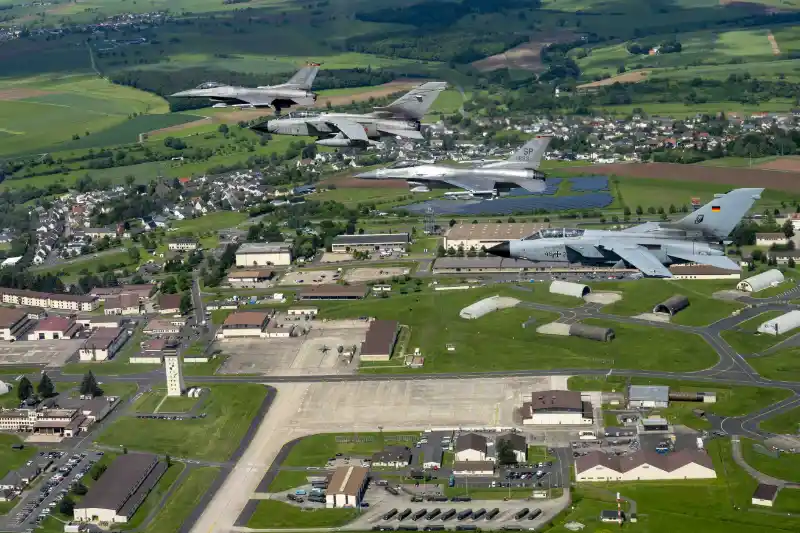
Spangdahlem also functions as a major logistics conduit, handling a significant share of heavy airlift traffic once managed by Rhein-Main. Recent fuel infrastructure upgrades allow it to draw up to one million gallons per day, sustaining surge operations at scale. Perhaps most consequential is the 52nd Fighter Wing’s responsibility for safeguarding elements of NATO’s theater nuclear deterrent, tying Spangdahlem directly to the alliance’s most sensitive mission.
5. NAS Sigonella – The Mediterranean’s Intelligence and Mobility Nexus
Perched on the island of Sicily, NAS Sigonella is often described as the “Hub of the Med,” a label earned through its unrivaled reach across Southern Europe, North Africa, and the Middle East. Though designated a naval air station, Sigonella supports all service branches and multiple NATO partners, making it one of the most joint and multinational bases in Europe.
Its strategic identity is defined by unmanned and maritime operations. Sigonella hosts Global Hawk drones and maritime patrol aircraft that deliver persistent intelligence, surveillance, and reconnaissance over vast oceanic and littoral zones. This capability is essential for tracking migration routes, monitoring naval movements, and supporting counterterrorism missions across the Mediterranean basin.
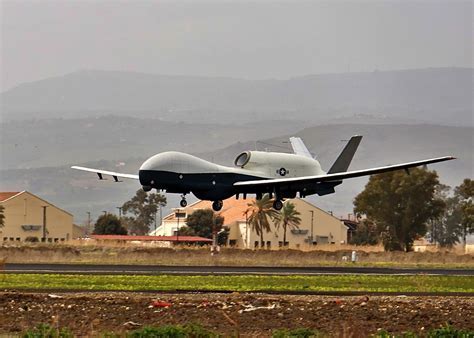
The base’s dual-site structure, with operational and administrative areas separated by several miles, reflects its organic growth over decades. Recent expansions added more than 140,000 square meters of specialized infrastructure designed specifically for unmanned systems, signaling a long-term commitment to drone-centric operations. Supporting roughly 7,000 personnel, Sigonella remains the primary staging point for the US 6th Fleet and a logistical bridge between continents.
4. RAF Lakenheath – Europe’s Fifth-Generation Strike Powerhouse
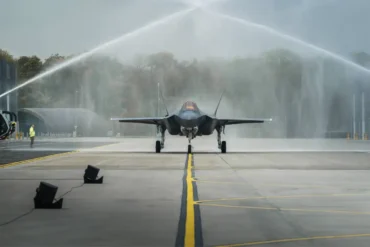
RAF Lakenheath stands as the epicenter of US tactical airpower in the United Kingdom. Home to the 48th Fighter Wing, it is the only base in Europe operating both the F-35A Lightning II and the F-15E Strike Eagle, creating a layered strike capability that blends stealth, payload, and endurance.
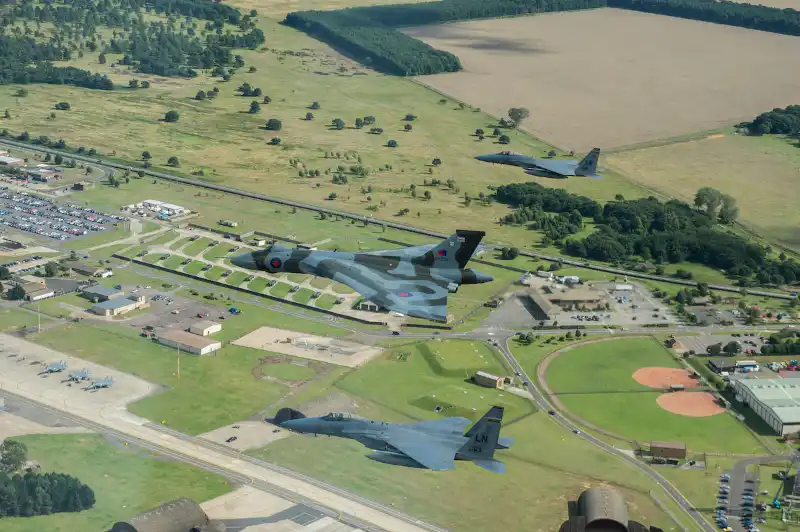
The base’s strategic importance intensified with the arrival of the F-35A, which at Lakenheath carries a unique responsibility. These aircraft are currently the only fifth-generation fighters in Europe certified to deliver the B61-12 precision nuclear bomb, placing the base at the heart of NATO’s nuclear sharing arrangement. This role elevates Lakenheath from a conventional strike base to a cornerstone of collective deterrence.
Operational culture at Lakenheath emphasizes mobility and adaptability. Its squadrons are frequent participants in Agile Combat Employment exercises, rehearsing rapid deployment to dispersed locations under contested conditions. With nearly 18,000 residents, including families, the base functions as a self-contained military city while maintaining a razor-sharp combat focus.
3. Aviano Air Base – Southern Europe’s Nuclear and Rescue Stronghold
Nestled at the foothills of the Italian Alps, Aviano Air Base anchors NATO’s airpower in Southern Europe. The 31st Fighter Wing’s F-16 squadrons provide a flexible mix of air defense, strike, and deterrence missions, enabling rapid response across the Mediterranean and into Eastern Europe.
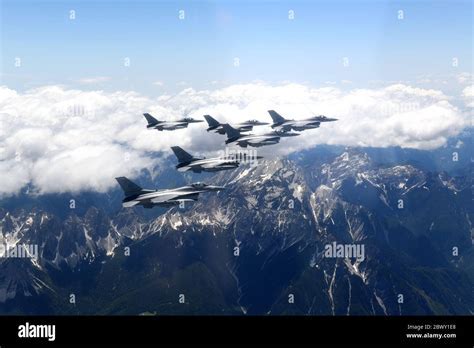
Aviano is one of only six European bases known to host B61 nuclear weapons, a fact that shapes its infrastructure investments and operational planning. Recent construction includes facilities for Rapid Airfield Damage Recovery and advanced combat rescue training, ensuring the base can absorb and recover from attack while sustaining operations.
The presence of specialized rescue squadrons equipped with HH-60W helicopters adds another layer of strategic depth. These units deliver long-range combat search and rescue, a capability essential for sustaining air operations in contested environments. Aviano’s population fluctuates between 8,000 and 10,000, reflecting its role as both a permanent hub and a launchpad for rotational deployments.
2. Mihail Kogălniceanu Air Base – NATO’s Expanding Eastern Sentinel
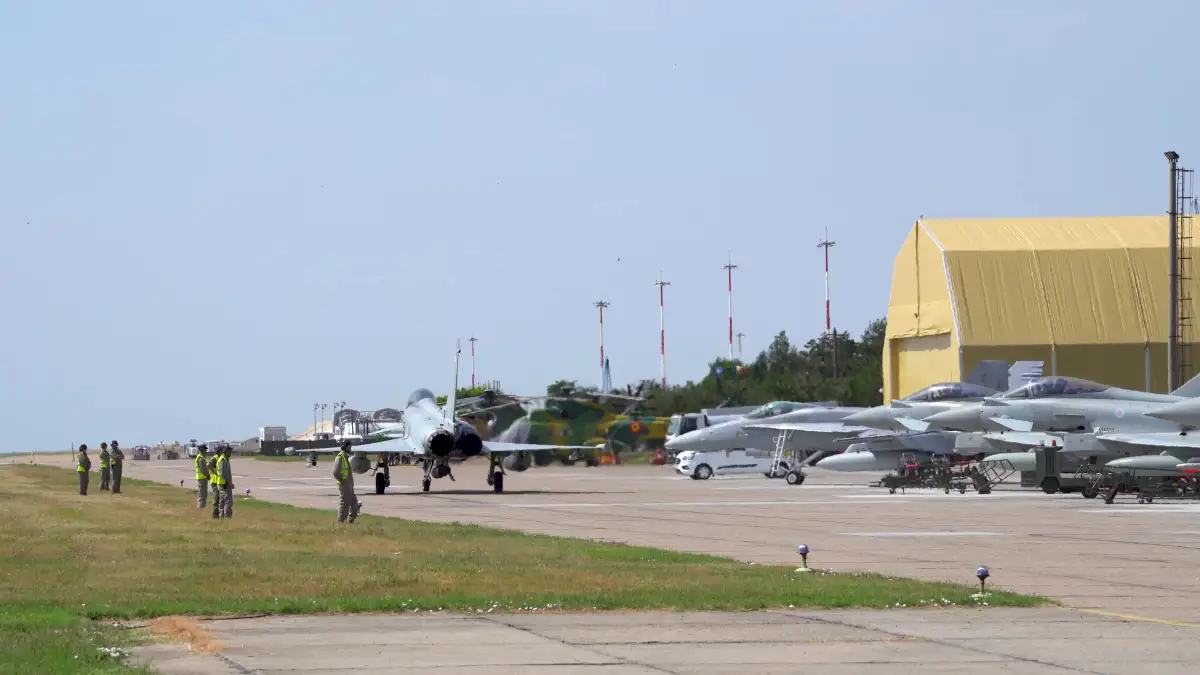
Often referred to simply as “MK,” Mihail Kogălniceanu Air Base in Romania represents the future of NATO basing. Situated near the Black Sea, it occupies a strategic crossroads between Eastern Europe, the Caucasus, and the Middle East. Recognizing its value, NATO approved a massive expansion in 2025 that will transform the base into one of the largest military installations on the continent.
Once complete, MK will span nearly 3,000 hectares, surpassing even Ramstein in physical size. New runways, hardened shelters, fuel depots, and ammunition storage areas are being built to support sustained high-intensity operations. The project includes a fully developed “Military City,” designed to house up to 10,000 permanent personnel and families, signaling a shift from rotational presence to enduring basing.
The base is expected to host Romanian F-16s, MQ-9 Reaper drones, and rotating forces from more than 30 NATO nations, making it a focal point for Enhanced Air Policing and maritime surveillance. Its expansion has drawn sharp criticism from Russia, underscoring MK’s role as a geopolitical pressure point along NATO’s eastern frontier.
1. Ramstein Air Base – Europe’s Ultimate Airpower Command Center
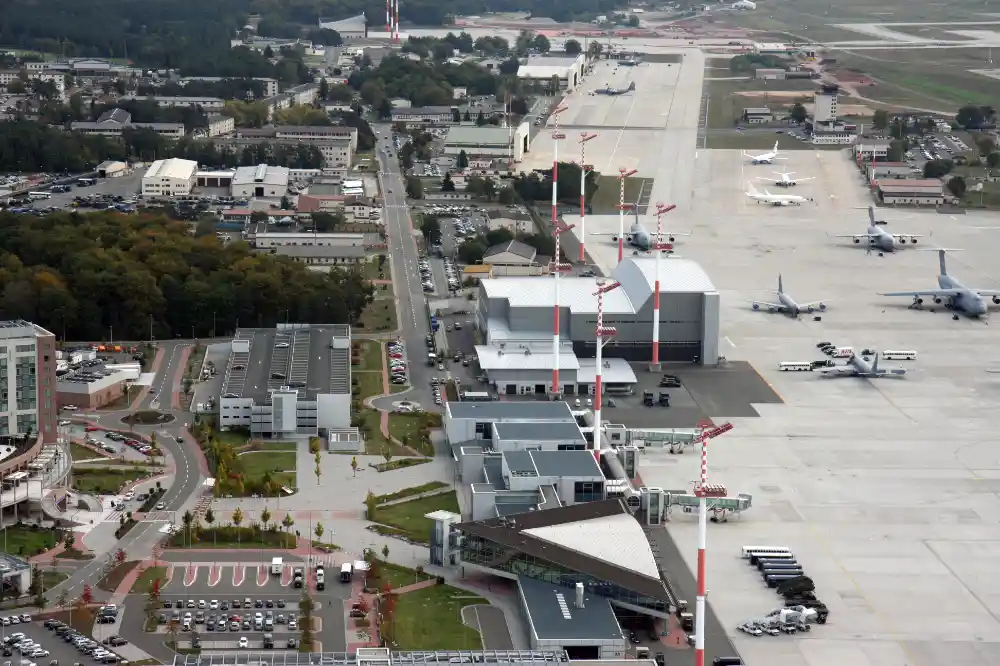
Ramstein Air Base in Germany is unrivaled in scope, population, and strategic influence. Serving as the headquarters for NATO Allied Air Command and USAFE-AFAFRICA, it functions as the brain of allied air operations across Europe and Africa. With more than 16,000 active-duty personnel and a total community exceeding 54,000 Americans, Ramstein is the largest US military enclave outside the homeland.
The base’s operational portfolio is vast. The 86th Airlift Wing conducts the theater’s only permanent airlift, airdrop, and aeromedical evacuation missions, ensuring rapid movement of forces and humanitarian support. New capabilities such as the Ramstein Air Defense Systems Integration Lab integrate allied sensors to counter cruise missiles and unmanned threats, reflecting the evolving character of air defense.
Ramstein is also emerging as a hub for space-enabled operations, with a US Space Force component focused on surveillance and communications becoming fully operational by 2026. High-profile exercises like Ramstein Flag and its role in coordinating military assistance to Ukraine highlight the base’s function as both an operational platform and a diplomatic nerve center.
Together, these seven bases form a strategic lattice that underpins NATO’s airpower, deterrence, and crisis response. Their scale, specialization, and integration with allied forces ensure that Europe remains not just a forward operating area, but a decisive theater in the balance of global power.