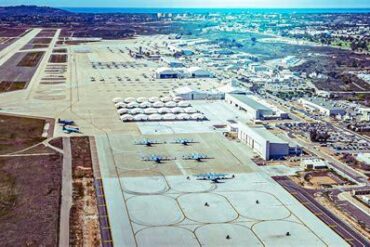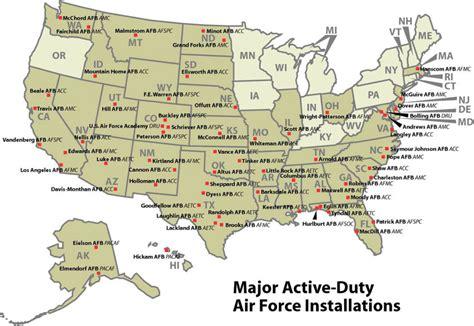
The United States maintains one of the most formidable long-range strike forces on Earth. Among the few nations that operate true strategic bombers, the US Air Force stands apart not merely for fleet size, but for technological sophistication and global reach. Under Air Force Global Strike Command (AFGSC), roughly 130 bombers form a layered, evolving force designed around deterrence, rapid deployment, and survivability. These aircraft are not scattered randomly across the map. They are concentrated at a handful of installations that function as the backbone of American strategic airpower.
Dispersal is deliberate. By basing bombers across multiple locations, the Air Force reduces vulnerability to a single catastrophic strike while preserving centralized maintenance ecosystems and elite training pipelines. Each base is tailored to its aircraft type, with hardened shelters, stealth maintenance hangars, weapons storage areas, and mission planning complexes built for highly specialized roles. The result is a strategic architecture where infrastructure and aircraft form an integrated deterrent machine.
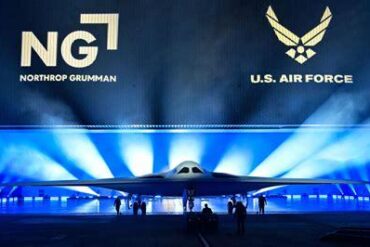
The current transformation underway marks one of the most consequential transitions in modern military aviation. The incoming Northrop Grumman B-21 Raider will gradually replace both the B-2 Spirit and the B-1B Lancer, embodying a “high-low” bomber philosophy. Stealthy penetrators will lead, while upgraded legacy platforms deliver overwhelming standoff firepower from safer distances. As this evolution unfolds, four bases stand out for hosting the largest bomber concentrations in the United States.
Whiteman Air Force Base: The Stealth Sanctuary of the B-2 Spirit
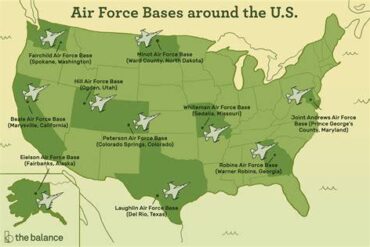
Whiteman Air Force Base in Missouri is singular in global aviation history. It is the only operational home of the B-2 Spirit, the flying wing that redefined stealth warfare. All 19 operational B-2 bombers are based here, flown by the 509th Bomb Wing and the 131st Bomb Wing of the Missouri Air National Guard. No other location on Earth houses this fleet.
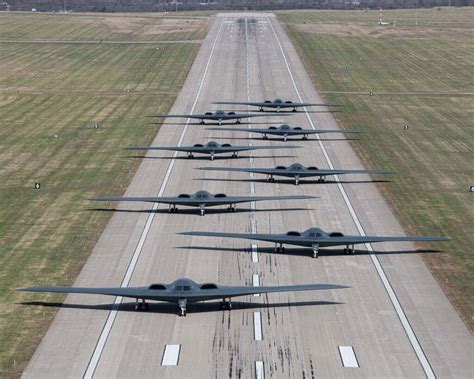
Whiteman’s identity was not always defined by stealth aircraft. During the Cold War, it operated more than 150 Minuteman II intercontinental ballistic missile silos, forming a nuclear backbone in the Midwest. The 1991 Strategic Arms Reduction Treaty reshaped that mission, leading to silo deactivation. As the missile fields went quiet, Whiteman was chosen to host the world’s first stealth bomber force. The transition symbolized a shift from static deterrence to flexible global strike.
The first operational B-2, Spirit of Missouri, arrived in 1993. The symbolism was deliberate. The 509th Bomb Wing, which had delivered the atomic weapons in World War II, now became custodian of a radically new strategic instrument. By 1997, the wing achieved Initial Operational Capability. Two years later, B-2 crews flew 30-hour nonstop missions from Missouri to Kosovo during Operation Allied Force, demonstrating the aircraft’s unmatched global reach.
Now, Whiteman stands on the cusp of another transformation. It has been officially selected as the second operational base for the B-21 Raider. Infrastructure upgrades are already planned to accommodate personnel growth and increased flight operations. Projections indicate over a thousand additional individuals joining the base community as B-21 operations scale up. Airfield activity will expand significantly, reflecting a higher operational tempo.
This evolution represents more than aircraft replacement. It marks the transition from first-generation stealth to next-generation low-observable dominance. The B-21 is designed with digital engineering principles, open architecture systems, and enhanced survivability. Whiteman will once again become ground zero for a generational leap in bomber warfare.
Ellsworth Air Force Base: The Launchpad of the B-21 Era
Near Rapid City, South Dakota, Ellsworth Air Force Base commands vast skies. It currently hosts 19 B-1B Lancer bombers under the 28th Bomb Wing, including the 34th and 37th Bomb Squadrons. The B-1B, originally conceived as a nuclear penetrator, evolved into a conventional strike powerhouse capable of carrying massive payloads at supersonic speed.
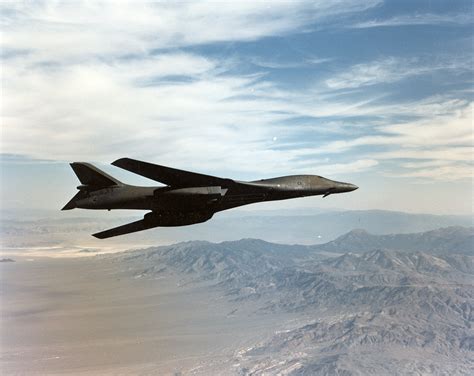
Ellsworth oversees the Powder River Training Complex, the largest contiguous training airspace in the continental United States. Spanning portions of four states, it enables realistic low-level maneuver training and complex large-force exercises. Bombers can practice terrain-following runs and coordinated strike profiles on a scale few nations can replicate.
Historically, Ellsworth was a core Strategic Air Command installation, operating both heavy bombers and 150 Minuteman II silos during the Cold War. Today, it stands at the forefront of the Air Force’s most significant modernization effort in decades. Ellsworth is slated to become the first operational base for the B-21 Raider, with initial aircraft expected to arrive later this decade.
The base is undergoing a transformation exceeding $1.5 billion in construction and upgrades. New stealth maintenance hangars, secure mission planning facilities, and advanced security infrastructure are rising across the installation. Production capacity for the B-21 has been increased by 25 percent, signaling a clear commitment to accelerating long-range strike capability.
As B-21 units arrive, the B-1B fleet will gradually retire in phases extending into the 2030s. The Lancer’s departure closes a chapter defined by speed and payload, but its replacement ushers in a platform designed for survivability against advanced integrated air defense systems. Ellsworth’s landscape is being reshaped not just physically, but strategically. It is becoming the spear tip of American penetrating strike capability.
Dyess Air Force Base: The Strike and Airlift Powerhouse
Dyess Air Force Base in Abilene, Texas, hosts the largest concentration of B-1B Lancer bombers in the world. The 7th Bomb Wing operates approximately 33 aircraft, making Dyess one of the most critical nodes in the nation’s long-range strike network.
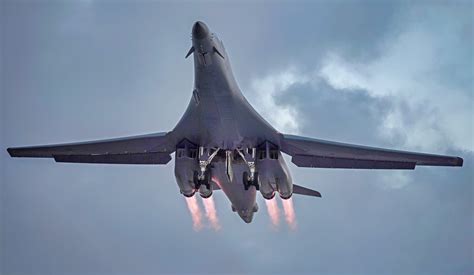
Dyess serves as the sole formal training unit for all B-1B aircrews. The 28th Bomb Squadron shapes pilots, weapon systems officers, and maintainers into operational teams. This centralized training function amplifies Dyess’s importance beyond sheer aircraft numbers. It is both a warfighting base and a knowledge factory.
The base has also been selected as the third main operating location for the B-21 Raider. The arrival of the Raider will reintroduce a nuclear mission to Dyess for the first time since the 1990s. Construction has already begun on dedicated B-21 facilities, including a mission planning complex built exclusively for sixth-generation stealth operations.
Dyess is unique in another dimension: it shares the runway with the 317th Airlift Wing, the largest C-130J Super Hercules unit in the world. This dual-role environment blends global strike and tactical airlift capabilities, creating operational flexibility rarely matched elsewhere.
Infrastructure modernization at Dyess is extensive, with more than 20 major projects underway. The base was the first Department of Defense installation powered entirely by renewable wind energy, reflecting a modernization philosophy that extends beyond aircraft. Supporting roughly 15,000 personnel and contributing billions annually to the Texas economy, Dyess is both a military engine and a regional economic anchor.
When the B-21 joins the lineup, Dyess will embody a hybrid posture: legacy supersonic bombers transitioning alongside cutting-edge stealth aircraft. Few bases illustrate the tension between past and future so vividly.
Barksdale Air Force Base: The B-52 Stronghold and Strategic Nerve Center
Barksdale Air Force Base in Louisiana hosts the largest bomber concentration in the United States. More than 60 B-52H Stratofortress aircraft are assigned here between the active-duty 2nd Bomb Wing and the Air Force Reserve’s 307th Bomb Wing. The base also serves as headquarters for Air Force Global Strike Command and the historic Eighth Air Force.
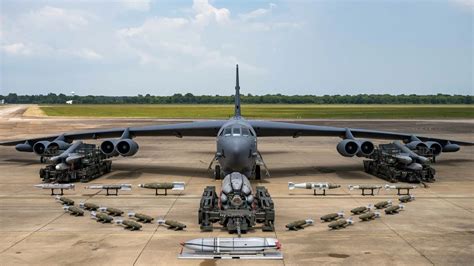
The B-52, affectionately known as the “BUFF,” first entered service in the 1950s. Yet through relentless modernization, it remains central to American deterrence strategy. The upcoming B-52J configuration represents its most comprehensive overhaul in decades. New Rolls-Royce F130 engines will replace the original Pratt & Whitney powerplants, delivering approximately 30 percent greater fuel efficiency, extended range, and significantly reduced maintenance demands.
The aircraft is also receiving a digital cockpit upgrade and the AN/APG-79 Active Electronically Scanned Array (AESA) radar, technology derived from advanced fighter platforms. AESA radars electronically steer beams rather than mechanically moving antenna arrays, enabling superior target tracking, mapping, and electronic warfare performance. Crew size may be reduced on certain missions, reflecting automation improvements.
Barksdale’s role extends beyond fleet size. As AFGSC headquarters, it orchestrates bomber and intercontinental ballistic missile wings nationwide. The base is also central to integration of the forthcoming Long-Range Stand-Off (LRSO) cruise missile, which will provide advanced nuclear strike capability compatible with the upgraded B-52J.
Strategically, the B-52J is envisioned as a “flying arsenal ship.” In a high-threat scenario, stealth platforms such as the B-21 would penetrate contested airspace first. B-52s, operating from safer distances, would unleash large salvos of standoff weapons. This layered approach multiplies combat effectiveness while managing risk.
Barksdale’s visible mass of aging yet evolving aircraft embodies the paradox of modern airpower: longevity paired with reinvention. The Stratofortress is projected to remain in service into the 2050s, an extraordinary lifespan for a combat aircraft. Its continued relevance underscores how adaptable design, when paired with technological renewal, can defy generational turnover.
The Strategic Architecture of American Bomber Power
These four installations collectively anchor the United States’ bomber force. Whiteman Air Force Base preserves the legacy of the B-2 while preparing for the B-21. Ellsworth Air Force Base leads the transition into next-generation stealth operations. Dyess Air Force Base merges high-volume strike capability with training dominance and renewable-powered infrastructure. Barksdale Air Force Base commands the largest fleet and serves as the institutional brain of long-range strike.
The distribution is intentional. Concentration provides efficiency in maintenance and training, while geographic dispersion complicates adversary targeting calculus. Each base specializes, yet all operate within a unified doctrine of credible deterrence.
As the B-1B retires and the B-21 expands, the character of these bases will continue to evolve. Hardened shelters will multiply. Secure digital planning centers will expand. Runways will host aircraft that blend stealth, connectivity, and endurance in ways previously confined to theory.
In strategic terms, bomber bases are not merely airfields. They are physical manifestations of policy, technology, and deterrence philosophy. Their flight lines tell a story stretching from Cold War nuclear standoff to 21st-century multi-domain warfare. Steel, concrete, and composite materials converge to form a quiet but unmistakable message: long-range strike remains central to American power projection.
The next decade will determine how that message is refined. What remains constant is the role of these four bases as pillars of strategic airpower—installations where history lingers in hangars, modernization hums in construction sites, and aircraft designed to shape geopolitics lift into the sky.