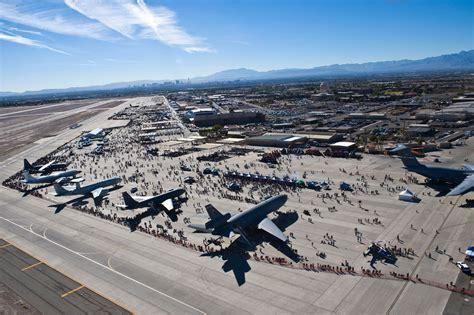
The strategic landscape of Europe’s air power is defined not just by aircraft fleets or technological sophistication, but by the sheer scale and density of personnel concentrated at key air bases. These installations function as operational nerve centers—where logistics, deterrence, intelligence, and rapid deployment intersect in real time. In 2026, a handful of bases stand apart, not merely as airfields, but as fully integrated military ecosystems supporting thousands of active-duty personnel and tens of thousands more through extended communities.
Personnel figures across European air bases remain fluid, often shaped by deployments, rotations, and geopolitical tensions. Yet, even with these fluctuations, a clear hierarchy emerges—revealing which installations truly anchor NATO’s air posture and Europe’s broader defense architecture. What follows is a deep, ground-level exploration of the five largest air force bases in Europe by active personnel, where scale meets strategy in unmistakable ways.
Aviano Air Base: Italy’s Strategic Nuclear and Tactical Hub
Located in northern Italy, Aviano Air Base stands as one of the most critical forward-operating bases for the United States in Europe. Hosting approximately 3,500 to 4,500 active-duty personnel, the base’s total population expands dramatically when including dependents, contractors, and multinational forces—reaching as high as 10,000 individuals.
Aviano’s significance lies not only in its size but in its strategic mission. It serves as the home of the 31st Fighter Wing, a unit tasked with maintaining combat-ready aircraft capable of executing precision strikes across Europe, North Africa, and the Middle East. The base is widely recognized as a key node in NATO’s nuclear sharing arrangement, with B61 nuclear gravity bombs reportedly stored on-site, reinforcing deterrence on the alliance’s southern flank.
Despite its American operational control, Aviano functions within a layered multinational environment. Italian military personnel, NATO partners, and civilian contractors operate side-by-side, creating a complex ecosystem of command, logistics, and support services. The base’s infrastructure reflects this diversity, with hardened aircraft shelters, advanced munitions storage, and rapid deployment capabilities designed to sustain high-tempo operations.
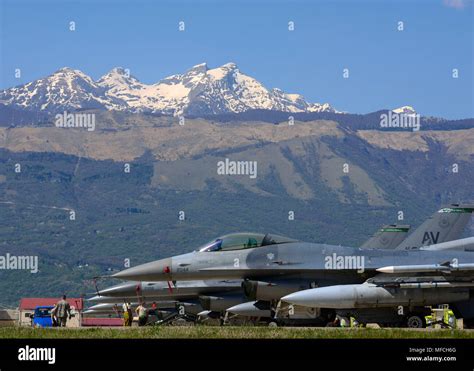
Beyond its immediate tactical role, Aviano represents a broader trend in European defense: the reliance on distributed yet powerful forward bases that can project force quickly without requiring massive troop concentrations in a single location. Its relatively moderate personnel count, compared to larger bases, is offset by its outsized strategic importance.
Istres-Le Tubé Air Base: France’s Sovereign Powerhouse
In southern France, Istres-Le Tubé Air Base—also known as BA 125—emerges as the largest installation operated by the French Air and Space Force, with an estimated 5,000 personnel. Unlike many other major European bases, Istres operates without a permanent foreign military presence, reflecting France’s long-standing doctrine of strategic autonomy.
The base is a cornerstone of France’s independent nuclear deterrent, supporting airborne components of the country’s force de frappe. It is also a multi-role powerhouse, handling Rafale fighter operations, aerial refueling missions, heavy transport logistics, and flight testing programs. This diversity of roles contributes to its large and highly specialized workforce.
France’s decision to limit foreign basing rights—rooted in policies dating back to Charles de Gaulle—has shaped Istres into a uniquely national asset. While other European nations integrate heavily with US forces, France maintains tighter control over its military infrastructure, prioritizing sovereignty over scale.
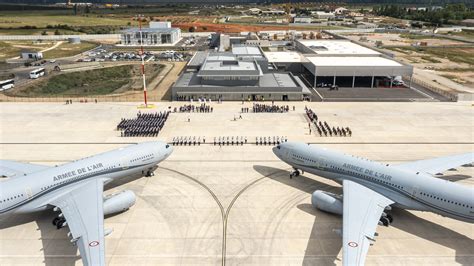
The base’s expansive runways, among the longest in Europe, enable it to support heavy-lift aircraft such as the Airbus A400M Atlas, further enhancing its logistical capabilities. Meanwhile, its role in testing next-generation systems ensures that Istres remains not just operationally relevant, but technologically forward-looking.
In a continent where multinational cooperation often defines military strength, Istres stands as a reminder that independent capability still carries significant strategic weight.
RAF Lakenheath: America’s Air Combat Stronghold in Britain
In the United Kingdom, RAF Lakenheath dominates as the largest air base by personnel, with approximately 7,000 active-duty members, primarily from the United States Air Force. When dependents and civilian staff are included, the total community swells to around 18,000.
Lakenheath is home to advanced fighter squadrons operating both the F-35 Lightning II and F-15E Strike Eagle, making it one of the most formidable tactical air bases in Europe. The presence of two F-35 squadrons alone gives the base a concentration of fifth-generation combat power that rivals entire national air forces.
The base’s strategic location allows for rapid response across Europe and into contested regions further afield. Its aircraft regularly participate in NATO exercises, deterrence patrols, and real-world operations, underscoring its role as a frontline asset in maintaining alliance readiness.
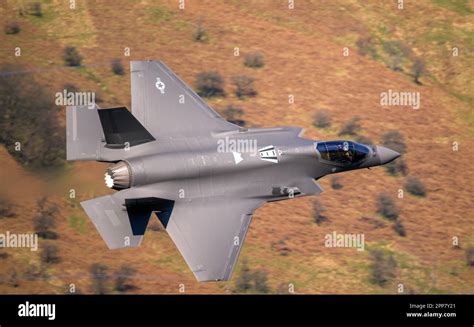
What sets Lakenheath apart is not just its size, but its integration into a broader network of US and UK facilities. Nearby bases such as RAF Mildenhall and RAF Feltwell create a regional cluster of military infrastructure, enabling shared logistics, intelligence coordination, and operational flexibility.
Even within the UK’s own military framework, Lakenheath’s personnel count surpasses that of many Royal Air Force installations, including RAF Brize Norton. This reflects the enduring importance of US-UK defense cooperation, particularly in the air domain, where combined capabilities amplify deterrence far beyond national limits.
Mihail Kogălniceanu Air Base: NATO’s Expanding Eastern Frontier
On the shores of the Black Sea, Mihail Kogălniceanu Air Base represents the future of NATO’s eastern defense posture. Currently supporting around 3,500 personnel, the base is undergoing a massive expansion that could see its population grow to 10,000 or even 20,000 personnel in the coming years.
This transformation is driven by rising tensions in Eastern Europe and the need for a stronger NATO presence near critical regions. Mihail Kogălniceanu is evolving into a permanent military city, complete with expanded runways, new hangars, housing facilities, and support infrastructure designed to accommodate both rotational and permanent forces.
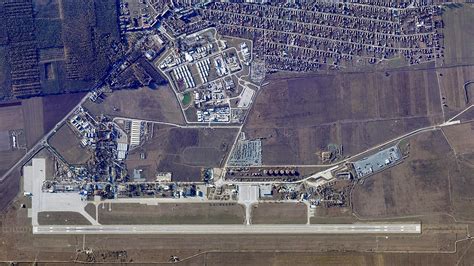
The base hosts a mix of Romanian forces, US troops, and other NATO contingents, reflecting a truly multinational approach to security. It plays a central role in air policing, intelligence gathering, and surveillance operations over the Black Sea, as well as acting as a staging ground for rapid deployments.
Despite recent fluctuations in troop levels—including partial withdrawals of US forces—the base’s long-term trajectory is clear. It is being positioned as a forward-operating hub capable of sustaining large-scale operations, potentially surpassing even some of Western Europe’s most established installations.
Mihail Kogălniceanu embodies a shift in NATO strategy: from static defense to dynamic, forward-positioned readiness. Its growth signals a recognition that geography remains a decisive factor in modern warfare.
Ramstein Air Base: Europe’s Undisputed Air Power Epicenter
At the top of the list stands Ramstein Air Base, widely regarded as the largest air force base in Europe by personnel. With approximately 9,000 military members and Department of Defense civilians, Ramstein anchors a vast military community that extends far beyond its immediate boundaries.
The base serves as the headquarters of the 86th Airlift Wing, responsible for coordinating airlift and logistics operations across Europe, Africa, and the Middle East. Its importance is magnified by its role in facilitating military aid, including critical support for Ukraine, making it a central node in contemporary geopolitical dynamics.
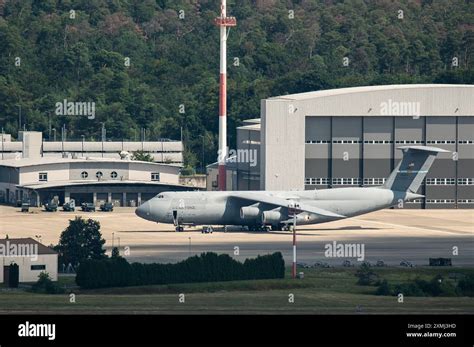
Ramstein’s influence extends into the broader Kaiserslautern Military Community, which includes tens of thousands of personnel, family members, and civilian employees. This makes it not just a base, but a self-sustaining military metropolis.
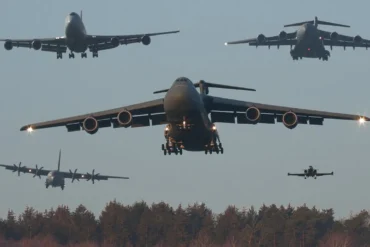
Operationally, Ramstein handles an immense volume of air traffic, from cargo aircraft to medical evacuation flights. Its infrastructure supports over 100 tenant units, each contributing to a highly coordinated system of logistics, command, and control.
What truly distinguishes Ramstein is its role as a strategic backbone. While other bases focus on combat or regional operations, Ramstein enables the entire system to function—moving troops, equipment, and information across continents with precision and speed.
In an era defined by rapid response and global reach, Ramstein exemplifies how logistics has become as critical as firepower.
The Bigger Picture: Scale, Strategy, and the Future of European Air Power
Across these five bases, a clear pattern emerges: size is not merely a function of national capacity, but of strategic necessity. From Aviano’s nuclear deterrence role to Ramstein’s logistical dominance, each installation reflects a specific dimension of modern air power.
European air forces, when combined under NATO, represent a formidable collective strength. Yet, this strength is unevenly distributed, concentrated in key locations where geography, infrastructure, and alliance commitments intersect. Bases like RAF Lakenheath and Mihail Kogălniceanu highlight the growing importance of forward positioning, while Istres underscores the enduring relevance of national sovereignty.
Personnel numbers, while impressive, tell only part of the story. Behind every figure lies a complex web of missions, technologies, and human expertise that transforms these bases into living, breathing engines of military capability.
As Europe navigates an increasingly uncertain security environment, these installations will continue to evolve—expanding, adapting, and reinforcing the continent’s defense posture. The scale of these bases is not just a reflection of current needs, but a signal of what lies ahead: a future where air power remains central to both deterrence and defense.