The United States Air Force (USAF) operates on a scale that few organizations on Earth can match. Beyond its vast fleet of aircraft and cutting-edge technology lies an equally impressive physical footprint—massive bases that stretch across deserts, coastlines, and remote training ranges. These installations are not merely airfields; they are self-contained ecosystems of strategy, research, training, and operational power.
From advanced weapons testing hubs to pilot training epicenters, the largest USAF bases reflect the immense logistical and strategic demands of modern air warfare. Their sheer size enables everything from supersonic experimentation to live-fire combat simulations that would be impossible elsewhere. What follows is a deep dive into the seven largest US Air Force bases by land area, each one playing a critical role in maintaining global air superiority.
7. Fairchild Air Force Base – Aerial Refueling Powerhouse in the Pacific Northwest
Spanning approximately 21 square miles (56 square kilometers), Fairchild Air Force Base may be the smallest on this list, but its operational importance is anything but minor. Located just southwest of Spokane, Washington, Fairchild serves as a cornerstone of Air Mobility Command, anchoring aerial refueling operations across vast distances.
At the heart of the base is the 92nd Air Refueling Wing, which operates the legendary KC-135 Stratotanker. These aircraft form the invisible lifeline of the Air Force, extending the reach of fighters, bombers, and transport aircraft across continents and oceans. Without refueling hubs like Fairchild, global air operations would shrink dramatically.
What truly sets Fairchild apart is its Survival, Evasion, Resistance, and Escape (SERE) School—the only one of its kind in the Air Force. Every year, around 20,000 students undergo intense training designed to prepare them for the worst-case scenario: isolation behind enemy lines. The program blends psychological endurance with raw survival skills, creating some of the most resilient personnel in the military.
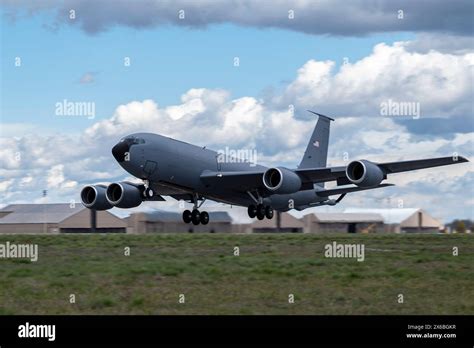
Supporting these missions is the 36th Rescue Squadron, alongside multiple joint and reserve units. The base operates as a multi-layered hub, combining operational readiness with specialized training—an efficient use of its relatively compact footprint.
6. Kirtland Air Force Base – Nuclear Backbone and Advanced Research Hub
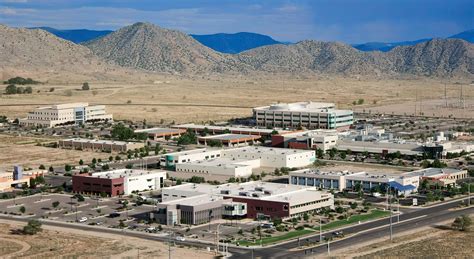
Covering 68 square miles (175 square kilometers), Kirtland Air Force Base in New Mexico represents a powerful blend of nuclear security and scientific innovation. It plays a pivotal role in the Air Force Global Strike Command, contributing directly to the United States’ nuclear deterrence strategy.
Kirtland is not just a military installation—it’s a crossroads of defense and science. With more than 20,000 personnel, it stands as one of the largest employers in the region. Its mission extends far beyond traditional air operations, encompassing advanced research in directed energy, space systems, and nuclear technology.
The presence of institutions like Sandia National Laboratories and collaboration with Los Alamos National Laboratory elevate Kirtland into a realm where military capability meets cutting-edge science. These partnerships drive innovation in areas such as laser weaponry, microwave systems, and satellite technologies.
Adding another dimension, the Space Force’s Delta 15 operates from Kirtland, reinforcing its importance in the increasingly contested domain of space. The base’s diversity of missions makes it one of the most technologically dynamic installations in the entire Air Force network.
5. Edwards Air Force Base – The Birthplace of Supersonic Innovation
Stretching across 469 square miles (1,214 square kilometers), Edwards Air Force Base is synonymous with aviation history and experimental excellence. Located deep in California’s Mojave Desert, it has long been the proving ground for the most advanced aircraft ever built.
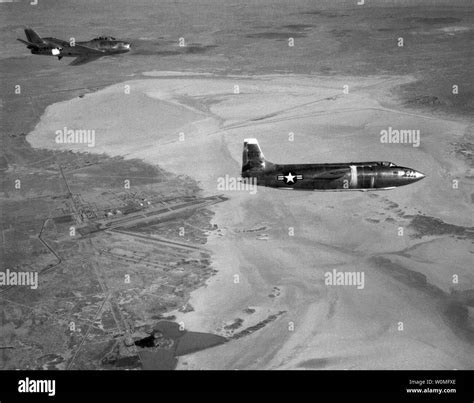
Edwards is home to the Air Force Test Center and the prestigious USAF Test Pilot School, where elite aviators push aircraft to their absolute limits. The base’s natural advantage lies in Rogers Dry Lake, a vast, flat expanse that serves as a 65-square-mile natural runway—ideal for emergency landings and experimental testing.
This is where legends were made. In 1947, Chuck Yeager broke the sound barrier here, forever changing aviation. Decades later, Edwards remained at the forefront, playing a critical role in the development of stealth aircraft like the F-117 Nighthawk, B-2 Spirit, and modern fighters such as the F-22 Raptor and F-35 Lightning II.
NASA’s Armstrong Flight Research Center further amplifies Edwards’ importance, with projects like the X-59 QueSST, designed to enable quiet supersonic travel. The base also houses the largest anechoic chamber in the world, used to test aircraft electronics in a controlled electromagnetic environment.
Few places on Earth can match Edwards’ legacy. It is not just a base—it is the frontier of flight itself.
4. Eglin Air Force Base – America’s Ultimate Weapons Testing Ground
At 724 square miles (1,875 square kilometers), Eglin Air Force Base in Florida’s Panhandle stands as the primary testing and evaluation center for USAF weaponry. Nearly 20,000 personnel from multiple military branches operate here, making it one of the most jointly integrated bases in the country.
Eglin’s mission revolves around precision and performance. Every major advancement in weapons systems, navigation, and targeting technology passes through its testing ranges. Its reach extends far beyond land, with a massive overwater range stretching into the Gulf of Mexico—ideal for live-fire exercises and missile testing.
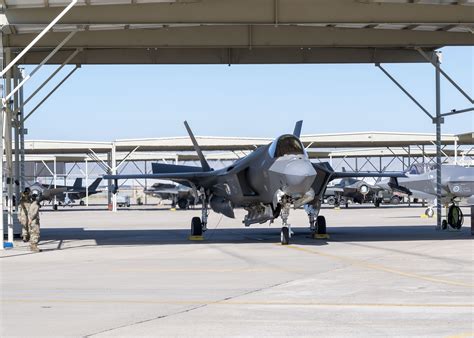
The base is also home to the 33rd Fighter Wing, a key training unit for the F-35A Lightning II. Pilots and maintainers alike refine their skills here, ensuring operational readiness for one of the world’s most advanced fighter jets.
Adding to its capabilities is the McKinley Climatic Laboratory, where aircraft are subjected to extreme environmental conditions—from arctic cold to desert heat. This ensures reliability in any operational scenario, a critical factor in modern warfare.
Eglin’s combination of scale, diversity, and technical capability makes it indispensable to the evolution of air combat systems.
3. Hill Air Force Base – Logistics Giant and Fighter Sustainment Hub
With an immense footprint of 2,657 square miles (6,928 square kilometers), Hill Air Force Base in Utah plays a crucial role in sustaining the Air Force’s operational edge. Its responsibilities extend far beyond flight operations into the realm of long-term aircraft maintenance and lifecycle management.
Central to Hill’s mission is the Ogden Air Logistics Complex, which oversees maintenance for aircraft like the F-22 Raptor, F-35 Lightning II, F-16 Fighting Falcon, A-10 Thunderbolt II, and C-130 Hercules. This is where aircraft are not just repaired—they are modernized, upgraded, and extended far beyond their original service lives.
The base also manages the Utah Test and Training Range, a vast desert environment used for live-fire exercises and tactical simulations. Combined with the presence of the 388th Fighter Wing, the Air Force’s first operational F-35 unit, Hill represents a powerful blend of combat readiness and logistical excellence.
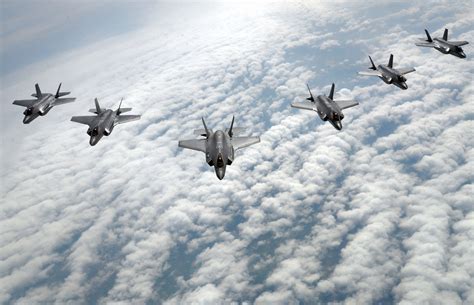
With around 20,000 personnel, Hill functions as a critical backbone of sustainment, ensuring that frontline aircraft remain mission-ready at all times.
2. Barry M. Goldwater Air Force Range – Realistic Combat Training on a Massive Scale
Encompassing 2,969 square miles (7,689 square kilometers), the Barry M. Goldwater Air Force Range is one of the largest and most important training environments in the United States. Unlike traditional bases, this installation is designed for full-spectrum combat simulation.
Jointly managed by Luke Air Force Base and Marine Corps Air Station Yuma, the range supports training for U.S. and allied forces alike. Its vast, open terrain allows for live-fire air-to-air and air-to-ground exercises, electronic warfare scenarios, and complex multi-branch operations.
What makes Goldwater exceptional is its realism. Pilots train in conditions that closely mirror actual combat, preparing them for the unpredictability of modern warfare. Nearly all Marine Corps aviation units pass through this range before deployment—a testament to its importance.
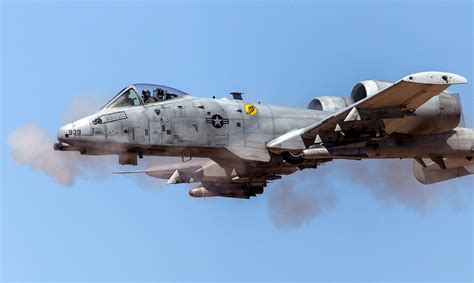
Luke AFB, closely tied to the range, serves as the primary training base for F-35A pilots, including those from allied nations. This makes the range not just a national asset, but a global training hub.
1. Nellis Air Force Base Complex – The Largest and Most Powerful Air Combat Training Environment
Dominating the list with a staggering 5,000 square miles (12,950 square kilometers), the Nellis Air Force Base Complex is the undisputed giant of USAF installations. Located in Nevada, it encompasses the Nevada Test and Training Range (NTTR), Creech AFB, and the Tonopah Test Range.
Nellis is synonymous with elite training. It hosts the world-renowned “Red Flag” exercises, where pilots engage in high-intensity simulated combat designed to replicate real-world conditions as closely as possible. These exercises are widely regarded as some of the most realistic air combat training events on Earth.
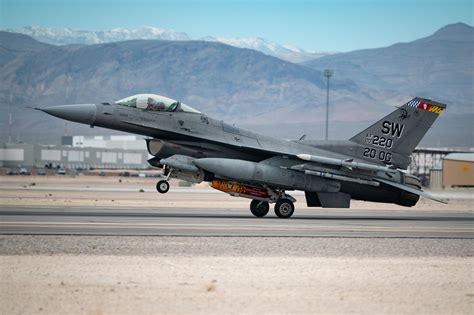
The NTTR alone covers millions of acres of restricted airspace, including the infamous Area 51 (Groom Lake). This highly classified site has been central to the development of groundbreaking aircraft such as the U-2, SR-71 Blackbird, and F-117 Nighthawk.
Creech Air Force Base, another component of the complex, focuses on remotely piloted aircraft (RPA) operations, reflecting the growing importance of drone warfare. Meanwhile, the Air Force Warfare Center at Nellis ensures that tactics, technology, and training evolve in lockstep.
The scale of Nellis is not just about size—it’s about capability, secrecy, and strategic dominance. It is a place where the future of air combat is continuously shaped and refined.
Why Size Matters: Strategic Depth and Operational Freedom
The immense size of these bases is not a coincidence—it is a necessity. Large installations provide strategic depth, allowing for safe testing, realistic training, and secure development of sensitive technologies. They also enable the Air Force to operate with a level of flexibility and autonomy that smaller facilities simply cannot offer.
From the deserts of Nevada to the forests of Washington, these bases form a geographic network of power projection, ensuring that the United States maintains its edge in air and space domains.
Each base tells a different story—of innovation, resilience, and preparation. Together, they form a system that is as vast as it is precise, a reminder that in modern warfare, space is not just territory—it is capability.