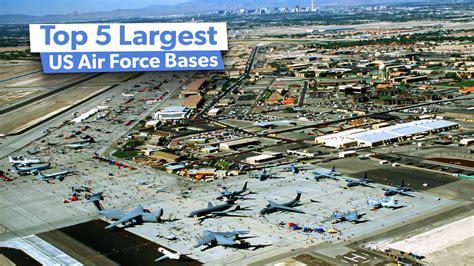
The United States Air Force operates some of the most extensive military installations in the world, yet understanding which bases house the largest populations can be surprisingly complex. Population figures for Air Force bases vary significantly depending on what is counted—active-duty personnel, reservists, civilian contractors, or family members. While exact rankings are difficult due to operational secrecy and fluctuating deployments, certain bases consistently appear among the largest in terms of human presence. These installations are more than just runways and hangars—they are self-contained cities, bustling with activity and strategic importance.
At the lower end of the list, Wright-Patterson Air Force Base in Ohio stands out as a critical hub of technological development and military research. Housing approximately 5,400 active-duty personnel, Wright-Patterson extends its influence far beyond its fenced boundaries, employing over 38,000 people, including civilians and contractors. Surrounding communities like Beavercreek, Fairborn, Riverside, and Huber Heights absorb much of the population, creating a blend of military and civilian life. The base has recently gained attention due to nationwide drone sightings, emphasizing its ongoing relevance in contemporary security measures. Wright-Patterson exemplifies how modern Air Force bases operate as integrated nodes of defense, research, and community life.
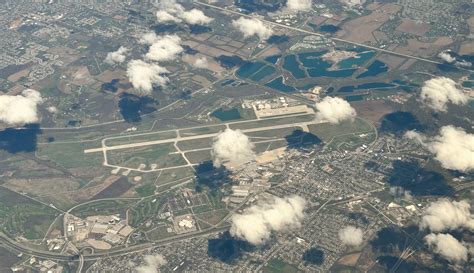
Hill Air Force Base in Utah is another example of a strategically vital installation. With roughly 5,608 active-duty personnel, Hill’s total workforce—including civilians and contractors—reaches nearly 27,000 individuals. The base hosts a variety of operational fighter wings under Air Combat Command and the Air Force Reserve Command, highlighting its multi-role function. Its elevation at 4,787 feet makes it one of the highest Air Force bases, offering unique environmental and operational challenges. Hill’s combination of cutting-edge operations and high-altitude training makes it an indispensable component of the United States’ air power infrastructure.
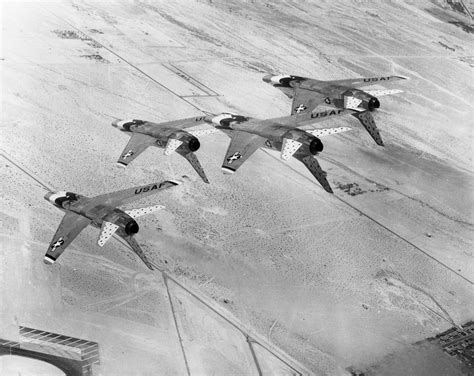
Travis Air Force Base in California earns its title as the “Gateway to the Pacific” for a reason. Home to approximately 7,348 active-duty Air Force personnel, it functions as a major logistics hub, particularly for strategic airlift missions. Travis’s sprawling complex includes 420 buildings and a workforce of over 13,000 military and civilian employees. Of its active-duty personnel, about 65% reside in the local area, embedding the base within surrounding communities. Travis plays a critical role in sustaining global US military operations, serving as one of the primary stations for the Lockheed C-5M Super Galaxy, the Air Force’s largest cargo aircraft. Its logistical capabilities and human resources make Travis a vital node in both domestic and international military readiness.
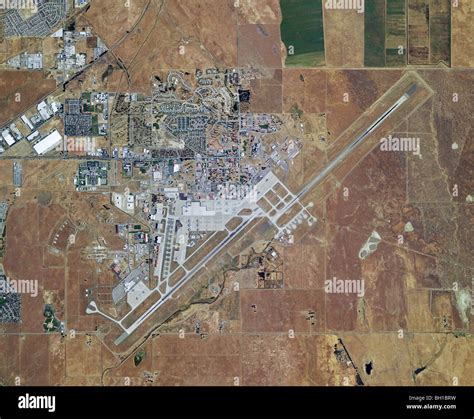
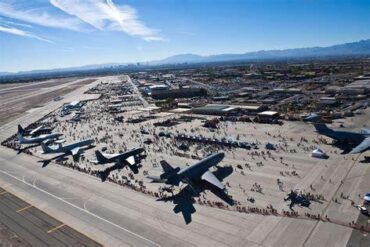
Moving further west, Nellis Air Force Base in Nevada represents one of the largest training and operational hubs in the Air Force. With approximately 10,000 active-duty personnel and an additional 5,000 contractors, Nellis extends its reach to an estimated 60,000 people when including families and retirees. The base is synonymous with advanced combat aviation training, hosting a wide range of aircraft from fighter jets to bombers and military transports. Covering over 14,000 acres, with restricted ranges stretching across 5,000 square miles, Nellis offers unmatched space for realistic training exercises. Its influence on Southern Nevada’s economy and workforce cannot be overstated, making it a centerpiece of both regional and national defense strategy.
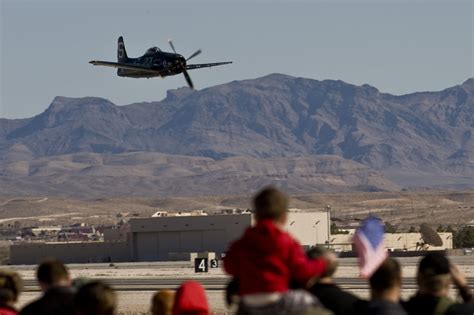
Joint Base San Antonio in Texas exemplifies the modern trend toward multiservice integration. Including Lackland and Randolph Air Force bases, JBSA trains thousands of personnel and provides advanced education and operational support. With over 12,500 active-duty Air Force members, plus Army, Navy, Marines, and Space Force units, the base demonstrates the collaborative nature of contemporary military operations. JBSA also serves as a massive support network, feeding nearly one million meals monthly and employing around 25,000 civilians. This base is not just a site of military activity but a sprawling ecosystem where logistical, educational, and operational components intersect, making it a microcosm of military life on a grand scale.
Eglin Air Force Base in Florida is unparalleled in its sheer breadth and operational significance. Hosting roughly 13,000 active-duty, reserve, and trainee personnel, Eglin serves as a central site for testing and developing new aircraft and munitions. The base’s Environmental Assessment report highlights a total population exceeding 81,000, encompassing civilians, retirees, dependents, and supporting personnel. Eglin’s combination of extensive land holdings, high-tech testing facilities, and operational versatility ensures it remains at the forefront of America’s air power development. The base’s economic impact is profound, generating billions in payroll and directly supporting tens of thousands of jobs both on and off the installation. Its strategic location along Florida’s Gulf Coast allows rapid deployment and testing of advanced weaponry, cementing its importance in national defense.
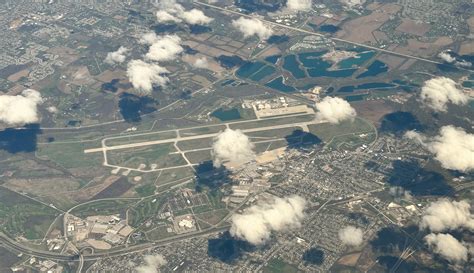
Finally, Ramstein Air Force Base in Germany illustrates the global reach of the US Air Force. With around 16,000 personnel, Ramstein is the largest Air Force installation outside the United States. Its strategic location in Kaiserslautern enables it to function as a logistical hub, projecting American air power across Europe and Africa. The base is home to the 86th Medical Group, which provides the largest active-duty outpatient clinic in the European theater. Ramstein’s population swells during large-scale deployments, reflecting its flexible operational capacity. Beyond military personnel, the wider Kaiserslautern Military Community includes over 50,000 residents, integrating American and local German communities in a unique cultural and operational synergy. The base’s history, stretching back to the post-World War II era, showcases its enduring relevance in international military strategy.
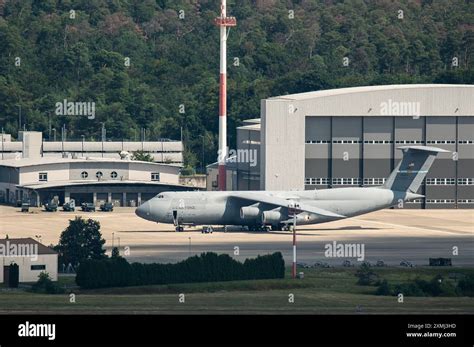
Examining these bases together reveals several key insights. First, population size does not always correlate with geographic area; some bases may be smaller in acreage but house more personnel due to operational density. Second, the strategic roles of these installations vary widely—from training hubs like Nellis and JBSA to logistical powerhouses such as Travis and Ramstein. Third, civilian contractors and local communities are integral to base operations, often creating symbiotic relationships that bolster both military effectiveness and regional economies.
The complexity of Air Force base populations underscores the challenges in measuring military influence purely by headcount. Many bases see fluctuating personnel levels due to training cycles, deployments, and temporary assignments. Furthermore, the integration of reserves, contractors, and family members complicates simple comparisons. Yet, the seven bases highlighted here consistently demonstrate a combination of size, strategic importance, and operational capacity that makes them indispensable to the Air Force mission.
Historically, bases like Wright-Patterson and Ramstein have served as innovation centers, supporting research and testing of cutting-edge aviation technologies. Wright-Patterson’s role in aerospace development has been critical since its early days, influencing aircraft design and propulsion systems that remain in service today. Similarly, Ramstein’s forward deployment capacity and medical facilities have allowed the United States to maintain a persistent presence in Europe, shaping NATO operations and broader military strategy.
Meanwhile, bases such as Hill and Nellis combine training, operational readiness, and research, reflecting a multidimensional approach to force preparation. Hill’s high-altitude operations prepare pilots for diverse environmental conditions, while Nellis’s advanced combat exercises simulate realistic combat scenarios with an unparalleled scope of aircraft and munitions. The dual focus on training and operational output ensures that these bases remain both a proving ground and a launchpad for American air power.
Economic impact is another critical dimension of these bases’ significance. Eglin and Travis, for instance, contribute billions in payroll and sustain thousands of jobs, both directly on base and indirectly in surrounding areas. Civilian contractors, service providers, and local businesses form an extended support network, reinforcing the base’s role as a major economic engine. In many communities, the Air Force base is the largest employer, shaping regional demographics, housing markets, and commercial development.
Moreover, the integration of military families into these bases adds a social and logistical layer that cannot be overlooked. Housing, schooling, healthcare, and recreational facilities must accommodate thousands of dependents, creating microcosms of civilian life within military compounds. This dynamic fosters community cohesion, resilience, and stability, allowing active-duty personnel to focus on operational readiness while ensuring quality of life for families.
The scale and complexity of these installations also reflect the technological and strategic evolution of the Air Force. Modern bases are not just airstrips—they are sprawling ecosystems that encompass aerospace testing, cyber operations, logistics, medical support, and joint service integration. Ramstein’s role in European operations, for instance, demonstrates how a single base can influence theater-level military strategy, supporting deployments, medical readiness, and multinational coordination simultaneously.
In conclusion, the largest US Air Force bases by population exemplify the intersection of human capital, technological capability, and strategic foresight. From Wright-Patterson’s innovation labs to Ramstein’s multinational operations, these installations showcase the breadth and depth of American air power infrastructure. Population size, while an important metric, is only part of the story; operational diversity, economic impact, and global reach collectively define the significance of these bases. As the Air Force continues to evolve, these installations will remain critical hubs, ensuring readiness, innovation, and strategic influence both at home and abroad.
The human scale of these bases is staggering, and the integration of military, civilian, and family members transforms them into communities in their own right. As the Air Force adapts to new technologies, cyber threats, and evolving global missions, these bases will continue to serve as the backbone of American air power, exemplifying the remarkable organizational and operational complexity required to maintain the nation’s strategic edge.