The United States Air Force maintains one of the world’s most sophisticated strategic bomber forces, forming the backbone of America’s long-range conventional and nuclear deterrence. Although the fleet is distributed across only a handful of installations, each base serves a unique purpose within Air Force Global Strike Command (AFGSC), from stealth bomber operations and crew training to bomber modernization and strategic command.
Rather than concentrating every aircraft at a single location, the USAF has developed a carefully balanced network of bomber bases that supports rapid global deployment, specialized maintenance, advanced training, and operational resilience. As the Northrop Grumman B-21 Raider begins entering service and the legendary Boeing B-52 Stratofortress evolves into the new B-52J, these installations are undergoing some of the most significant transformations in decades.
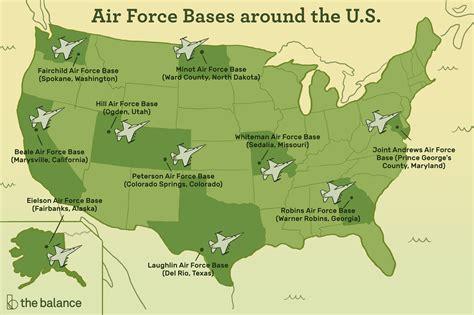
The following four air bases represent the largest concentrations of strategic bombers in the United States and illustrate how American long-range strike capability is preparing for the future.
After decades of operating aircraft designed during the Cold War, the bomber force is entering an entirely new era. The retirement of the Rockwell B-1B Lancer, the gradual replacement of the Northrop Grumman B-2 Spirit, and the extensive modernization of the B-52 are reshaping not only aircraft fleets but also the infrastructure, personnel, and missions of America’s premier bomber bases.
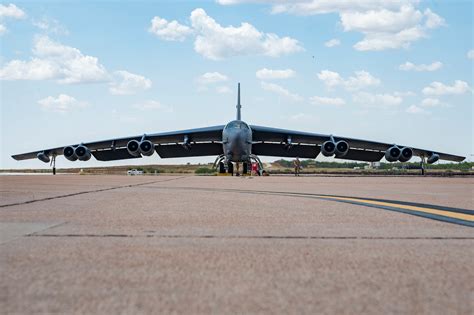
Barksdale Air Force Base: America’s Largest Strategic Bomber Hub
Located in Louisiana, Barksdale Air Force Base stands as the undisputed center of America’s strategic bomber enterprise. Home to more than 60 operational bombers, it possesses the largest concentration of bomber aircraft anywhere in the United States while simultaneously serving as the headquarters of Air Force Global Strike Command.
The installation hosts approximately 44 B-52H Stratofortresses assigned to the 2nd Bomb Wing, while the 307th Bomb Wing of the Air Force Reserve contributes another 18 to 20 aircraft. Together, these aircraft form the world’s largest operational fleet of B-52 bombers.
Beyond the aircraft themselves, Barksdale functions as the command center responsible for overseeing every operational bomber wing in the Air Force. The headquarters supervises all B-1, B-2, B-52, and future B-21 operations alongside America’s intercontinental ballistic missile wings, making the base one of the most strategically important military installations in the nation.
Its importance is only increasing as the B-52 undergoes its most comprehensive modernization since entering service in the 1950s. The new B-52J configuration introduces Rolls-Royce F130 engines, dramatically improving fuel efficiency, reducing maintenance requirements, and extending operational life well into the 2050s.
Equally transformative is the aircraft’s modernized digital cockpit, upgraded avionics, and the installation of the AN/APG-79 Active Electronically Scanned Array radar, technology derived from the F/A-18 Super Hornet. These enhancements provide vastly improved targeting, terrain mapping, electronic warfare capability, and situational awareness while allowing some missions to be flown with a reduced four-person crew.
The base is also preparing to support the next generation of long-range standoff weapons, ensuring the B-52 remains an indispensable launch platform capable of releasing large numbers of precision cruise missiles from well outside hostile air-defense envelopes.
Dyess Air Force Base: The Heart of B-1B Lancer Operations
With approximately 33 B-1B Lancer bombers, Dyess Air Force Base in Texas serves as one of America’s premier strike aviation centers. While Barksdale dominates in fleet size, Dyess performs an equally vital role as the primary operational and training center for the Air Force’s supersonic swing-wing bomber.
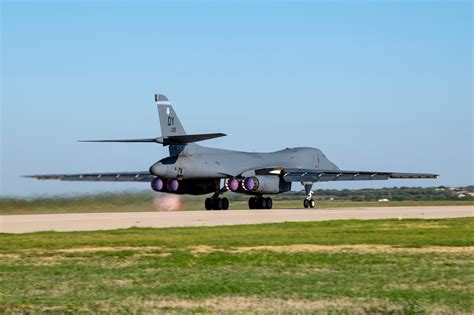
The 7th Bomb Wing operates the majority of the installation’s bomber fleet, while the 28th Bomb Squadron functions as the Air Force’s formal B-1B training unit. Every new B-1 crew member passes through Dyess during qualification, making the base indispensable to sustaining operational readiness across the entire Lancer community.
The installation’s significance extends beyond bomber operations. Dyess also hosts the 317th Airlift Wing, the largest Lockheed Martin C-130J Super Hercules organization in the world. This unique combination of strategic strike and tactical airlift creates one of the most versatile airpower hubs in the Department of Defense.
Dyess has been selected as the third main operating location for the incoming B-21 Raider, triggering an unprecedented wave of construction projects specifically designed for sixth-generation stealth bomber operations. More than twenty major infrastructure developments are underway, including specialized maintenance facilities, secure mission-planning centers, and aircraft support complexes tailored to the Raider’s unique operational requirements.
The transition also restores a capability absent from Dyess since the 1990s: a nuclear bomber mission. Once the B-21 becomes operational, the installation will once again play a direct role in America’s strategic nuclear deterrent.
Beyond military operations, Dyess has become an important regional economic engine. Supporting roughly 15,000 personnel and family members, it contributes billions of dollars annually to the Texas economy while remaining notable as the first Department of Defense installation powered entirely by renewable wind energy.
Ellsworth Air Force Base: Preparing for the B-21 Raider Era
Situated near Rapid City, South Dakota, Ellsworth Air Force Base currently maintains 19 B-1B Lancer bombers, but its greatest significance lies in the future rather than the present.
The base has been selected as the first operational home of the revolutionary B-21 Raider, making it the focal point of America’s next generation of strategic airpower.
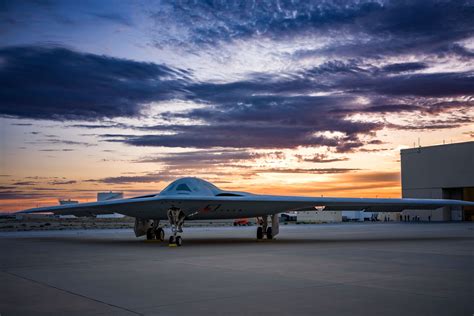
Today, the 28th Bomb Wing operates two active B-1 squadrons—the 34th Bomb Squadron and the 37th Bomb Squadron—while preparing for one of the largest infrastructure transformations in recent Air Force history.
The modernization effort exceeds $1.5 billion, encompassing new hangars, secure maintenance facilities, weapons storage areas, training infrastructure, and mission-planning centers specifically designed around stealth bomber requirements.
Ellsworth’s operational advantages extend well beyond its aircraft inventory. The installation oversees the Powder River Training Complex (PRTC), the largest military training airspace in the continental United States. Stretching across four states, this enormous range enables bomber crews to conduct realistic low-level penetration exercises, complex strike packages, electronic warfare training, and large-force operations that closely resemble real combat scenarios.
Historically, Ellsworth was one of the principal Strategic Air Command installations during the Cold War, simultaneously supporting heavy bombers and approximately 150 Minuteman II missile silos. That legacy of strategic deterrence continues as the base transitions toward hosting America’s most advanced stealth bomber.
Beginning in 2027, the first operational B-21 aircraft are expected to arrive, gradually replacing the aging B-1B fleet. Current Air Force plans envision phased retirement of the Lancer throughout the next decade, allowing Ellsworth to become one of the world’s most advanced stealth bomber installations.
Whiteman Air Force Base: Exclusive Home of the B-2 Spirit
Although it operates the smallest bomber fleet among the four largest installations, Whiteman Air Force Base occupies a uniquely important position within American military aviation.
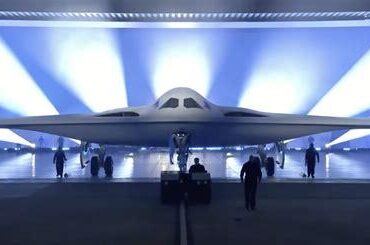
Located in Missouri, Whiteman remains the world’s only operational base for the B-2 Spirit, housing the entire active fleet of 19 stealth bombers.
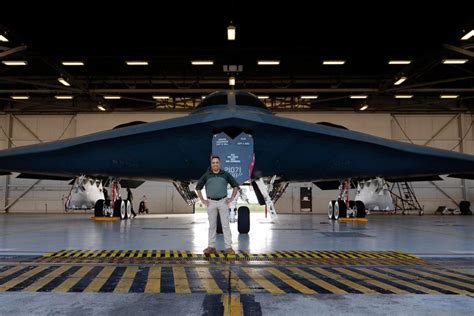
The aircraft are flown jointly by the 509th Bomb Wing and the 131st Bomb Wing of the Missouri Air National Guard, combining active-duty and reserve expertise within a single stealth bomber community.
The 509th Bomb Wing carries exceptional historical significance. During World War II, it conducted the atomic missions over Hiroshima and Nagasaki before later becoming the first operational unit to fly the revolutionary B-2 Spirit.
The aircraft arrived at Whiteman in 1993, while the wing achieved Initial Operational Capability four years later. Combat quickly followed. During Operation Allied Force in 1999, B-2 crews flew extraordinary 30-hour nonstop missions from Missouri to Kosovo, demonstrating the unprecedented global reach made possible through stealth technology and aerial refueling.
Whiteman itself has experienced one of the most dramatic mission transitions in Air Force history. During the Cold War, the installation supported more than 150 Minuteman II intercontinental ballistic missile silos spread across the surrounding countryside. Following nuclear arms reduction agreements after the collapse of the Soviet Union, those missiles were deactivated, allowing the base to evolve into the permanent home of America’s stealth bomber force.
The transformation continues today. Whiteman has already been selected as the second operational base for the B-21 Raider, ensuring that it remains at the forefront of strategic bomber operations for decades to come. Air Force projections indicate increases in personnel, housing requirements, and annual flight operations as the Raider gradually replaces the B-2.
How America’s Bomber Bases Complement Each Other
Rather than duplicating missions, these four installations operate as complementary elements of a highly integrated strategic strike network.
Each base contributes distinct capabilities:
- Barksdale Air Force Base serves as the headquarters of Air Force Global Strike Command and the primary center for B-52 operations.
- Dyess Air Force Base functions as the leading B-1 operational and training installation while preparing for future B-21 missions.
- Ellsworth Air Force Base will become the first operational home of the B-21 Raider and hosts one of America’s largest military training airspaces.
- Whiteman Air Force Base remains the exclusive operational home of the B-2 Spirit until its eventual replacement by the Raider.
This deliberate distribution minimizes operational risk, simplifies specialized maintenance, improves training efficiency, and ensures that America’s bomber force remains resilient even during periods of heightened international tension.
The Future of America’s Strategic Bomber Fleet
The modernization underway across all four bomber installations represents far more than routine aircraft replacement. It reflects a fundamental shift in how the United States intends to project long-range military power throughout the twenty-first century.
The stealth-focused B-21 Raider will increasingly undertake the most heavily defended penetration missions, while the upgraded B-52J Stratofortress evolves into an exceptionally capable stand-off strike platform capable of delivering advanced cruise missiles from outside sophisticated enemy air-defense systems.
As the venerable B-1B Lancer gradually retires and the B-2 Spirit hands over its mission to the Raider, these four air bases are receiving billions of dollars in infrastructure improvements that will support strategic bomber operations for decades to come.
Together, Barksdale, Dyess, Ellsworth, and Whiteman form the operational backbone of the United States’ long-range strike capability. Their evolving aircraft fleets, specialized missions, and extensive modernization programs ensure that American strategic aviation remains prepared to respond rapidly across the globe while maintaining one of the world’s most credible deterrence forces.