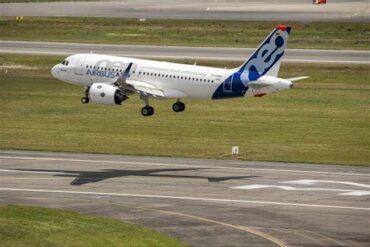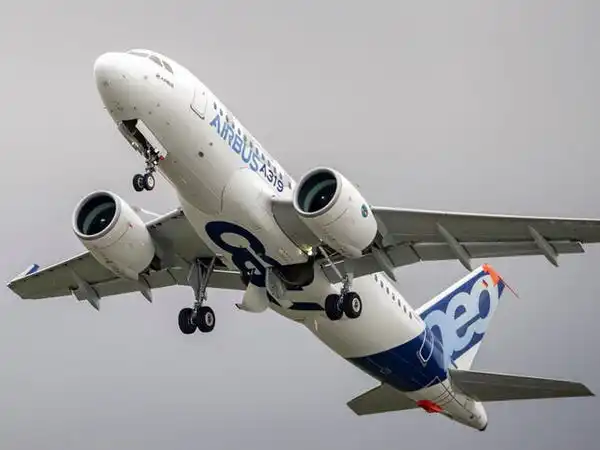
The Airbus A319neo was designed to continue the legacy of one of the most successful aircraft families in aviation history. However, unlike the highly successful A320neo and A321neo, the smallest member of Airbus’ re-engined narrowbody family has struggled to find a meaningful role in today’s airline market. Positioned between the smaller Airbus A220 and the larger A321neo, the A319neo has become trapped in a difficult segment where it offers fewer advantages and faces stronger competition from both sides.
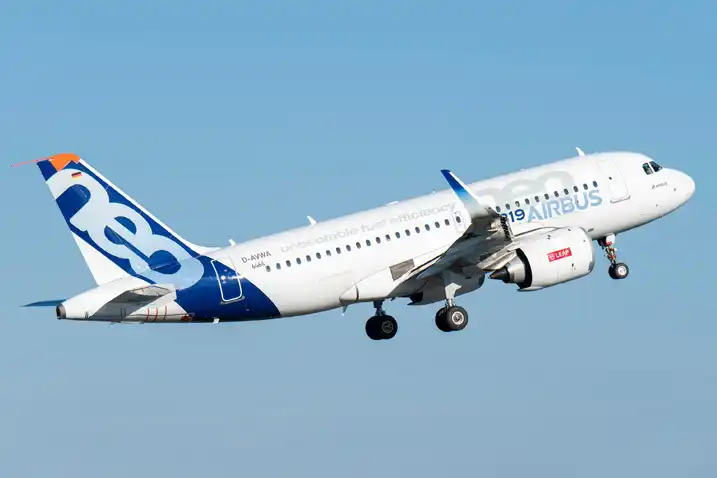
The story of the A319neo is closely connected to the evolution of the Airbus A320 family, which transformed the global single-aisle aircraft market. Since the launch of the original A320 program in 1984, Airbus has created a family of aircraft that covers a wide range of passenger capacities. The A320 became a commercial success, the A321 grew into a market leader, while smaller variants attempted to serve airlines requiring lower capacity and improved operational flexibility.
The original A320 family strategy was simple: develop one highly efficient aircraft platform and modify it to meet different airline needs. The A321 was created as a stretch of the A320, offering more seats and better economics on dense routes. Later, Airbus introduced the A319 as a shortened version, targeting airlines that needed a smaller aircraft with similar technology and fleet commonality.
However, the market conditions that helped the A319 succeed in the past have changed dramatically. Improvements in engine technology, aircraft efficiency, and airline network strategies have reduced the need for smaller versions of larger aircraft. As a result, the A319neo has become a victim of its own family’s success.
How Airbus Built the A320 Family Through Aircraft Stretches and Shrinks
Aircraft manufacturers frequently create new models by stretching or shrinking existing designs. This approach reduces development costs while allowing airlines to select aircraft sizes that match different routes.
A stretched aircraft typically improves airline economics because it carries more passengers while requiring only a modest increase in fuel consumption. This is why the Airbus A321 became increasingly attractive compared with the original A320. The aircraft could generate significantly more revenue while maintaining similar operating characteristics.
The disadvantage of a stretch aircraft is that it may lose some performance capabilities, especially on shorter runways or challenging airports. Smaller aircraft, meanwhile, generally offer better field performance and longer range because they carry less weight.
The A319 followed the opposite philosophy. By shortening the A320 fuselage, Airbus created an aircraft with fewer seats, improved airport performance, and greater range capability. When the original A319 entered service, these characteristics were valuable because the larger A320 could not always match those requirements.
The A319-100 achieved considerable success, collecting nearly 1,500 orders. Airlines valued its combination of efficiency, range, and smaller capacity. At the time, the aircraft filled an important gap between regional jets and larger narrowbody aircraft.
The arrival of the A320neo family, however, changed this balance. Modern engines improved the performance of larger aircraft, allowing the A320neo and A321neo to cover missions that previously required smaller aircraft.
The A319neo’s Biggest Problem: The A320neo Does Almost Everything Better
When Airbus introduced the A319neo, expectations were much lower than for its larger siblings. The aircraft retained the same basic structure as the A319-100 but received new-generation engines, including the CFM LEAP-1A and Pratt & Whitney PW1100G.
The problem was that these engines weigh almost the same regardless of whether they are installed on an A319neo, A320neo, or A321neo. Because the A319neo carries fewer passengers, the weight penalty becomes more significant on a per-seat basis.
This means the smallest member of the family does not achieve the same efficiency advantage that earlier generations enjoyed. The A319neo has excellent range and strong takeoff performance, but most airlines no longer require those advantages enough to justify accepting lower seat economics.
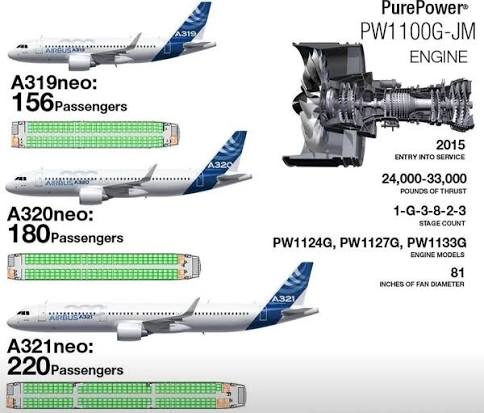
The aircraft can typically accommodate between 130 and 150 passengers, while the A320neo can carry approximately 160 to 180 passengers depending on configuration. Although the smaller aircraft may appear attractive for airlines with lower demand routes, the operating cost difference is not large enough to make the A319neo a clear winner.
Airlines must consider more than simply filling seats. A larger aircraft flying with some empty seats can still generate higher revenue than a smaller aircraft operating at full capacity. This principle has strongly benefited the A321neo, which provides airlines with significant additional revenue potential.
The result is a difficult situation for the A319neo. It is not cheap enough to replace smaller aircraft, and it is not large enough to compete economically with the A320neo.
The A321neo Changed the Narrowbody Market Forever
The biggest challenge for the A319neo comes from above: the extraordinary success of the Airbus A321neo.
The A321neo has become one of the most successful commercial aircraft variants ever developed. Airlines around the world have embraced the aircraft because it combines high capacity, impressive range, and strong fuel efficiency.
With seating capacity exceeding 200 passengers in some configurations, the A321neo allows airlines to replace older widebody aircraft on medium-haul routes while also opening new long-distance narrowbody opportunities.
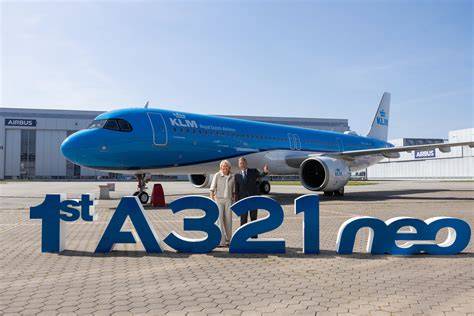
The aircraft’s popularity has changed airline fleet planning. Instead of choosing smaller aircraft to match average demand, many carriers now prefer larger aircraft that provide flexibility during peak periods and maximize revenue opportunities.
The A321neo also benefits from improved takeoff performance compared with earlier A321 versions. This reduces one of the traditional disadvantages of larger narrowbody aircraft and allows it to operate from more airports.
Airlines increasingly see the A321neo as the ideal single-aisle aircraft. Even if demand is occasionally lower, the financial advantage of having additional seats available often outweighs the cost of operating a larger aircraft.
This trend has weakened the business case for smaller aircraft like the A319neo.
The Airbus A220 Creates Pressure From Below
While the A321neo dominates the upper end of the market, the Airbus A220-300 creates another challenge from the opposite direction.
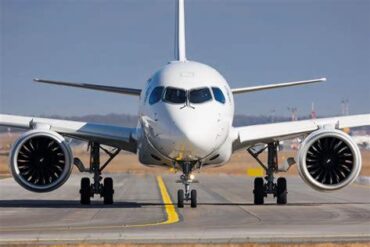
Originally developed by Bombardier as the CSeries, the A220 became part of Airbus’ portfolio in 2018. The aircraft was designed specifically for the smaller narrowbody market and introduced advanced technology, lightweight materials, and highly efficient engines.
The A220-300 can carry a similar number of passengers as the A319neo, but it offers several advantages. Its clean-sheet design provides excellent fuel efficiency, while its smaller size makes it attractive for airlines operating thinner routes.
Unlike the A319neo, the A220 was not created as a smaller version of another aircraft. It was designed around the needs of the modern regional and small narrowbody market.
The A220 program has already achieved significant commercial momentum, with hundreds of orders from airlines worldwide. Its success demonstrates that airlines seeking smaller aircraft increasingly prefer purpose-built designs rather than reduced versions of larger families.
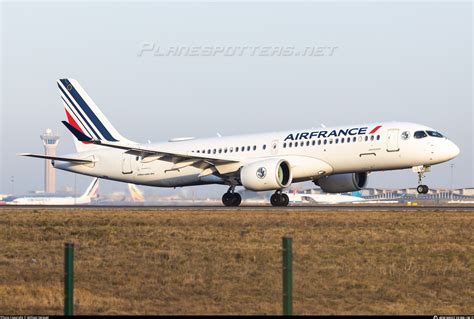
The A319neo also faces competition from the Embraer E195-E2, another modern aircraft designed for similar missions. These aircraft provide airlines with efficient solutions for lower-demand routes without carrying the economic disadvantages of a traditional shrink model.
Why Airbus Has Little Motivation To Push The A319neo
From Airbus’ perspective, the A319neo is not a priority. The company already has enormous demand for its larger aircraft, particularly the A321neo.
The A320neo family production system is highly valuable because the company can manufacture multiple variants on the same production line. However, the A319neo generates less revenue because it is the smallest and lowest-priced aircraft in the family.
With production slots sold years in advance, Airbus has little reason to aggressively promote a model that competes internally with more profitable aircraft.
The company’s focus has shifted toward expanding the A220 program while increasing production efficiency. Airbus needs the A220 to become more profitable, making the smaller aircraft family strategically important for the future of the lower-capacity market.
Although the A319neo remains available to customers that specifically request it, Airbus has reduced its sales efforts. The aircraft has effectively moved from a major product offering to a niche option.
Could The A220-500 Finish The A319neo’s Story?
The situation could become even more challenging if Airbus launches the rumored A220-500.
A stretched A220 variant would likely compete directly with the A320neo by offering similar passenger capacity with the advantages of a newer design. Such an aircraft could create another option between the A220-300 and A321neo.
For the A319neo, this would create an even smaller market. The aircraft is already squeezed between the A220-300 and A320neo/A321neo families. A larger A220 would remove another reason for airlines to consider the smallest A320neo variant.
The A320neo itself could also face pressure because airlines increasingly favor the larger A321neo. While the A320neo remains successful, its role has gradually shifted as carriers look for maximum revenue potential.
The A319neo’s Uncertain Place In Airbus’ Future
The Airbus A319neo represents an interesting example of how successful aircraft families can eventually make some of their own members unnecessary. The aircraft is not a failure because of poor engineering. Instead, it has become outdated by market evolution.
The A319neo offers excellent performance, fleet commonality, and reliability. However, airlines today demand stronger economic advantages, and the aircraft struggles to provide a clear reason for purchase.
The A321neo dominates the high-capacity narrowbody market, while the A220-300 delivers efficiency in the smaller segment. Caught between these two successful aircraft, the A319neo has very little room to grow.
For Airbus, the aircraft remains a useful option for specialized customers, particularly airlines operating challenging airports or unique missions. But as commercial aviation continues moving toward larger, more efficient narrowbody aircraft, the A319neo’s role appears increasingly limited.
The aircraft that once expanded the A320 family’s reach is now being squeezed by the very aircraft that made Airbus the leader of the single-aisle market.