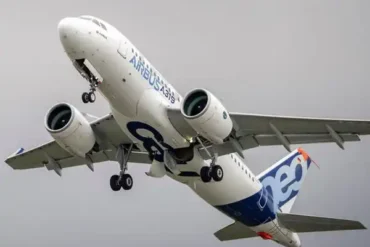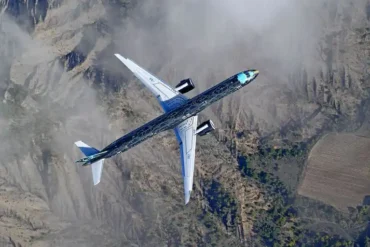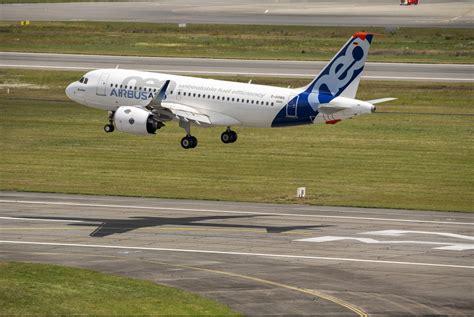
The Airbus A319neo, once envisioned as a nimble workhorse for niche markets and high-altitude operations, is now on the brink of obsolescence. With just 57 total orders—a stark contrast to its A320neo and A321neo siblings—Airbus is actively evaluating the suspension of the A319neo program, acknowledging its diminishing relevance in a rapidly evolving commercial aviation landscape.
A Shrinking Future: A319neo’s Limited Market Viability
The A319neo was officially launched in 2010 as part of the broader A320neo family, incorporating advanced engines and aerodynamic improvements. However, more than a decade later, the model has failed to secure a sustainable market position. According to Airbus’ official orderbook, the aircraft has recorded only 57 firm orders, making it the least successful variant in the A320neo line. By comparison:
- A320neo: Over 4,000 orders.
- A321neo: Surpassing 7,000 orders.
The disparity is staggering and points to a fundamental mismatch between the A319neo’s design and modern airline requirements.
High Per-Seat Costs Undermine Competitiveness
At the core of the A319neo’s struggles lies its inferior cost per seat compared to larger narrowbody alternatives. While it shares LEAP-1A or PW1100G engines with its family counterparts, the smaller fuselage of the A319neo dilutes fuel efficiency on a per-passenger basis. Airlines increasingly favor models that offer higher capacity and better unit economics—an area where the A319neo consistently underperforms.
Fleet planners now prioritize aircraft that maximize revenue on high-density routes, particularly as demand for both business travel and premium cabin configurations rebounds post-pandemic. In this climate, the A319neo’s smaller size and lower revenue-generating potential make it a tough sell.
Airbus Acknowledges Diminishing Relevance
In recent comments to Airliner World, Marc Guinot, Chief Engineer of the A320 Family, conceded the uncertain future of the A319neo. “There is not much more in the orderbook, even if we know it’s an important product,” he said. “We could think of stopping the A319 at a point in time, but to do this we should first have an A320neo with a very good level of performance for high altitude airports.”
Guinot’s remarks underscore a pivotal consideration: the A319neo’s remaining stronghold—high-altitude airports—may soon be adequately covered by the A320neo, if properly optimized.
Chinese Carriers and Niche Operators Dominate the Orderbook
Nearly half of the A319neo’s global orders have originated from a small number of Chinese airlines and government entities. As of July 2025, the breakdown of orders is as follows:
- Tibet Airlines: 13 ordered / 9 in service
- China Southern Airlines: 9 ordered / 9 in service
- Air China: 10 ordered / 1 in service
- West Air: 1 ordered / 1 in service
- Undisclosed customers: 14 ordered / 4 in service
- Government and Executive use: 10 ordered / 7 in service
These figures illustrate the aircraft’s limited commercial footprint, concentrated heavily in regions where its short-field and high-altitude performance remains valuable. Airports like Lhasa Gonggar and Nyingchi Mainling—situated in the challenging terrain of the Tibetan Plateau—benefit from the A319neo’s shorter takeoff roll and higher thrust-to-weight ratio.
But these niche strengths are no longer sufficient to justify long-term program viability, especially when the A320neo is closing the performance gap while offering far superior economics.
Spirit Airlines: The Turning Point for the A319neo
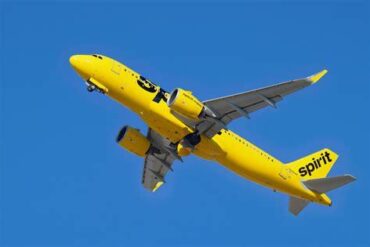
Perhaps the most significant blow to the A319neo program came in 2023, when Spirit Airlines, once its largest Western customer, canceled all 31 of its orders and converted them to the A321neo. This decision not only eliminated more than half of the A319neo’s total commercial backlog at the time but also reflected a broader industry trend.
Spirit’s fleet strategy realignment echoed moves seen across the ultra-low-cost carrier (ULCC) segment. As airlines push to increase margins through scale and capacity, the A319neo’s lower seat count became a liability rather than an asset. For a cost-sensitive operator like Spirit, shifting to the A321neo meant more passengers, better fuel burn per seat, and improved yields across high-traffic routes.
Fleet Trends: Bigger Aircraft, Better Economics
The aviation industry has steadily evolved toward larger narrowbody aircraft, especially in the context of network optimization and slot-constrained airports. The A321neo, with its superior range and capacity, enables airlines to consolidate frequencies, reduce crew costs, and offer more premium seating—all while keeping operating margins healthy.
In contrast, the A319neo offers no compelling advantage over its larger counterparts, except in very limited geographic markets. As a result, airlines with global ambitions or network complexity prefer to standardize around the A320neo and A321neo, avoiding the additional maintenance and training burdens of a third sub-variant.
The Technical Case for Sunset: Production and Resources
From a manufacturing standpoint, maintaining the A319neo production line diverts resources from more in-demand models. Airbus, like Boeing, faces significant supply chain constraints and is under pressure to ramp up production of high-margin models like the A321XLR and A350. Keeping the A319neo alive with only a trickle of orders makes little financial sense.
Moreover, each aircraft variant requires certification upkeep, support infrastructure, and aftermarket provisioning—all of which add cost and complexity. If Airbus sees no major rebound in orders, phasing out the A319neo could streamline operations and free capacity for more lucrative programs.
What Could Replace the A319neo in Its Niche?
While Airbus explores an internal performance upgrade of the A320neo to match or exceed the A319neo’s high-altitude capabilities, the broader strategic pivot may come from the A220-300 or A220-100. The A220 family, which Airbus inherited from Bombardier, offers exceptional efficiency on thinner routes, a modern cabin, and superior economics for small- to mid-sized markets.
Though not ideal for high-altitude operations in its current form, the A220’s composite-heavy design and Pratt & Whitney geared turbofan engines suggest potential for future optimization. If Airbus commits to high-altitude variant development for the A220, it could fully render the A319neo obsolete across all fronts.
Market Sentiment and the End of the Line
As of mid-2025, Airbus has not officially terminated the A319neo program, but the writing appears to be on the wall. No new orders have materialized in over two years, and existing customers are either deferring or converting their positions. The aircraft’s limited appeal, coupled with rising production costs and customer preference for larger narrowbodies, suggest that a quiet suspension may be imminent.
In many ways, the A319neo’s struggles mirror broader changes in global aviation. Airlines are adapting to a world where efficiency, capacity, and flexibility are paramount. In that equation, the A319neo simply doesn’t add up.
Conclusion: A Strategic Phase-Out in Motion
The A319neo’s days are numbered. Once a promising tool for rugged routes and altitude-challenged airports, it now finds itself increasingly marginalized by technological progress and commercial pragmatism. Airbus must make a calculated decision—continue allocating resources to an underperforming aircraft or concentrate on high-demand, high-profit platforms.
With only 57 orders in total, few aircraft in modern commercial history have failed to resonate as clearly as the A319neo. Unless a major customer steps forward with a sizeable, strategic order—and soon—the aircraft is poised to become a footnote in Airbus history, a reminder of how swiftly the tides of market demand can turn.