Pratt & Whitney once stood firmly among the world’s leading manufacturers of large commercial aircraft engines, competing directly with GE Aerospace and Rolls-Royce for some of aviation’s most important widebody programs. Its PW4000 family became a familiar presence on Boeing 747s, Boeing 767s, Boeing 777s, Airbus A300s, Airbus A310s, Airbus A330s, and McDonnell Douglas MD-11s. For airlines operating long-haul fleets during the 1990s and early 2000s, Pratt & Whitney was not simply another engine supplier. It was one of the three companies capable of supplying the propulsion systems for the industry’s most important twin-aisle aircraft.
That position has changed dramatically. Pratt & Whitney is now largely absent from the newest generation of passenger widebodies, while GE Aerospace and Rolls-Royce dominate the modern twin-aisle engine market. Airbus’s A350 and A330neo rely exclusively on Rolls-Royce engines, while Boeing’s 777X uses the GE9X and the 787 is powered primarily by GE’s GEnx, alongside the Rolls-Royce Trent 1000. Pratt’s PW4000 remains commercially important, but primarily as a legacy engine family supported through maintenance, spare parts, and overhaul rather than new aircraft production.
The disappearance is particularly striking because Pratt & Whitney did not simply lose the widebody market through a series of unsuccessful campaigns. Instead, the company made a strategic choice to concentrate its commercial-engine resources elsewhere. The geared turbofan, particularly the PW1000G family, became the centerpiece of that strategy. Pratt effectively exchanged participation in a lower-volume but highly valuable widebody market for a position in the enormous single-aisle sector, where thousands of new aircraft are being ordered and delivered.
Pratt & Whitney’s Former Role in the Widebody Engine Market
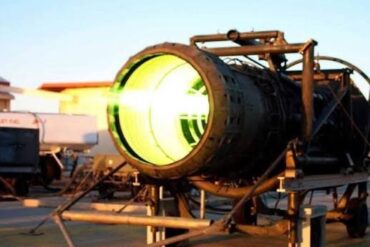
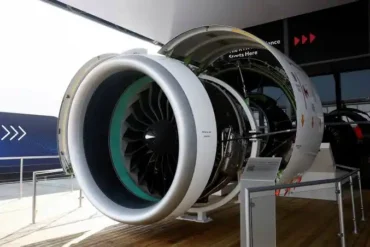
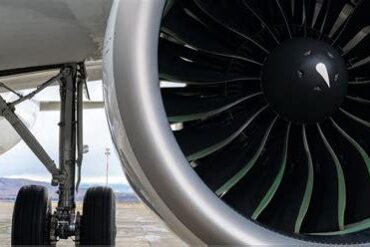
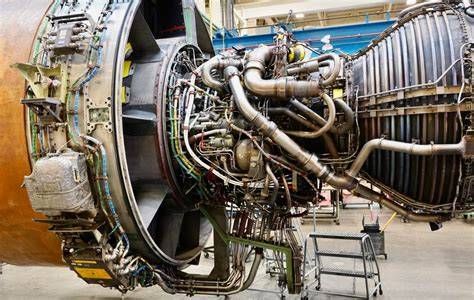
The PW4000 represented the height of Pratt & Whitney’s modern widebody ambitions. Introduced in the late 1980s, the high-bypass turbofan family was developed in several configurations so that it could serve different aircraft and thrust requirements. That flexibility allowed Pratt to participate across a broad section of the commercial aviation market.
The engine eventually powered aircraft ranging from Boeing 747-400 and Boeing 767 variants to Airbus A330s and early Boeing 777s. It also became an important powerplant for the Airbus A300 and A310, McDonnell Douglas MD-11, and other long-haul aircraft. The PW4000 accumulated millions of flight hours and established a substantial installed base that would continue generating aftermarket business long after the engine stopped competing for newly developed aircraft.
During this period, airlines generally had more leverage when selecting engines. Aircraft manufacturers frequently offered multiple engine options, allowing carriers to evaluate fuel consumption, reliability, acquisition costs, maintenance arrangements, spare-engine availability, and long-term support. Engine manufacturers consequently had to compete not only on technical performance but also on the economics of their entire lifecycle proposition.
The Boeing 777 illustrates both Pratt’s participation and its limitations. While PW4000-powered 777s were delivered to major airlines, GE ultimately achieved a much stronger position. Fleet data cited in the reference material indicates that among active 777-200, 777-200ER, and 777-300 aircraft, only a relatively small portion remains powered by Pratt & Whitney engines, compared with a much larger GE share.
That imbalance mattered because the 777 became one of the most commercially successful widebody aircraft ever produced. A stronger position on the program could have created decades of future maintenance revenue. Instead, Pratt entered the next generation of widebody development without the same strategic momentum enjoyed by its competitors.
The Modern Widebody Market Became a GE-Rolls-Royce Stronghold
The biggest change came with the arrival of today’s newest twin-aisle aircraft. Rather than repeating the three-way competition of previous generations, Airbus and Boeing selected engine configurations that effectively excluded Pratt & Whitney from the newest passenger widebody platforms.
The Airbus A350 is the clearest example. Every A350 is powered by the Rolls-Royce Trent XWB, giving Rolls-Royce an exclusive position on one of the world’s most important modern long-haul aircraft. The A350’s success therefore created an enormous installed base for Rolls-Royce and a corresponding long-term aftermarket opportunity.
Airbus followed a similar approach with the A330neo. The aircraft is powered exclusively by the Rolls-Royce Trent 7000, meaning airlines purchasing the modernized A330 do not receive an alternative engine choice. For Rolls-Royce, the combination of A350 and A330neo provides a particularly strong position across Airbus’s modern widebody family.
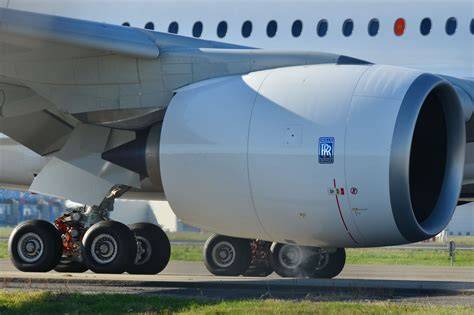
Boeing’s latest programs tell a slightly different story but produce the same result for Pratt & Whitney. The Boeing 777X is powered exclusively by GE Aerospace’s GE9X, an enormous engine designed specifically for the aircraft. The GE9X is capable of producing up to approximately 134,300 pounds of thrust, placing it among the most powerful commercial aircraft engines ever developed.
The Boeing 787 is also outside Pratt’s modern portfolio. GE’s GEnx powers a large portion of the Dreamliner fleet, while Rolls-Royce’s Trent 1000 serves another portion. Pratt therefore has no role on either of Boeing’s newest passenger widebody families.
The result is an unusually concentrated market. GE Aerospace and Rolls-Royce effectively divide the newest passenger widebody engine business, leaving Pratt & Whitney with an installed base from earlier generations rather than a position on new aircraft.
Why Pratt & Whitney Chose the Narrowbody Market
Pratt’s strategic shift becomes easier to understand when the economics of commercial aviation are considered. Developing a new widebody engine requires enormous capital investment, years of engineering work, extensive testing, certification, and close coordination with an aircraft manufacturer. The potential reward is substantial, but the number of aircraft produced can be relatively modest compared with the single-aisle market.
Narrowbody aircraft operate on a vastly larger scale. Families such as the Airbus A320neo, Airbus A220, and Embraer E-Jet E2 are being delivered to airlines across the world in large numbers. These aircraft also serve an expanding range of missions, from short domestic flights to longer international routes that were once dominated by larger aircraft.
Pratt & Whitney recognized an opportunity to concentrate its resources on this high-volume market through the geared turbofan architecture. Rather than developing another conventional large turbofan to compete with GE and Rolls-Royce on widebodies, Pratt pursued an engineering concept that could deliver major efficiency improvements on smaller commercial aircraft.
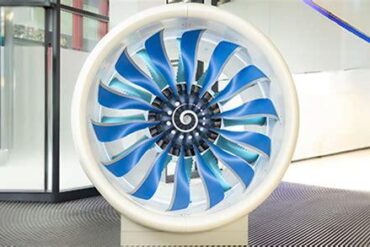
The PW1000G family became the result. Its defining feature is a reduction gearbox positioned between the fan and the low-pressure turbine. The gearbox allows the large front fan to rotate at a different speed from the turbine, enabling each component to operate closer to its optimal rotational speed.
That architecture promised significant improvements in fuel efficiency, emissions, noise, and operating economics. For airlines operating hundreds of narrowbody aircraft, even relatively small improvements in fuel consumption can translate into enormous financial savings over the lifetime of a fleet.
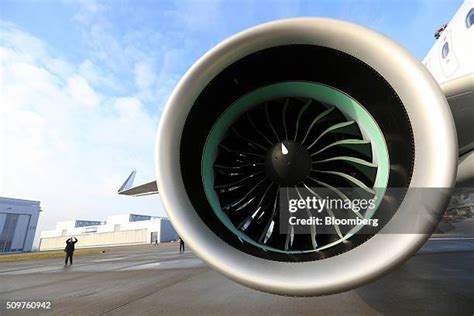
The PW1000G Put Pratt at the Center of Narrowbody Growth
The PW1000G strategy gave Pratt & Whitney something it could not obtain by continuing to chase every widebody program: a major role across multiple high-volume aircraft families.
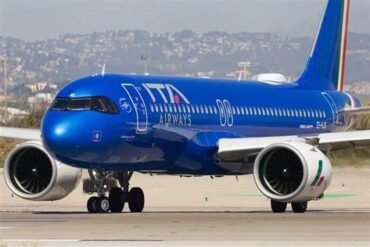
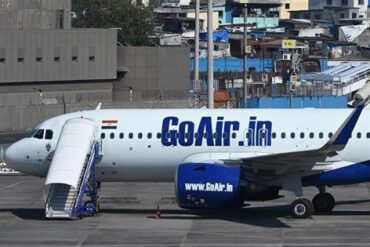
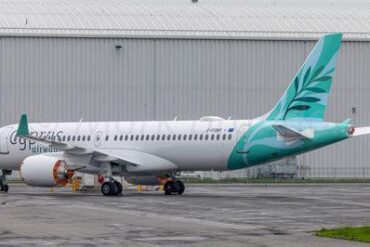
The engine powers the Airbus A220, selected variants of the Airbus A320neo family, and Embraer’s E-Jet E2 family. That breadth is strategically significant because it gives Pratt exposure to several aircraft segments rather than tying its future to a single large twin-aisle program.
The A220 is particularly important because the aircraft targets a segment between traditional regional jets and larger narrowbodies. The E2 family similarly extends Pratt’s reach into regional and smaller single-aisle operations. Meanwhile, the A320neo family provides access to one of the world’s largest commercial aircraft programs.
This is where Pratt’s decision becomes more than simply a retreat from widebodies. It represents a fundamental reallocation of commercial aerospace resources. The company accepted that it would not participate in every major aircraft program and instead focused on creating a position where production volumes could be much higher.
The potential payoff is enormous. Every new aircraft creates an installed engine base, and every installed engine can generate maintenance, repair, overhaul, spare-parts, and service revenue for decades. If Pratt can maintain a large share of a rapidly expanding narrowbody fleet, the aftermarket opportunity can extend far beyond the initial engine sale.
The Geared Turbofan Came With Serious Challenges
The narrowbody strategy has not been without problems. Pratt & Whitney’s geared turbofan has faced well-publicized durability and manufacturing issues, resulting in inspections, accelerated removals, repairs, and disruptions for airlines operating affected aircraft.
The difficulties became particularly serious because the installed fleet expanded rapidly. When a significant number of engines require inspection or shop visits at the same time, the challenge is no longer limited to engineering. Airlines need replacement engines, maintenance capacity, spare parts, technicians, and predictable turnaround times.
Pratt’s problems demonstrated an important truth about the commercial engine business: technical innovation creates enormous potential, but it also creates enormous responsibility once thousands of engines enter airline service.
Nevertheless, airlines have continued ordering aircraft powered by the PW1000G family. That continued demand reflects the broader economics of the narrowbody market. Fuel represents one of an airline’s largest operating expenses, and efficiency gains accumulated across thousands of daily flights can remain extremely valuable even when an engine program encounters serious operational difficulties.
Pratt’s challenge is therefore to turn the technological promise of the GTF into long-term reliability while protecting the commercial value of its enormous installed base.
The Hidden Cost of Leaving the Widebody Market
The decision to concentrate on narrowbodies created a substantial opportunity cost. Commercial engines are unusual products because the initial sale is only part of the business model. Manufacturers expect to earn significant revenue through decades of aftermarket support.
A new widebody engine can remain associated with an aircraft for 20, 25, or even 30 years. During that period, engines require inspections, repairs, replacement components, overhauls, technical support, and eventually life-extension work. Missing an entire generation of aircraft can therefore mean missing decades of future aftermarket revenue.
This is one reason Pratt’s absence from the A350, 787, A330neo, and 777X is strategically significant. The company is not merely missing today’s engine deliveries. It is also absent from the maintenance ecosystems that will develop around those fleets for much of the 21st century.
At the same time, the decision must be judged against the opportunity Pratt gained. The narrowbody market has substantially higher aircraft production volumes, and the PW1000G gives Pratt access to several of those programs.
In other words, Pratt did not simply sacrifice one market without compensation. It traded market breadth for market depth, concentrating its commercial-engine business on aircraft families where it believed production scale and long-term demand could provide a stronger return.
The PW4000 Became an Aftermarket Business
Although Pratt no longer competes for new widebody aircraft with the PW4000, the engine family remains commercially relevant. Thousands of PW4000 engines remain in service or support fleets around the world, particularly on older passenger aircraft and freighters.
The engine continues to power Boeing 767s, early Boeing 777s, Airbus A330ceos, Boeing 747s, MD-11 freighters, and other legacy aircraft. Cargo operators are especially important because freighter aircraft often remain in service well beyond the retirement age of their passenger counterparts.
This gives Pratt a significant aftermarket business, but it is fundamentally different from winning a new aircraft program. Instead of expanding the installed base, Pratt is effectively managing an existing one.
As the fleet ages, parts availability becomes increasingly important. Production volumes decline, suppliers may leave legacy programs, and certain components become more difficult or expensive to manufacture. Airlines can consequently face rising maintenance costs even when the aircraft itself remains operationally useful.
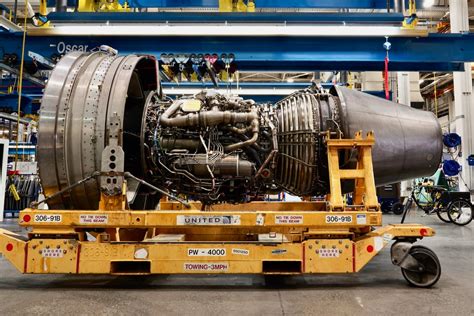
The situation illustrates the long-term consequences of strategic market positioning. Pratt can still earn substantial revenue from PW4000 engines, but the business is increasingly about harvesting the value of past success rather than creating a new generation of widebody installations.
Parts Shortages Can Influence Airline Fleet Decisions
The relationship between engine availability and aircraft retirement is particularly important. An airline may have an otherwise serviceable aircraft, but if its engines cannot be economically maintained, the aircraft’s future can change quickly.
United Airlines provides an example of how legacy PW4000 challenges can intersect with fleet strategy. The carrier retired its first Boeing 777-200 in late 2025 after approximately three decades of service. While aircraft retirement decisions involve many factors, reports surrounding the airline’s PW4000-powered 777 fleet highlighted the difficulty of obtaining replacement components and returning engines to service.
This matters because engine availability can be just as important as aircraft availability. A grounded aircraft generates no revenue, and an airline may ultimately decide that investing heavily in an aging propulsion system is less attractive than replacing the aircraft with newer, more efficient equipment.
For Pratt, every premature retirement reduces the remaining installed base. That does not make the PW4000 business irrelevant, but it reinforces its natural trajectory: the fleet will gradually shrink while maintenance demand becomes concentrated among the aircraft that remain economically viable.
What Pratt’s Narrowbody Strategy Really Achieved
Judging Pratt & Whitney’s strategy solely by its absence from modern widebodies would be misleading. The company gave up a place in one of aviation’s most prestigious markets, but it simultaneously established a powerful position in the high-volume single-aisle segment.
The difference is fundamental. A widebody program can produce fewer aircraft but generate enormous value per engine. A narrowbody program produces aircraft in much larger numbers, creating a potentially massive installed base. For an engine manufacturer that earns substantial revenue throughout the product lifecycle, scale can compensate for lower value per individual engine.
The A220, A320neo family, and E2 aircraft therefore provide Pratt with something that the PW4000’s legacy fleet cannot: a pathway for sustained future growth.
The strategy also allowed Pratt to focus its engineering resources on a technology with applications across multiple aircraft categories. The geared turbofan is not merely one engine for one airplane. It is an architectural approach that can be adapted to different thrust classes and aircraft requirements.
That flexibility has made the GTF one of the most consequential parts of Pratt & Whitney’s modern commercial strategy, despite the significant technical problems the program has encountered.
GE Aerospace and Rolls-Royce Benefited From Pratt’s Absence
Pratt’s decision also reshaped the competitive environment for its rivals. GE Aerospace gained an exceptionally strong position in Boeing’s widebody portfolio, particularly through the GEnx and GE9X. Rolls-Royce, meanwhile, secured exclusive positions on Airbus’s A350 and A330neo.
For airlines, this concentration has consequences. Historically, engine competition gave carriers additional leverage when negotiating acquisition prices, maintenance agreements, spare-engine arrangements, and long-term service contracts. When only one engine manufacturer is available for a particular aircraft, those negotiations naturally take place within a different competitive framework.
The modern widebody market therefore has a structural characteristic that was less pronounced in previous generations: aircraft manufacturers and engine suppliers have become closely aligned through exclusive or highly concentrated engine relationships.
Pratt’s withdrawal did not create that structure by itself, but its absence made the concentration more pronounced.
A Strategic Trade Rather Than a Simple Retreat
Pratt & Whitney’s commercial history therefore tells a more complicated story than the disappearance of the PW4000 from new aircraft might suggest. The company once competed aggressively in the widebody market and built a huge installed base. But instead of committing enormous resources to another generation of twin-aisle engines, it chose to pursue a different path.
The geared turbofan strategy transformed Pratt’s position in commercial aviation. It moved the company toward the enormous narrowbody market and gave it access to several major aircraft families. The strategy has produced significant technical and operational challenges, but the underlying market opportunity remains substantial.
Meanwhile, GE Aerospace and Rolls-Royce have inherited the leading positions across today’s new-generation passenger widebodies. Their engines will accumulate decades of flight hours and aftermarket revenue, while Pratt’s PW4000 business gradually transitions toward legacy support.
The central lesson is that aerospace strategy is rarely about winning every competition. It is about deciding where scarce engineering capital, manufacturing capacity, and technological expertise can generate the greatest long-term return. Pratt & Whitney traded the prestige and aftermarket potential of the modern widebody market for scale in narrowbody propulsion.
Whether that trade ultimately proves superior will depend on the long-term reliability of the GTF, the growth of the single-aisle fleet, and Pratt’s ability to capture aftermarket value from thousands of engines. But one thing is already clear: Pratt & Whitney did not disappear from commercial aviation. It changed where it intended to win.